 Preview
 Send
Send Share
Share
 Details

 Download
 Similars
 X-Ray
X-Ray Diaporama
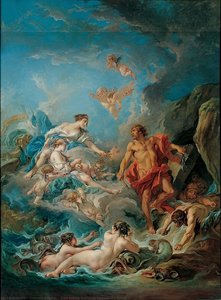
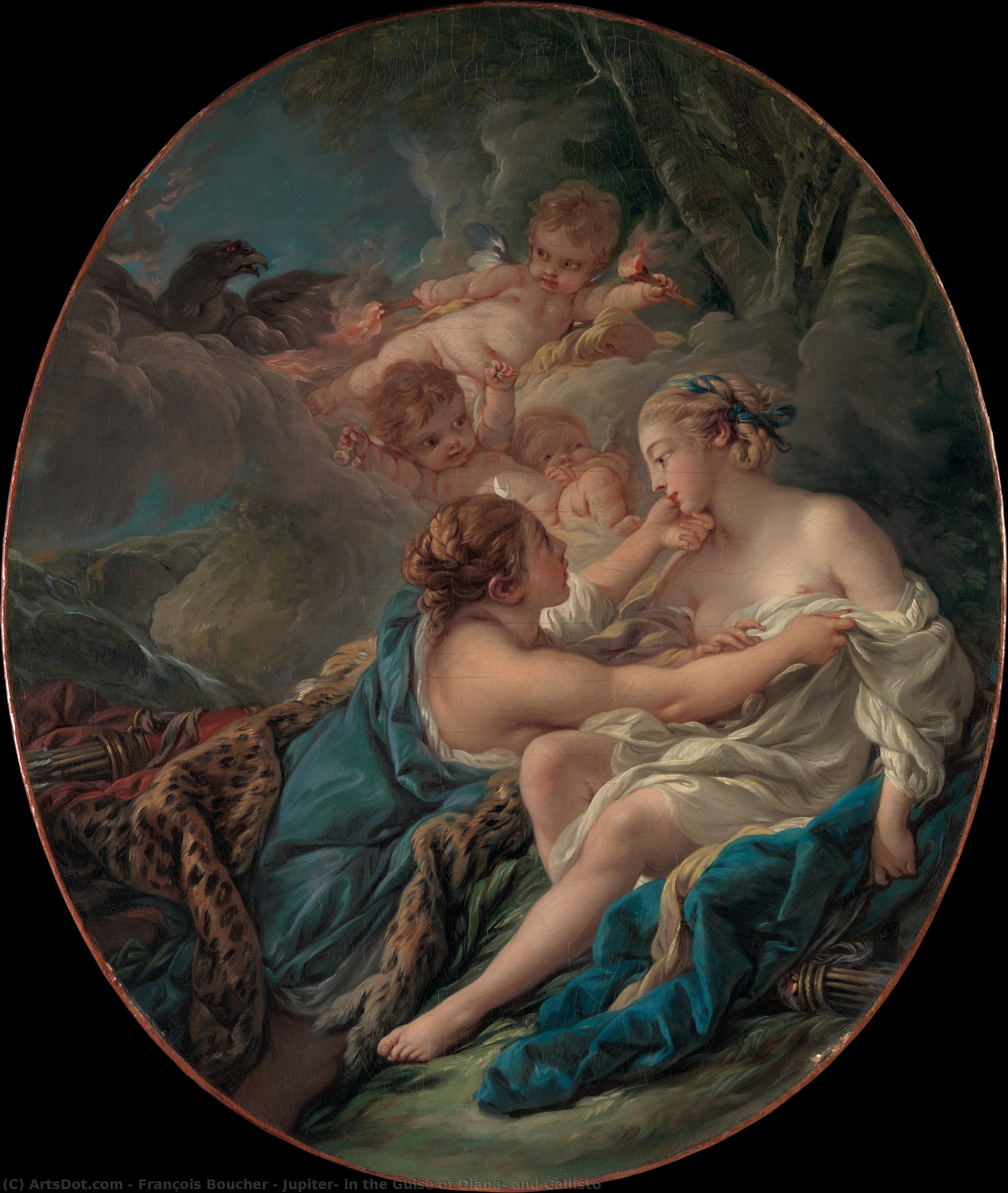
Jupiter, in the Guise of Diana, and Callisto
 Rococo
 1763
1763 65.0 x 55.0 cm
 Metropolitan Museum of Art
 Read More
Hand Made Oil Reproduction
Hand-painted oil on canvas in your size and frame, made to order by our artists. ( Buy Print Buy Image)




P118B $10

P118H $10

P118W $10

P438Z $10

P508JH $12

P508YH $12

P805H $10

P805Z $10

P919BZ $10

P919G $10

P919XJ $10

P959ZH $10

P968JZ $12

W106C $8

W218G $10

W218JH $8

W218Y $10

W307PJ $10

W316G $10

W316PJ $8

W316Y $10

W398PJ $8

W4111J $10

W500HY $15

W500JH $15

W692G $12

W849H $8

W940BG $15

W953PJ $8




Pick from our preset sizes that match the artwork's original proportions.

You may enter your own dimensions to fit a specific frame or space. If your selected size does not match the original image's proportions, we will either crop the artwork or extend the painting with additional hand-painted elements. A digital mockup will be sent for your approval before production begins.
Please note that the on-screen preview does not reflect the actual cropping or extension. Only the mockup will accurately show the final composition.
While custom sizes are available, we recommend selecting a dimension from the predefined list to preserve the original proportions.
After order, ArtsDot.com team will email client for instructions and provide a mockup preview
Worldwide Delivery () in 3/4 weeks instead of standard 5 weeks. (1 September). No compromise on quality.

Free Worldwide Express Shipping

High-Quality Linen Canvas

Full Shipping Insurance

Customs Tax Refund Guarantee

True Color Matching Guarantee

60-Day Return Policy (Defects Only)

100% Money-Back Guarantee

Bulk Discount Offer
 Glass option is only available in size under 110 CM

Jupiter, in the Guise of Diana, and Callisto
Reproduction Medium
Reproduction Size
-


Total Price
$ 263
A Vision of Divine Desire: François Boucher’s “Jupiter, in the Guise of Diana, and Callisto”
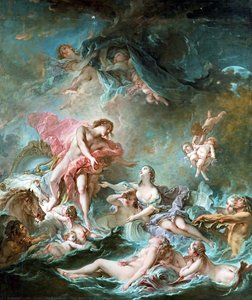
François Boucher's "Jupiter, in the Guise of Diana, and Callisto," painted in 1763, is more than just a beautiful depiction; it’s a shimmering embodiment of the Rococo era’s fascination with mythology, sensuality, and the delicate dance between illusion and reality. Created during a period of opulent excess and refined taste within the French court, this oval painting transcends mere illustration, becoming a carefully constructed tableau designed to evoke both pleasure and contemplation. The scene unfolds on a verdant hillside, bathed in a soft, diffused light that seems to emanate from an unseen source – a hallmark of Boucher’s signature style, prioritizing atmosphere and mood over stark realism.
At the heart of the composition lies Jupiter, transformed into Diana, the goddess of the hunt. His eagle form subtly suggests his divine nature, while his gesture—a graceful sweep of his hand towards Callisto—hints at a carefully orchestrated seduction. Callisto, depicted as a young maiden, is caught in a moment of startled beauty, her expression a mixture of surprise and vulnerability. The inclusion of the nymph Angélique, positioned slightly to the left, adds another layer of intrigue, suggesting a secondary narrative within the larger mythological framework. The figures are not presented as engaged in a dramatic struggle, but rather as participants in a delicately staged encounter, emphasizing the painting’s inherent theatricality.
The Language of Rococo: Technique and Composition
Boucher's mastery lies not only in his subject matter but also in his technical execution. The painting is executed with exquisite detail, employing a technique known as *sfumato* – a subtle blurring of lines and edges that creates an ethereal quality. The drapery, particularly the voluminous folds of Diana’s gown and Callisto's flowing garments, appears to ripple and move with an almost palpable grace. This masterful use of texture is further enhanced by Boucher’s skillful handling of color; he employs a palette dominated by soft pinks, blues, and greens, creating a harmonious and visually soothing effect. The composition itself is carefully balanced, utilizing the oval format to create a sense of depth and movement. The figures are strategically placed within the landscape, drawing the viewer's eye through the scene with an effortless flow.
Notably, Boucher deliberately destabilizes spatial perspective. Bodies bisecting the oval format, clouds swirling in the background, and the elaborate rush of draperies contribute to a sense of visual ambiguity—a characteristic feature of Rococo art that challenges traditional notions of realism. This instability is not merely decorative; it reflects the era’s fascination with illusion and the blurring of boundaries between reality and fantasy.
Mythological Echoes: Ovid and the *Metamorphoses*
“Jupiter, in the Guise of Diana, and Callisto” draws heavily from Ovid's *Metamorphoses*, a collection of mythological tales that served as a primary source of inspiration for artists during the 18th century. The story depicted here is one of transformation and desire—Jupiter’s disguise as Diana to seduce Callisto, ultimately leading to her becoming a bear. This narrative explores themes of power, deception, and the capricious nature of the gods. Boucher skillfully translates this complex myth into a visually arresting scene, prioritizing the emotional impact over strict adherence to Ovid's original text. The painting’s beauty lies in its ability to evoke the spirit of the *Metamorphoses* while simultaneously existing as a self-contained work of art.
A Legacy of Sensuality and Grace
“Jupiter, in the Guise of Diana, and Callisto” remains a quintessential example of Boucher’s artistic genius. It exemplifies the Rococo style's emphasis on beauty, elegance, and sensual pleasure—qualities that resonated deeply with the French court and continue to captivate viewers today. Reproductions of this painting offer a glimpse into a world of refined taste and mythological intrigue, inviting us to contemplate the timeless themes of love, desire, and transformation. Its delicate balance of form and color, combined with its evocative narrative, solidifies Boucher’s place as one of the most celebrated artists of his era.
Related Artworks

Artist Biography
François Boucher: A Life in Rococo
François Boucher (1703-1770) was a pivotal figure in 18th-century French art, renowned as one of the most celebrated painters of the Rococo era. His work embodies the elegance, sensuality, and playful spirit that defined this influential style.
Early Life and Training
Born on September 29, 1703, in Paris, France, François Boucher’s artistic journey began under the tutelage of his father, Jean Boucher, a painter himself. At the age of seventeen, he caught the eye of François Lemoyne, leading to a brief but impactful apprenticeship. He further honed his skills with engraver Jean-François Cars before achieving a significant milestone: winning the prestigious Grand Prix de Rome in 1720.
Rise to Prominence and Artistic Development
Boucher’s time in Italy, following his win at the Grand Prix, proved formative. Upon returning to France, he was admitted to the Académie Royale de Peinture et de Sculpture in 1731. His *morceau de réception*, “Rinaldo and Armida” (1734), immediately established him as a master of the Rococo style. This period saw his artistic voice fully emerge, characterized by delicate brushwork, pastel palettes, and an emphasis on mythological and pastoral themes.
Key Works and Themes
Boucher’s oeuvre is remarkably diverse, encompassing mythology, portraiture, genre scenes, and decorative arts. Some of his most celebrated works include:
- “The Breakfast” (1739): A charming depiction of domestic life featuring his wife and children.
- “The Triumph of Venus” (1740-1751): A series of paintings showcasing Boucher’s mastery of mythological narratives.
- Numerous portraits of Madame de Pompadour, the influential mistress of King Louis XV, solidifying his position at court.
- Landscape paintings like “The Setting of the Sun”, demonstrating a lyrical and idyllic vision of nature.
Recurring themes in Boucher’s work include love, beauty, leisure, and the idealized world of mythology. His paintings often evoke a sense of playful eroticism and refined elegance.
Influence and Legacy
Boucher's influence extended far beyond painting. He designed costumes and sets for the theater, created tapestries for the Beauvais workshops, and collaborated with the Gobelins Manufactory. His appointment as *Premier Peintre du Roi* in 1765 cemented his status as the leading artist of the French Rococo.
While later critics questioned the perceived superficiality of Rococo art, Boucher’s impact on subsequent generations is undeniable. He influenced artists such as Jean-Honoré Fragonard and contributed significantly to the development of Neoclassicism through his students.
Historical Significance
François Boucher's work provides a valuable window into the tastes and values of 18th-century French society. His paintings reflect the aristocratic culture of the era, characterized by luxury, refinement, and a pursuit of pleasure. He remains a significant figure in art history, celebrated for his technical skill, artistic innovation, and enduring contribution to the Rococo style.

François Boucher
1703 - 1770 , France
Quick Facts
- Birth Date: September 29, 1703
- Birth Place: Paris, France
- Death Date: 1770
- Influenced By: François Lemoyne, Jean-François Cars
- Movement: Rococo
- Name: François Boucher
- Nationality: French
- Notable Works:
- Rinaldo and Armida
- The Breakfast
- Madame Boucher
- The Setting of the Sun
- Vulcan Presenting Venus with Arms for Aeneas
Related Articles
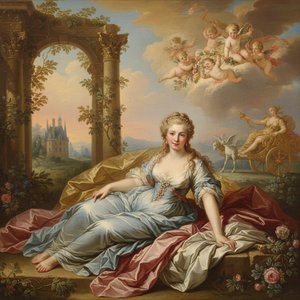
François Boucher: Rococo Master of Myth, Sensuality, and the French Court
Explore the captivating world of François Boucher, master of Rococo painting! Discover his iconic works, aristocratic patronage, and lasting influence on French art history. Learn more at ArtsDot.

The Rococo Aesthetic: Opulence, Rebellion & the Pursuit of Pleasure in 18th-Century Art
Explore the opulent world of Rococo art! Discover its origins, key artists like Watteau & Boucher, and lasting influence on design. Expert insights for collectors & enthusiasts.

Rococo's Radiant Legacy: 10 Masterpieces for Your Home |
Indulge in the elegance of Rococo! Explore 10 masterpieces by Fragonard, Boucher & Watteau. Discover the stories behind these iconic paintings and bring timeless art to your home with museum-quality reproductions from .
The Allure of Elegance in Art: A Historical & Aesthetic Exploration of Refinement & Grace
Explore the exquisite world of Rococo art! Discover its history, masters (Watteau, Boucher & more), and defining elegance. Expert insights for collectors seeking museum-quality reproductions & custom portraits.
The Rococo Style: Aristocratic Leisure & the Pursuit of Delight in 18th-Century Art
Explore the opulent world of Rococo art! Discover Watteau, Boucher & Nattier's masterpieces. Expert insights for collectors seeking museum-quality reproductions and custom portraits at ArtsDot.