 Preview
 Send
Send Share
Share
 Details

 Download
 Similars
 X-Ray
X-Ray Diaporama
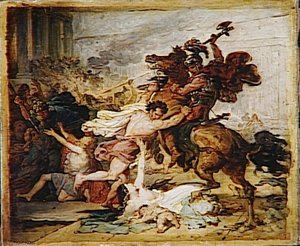
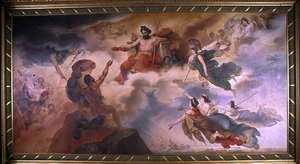
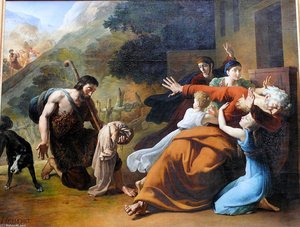
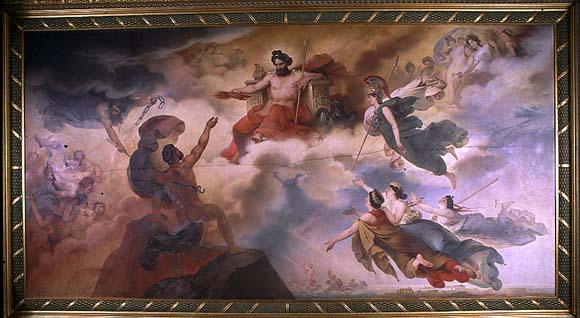
Le Vésuve personnifié reçoit de Jupiter le feu qui doit consumer les villes d'Herculanum, de Pompéi et de Stabies


 Read More
Hand Made Oil Reproduction
Hand-painted oil on canvas in your size and frame, made to order by our artists. ( Buy Print Buy Image)




P118B $10

P118H $10

P118W $10

P438Z $10

P508JH $12

P508YH $12

P805H $10

P805Z $10

P919BZ $10

P919G $10

P919XJ $10

P959ZH $10

P968JZ $12

W106C $8

W218G $10

W218JH $8

W218Y $10

W307PJ $10

W316G $10

W316PJ $8

W316Y $10

W398PJ $8

W4111J $10

W500HY $15

W500JH $15

W692G $12

W849H $8

W940BG $15

W953PJ $8




Pick from our preset sizes that match the artwork's original proportions.

You may enter your own dimensions to fit a specific frame or space. If your selected size does not match the original image's proportions, we will either crop the artwork or extend the painting with additional hand-painted elements. A digital mockup will be sent for your approval before production begins.
Please note that the on-screen preview does not reflect the actual cropping or extension. Only the mockup will accurately show the final composition.
While custom sizes are available, we recommend selecting a dimension from the predefined list to preserve the original proportions.
After order, ArtsDot.com team will email client for instructions and provide a mockup preview
Worldwide Delivery () in 3/4 weeks instead of standard 5 weeks. (3 September). No compromise on quality.

Free Worldwide Express Shipping

High-Quality Linen Canvas

Full Shipping Insurance

Customs Tax Refund Guarantee

True Color Matching Guarantee

60-Day Return Policy (Defects Only)

100% Money-Back Guarantee

Bulk Discount Offer
 Glass option is only available in size under 110 CM

Le Vésuve personnifié reçoit de Jupiter le feu qui doit consumer les villes d'Herculanum, de Pompéi et de Stabies
Reproduction Medium
Reproduction Size
-


Total Price
$ 263
François Joseph Heim: A Titan of Romantic History Painting
François Joseph Heim (1787 – 1865) stands as a monumental figure in French art history, embodying the grandeur and dramatic fervor of the Romantic era while firmly rooted in academic tradition. Born in Belfort, Alsace-Lorraine—a region then under Napoleonic rule—Heim’s artistic journey began with an early fascination for disegno, nurtured by his studies at the École Centrale de Strassburg, where he demonstrated exceptional talent alongside Horace Vernet. This formative experience cemented his connection to the burgeoning Romantic movement, albeit tempered by a grounding in classical principles. His encounter with Vernet proved pivotal; together they embarked on a shared artistic apprenticeship, forging bonds that would influence Heim’s stylistic choices throughout his career. The Prix de Rome competition of 1806 yielded second place, propelling him into the orbit of Parisian artistic circles and introducing him to the intellectual currents shaping European culture at the time. This recognition validated his commitment to mastering the conventions of academic painting—a discipline that prioritized meticulous observation and idealized representation—yet simultaneously fueled his desire to express profound emotion and explore themes of heroism and moral fortitude.- Subject Matter: Heim’s magnum opus, “Le Vésuve personnifié reçoit de Jupiter le feu qui doit consumer les villes d'Herculanum, Pompeii et Stabies,” depicts a pivotal moment in Roman history—the eruption of Mount Vesuvius in 79 AD that obliterated three ancient cities. This dramatic scene served as inspiration for the Musée du Louvre’s monumental plafond, commissioned by Charles X and executed between 1825 and 1826.
- Style: The painting adheres to the Romantic aesthetic—characterized by expressive brushwork, vibrant color palettes, and a focus on conveying psychological intensity. Heim skillfully employed chiaroscuro techniques to heighten the drama of the composition, casting figures in stark contrasts of light and shadow to emphasize their vulnerability against the overwhelming force of nature.
- Technique: Executed in oil on plaster, “Le Vésuve” exemplifies the meticulous craftsmanship demanded by monumental decorative projects. Heim’s painstaking attention to detail—evident in the rendering of volcanic ash, billowing smoke, and the tormented expressions of the depicted deities—underscores his dedication to achieving artistic excellence.
- Historical Context: The eruption of Mount Vesuvius was a cataclysmic event that captivated intellectuals and artists alike. Heim’s depiction reflects the Romantic fascination with mythology and folklore, drawing upon classical narratives to explore themes of destruction, resilience, and divine intervention.
- Symbolism: The central figure of Vesuvius embodies both destructive power and regenerative potential—a reflection of the Romantic belief in the cyclical nature of history and the transformative capacity of suffering. Jupiter’s fiery gaze symbolizes divine judgment and underscores the vulnerability of humanity before cosmic forces.
Related Artworks





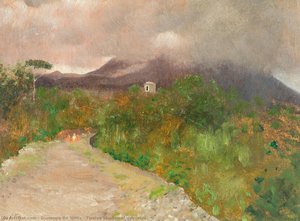
Artist Biography
The Grandeur of a Romantic Visionary
François Joseph Heim stands as a monumental figure in the tapestry of French art history, embodying the dramatic fervor of the Romantic era while remaining firmly anchored in the rigorous discipline of academic tradition. Born in 1787 in Belfort, within the Alsace-Lorraine region, Heim’s early life was shaped by the shifting borders and Napoleonic influences of his homeland. His artistic journey began with a profound fascination for disegno, a passion nurtured during his formative studies at the École Centrale de Strassburg. It was here that he first demonstrated an exceptional talent that would eventually lead him to the heart of the Parisian art world, establishing a foundation of technical precision that would define his entire oeuvre.
The trajectory of Heim’s career was irrevocably altered by his encounter with the legendary Horace Vernet. This relationship was far more than a mere acquaintance; it was a pivotal artistic apprenticeship that forged deep bonds and shared stylistic ambitions. Together, they navigated the competitive landscape of French neoclassicism and burgeoning Romanticism. Under the subtle guidance of Vernet, Heim learned to master the art of narrative painting, discovering how to infuse large-scale compositions with palpable emotion, atmospheric depth, and meticulous detail. This period of mentorship was essential in preparing him for the intense scrutiny of the Paris Salons, where his ability to blend classical structure with dramatic storytelling would soon earn him international renown.
Triumph at the Salon and the Mastery of History
Heim’s ascent within the prestigious French artistic hierarchy was nothing short of meteoric. The Second Salon of 1807 served as his grand introduction to the public, where he secured first prize for his breathtaking work, The Arrival of Jacob in Mesopotamia. This monumental canvas, commissioned by the influential Vivant Denon, showcased Heim’s ability to handle complex biblical narratives with a sense of epic scale and spiritual gravity. By depicting Moses leading the Israelites through the desert, Heim tapped into the era's fascination with grand historical and religious themes, establishing himself as a premier chronicler of the past.
His success was not a singular event but a sustained period of excellence. The gold medal awarded to him at the Salon of 1812 further solidified his reputation, recognizing his unique ability to convey profound spiritual truths through masterful technique. His works often featured:
- Dramatic Narrative: A focus on pivotal moments in biblical and historical chronicles that captured the imagination of the 19th-century public.
- Technical Precision: An unwavering commitment to the academic standards of anatomy, light, and texture.
- Emotional Resonance: The use of atmosphere and composition to evoke feelings of awe, tragedy, or triumph.
Legacy and Historical Significance
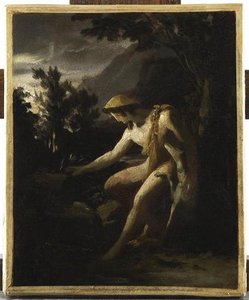
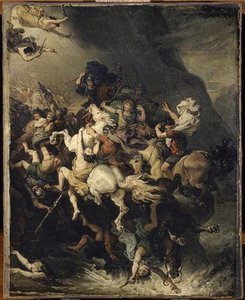
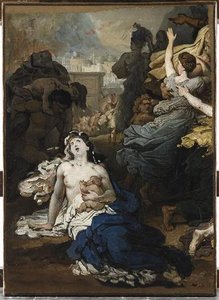
As his career progressed, Heim became a fixture of the French art establishment, known for his ability to satisfy both the intellectual demands of critics and the aesthetic desires of collectors. His depictions of religious figures, such as his celebrated work Saint John, demonstrated a capacity for intimacy that contrasted beautifully with his larger, more turbulent historical compositions like The Massacre of the Jews. This versatility allowed him to navigate the shifting tastes of a century caught between the fading echoes of Neoclassicism and the rising tide of Romanticism.
Ultimately, the significance of François Joseph Heim lies in his role as a bridge between eras. He did not merely follow trends; he synthesized the structural integrity of the old masters with the emotional intensity of his contemporaries. Through his grand Salon paintings and evocative portraits, he helped define the visual language of 19th-century France, leaving behind a legacy of works that continue to command respect for their technical brilliance and their profound ability to transport the viewer into the heart of history.
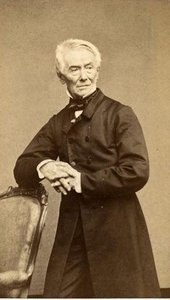
françois joseph heim
1787 - 1865 , France
Quick Facts
- Artistic Movement Or Style: Academic Art
- Artists Who Influenced This Artist: ['Vincent']
- Date Of Birth: 1787 Belfort France
- Date Of Death: 1865
- Full Name: François Joseph Heim
- Nationality: French
- Notable Artworks:
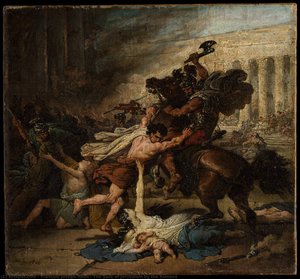
- The Sack of Jerusalem by the Romans
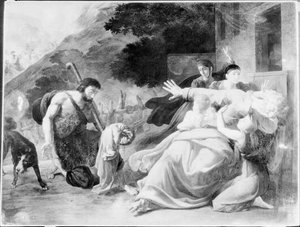
- LA ROBE ENSANGLANTE DE JOSEPH APPORTEE A JACOB
- La Prise de Troie
- Place Of Birth: Belfort France
Related Articles
Romantic Realism's Finest: 10 Masterpieces for Your Home | ArtsDot
Explore 10 defining masterpieces of Romantic Realism! Discover Courbet, Millet & Daumier's powerful paintings—capturing emotion and social realities. Find museum-quality reproductions for your home at ArtsDot.com.

Romantic Landscapes: 10 Masterpieces for Your Home | ArtsDot
Journey through 10 Romantic landscape masterpieces by Friedrich, Turner & Cole. Explore emotional art, sublime nature scenes & iconic 19th-century paintings. Find museum-quality reproductions for your home at ArtsDot.com – discover the full collection online!
Romantic Masterpieces: 10 Artworks for a Timeless Home Decor Aesthetic
Fall in love with art! Explore 10 iconic romantic paintings – from Monet & Bouguereau to Fragonard. Discover the stories behind these masterpieces and find museum-quality reproductions for your home decor at .
Bartolomeo Pinelli: Neoclassical Linearity & Roman Topography of Memory
Explore the captivating world of Bartolomeo Pinelli, a master Italian engraver renowned for his evocative Roman scenes & historical narratives. Discover his art and legacy with ArtsDot.
The Allure of Romantic Vibe in Artwork: A Historical & Psychological Exploration
Explore the captivating world of Romantic art! Discover its history, psychological depth, key artists like Friedrich & Goya, and find timeless pieces for your collection at ArtsDot.com.