 Preview
 Send
Send Share
Share
 Details

 Download
 Similars
 X-Ray
X-Ray Diaporama
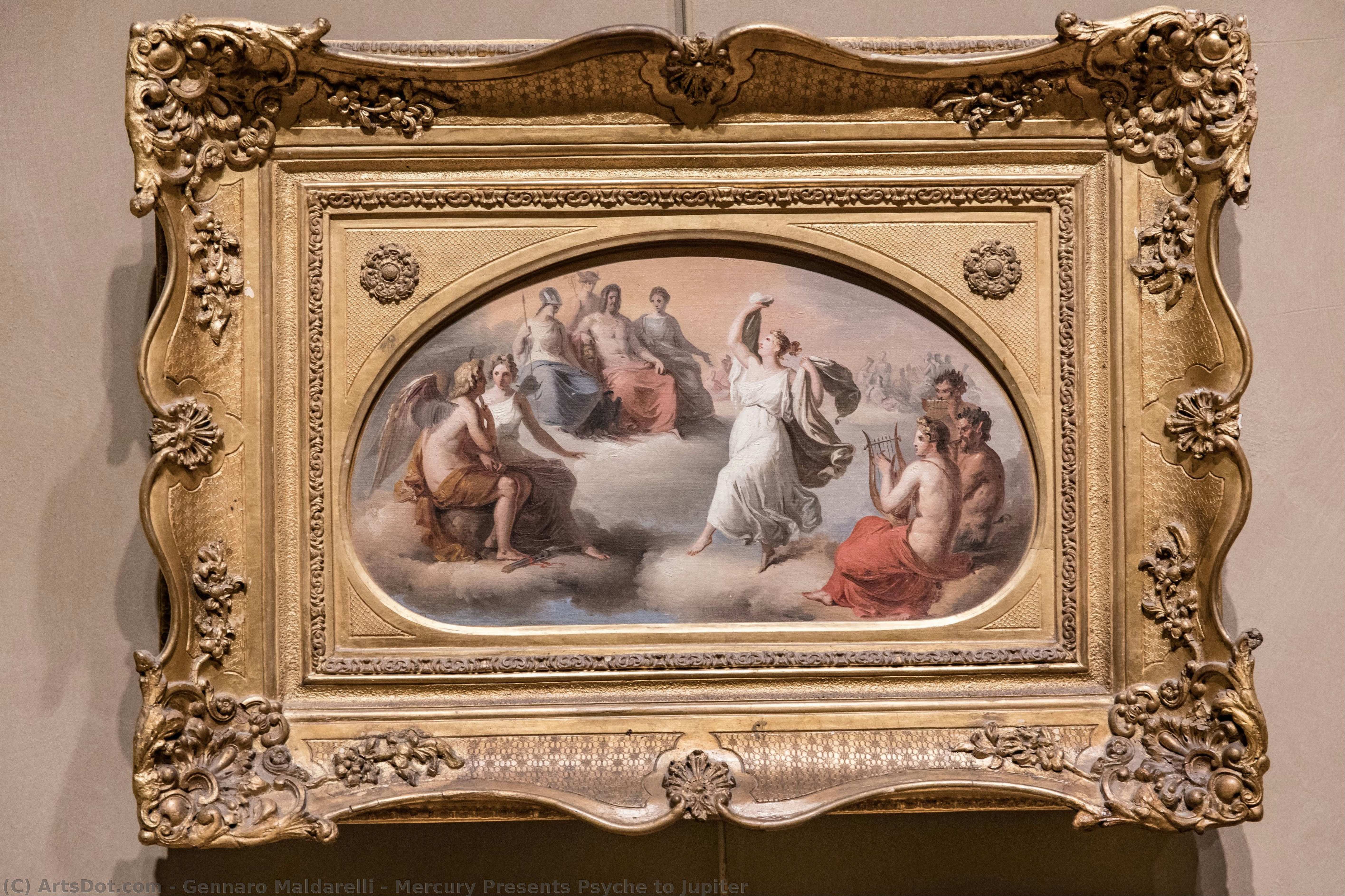
Mercury Presents Psyche to Jupiter


 Read More
Hand Made Oil Reproduction
Hand-painted oil on canvas in your size and frame, made to order by our artists. ( Buy Print Buy Image)




P118B $10

P118H $10

P118W $10

P438Z $10

P508JH $12

P508YH $12

P805H $10

P805Z $10

P919BZ $10

P919G $10

P919XJ $10

P959ZH $10

P968JZ $12

W106C $8

W218G $10

W218JH $8

W218Y $10

W307PJ $10

W316G $10

W316PJ $8

W316Y $10

W398PJ $8

W4111J $10

W500HY $15

W500JH $15

W692G $12

W849H $8

W940BG $15

W953PJ $8




Pick from our preset sizes that match the artwork's original proportions.

You may enter your own dimensions to fit a specific frame or space. If your selected size does not match the original image's proportions, we will either crop the artwork or extend the painting with additional hand-painted elements. A digital mockup will be sent for your approval before production begins.
Please note that the on-screen preview does not reflect the actual cropping or extension. Only the mockup will accurately show the final composition.
While custom sizes are available, we recommend selecting a dimension from the predefined list to preserve the original proportions.
After order, ArtsDot.com team will email client for instructions and provide a mockup preview
Worldwide Delivery () in 3/4 weeks instead of standard 5 weeks. (17 August). No compromise on quality.

Free Worldwide Express Shipping

High-Quality Linen Canvas

Full Shipping Insurance

Customs Tax Refund Guarantee

True Color Matching Guarantee

60-Day Return Policy (Defects Only)

100% Money-Back Guarantee

Bulk Discount Offer
 Glass option is only available in size under 110 CM

Mercury Presents Psyche to Jupiter
Reproduction Medium
Reproduction Size
-


Total Price
$ 263
Artwork Description
A Celestial Encounter: The Myth of Psyche and Jupiter
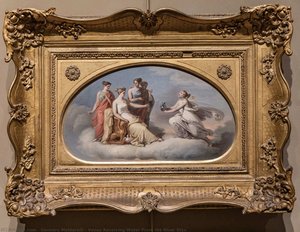
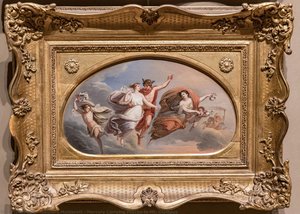
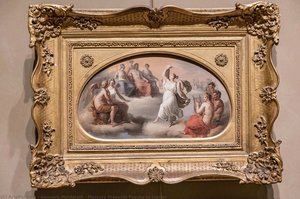
In the grand tradition of Neapolitan academic painting, Gennaro Maldarelli’s Mercury Presents Psyche to Jupiter serves as a breathtaking window into the mythological splendor of antiquity. This evocative oil on canvas captures a pivotal moment of divine intervention, where the mortal realm and the heavens collide. The composition is anchored by the delicate presence of Psyche, whose journey from human vulnerability to divine immortality is rendered with profound grace. As Mercury facilitates this celestial introduction, the viewer is transported to an ethereal outdoor setting, where the sky itself seems to pulse with the weight of destiny. The painting does not merely depict a scene; it orchestrates a drama of transformation, inviting the observer to witness the moment a soul is elevated to the company of the gods.
The artistry of Maldarelli is deeply rooted in the classical revivalism that swept through Italy during the mid-19th century. Drawing inspiration from the frescoed ceilings of Pompeii and the opulent decorations of the Royal Palace of Naples, the artist employs a technique that balances academic precision with a soft, atmospheric luminosity. The brushwork, while disciplined, allows for a fluid movement of light across the figures, particularly in the way the sunlight catches the drapery of the characters. This mastery of light and shadow—the classic chiaroscuro influence—adds a sculptural depth to the bodies of Jupiter, Venus, and Cupid, making them appear almost tangible within their heavenly landscape. For the discerning collector, this piece offers a sophisticated interplay of texture and tone that commands attention in any setting.
Symbolism and the Elegance of Classical Narrative
Beyond its visual splendor, the work is rich with the symbolic language of the 1840s, an era captivated by the romanticized struggles of the human spirit. The presence of Mercury acts as a bridge between worlds, symbolizing communication and the transition of states, while the figures of Venus and Cupid represent the eternal power of love to transcend even the most daunting trials. Every element, from the seated figures in the foreground—perhaps representing the earthly reflection of the divine union—to the angelic beings hovering above, contributes to a narrative of transcendence. The painting serves as a meditation on the idea that through trial and devotion, one may achieve a state of eternal grace.
For interior designers and connoisseurs of fine art, this reproduction offers more than just a decorative element; it provides a focal point of historical gravity and emotional depth. The composition, framed by an elegant gold aesthetic, is designed to evoke a sense of timelessness. Whether placed in a grand library, a formal dining hall, or a curated gallery space, the painting brings with it an aura of classical prestige. It is a piece that invites long periods of contemplation, sparking conversations about mythology, history, and the enduring beauty of the Italian academic tradition. Owning such a work is an opportunity to preserve a fragment of the 19th-century Neapolitan soul, bringing the majesty of Olympus into the modern home.
Related Artworks



![L’enlèvement De Psyché [the Abduction Of Psyche] — Oscar Pereira Da Silva, Academic Historicism](/media/artworks/images/thumbnails/cf/91/cf9167e0d9b94794a7daf14b76bd4566.jpg)
Artist Biography
The Echoes of Industry: A Biography of William Adnison
William Adnison (1817-1858), a name perhaps less familiar than his contemporaries in the bustling world of mid-19th century American art, nevertheless carved out a unique and profoundly evocative space for himself. Born in rural Pennsylvania, Adnison’s life was inextricably linked to the burgeoning industrial landscape of America – an observation that would become the defining characteristic of his artistic vision. Unlike many artists of his era focused on idyllic landscapes or historical narratives, Adnison sought to capture the raw, often brutal beauty of factories, mills, and the lives of those who labored within them. His work stands as a poignant testament to the social realities of a rapidly changing nation, offering a stark contrast to the romanticized depictions prevalent at the time. Adnison’s early life provided little indication of his future artistic pursuits. He apprenticed as a printer in Philadelphia, an experience that instilled in him a deep appreciation for craftsmanship and the mechanics of production – skills he would later translate into his paintings. It was during this period that he began to develop his distinctive style, characterized by meticulous detail, a muted color palette dominated by grays, browns, and ochres, and a remarkable ability to render textures with astonishing accuracy. He wasn’t interested in grand gestures or dramatic lighting; instead, he favored the subtle shifts of light and shadow within industrial interiors, revealing the inherent poetry of labor. His early influences were diverse – from the German Romantic painters who explored themes of industry and social critique, to the Dutch masters known for their meticulous depictions of everyday life. However, Adnison’s work quickly developed its own distinct voice, rooted in his unique perspective as an observer of American industrialization. Adnison's artistic journey truly began after a debilitating injury forced him to abandon printing. This enforced inactivity provided the time and impetus he needed to dedicate himself fully to painting. He initially struggled to gain recognition, often exhibiting alongside less established artists. Yet, his unwavering commitment to his subject matter – the factories of Pennsylvania – eventually garnered attention. His paintings weren’t simply depictions of industrial scenes; they were imbued with a sense of melancholy and empathy for the workers he portrayed. He meticulously rendered the faces of men and women, capturing their weariness, resilience, and quiet dignity. His most celebrated works, such as *The Mill*, *The Foundry*, and *The Cotton Factory*, became powerful symbols of the era’s social conditions. These paintings weren't celebratory; they were investigations – honest portrayals of a difficult reality. A key element of Adnison’s artistic process was his painstaking attention to detail. He often worked directly from life, sketching and studying his subjects in factories and mills for extended periods. He employed a technique known as *pointillé*, a method of applying numerous tiny dots of paint to create texture and tonal variations – a technique borrowed from Japanese prints but adapted to suit his own style. This meticulous approach resulted in paintings that possessed an almost photographic quality, capturing the intricate details of machinery, brickwork, and the workers’ clothing with remarkable precision. Furthermore, Adnison's use of light was particularly noteworthy. He avoided bright, dramatic lighting, instead favoring a diffused, atmospheric illumination that emphasized the shadows and created a sense of quiet contemplation. Despite his growing reputation, Adnison’s career was tragically cut short by illness in 1858 at the age of forty-one. His untimely death left behind a relatively small body of work – approximately eighty paintings – but one that continues to resonate with viewers today. His legacy lies not only in his technical skill and artistic vision, but also in his courageous portrayal of an often-overlooked aspect of American history. Adnison’s paintings serve as a poignant reminder of the human cost of industrial progress and offer a valuable insight into the lives of those who toiled within the factories and mills that fueled America's rise to prominence. His work remains a powerful testament to the enduring power of art to illuminate social realities and evoke empathy for the experiences of others, solidifying his place as a significant, if somewhat unsung, figure in American art history.Key Works
- The Mill (1847): Perhaps Adnison’s most famous work, this painting depicts a bustling textile mill with workers engaged in their labor. The scene is rendered with remarkable detail and a subtle sense of melancholy.
- The Foundry (1850): A powerful depiction of a blacksmith's forge, capturing the heat, noise, and intensity of the work. The figures are depicted with dignity and resilience.
- The Cotton Factory (1853): This painting offers a detailed portrayal of a cotton factory, highlighting the repetitive motions and monotonous routines of the workers.
- Portrait of a Worker (circa 1856): A series of intimate portraits capturing the faces of factory workers, revealing their weariness and quiet dignity.

gennaro maldarelli
1858 , Italy
Quick Facts
- Artistic Movement Or Style: World Goes Pop
- Artists Or Movements Influenced By This Artist: ['']
- Artists Who Influenced This Artist: ['']
- Date Of Death: 1858
- Notable Artworks: ['Various works featured in The EY Exhibition: The World Goes Pop']
Related Articles
Academic Realism's Finest: 10 Masterpieces for Art Lovers & Home Decor
Explore 10 defining Academic Realism masterpieces by Bouguereau, Gérôme & Cabanel. Discover the stories behind these iconic paintings and bring timeless art into your home with museum-quality reproductions from ArtsDot.com. Explore the full collection online!
Echoes of Olympus: Mythological Narratives in Western Art Through the Ages
Explore the captivating history of mythological narratives in Western art! From ancient Greece to modern masterpieces, discover iconic artworks & symbolism. Expert analysis and high-quality reproductions at ArtsDot.
Academic Art: Tradition, Technique & the Pursuit of Ideal Form in the 19th Century
Explore the world of Academic Art! Discover its history, key artists like Ingres & Bouguereau, defining techniques, and lasting influence on 19th-century painting. Learn about the Salon system and its legacy.
Academic Art: Tradition, Technique & the Rise of Modernism
Explore the rich history of Academic Art – its techniques, key masters like Bouguereau & Ingres, and influence on 19th-century painting. Discover this enduring tradition.

Academic Realism: Technique, History & Enduring Influence on Art
Explore the captivating world of Academic Realism! Discover key artists, techniques & its lasting impact on art history. Expert insights & high-quality reproductions at ArtsDot.