 Preview
 Send
Send Share
Share
 Details

 Download
 Similars
 X-Ray
X-Ray Diaporama
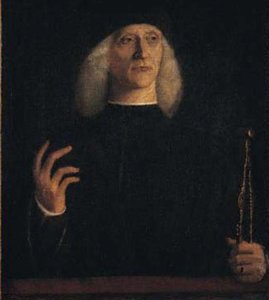
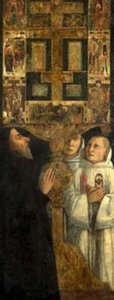
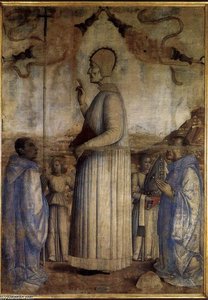
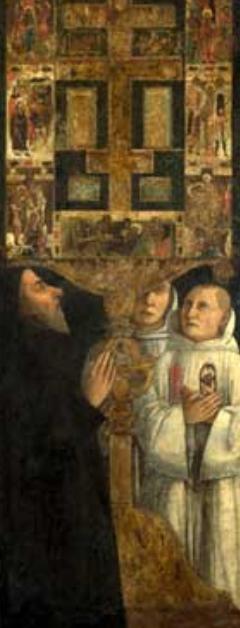
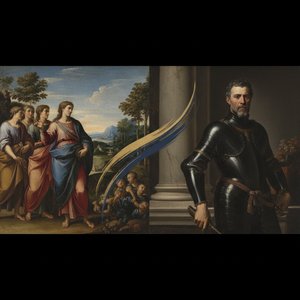
Cardinal Bessarion with the Bessarion Reliquary
 Oil On Panel
- Early Renaissance
 1472
1472- Renaissance
 102.0 x 37.0 cm
 National Gallery
 Read More
Giclée / Art Print
Museum-quality giclée or canvas print with fast production and flexible finish options. ( Buy Hand Made Painting Buy Image)




P118B $10

P118H $10

P118W $10

P438Z $10

P508JH $12

P508YH $12

P805H $10

P805Z $10

P919BZ $10

P919G $10

P919XJ $10

P959ZH $10

P968JZ $12

W106C $8

W218G $10

W218JH $8

W218Y $10

W307PJ $10

W316G $10

W316PJ $8

W316Y $10

W398PJ $8

W4111J $10

W500HY $15

W500JH $15

W692G $12

W849H $8

W940BG $15

W953PJ $8




Pick from our preset sizes that match the artwork's original proportions.

You may enter your own dimensions to fit a specific frame or space. If your selected size does not match the original image's proportions, we will either crop the artwork or extend the image with a mirrored or solid-fill edge. A digital mockup will be sent for your approval before production begins.
Please note that the on-screen preview does not reflect the actual cropping or extension. Only the mockup will accurately show the final composition.
While custom sizes are available, we recommend selecting a dimension from the predefined list to preserve the original proportions.
Worldwide Delivery () in 2 weeks instead of standard 4/5 weeks. (25 August)

Free Worldwide Express Shipping

High-Quality Linen Canvas

Full Shipping Insurance

Customs Tax Refund Guarantee

True Color Matching Guarantee

60-Day Return Policy (Defects Only)

100% Money-Back Guarantee

Bulk Discount Offer
 Glass option is only available in size under 110 CM

Cardinal Bessarion with the Bessarion Reliquary
Giclée / Art Print
Reproduction Size
-


Total Price
$ 63
Collectible Description
A Devotion Etched in Gold: Cardinal Bessarion with the Bessarion Reliquary
To stand before Gentile Bellini's Cardinal Bessarion with the Bessarion Reliquary is to step directly into the luminous, devout atmosphere of the Italian Renaissance. This masterpiece from 1472 transcends mere portraiture; it is a profound meditation on faith, cultural exchange, and enduring piety. The scene captures Cardinal Bessarion, a distinguished Greek cleric elevated to archbishop within the Orthodox Church, kneeling in an attitude of deep reverence before a sacred object—the reliquary containing fragments believed to be from the True Cross. Bellini’s handling of this narrative is nothing short of masterful, inviting the viewer into a moment suspended between earthly devotion and divine mystery.
The Tapestry of Venetian Piety and Eastern Faith
The historical context imbues the painting with layers of significance that resonate even today. The presence of the Scuola della Carità, the religious confraternity to which Bessarion dedicated this precious reliquary, speaks volumes about the intertwining lives of faith and civic duty in Renaissance Venice. This gift was not merely an act of piety; it was a poignant plea—a hope that the Western Christian world would rally to support their brethren following the devastating fall of Constantinople. Bellini thus crafts a dialogue across cultures, using the tangible gold of the reliquary to bridge East and West, making the painting a powerful artifact of geopolitical and spiritual yearning.
Mastery in Tempera and Detail
Technically, the work showcases Gentile Bellini’s exquisite skill. Executed in tempera on panel, the surface retains the delicate luminosity characteristic of early Renaissance painting. Observe the meticulous detail applied to the golden background—an ornate field teeming with smaller narrative vignettes that suggest a boundless spiritual cosmos. The figures themselves are rendered with careful attention to drapery and gesture; while the perspective remains somewhat flattened, typical of the period’s artistic conventions, the sense of layered depth is achieved through overlapping forms and the rich interplay of light on fabric. It is an exercise in controlled splendor.
Symbolism and Emotional Resonance
The emotional core of the piece lies in its palpable atmosphere of solemn contemplation. The central focus—the reliquary itself, housing fragments of Christ’s garments and the Cross—acts as a powerful magnet for devotion. Every gesture, from the monk holding the chalice to the reverent posture of Bessarion, directs the eye toward this sacred focal point. Symbolically, the painting speaks to the enduring nature of faith against the backdrop of historical upheaval. For the modern admirer, it offers an immediate connection to a time when art was not merely decoration, but a vital vehicle for theological instruction and communal identity.
Bringing Renaissance Grandeur Home
For those who wish to incorporate such profound artistic history into their own spaces, acquiring a high-quality reproduction of this work allows one to possess a piece steeped in the grandeur of the Venetian Renaissance. Imagine the subtle glow of Bellini’s palette illuminating a drawing room or chapel. It is an object that demands contemplation, inviting quiet moments of reflection and serving as a magnificent testament to human devotion and artistic genius.
Related Artworks
Artist Biography
A Venetian Renaissance Master
Gentile Bellini, born in Venice in 1429, emerged from a family deeply entrenched in the artistic heart of the city. His father, Jacopo Bellini, was a pioneering figure who embraced the relatively new medium of oil paint, and his younger brother, Giovanni, would later achieve renown as one of Venice’s most celebrated masters. Gentile's initial training unfolded within his father’s workshop, where he mastered the techniques that would define his career. One of Venice’s oldest surviving oil paintings, The Blessed Lorenzo Giustinian (1445), stands as a testament to this early skill and is now housed in the Accademia Museum. From these beginnings, Gentile quickly distinguished himself, earning recognition for his remarkable talent in portraiture and securing his position as the official painter of the Doges – the rulers of Venice. This prestigious role would profoundly shape his artistic trajectory, placing him at the center of Venetian power and society.Influences and Artistic Development
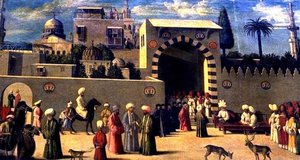
Gentile Bellini’s style was a fascinating synthesis of diverse influences. The rich traditions of the Byzantine Empire cast a long shadow over Venetian art, imbuing it with a distinctive aesthetic that resonated in Gentile's work through stylized figures and opulent color palettes. However, his artistic horizons expanded dramatically following an extraordinary journey to Constantinople in 1479. Invited by Sultan Mehmed II himself, Bellini spent time at the Ottoman court, an experience that proved pivotal in shaping his later creations. This encounter with a different culture, architecture, and way of life infused his paintings with a unique perspective. His portrait of Mehmed II, now residing in the National Gallery, London, is a striking example of this influence – a compelling depiction of power and personality informed by firsthand observation. Gentile’s compositions often feature grand scale scenes populated with numerous figures, reflecting the demands of commissions from Venice's powerful Scuole Grandi, major confraternities that played a vital role in civic life.Masterpieces and Artistic Legacy
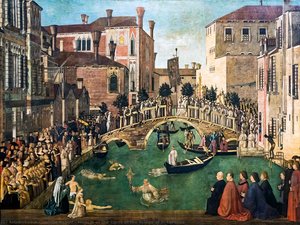
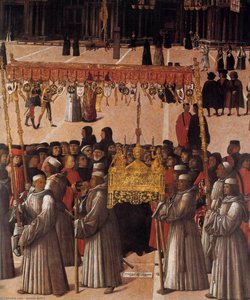
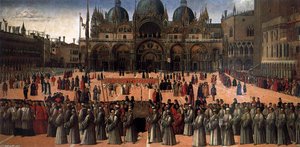
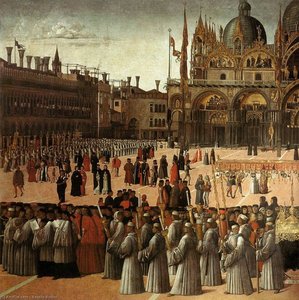
Among Gentile Bellini’s most celebrated works are two monumental paintings: The Procession of the True Cross in Piazza San Marco (1496) and The Miracle of the True Cross at the S. Lorenzo Bridge (c. 1500). The former is a breathtaking panorama of Venetian life, capturing the energy and spectacle of a religious procession with meticulous detail. It showcases his ability to portray large crowds and intricate architectural settings with remarkable precision. The Miracle of the True Cross at the S. Lorenzo Bridge is particularly noteworthy for its inclusion of self-portraits – both Gentile’s own likeness and that of his brother, Giovanni Bellini. This subtle artistic collaboration offers a fascinating glimpse into their relationship and creative dialogue. Beyond individual paintings, Gentile Bellini holds an important place in art history as one of the founders of Orientalist art—a movement characterized by depictions of Eastern cultures and settings.Historical Significance
Gentile Bellini’s legacy rests on several key achievements. His pioneering use of oil paint solidified its position as the dominant medium in Venetian painting, allowing for greater detail, luminosity, and realism. Furthermore, his exposure to Ottoman culture and subsequent incorporation of Eastern motifs into his work established him as a significant figure in the development of Orientalist art—a trend that would captivate European artists for centuries. While often overshadowed by the fame of his brother Giovanni, Gentile Bellini’s contributions are now widely recognized as essential to understanding the evolution of Western painting. He skillfully blended Venetian artistic traditions with influences from both the Byzantine Empire and Ottoman culture, creating a unique and compelling style that resonated throughout Europe. His work stands as a testament not only to his exceptional skill and talent but also to the power of cultural exchange in shaping artistic innovation.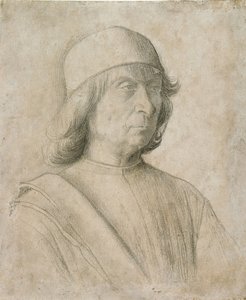
Gentile Bellini
1429 - 1507 , Italy
Quick Facts
- Artistic Movement Or Style: Renaissance
- Artists Or Movements Influenced By This Artist: ['Orientalist art']
- Artists Who Influenced This Artist:
- Jacopo Bellini
- Gentile da Fabriano
- Date Of Birth: 1429
- Date Of Death: 1507
- Full Name: Gentile Bellini
- Nationality: Italian
- Notable Artworks:
- Procession in Piazza San Marco
- Miracle of the True Cross
- Portrait of Mehmed II
- Place Of Birth: Venice, Italy
Related Articles
Vittore Carpaccio: Venetian Renaissance Narrative & the Poetics of Detail
Explore the captivating world of Vittore Carpaccio, a master storyteller of the Venetian Renaissance. Discover his intricate details, narrative cycles like 'The Legend of St. Ursula,' and unique artistic style.

Jacopo Tintoretto's Masterpieces: 25 Paintings That Define Venetian Drama | ArtsDot
Explore 25 breathtaking masterpieces by Jacopo Tintoretto, the Venetian master of drama and light. Discover the stories behind iconic Renaissance paintings & find museum-quality art reproductions to elevate your home decor on ArtsDot.com.
The Golden Light of Innovation: Exploring the Venetian Renaissance Art Movement (1430–1580)
Explore the Golden Age of Venetian art (1430–1580). Discover Giorgione, Titian & Tintoretto's techniques, the 'colorito' revolution, and lasting influence. Expert insights for collectors & enthusiasts.
Pietro Longhi's Venetian Scenes: A Study of Rococo Society & Domestic Life
Explore the captivating world of Pietro Longhi's Venetian scenes! Discover insightful analysis of his Rococo masterpieces & social commentary on 18th-century life. Learn about this 'Venetian Hogarth' and his lasting artistic legacy.
Sebastiano del Piombo: Bridging Venetian Colorism & Roman Grand Manner Portraiture
Explore the captivating art of Sebastiano del Piombo, a Renaissance master bridging Venetian colorism & Roman grandeur. Discover his iconic portraits and lasting influence on art history. Learn more at ArtsDot.