 Preview
 Send
Send Share
Share
 Details

 Download
 Similars
 X-Ray
X-Ray Diaporama
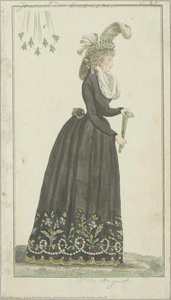
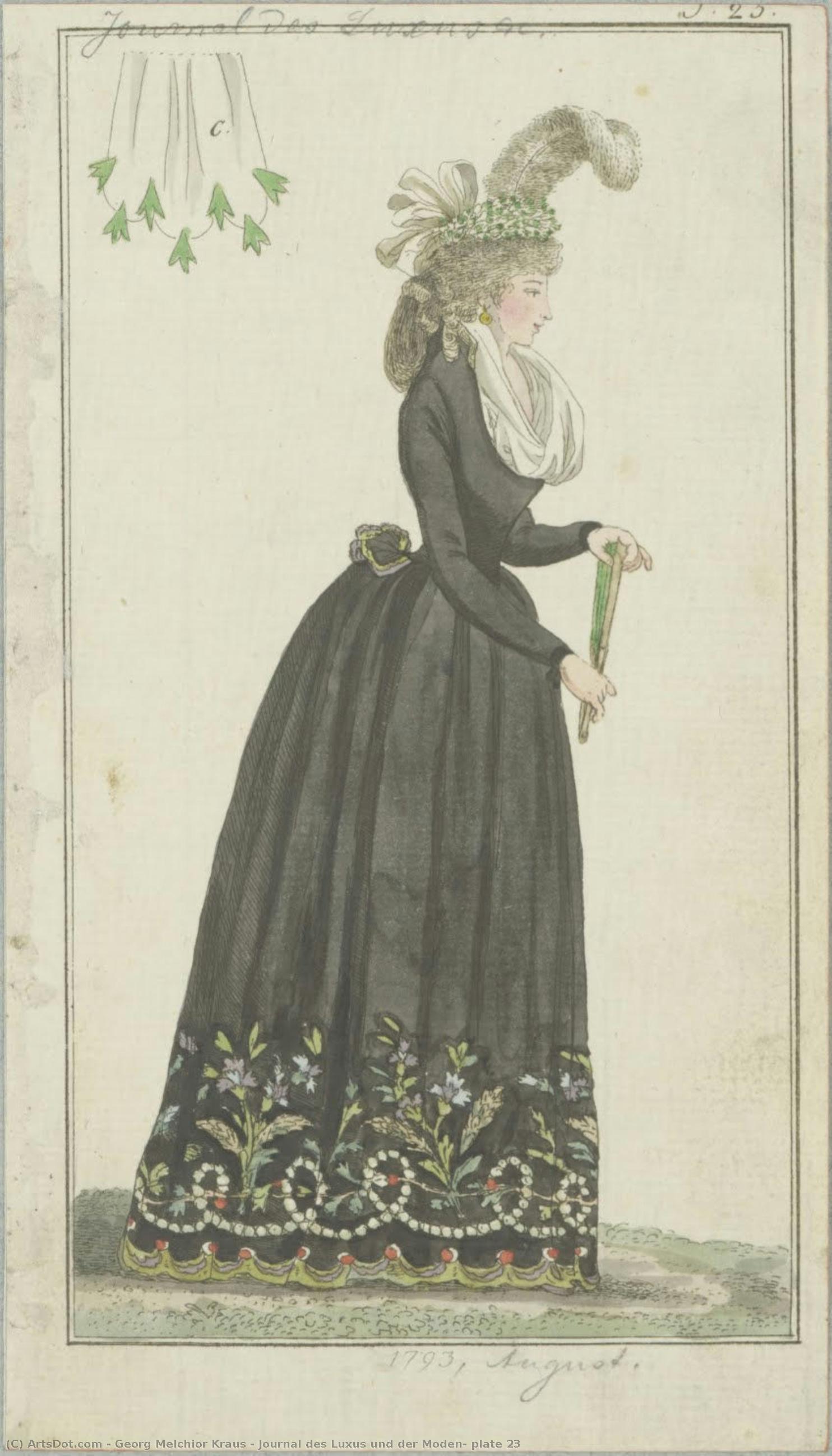
Journal des Luxus und der Moden, plate 23
 Neoclassicism
 1793
1793 19.0 x 11.0 cm
 Read More
Giclée / Art Print
Museum-quality giclée or canvas print with fast production and flexible finish options. ( Buy Hand Made Painting Buy Image)




































Pick from our preset sizes that match the artwork's original proportions.

You may enter your own dimensions to fit a specific frame or space. If your selected size does not match the original image's proportions, we will either crop the artwork or extend the image with a mirrored or solid-fill edge. A digital mockup will be sent for your approval before production begins.
Please note that the on-screen preview does not reflect the actual cropping or extension. Only the mockup will accurately show the final composition.
While custom sizes are available, we recommend selecting a dimension from the predefined list to preserve the original proportions.
Worldwide Delivery () in 2 weeks instead of standard 4/5 weeks. (29 August)

Free Worldwide Express Shipping

High-Quality Linen Canvas

Full Shipping Insurance

Customs Tax Refund Guarantee

True Color Matching Guarantee

60-Day Return Policy (Defects Only)

100% Money-Back Guarantee

Bulk Discount Offer
 Glass option is only available in size under 110 CM

Journal des Luxus und der Moden, plate 23
Giclée / Art Print
Reproduction Size
-


Total Price
$ 63
Related Artworks
Artist Biography
Georg Melchior Kraus (1737–1806): A Weimar Pioneer
Georg Melchior Kraus (1737–1806) stands as a pivotal figure in German art history, particularly recognized for his contribution to the Weimar School and his enduring friendship with Johann Wolfgang Goethe. Born in Frankfurt am Main, he emerged from humble beginnings—the sixth child of Cornelia Krauser née Paulsen and Johann Georg Krauser—who operated the “Zur Weissen Schlangen” hotel in Frankfurt’s Sandgasse. Despite facing significant hardship early in life due to the premature deaths of five siblings, Kraus possessed an unwavering determination that propelled him toward artistic excellence and intellectual engagement. His formative years were spent studying under Johann Heinrich Tischbein the Elder at the court of Frederick II of Saxe Weimar and Eisenach, absorbing the stylistic precepts of Baroque painting and honing his observational skills. This exposure proved invaluable as he embarked on a Parisian sojourn in 1762–63, immersing himself in the vibrant artistic milieu of Enlightenment France and collaborating with luminaries like Jean-Baptiste Greuze. It was during this period that Kraus cultivated an influential connection with Goethe, forging a bond that would shape both their artistic careers and intellectual dialogues for decades to come. Kraus’s artistic output spanned diverse mediums—paintings, etchings, and architectural designs—reflecting his versatility as an artist and his keen understanding of contemporary tastes. Notably, he established the Fürstliche Freie Zeichenschule Weimar (Royal Free Drawing School) in 1776 alongside Friedrich Justin Bertuch, fostering a new generation of artists committed to Neoclassical ideals. This institution became a cornerstone of Weimar’s cultural landscape and cemented Kraus's legacy as a champion of artistic innovation and educational reform. Among his most celebrated works are depictions of biblical scenes—particularly “The Annunciation”—characterized by meticulous detail and expressive dynamism, demonstrating Kraus’s mastery of chiaroscuro and compositional balance. However, it is perhaps his engravings that garnered him enduring recognition. His prints captured the spirit of Weimar society with remarkable accuracy, portraying portraits of prominent figures like Goethe and Friedrich Schiller alongside scenes from daily life—a testament to his ability to convey emotion and narrative through visual language. A particularly striking example is “Journal des Luxus und der Moden,” plate 23 (1793), showcasing Kraus’s skill in capturing the elegance and sophistication of the era. The artwork portrays a woman adorned in opulent attire, meticulously rendered with delicate etching techniques—a masterful demonstration of Kraus's technical prowess. Furthermore, his involvement in architectural projects, notably the Pulverturm and Johannistor in Jena (completed in 1792), underscores his broader engagement with shaping the visual environment of Weimar’s intellectual capital. Kraus’s artistic legacy extends beyond individual masterpieces; he profoundly influenced the development of Weimar’s artistic culture and established a tradition of scholarly painting that endured for generations. His unwavering dedication to artistic excellence, coupled with his friendship with Goethe—a relationship marked by mutual admiration and collaborative creativity—solidifies Kraus's place as one of Germany’s most important artists of the eighteenth century.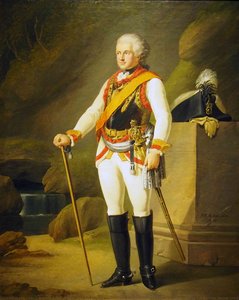
georg melchior kraus
1737 - 1806
Quick Facts
- Artistic Movement Or Style: Neoclassicism
- Artists Or Movements Influenced By This Artist: ['Goethe']
- Artists Who Influenced This Artist: ['Johann Heinrich Tischbein']
- Date Of Birth: 1737
- Full Name: Georg Melchior Kraus
- Nationality: German
- Notable Artworks:
- A Family at Table
- Journal des Luxus und der Moden, plate 23
- Place Of Birth: Frankfurt am Main, Germany
Related Articles

Georges Braque's Masterpieces: 25 Paintings That Defined Cubism & Modern Art | ArtsDot
Explore 25 iconic Georges Braque paintings that revolutionized Cubism & modern art. Discover the stories behind his masterpieces, from Fauvism to Analytical Cubism. Find museum-quality reproductions & elevate your home decor with ArtsDot.com.

Georges Seurat's Masterpieces: 25 Paintings That Defined Pointillism | ArtsDot
Explore 25 iconic Georges Seurat paintings & discover the brilliance of Pointillism. From 'La Grande Jatte' to his harbor scenes, delve into art history with ArtsDot.com. Find museum-quality reproductions for your home decor. Explore the full collection online!
Engraving's Golden Age: 10 Masterpieces That Redefined Art | ArtsDot
Journey through art history with our Top 10 Legendary Engravings! Explore masterpieces by Dürer, Rembrandt & Goya. Discover the stories behind these iconic prints and find museum-quality reproductions for your home at ArtsDot.com.
George Roux: Pioneering Symbolism & Enduring Legacy in Verne's Illustrations
Explore the captivating world of George Roux, a pioneer of French Symbolist illustration renowned for his iconic work with Jules Verne. Discover his artistic techniques, enduring legacy, and how to collect his timeless masterpieces.
Engraving: A Historical Survey of Technique, Artistic Expression & Enduring Legacy
Explore the rich history of engraving with ArtsDot. Discover techniques, iconic artists like Dürer & Callot, collecting tips, and expert guidance for preserving your art investment. Learn about intaglio printing & more!