 Preview
 Send
Send Share
Share
 Details

 Download
 Similars
 X-Ray
X-Ray Diaporama
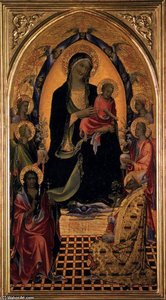
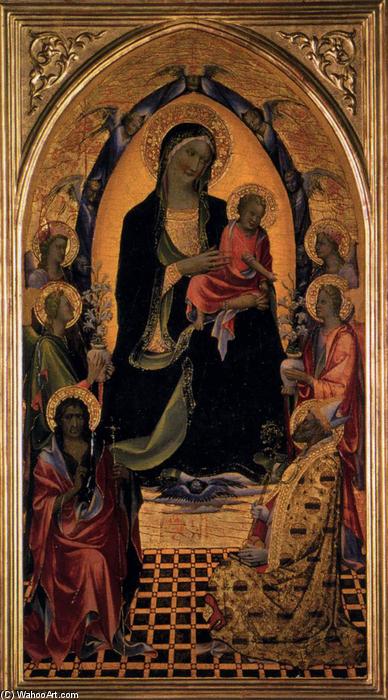
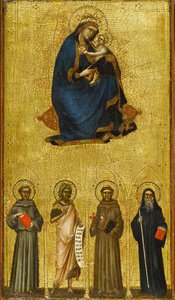
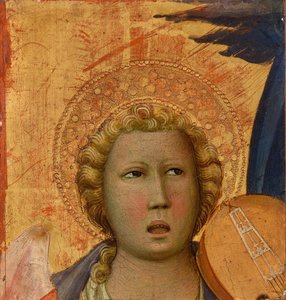
Virgin with Child and Saints


 Read More
Hand Made Oil Reproduction
Hand-painted oil on canvas in your size and frame, made to order by our artists. ( Buy Print Buy Image)




P118B $10

P118H $10

P118W $10

P438Z $10

P508JH $12

P508YH $12

P805H $10

P805Z $10

P919BZ $10

P919G $10

P919XJ $10

P959ZH $10

P968JZ $12

W106C $8

W218G $10

W218JH $8

W218Y $10

W307PJ $10

W316G $10

W316PJ $8

W316Y $10

W398PJ $8

W4111J $10

W500HY $15

W500JH $15

W692G $12

W849H $8

W940BG $15

W953PJ $8




Pick from our preset sizes that match the artwork's original proportions.

You may enter your own dimensions to fit a specific frame or space. If your selected size does not match the original image's proportions, we will either crop the artwork or extend the painting with additional hand-painted elements. A digital mockup will be sent for your approval before production begins.
Please note that the on-screen preview does not reflect the actual cropping or extension. Only the mockup will accurately show the final composition.
While custom sizes are available, we recommend selecting a dimension from the predefined list to preserve the original proportions.
After order, ArtsDot.com team will email client for instructions and provide a mockup preview
Worldwide Delivery () in 3/4 weeks instead of standard 5 weeks. (23 August). No compromise on quality.

Free Worldwide Express Shipping

High-Quality Linen Canvas

Full Shipping Insurance

Customs Tax Refund Guarantee

True Color Matching Guarantee

60-Day Return Policy (Defects Only)

100% Money-Back Guarantee

Bulk Discount Offer
 Glass option is only available in size under 110 CM

Virgin with Child and Saints
Reproduction Medium
Reproduction Size
-


Total Price
$ 263
Artwork Description
Gherardo di Jacopo Starnina: A Florentine Master of Detail
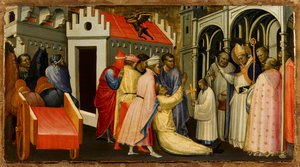
Gherardo di Jacopo Starnina (c. 1354 – 1411), affectionately known as “Starnina,” stands as a testament to the quiet brilliance that often characterizes artistic achievement—a figure whose influence on Venetian art history is substantial, yet overshadowed by the flamboyant reputations of his contemporaries like Titian and Tintoretto. He wasn’t merely a painter; he was a craftsman of emotion and precision, elevating devotional imagery with an unparalleled dedication to meticulous detail, particularly evident in his frescoes adorning the Basilica di San Frediano and Museo di Bassano. While Starnina may not dominate museum halls or command headlines, his contribution represents a crucial bridge between Gothic tradition and the burgeoning humanist ideals that defined the Renaissance, securing his place as a cornerstone of Florentine artistic heritage. Born around 1354 in Florence, Starnina’s early life remains shrouded in relative obscurity—information about his formative years is scarce. However, he received an exceptional education under Agnolo Gaddi, a sculptor and painter who championed Giotto and Simone Martini – artists who prioritized expressive emotion alongside careful observation. This foundational training instilled within him a lifelong commitment to capturing the essence of human experience through meticulous rendering, shaping his artistic vision and technique for decades to come.The Frescoes of San Frediano: A Symphony of Color and Emotion
Starnina’s magnum opus resides in the Basilica di San Frediano, where he executed a series of frescoes depicting scenes from the Life of Saint Francis of Assisi. These works exemplify Starnina's distinctive style—characterized by luminous color palettes and remarkably realistic depictions of drapery folds and facial expressions. Unlike many artists of his time who favored stylized representations, Starnina sought to convey palpable emotion through subtle nuances of gesture and posture, mirroring the humanist preoccupation with psychological realism that was gaining momentum across Europe. The frescoes are not merely aesthetically pleasing; they serve as powerful meditations on faith and compassion, reflecting Starnina’s profound spiritual convictions.A Master of Decorative Detail: Beyond Mere Representation
What truly distinguishes Starnina from his peers is his extraordinary skill in decorative embellishment—a characteristic that extends far beyond the confines of his paintings. His frescoes incorporate intricate geometric patterns and stylized floral motifs, demonstrating a mastery of visual language that anticipates later developments in Venetian art. The Museo di Bassano houses several panels featuring scenes from the Bible, showcasing Starnina’s meticulous attention to surface texture and color harmony—a deliberate effort to engage the viewer's senses and elevate the artwork beyond mere visual representation. He achieved this remarkable feat by blending Gothic influences with humanist sensibilities, resulting in a style that is both emotionally resonant and technically sophisticated.Symbolism Illuminated: Angels, Light, and Divine Grace
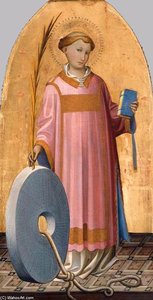
The iconography of Starnina’s paintings—particularly his depictions of saints and angels—is imbued with rich symbolic meaning. The use of golden halos signifies holiness and divine grace, while the luminous drapery folds convey spiritual radiance—a technique borrowed from Giotto and Simone Martini that underscores the importance of conveying emotion alongside visual accuracy. Furthermore, Starnina’s masterful manipulation of light creates an atmosphere of solemn contemplation, guiding the viewer's gaze toward the central figures and reinforcing their spiritual significance. These artistic choices reflect a broader humanist concern with understanding the human condition—a desire to capture not only outward appearances but also inner feelings and beliefs.Legacy: A Quiet Voice Amidst Artistic Giants
Though overshadowed by the flamboyant brilliance of Titian and Tintoretto, Gherardo di Jacopo Starnina’s legacy endures as a symbol of Florentine artistic integrity—a reminder that true artistry lies not merely in grand spectacle but also in profound emotional depth and unwavering technical precision. His frescoes continue to inspire awe and admiration, cementing his place as one of the most important figures in Venetian Renaissance art history.Related Artworks

Artist Biography
The Soul of the Venetian Renaissance: The Life of Gherardo di Jacopo Starnina
In the golden twilight of the Middle Ages, as the rigid structures of the Gothic era began to soften under the warmth of burgeoning humanism, there emerged a painter whose brush captured the very essence of spiritual devotion and intricate beauty. Gherardo di Jacopo Starnina, known to history by the affectionate moniker “Starnina,” stands as a vital bridge in the evolution of Italian art. Born in Florence around 1354, his early years were steeped in the prestigious traditions of the Florentine school. As an apprentice to the renowned Agnolo Gaddi, Starnina was immersed in a world where the emotional depth of Giotto met the delicate, lyrical elegance of Simone Martini. This formative period instilled in him a lifelong duality: a profound commitment to realistic observation paired with an unwavering devotion to the spiritual narrative.
The trajectory of Starnina’s life took a transformative turn when he migrated toward Venice around 1380. This move was not merely a change in geography but a shift in artistic atmosphere. In Venice, the light was different, more luminous and atmospheric, and the burgeoning trade brought new textures and colors to the artist's palette. It was here that Starnina truly found his voice, establishing himself as a master of detail and a painter of profound faith. His work began to reflect the unique Venetian sensibility—a blend of rich, decorative splendor and a deep, contemplative stillness that invited the viewer into a state of prayerful meditation.
Mastery of Detail and the Sacred Narrative
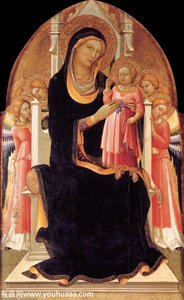
To gaze upon a Starnina masterpiece is to enter a world where every fold of fabric and every subtle gesture carries weight. He was not an artist preoccupied solely with grand, sweeping movements; rather, he found the divine in the minute. His technique was characterized by a remarkable attention to texture and nuance, a hallmark that would define the Venetian Renaissance style. In works such as Virgin with Child and Saints, one can witness his ability to weave together angelic figures and holy saints within a composition that feels both mathematically structured and emotionally fluid. He utilized color not just as a means of representation, but as a tool to convey the sanctity of his subjects.
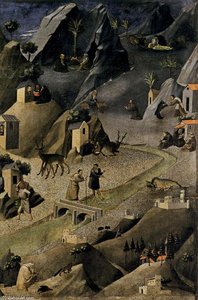
His contributions to sacred spaces remain some of his most enduring legacies. The frescoes adorning the Basilica di San Frediano and the collections within the Museo di Bassano serve as windows into a lost era of craftsmanship. Starnina’s ability to render the Thebaid—the desert landscapes inhabited by hermits—demonstrates his skill in blending landscape with spiritual struggle, using light and shadow to evoke the isolation and piety of the saints. His work on the façades and interiors of religious institutions showcased a mastery of perspective that, while still rooted in Gothic tradition, pointed toward the revolutionary advancements of the coming centuries.
A Lasting Legacy in Art History
While the names of later Venetian giants like Titian or Tintoretto often dominate the historical discourse, the significance of Starnina cannot be overstated. He provided the essential foundation upon which the later masters built their triumphs. By integrating the emotional intensity of his Florentine training with the luminous, decorative richness of Venice, he helped create a new visual language for the Renaissance. His life’s work represents a period of transition, where the symbolic rigidity of the past was gracefully yielding to a more human-centric, observant way of seeing the world.
The enduring impact of Gherardo di Jacopo Starnina can be summarized through several key artistic contributions:
- Stylistic Synthesis: The seamless blending of Florentine emotional realism with Venetian decorative splendor.
- Devotional Precision: A unique ability to use intricate detail and texture to enhance the spiritual impact of religious iconography.
- Historical Continuity: Serving as a crucial link between the late Gothic tradition and the dawn of the High Renaissance.
- Architectural Integration: The masterful execution of large-scale frescoes and mosaics that transformed sacred spaces into immersive spiritual environments.
Today, when we study the works of Starnina, we are not merely looking at relics of the 15th century; we are witnessing the birth of a new way of perceiving the divine through the lens of human beauty and meticulous artistry.
gherardo di jacopo starnina
1354 - 1411 , Italy
Quick Facts
- Artistic Movement Or Style: Venetian Renaissance
- Artists Who Influenced This Artist:
- Antonio Canova
- Jacopo Bassano
- Date Of Birth: Florence, Italy (1354)
- Date Of Death: 1411
- Full Name: Gherardo di Jacopo Starnina
- Nationality: Italian
- Notable Artworks:
- Thebaid (detail)
- Virgin with Child and Saints
- Place Of Birth: Florence
Related Articles

The Fresco as Family Legacy: Preserving Heritage Through Wall Art
Explore the rich history & enduring legacy of fresco painting. Discover how to preserve family heritage through stunning wall art. Expert insights & restoration guidance.

The Enduring Legacy of Fresco: Technique, History & Artistic Expression Across Cultures
Explore the rich history & enduring legacy of fresco painting! Discover ancient techniques, Giotto's masterpieces, and modern applications. Expert insights for art lovers & professionals.

The Enduring Legacy of Fresco Painting: Techniques, History & Contemporary Relevance
Explore the rich history & enduring artistry of fresco painting – from Giotto to Michelangelo! Discover techniques, conservation efforts, & modern applications. Learn how ArtsDot brings this timeless art form to your home.

Art That Lives With You: The Emotional Power of a Custom Interior Fresco
Discover the emotional power & timeless beauty of custom interior frescoes. Explore history, design tips & expert guidance from – creating lasting legacies.
The Enduring Legacy of Fresco: Technique, History & Artistic Expression
Explore the rich history & enduring artistry of fresco painting. Discover techniques from Giotto to Michelangelo, conservation efforts, & modern applications. Learn how ArtsDot brings this timeless art form to your home.