 Preview
 Send
Send Share
Share
 Details

 Download
 Similars
 X-Ray
X-Ray Diaporama
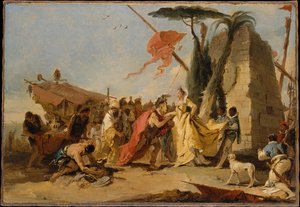
The Banquet of Cleopatra
 Oil On Canvas
- WallArt
- Rococo
 1744
1744- Early Modern
 250.0 x 357.0 cm
 National Gallery of Victoria
 Read More
Hand Made Oil Reproduction
Hand-painted oil on canvas in your size and frame, made to order by our artists. ( Buy Print Buy Image)




P118B $10

P118H $10

P118W $10

P438Z $10

P508JH $12

P508YH $12

P805H $10

P805Z $10

P919BZ $10

P919G $10

P919XJ $10

P959ZH $10

P968JZ $12

W106C $8

W218G $10

W218JH $8

W218Y $10

W307PJ $10

W316G $10

W316PJ $8

W316Y $10

W398PJ $8

W4111J $10

W500HY $15

W500JH $15

W692G $12

W849H $8

W940BG $15

W953PJ $8




Pick from our preset sizes that match the artwork's original proportions.

You may enter your own dimensions to fit a specific frame or space. If your selected size does not match the original image's proportions, we will either crop the artwork or extend the painting with additional hand-painted elements. A digital mockup will be sent for your approval before production begins.
Please note that the on-screen preview does not reflect the actual cropping or extension. Only the mockup will accurately show the final composition.
While custom sizes are available, we recommend selecting a dimension from the predefined list to preserve the original proportions.
After order, ArtsDot.com team will email client for instructions and provide a mockup preview
Worldwide Delivery () in 3/4 weeks instead of standard 5 weeks. (3 September). No compromise on quality.

Free Worldwide Express Shipping

High-Quality Linen Canvas

Full Shipping Insurance

Customs Tax Refund Guarantee

True Color Matching Guarantee

60-Day Return Policy (Defects Only)

100% Money-Back Guarantee

Bulk Discount Offer
 Glass option is only available in size under 110 CM

The Banquet of Cleopatra
Reproduction Medium
Reproduction Size
-


Total Price
$ 263
A Grand Spectacle of Excess and Elegance
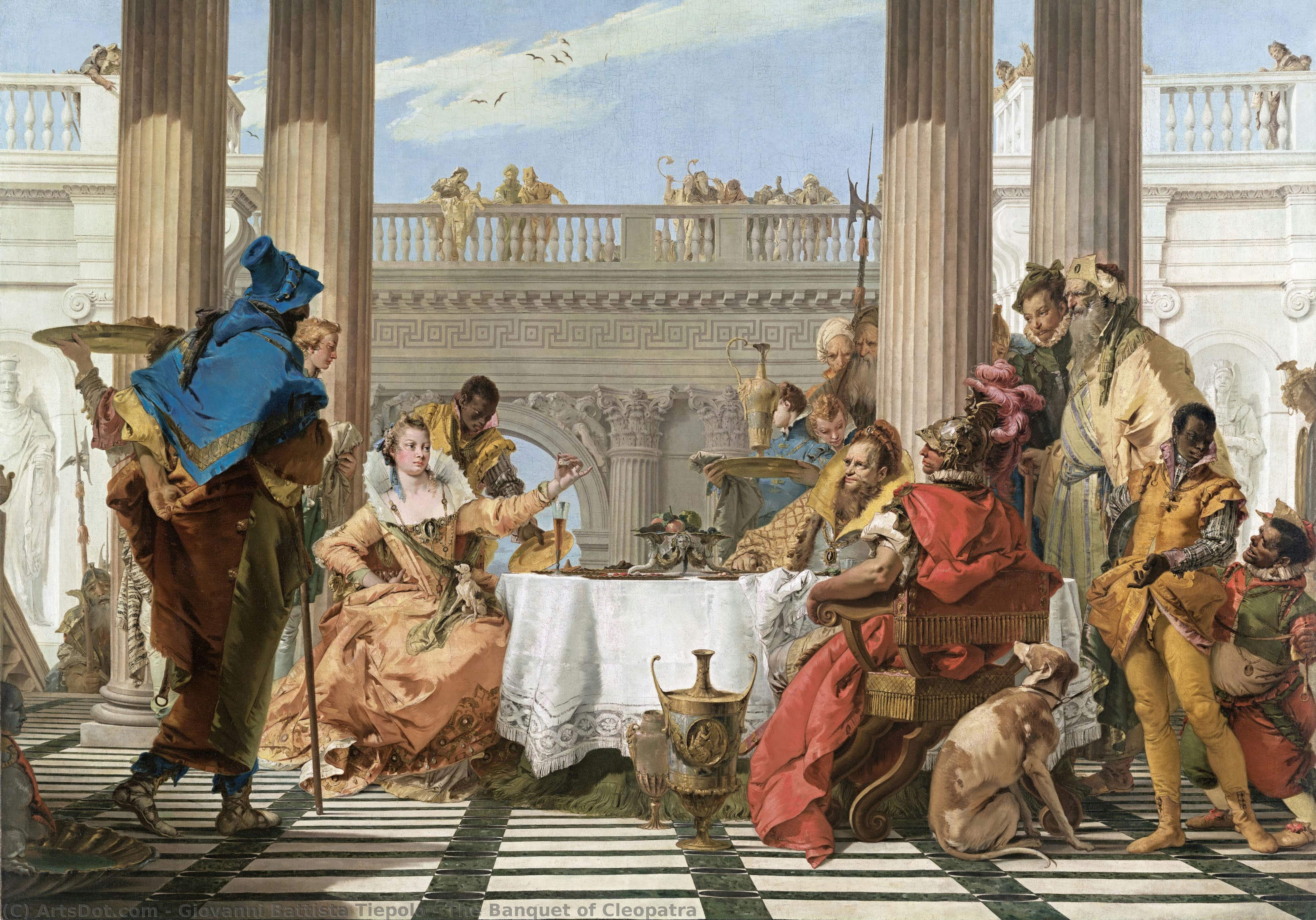
In the luminous theater of the eighteenth century, few moments capture the intoxicating blend of drama and decadence quite like Giambattista Tiepolo’s The Banquet of Cleopatra. This monumental oil on canvas is not merely a depiction of a meal; it is a staged climax of historical legend, where the boundaries between power, romance, and reckless extravagance dissolve as effortlessly as a pearl in vinegar. As the eye wanders across the vast composition, one is immediately swept into a world of Rococo splendor, where the air seems thick with the scent of fine wine and the palpable tension of a high-stakes wager. Tiepolo, the undisputed architect of Venetian light, masterfully orchestrates a scene that feels both intimate in its emotional stakes and infinite in its theatrical scale.
The narrative core of the painting rests upon a legendary contest of wits and wealth between the Egyptian Queen Cleopatra and the Roman General Mark Antony. Drawing from the chronicles of Pliny the Elder, Tiepolo captures the precise heartbeat of victory. We witness Cleopatra at her most defiant and breathtaking; having wagered that she could outspend even the most legendary Roman excesses, she performs her ultimate feat of bravado. With a grace that belies the destruction of fortune, she removes a priceless pearl from her earring to dissolve it in a goblet of vinegar. It is a gesture of profound contempt for material wealth, a symbolic triumph that leaves Antony—clad in striking, authoritative reds—recoiling in a mixture of shock and burgeoning fascination.
The Mastery of Venetian Light and Rococo Motion
Technically, the work serves as a masterclass in the Venetian school’s ability to manipulate atmosphere. Tiepolo employs a palette that breathes with life, utilizing brilliant whites, deep crimsons, and shimmering golds to guide the viewer's gaze through the crowded banquet hall. The technique is characterized by a fluid, painterly touch that lends a sense of movement to the entire assembly. Notice how the light does not merely illuminate the figures but seems to dance upon the surfaces of fine silks, polished metals, and the crystalline clarity of the glassware. This interplay of light and shadow creates a rhythmic energy, pulling the observer into the lively conversation and the suspenseful gazes of the onlookers surrounding the central protagonists.
For the discerning collector or interior designer, this piece offers more than just historical interest; it provides a profound emotional anchor for a sophisticated space. The composition possesses an inherent architectural grandeur, making it an ideal centerpiece for large-scale installations where a sense of "history and legend" is desired. The painting’s ability to evoke both the opulence of the East and the structured strength of the West allows it to harmonize with diverse decor styles, from classical European estates to contemporary luxury settings. To possess a reproduction of such a masterpiece is to invite a conversation about the enduring power of human passion and the breathtaking beauty found in moments of absolute, unbridled extravagance.
Related Artworks
Artist Biography
Giambattista Tiepolo: The Architect of Venetian Light
Giovanni Battista Tiepolo (1696 – 1770) stands as a titan amongst the painters of his era, an undisputed master of Rococo and arguably the most influential fresco artist of the eighteenth century. Born in Venice, Italy—a city steeped in artistic tradition—Tiepolo ascended to unparalleled fame through his breathtaking canvases and monumental murals that transformed churches and palaces into immersive experiences of color, drama, and illusionistic grandeur. His legacy continues to inspire artists today, cementing his place as one of the foremost figures in Venetian art history.- Early Life & Training: Tiepolo’s artistic journey began under the tutelage of Giovanni Antonio Pellegrini, a respected Venetian painter who instilled in him a foundational understanding of disegno—the Italian term for drawing and design—a cornerstone of Baroque aesthetics. Recognizing his prodigious talent, Pellegrini encouraged Tiepolo to pursue studies at Bolognese academies, where he honed his skills alongside artists like Francesco Bartolomeo Rastrelli and Antonio Canaletto, absorbing influences from both Baroque grandeur and emerging Rococo elegance.
- The Venetian Workshop & Artistic Breakthrough: Returning to Venice in 1726, Tiepolo established a prolific workshop that quickly became synonymous with artistic excellence. He embraced the stylistic precepts of Rococo—characterized by delicate ornamentation, pastel hues, and asymmetrical compositions—yet retained a core commitment to classical principles of proportion and perspective. This harmonious blend resulted in works that captivated audiences and garnered critical acclaim, notably his frescoes adorning Palazzo Labia and Ca’ Rezzonico.
- Royal Patronage & Grand Commissions: Tiepolo's artistic reputation swiftly attracted the attention of European monarchs, securing him lucrative commissions from kings and princes across Italy, Spain, and Prussia. His monumental frescoes in Schönbrunn Palace near Vienna and Sanssouci Palace in Potsdam exemplify his mastery of scale and theatrical presentation—transforming spaces into opulent spectacles that celebrated royal power and artistic innovation.
- Technique & Innovation: Tiepolo’s distinctive technique involved meticulous preparation, utilizing grisaille underdrawings to establish precise spatial relationships before applying layers of vibrant color. He pioneered innovative methods of pigment mixing and glazing—creating luminous surfaces that seemed to emanate light itself—a hallmark of his unparalleled artistic vision. His frescoes are renowned for their masterful use of chiaroscuro—the interplay between light and shadow—generating a palpable sense of depth and dynamism.
- Legacy & Influence: Tiepolo’s influence extended far beyond his lifetime, shaping the aesthetic sensibilities of subsequent generations of artists. His emphasis on illusionistic painting profoundly impacted Baroque and Rococo styles, establishing him as an undisputed champion of theatrical grandeur and visual splendor. Today, Tiepolo's works continue to inspire awe and admiration, serving as enduring monuments to Venetian artistic genius.
Notable Works & Artistic Achievements
- Assumption of Mary at San Giorgio Maggiore: Considered Tiepolo’s masterpiece, this monumental fresco exemplifies his unparalleled skill in creating immersive environments and conveying profound spiritual emotion. Its soaring ceiling depicts the Virgin Mary ascending into heaven amidst a celestial procession—a breathtaking spectacle of color and movement that remains unsurpassed.
- The Triumph of Saint Peter: Located in St. Peter’s Basilica, Rome, this fresco commemorates the papal coronation ceremony—a grand celebration of papal authority rendered with meticulous detail and luminous vibrancy.
- Palazzo Labia Frescoes: Tiepolo's frescoes within Palazzo Labia showcase his mastery of illusionistic painting—creating a captivating panorama of Venetian life that transports viewers back to the eighteenth century.
Connections & Artistic Influences
Tiepolo’s artistic development was profoundly shaped by the prevailing stylistic currents of his time. He absorbed influences from Caravaggio’s dramatic chiaroscuro and Bernini’s sculptural virtuosity—embracing Baroque grandeur while simultaneously exploring the delicate aesthetic principles of Rococo. Furthermore, he collaborated closely with Antonio Canaletto, whose meticulous cityscape paintings served as inspiration for Tiepolo's own depictions of Venetian urban landscapes.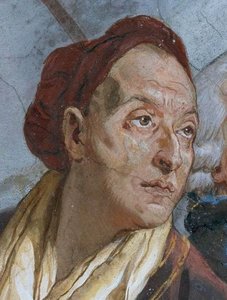
giambattista tiepolo
1696 - 1770 , Italy
Quick Facts
- Artistic Movement Or Style: Rococo
- Artists Or Movements Influenced By This Artist: ['Baroque']
- Artists Who Influenced This Artist: ['Nicolas Frémiet']
- Date Of Birth: Venice, Italy (1696)
- Date Of Death: Madrid, Spain (1770)
- Full Name: Giovanni Battista Tiepolo
- Nationality: Italian
- Notable Artworks:
- Assumption Tiepolo
- Young Man with Bow and large Quiver
- Place Of Birth: Venice
Related Articles
Giambattista Tiepolo: A Rococo Master's Legacy of Light & Illusion
Explore the captivating world of Giambattista Tiepolo, master of Rococo art. Discover his innovative techniques, iconic frescoes, and lasting influence on Italian painting. A guide for discerning collectors.

Rococo's Radiant Legacy: 10 Masterpieces for Your Home |
Indulge in the elegance of Rococo! Explore 10 masterpieces by Fragonard, Boucher & Watteau. Discover the stories behind these iconic paintings and bring timeless art to your home with museum-quality reproductions from .

The Rococo Aesthetic: Opulence, Rebellion & the Pursuit of Pleasure in 18th-Century Art
Explore the opulent world of Rococo art! Discover its origins, key artists like Watteau & Boucher, and lasting influence on design. Expert insights for collectors & enthusiasts.
18th Century Masters: 10 Artworks That Define an Era | ArtsDot
Journey through 18th century art! Explore 10 iconic paintings – from Rococo elegance to Neoclassical grandeur. Discover Fragonard, David & more. Find museum-quality reproductions and elevate your home decor on ArtsDot.com.

The Enduring Legacy of Oil on Canvas: Technique, History & Aesthetic Impact
Explore the rich history & techniques of oil painting – from Renaissance masters to Impressionism. Discover pigments, layering methods, and why this timeless medium endures. Expert insights for artists & art enthusiasts.