 Preview
 Send
Send Share
Share
 Details

 Download
 Similars
 X-Ray
X-Ray Diaporama
REBECCA AU PUITS


 Read More
Giclée / Art Print
Museum-quality giclée or canvas print with fast production and flexible finish options. ( Buy Hand Made Painting Buy Image)




P118B $10

P118H $10

P118W $10

P438Z $10

P508JH $12

P508YH $12

P805H $10

P805Z $10

P919BZ $10

P919G $10

P919XJ $10

P959ZH $10

P968JZ $12

W106C $8

W218G $10

W218JH $8

W218Y $10

W307PJ $10

W316G $10

W316PJ $8

W316Y $10

W398PJ $8

W4111J $10

W500HY $15

W500JH $15

W692G $12

W849H $8

W940BG $15

W953PJ $8




Pick from our preset sizes that match the artwork's original proportions.

You may enter your own dimensions to fit a specific frame or space. If your selected size does not match the original image's proportions, we will either crop the artwork or extend the image with a mirrored or solid-fill edge. A digital mockup will be sent for your approval before production begins.
Please note that the on-screen preview does not reflect the actual cropping or extension. Only the mockup will accurately show the final composition.
While custom sizes are available, we recommend selecting a dimension from the predefined list to preserve the original proportions.
Worldwide Delivery () in 2 weeks instead of standard 4/5 weeks. (24 August)

Free Worldwide Express Shipping

High-Quality Linen Canvas

Full Shipping Insurance

Customs Tax Refund Guarantee

True Color Matching Guarantee

60-Day Return Policy (Defects Only)

100% Money-Back Guarantee

Bulk Discount Offer
 Glass option is only available in size under 110 CM

REBECCA AU PUITS
Giclée / Art Print
Reproduction Size
-


Total Price
$ 63
Collectible Description
A Divine Encounter in Venetian Gold
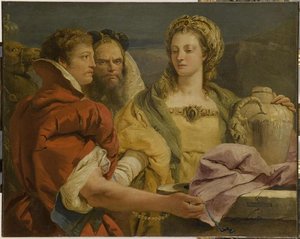
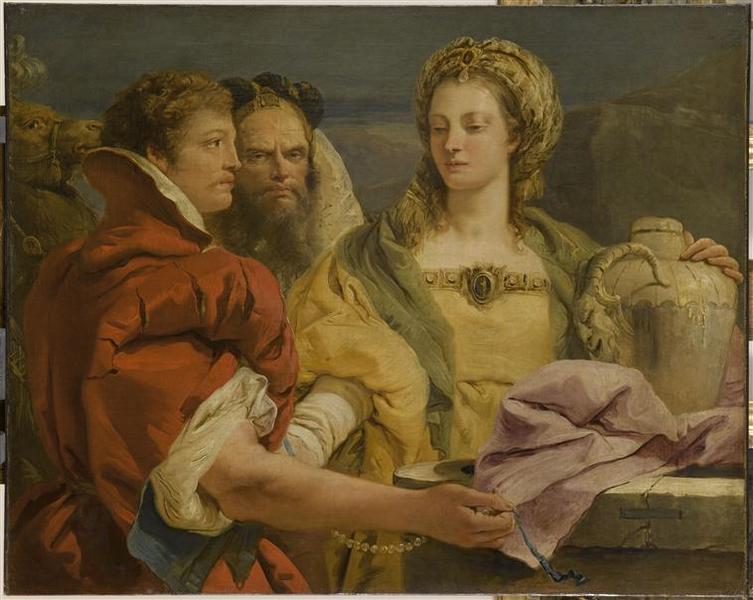
In the luminous heart of the eighteenth century, amidst the decadent splendor of the Rococo era, Giandomenico Tiepolo captured a moment of profound destiny in his masterpiece, Rebecca au Puits. This captivating tableau, currently housed within the hallowed halls of the Louvre Museum, serves as a breathtaking testament to the zenith of Venetian artistic expression. The scene unfolds with a theatrical grace, transporting the viewer to an arid, sun-drenched landscape where the biblical narrative of Genesis 24 breathes with new life. As we gaze upon the encounter between Rebecca and Isaac, we are not merely observing a historical or religious event; we are witnesses to a pivotal moment of recognition and divine providence that feels both monumental and intimately human.
The composition is masterfully orchestrated to guide the soul through its narrative arc. Positioned prominently on the right, Rebecca stands as a figure of grace, her presence anchored by the large amphora at her side—a vessel that serves as a powerful symbol of life’s sustenance and purity. Facing her, Isaac occupies the foreground with a sense of quiet anticipation, while the subtle gesture of Eliezer directs our eyes toward this fateful meeting. The arrangement follows a delicate triangular structure, a classical technique that provides a sense of stability and balance, ensuring that the viewer's gaze remains locked within the emotional orbit of the central figures.
The Radiance of the Rococo Technique
To behold Rebecca au Puits is to experience the masterful application of the Venetian tradition. Heavily influenced by the legendary frescoes of his father, Giovanni Battista Tiepolo, Giandomenico employs an oil on canvas technique that prioritizes a luminous color palette. The artwork is bathed in warm, opulent hues—rich reds, shimmering golds, and deep browns—which evoke the heat of the midday sun and the richness of the era's aesthetic. These warm tones are artfully contrasted against the cooler blues and soft greens of the distant, hazy landscape, creating a sense of atmospheric perspective that lends an extraordinary depth to the canvas.
The texture of the piece is equally evocative; visible brushstrokes lend a palpable materiality to the scene, from the heavy, rhythmic folds of the drapery to the rugged, weathered surfaces of the rocky terrain. The lighting is soft and diffused, as if filtered through a gentle Mediterranean haze, casting subtle shadows that define the volume of the figures and illuminate their expressions of curiosity and wonder. For the discerning collector or interior designer, this interplay of light and shadow offers a sophisticated visual rhythm that can breathe life and classical elegance into any curated space.
A Timeless Legacy for the Modern Collector
Beyond its technical brilliance, Rebecca au Puits resonates through its profound emotional impact. It captures the very essence of anticipation—the breathless moment before a life-changing union. This sense of "divine encounter" makes the painting more than just a piece of history; it is an invitation to contemplate themes of destiny, purity, and the beauty of unexpected connections. The artwork embodies the spirit of the reign of Louis XV, reflecting an age of elegance and refined taste that continues to inspire awe centuries later.
For those seeking to adorn their surroundings with a piece of profound cultural significance, a high-quality reproduction of this Tiepolo masterpiece offers an unparalleled opportunity. Whether placed in a grand salon or a quiet study, the painting’s ability to command attention through its vibrant colors and narrative depth makes it a centerpiece of enduring value. It is an investment in beauty, a tribute to the Venetian legacy, and a window into a world where every brushstroke tells a story of grace and glory.
Related Artworks

Artist Biography
The Venetian Legacy of Giandomenico Tiepolo
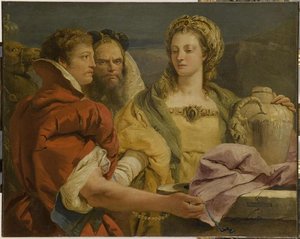
In the luminous heart of eighteenth-century Venice, a period defined by the decadent splendor of the Rococo, Giandomenico Tiepolo emerged as a master of both grand spectacle and intimate human drama. Born in 1727, his life was inextricably woven into the fabric of one of art history's most formidable dynasties. As the son of the legendary Giovanni Battista Tiepolo, Giandomenico did not merely inherit a name; he inherited a visual language of light, movement, and theatricality. While much of his early career was spent in the shadow of his father’s monumental frescoes, Giandomenico possessed a singular creative spirit that allowed him to transcend mere imitation, eventually carving out a niche that blended the epic scale of his lineage with a poignant, often satirical, observation of Venetian life.
The formative years of Tiepolo’s development were characterized by a profound apprenticeship within the very workshops that decorated the palaces of Europe. Working alongside his father on ambitious projects, such as the breathtaking frescoes in Würzburg, Giandomenico mastered the technical complexities of large-scale composition and the innovative "oil sketch" technique. This method, which allowed for a more fluid and spontaneous capture of emotion, became a cornerstone of his approach. Through these collaborations, he learned to manipulate light to create depth and drama, yet he also began to develop an interest in much smaller, more delicate subjects that departed from the heroic myths favored by the previous generation.
A Mastery of Movement and Character
As his artistic identity matured, Giandomenico’s work began to exhibit a fascinating duality. On one hand, he maintained the grand tradition of Venetian decorative art, contributing significantly to opulent interiors like those found in Vicenza’s Villa Valmarana. On the other hand, he turned his gaze toward the streets and theaters of Venice, finding inspiration in the Commedia dell'arte. It is within this realm that his most enduring and evocative imagery resides—specifically his celebrated series featuring Punchinello. Through these characters, Tiepolo moved away from the divine and the mythological to explore the whimsical, the grotesque, and the deeply human.
His technical prowess was not limited to the brush; he was also a gifted etcher, using the medium to explore fine lines and atmospheric textures. This versatility allowed him to capture a wide spectrum of themes:
- Religious Devotion: Works such as The Agony in the Garden demonstrate his ability to handle profound spiritual tension with classical grace.
- Architectural Fantasies: His depictions of imaginary structures, like the View of the Gothic Pavilion, showcase a mastery of perspective and a romanticized vision of architectural grandeur.
- Social Satire: Through his etchings, he captured the fleeting, often melancholic essence of Venetian society, using masks and puppets to mirror the complexities of human identity.
Historical Significance and Enduring Spirit
The historical significance of Giandomenico Tiepolo lies in his role as a bridge between the soaring heights of the Baroque-Rococo era and the more introspective, observational styles that would follow. While he carried the torch of his father's monumentalism, he also anticipated the shift toward a more psychological and social realism. His ability to oscillate between the epic scale of a palace fresco and the intimate wit of a character study makes his oeuvre a unique window into the soul of late eighteenth-century Venice.
Ultimately, Tiepolo’s legacy is one of profound adaptability and emotional depth. He did not simply replicate the glory of the past; he reinterpreted it through a lens of contemporary observation. Whether through the sweeping narratives of his early training or the biting, beautiful etchings of his later years, Giandomenico Tiepolo remains a vital figure whose work continues to captivate with its blend of theatrical magic and tender humanity.
Giandomenico Tiepolo
1727 - 1804
Quick Facts
- Artistic Movement Or Style: Rococo
- Artists Or Movements Influenced By This Artist: ['Venetian Baroque']
- Artists Who Influenced This Artist: ['Giovanni Battista Tiepolo']
- Date Of Birth: 1727
- Date Of Death: 1804
- Full Name: Giandomenico Tiepolo
- Nationality: Italian
- Notable Artworks:
- The Agony in the Garden
- Untitled (AQR3XQ)
- St. Ambrosius Addressing St. Augustine
- Place Of Birth: Venice, Italy
Related Articles

Jacopo Tintoretto's Masterpieces: 25 Paintings That Define Venetian Drama | ArtsDot
Explore 25 breathtaking masterpieces by Jacopo Tintoretto, the Venetian master of drama and light. Discover the stories behind iconic Renaissance paintings & find museum-quality art reproductions to elevate your home decor on ArtsDot.com.

Rococo's Radiant Legacy: 10 Masterpieces for Your Home |
Indulge in the elegance of Rococo! Explore 10 masterpieces by Fragonard, Boucher & Watteau. Discover the stories behind these iconic paintings and bring timeless art to your home with museum-quality reproductions from .
Giambattista Tiepolo: A Rococo Master's Legacy of Light & Illusion
Explore the captivating world of Giambattista Tiepolo, master of Rococo art. Discover his innovative techniques, iconic frescoes, and lasting influence on Italian painting. A guide for discerning collectors.
Hermitage Masterpieces: 25 Art Treasures to Inspire Your Home Decor
Journey through the Hermitage Museum's 25 greatest artworks! Explore masterpieces by Rembrandt, Leonardo da Vinci & Vermeer. Find museum-quality art reproductions and curated decor ideas to bring timeless beauty home. Discover all masterpieces on ArtsDot.com.
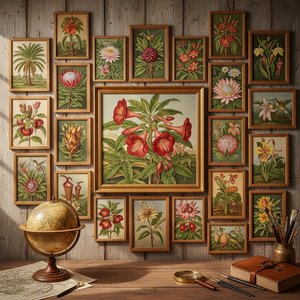
Marianne North's Masterpieces: 25 Botanical Paintings That Bloom With Adventure | ArtsDot
Journey through the vibrant world of Marianne North’s botanical paintings! Explore 25 iconic artworks from this Victorian artist, celebrating exotic flora & travel. Find museum-quality reproductions and curated decor ideas at ArtsDot.com.