 Preview
 Send
Send Share
Share
 Details

 Download
 Similars
 X-Ray
X-Ray Diaporama
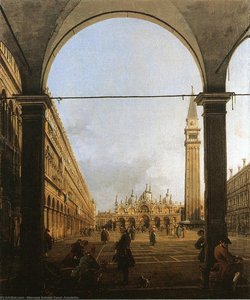
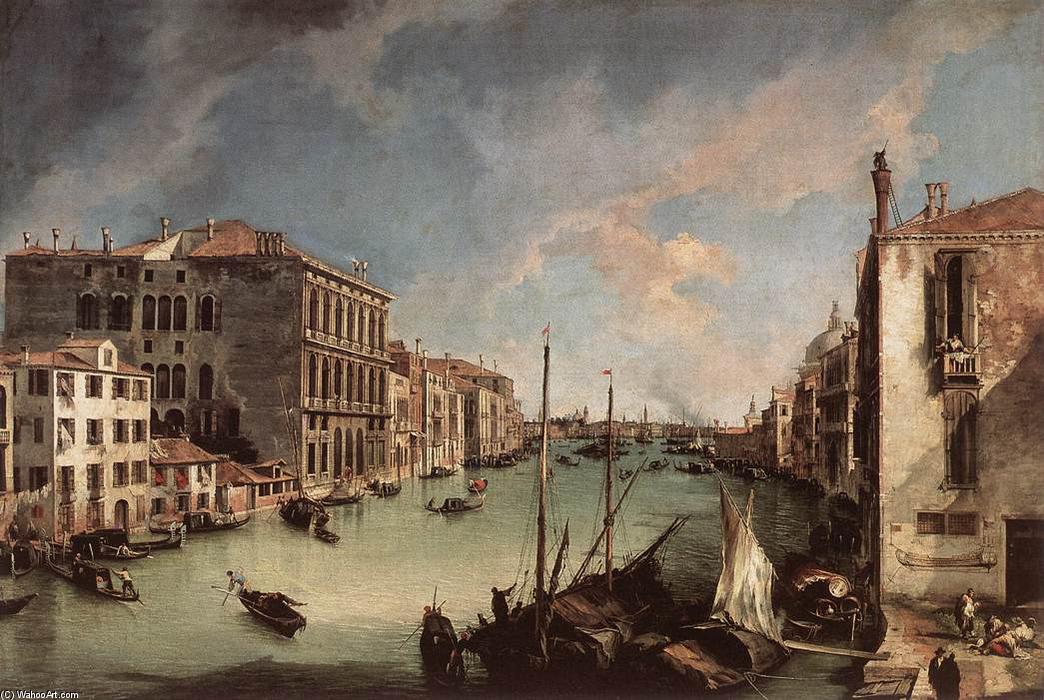
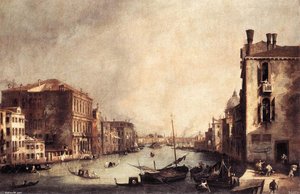
Grand Canal, Looking East from the Campo San Vio
 Acrylic On Canvas
- WallArt
- Baroque Landscape
 1723
1723 140.0 x 204.0 cm
 Museo Thyssen-Bornemisza
 Read More
Hand Made Oil Reproduction
Hand-painted oil on canvas in your size and frame, made to order by our artists. ( Buy Print Buy Image)




P118B $10

P118H $10

P118W $10

P438Z $10

P508JH $12

P508YH $12

P805H $10

P805Z $10

P919BZ $10

P919G $10

P919XJ $10

P959ZH $10

P968JZ $12

W106C $8

W218G $10

W218JH $8

W218Y $10

W307PJ $10

W316G $10

W316PJ $8

W316Y $10

W398PJ $8

W4111J $10

W500HY $15

W500JH $15

W692G $12

W849H $8

W940BG $15

W953PJ $8




Pick from our preset sizes that match the artwork's original proportions.

You may enter your own dimensions to fit a specific frame or space. If your selected size does not match the original image's proportions, we will either crop the artwork or extend the painting with additional hand-painted elements. A digital mockup will be sent for your approval before production begins.
Please note that the on-screen preview does not reflect the actual cropping or extension. Only the mockup will accurately show the final composition.
While custom sizes are available, we recommend selecting a dimension from the predefined list to preserve the original proportions.
After order, ArtsDot.com team will email client for instructions and provide a mockup preview
Worldwide Delivery () in 3/4 weeks instead of standard 5 weeks. (16 August). No compromise on quality.

Free Worldwide Express Shipping

High-Quality Linen Canvas

Full Shipping Insurance

Customs Tax Refund Guarantee

True Color Matching Guarantee

60-Day Return Policy (Defects Only)

100% Money-Back Guarantee

Bulk Discount Offer
 Glass option is only available in size under 110 CM

Grand Canal, Looking East from the Campo San Vio
Reproduction Medium
Reproduction Size
-


Total Price
$ 263
Artwork Description
Grand Canal, Looking East from the Campo San Vio: A Venetian Vision
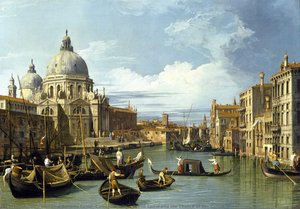
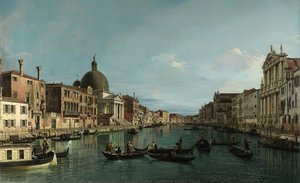
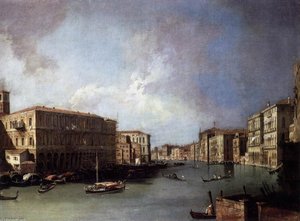
The painting captures a quintessential moment in Venice’s history – a serene afternoon bathed in diffused light as viewed from Campo San Vio, a bustling square nestled amongst the city's architectural grandeur. Giovanni Antonio Canaletto, known universally as Canaletto, achieved this remarkable feat not merely through observation but through masterful manipulation of perspective and color, cementing his place as one of the foremost topographical artists of the Baroque era.- Subject Matter: The scene depicts the Grand Canal itself, a vital artery of Venetian commerce and social life. Dominating the composition are several gondolas gliding along the waterway, their reflections shimmering on the water’s surface – a testament to Canaletto's keen eye for capturing atmospheric conditions.
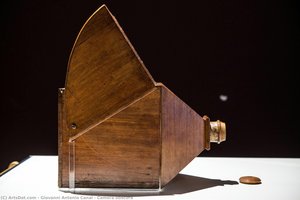
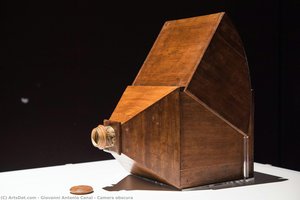
- Style & Technique: Canaletto employed the camera obscura technique—a darkened room with a pinhole aperture projecting an inverted image of the outside world—to meticulously plan and execute his canvases. This method ensured unparalleled accuracy in depicting buildings, streets, and landscapes, resulting in incredibly detailed renderings that are remarkably stable over time.
- Historical Context: Created in 1756 during Canaletto’s prolific period in London, this artwork reflects the burgeoning fascination with Venetian culture amongst English aristocrats. It served as a visual chronicle of the era, documenting architectural developments and capturing the spirit of urban life—a deliberate effort to portray Venice as a beacon of elegance and sophistication.
- Color Palette: Canaletto’s palette is restrained yet luminous, favoring muted tones of ochre, umber, and Venetian red. These colors are skillfully blended to create subtle gradations of light and shadow, enhancing the sense of depth and realism—a hallmark of his artistic approach.
- Emotional Impact: The painting evokes a feeling of tranquility and contemplation, inviting viewers to immerse themselves in the beauty of Venice’s historic setting. Canaletto's masterful depiction captures not just what was seen but also how it felt – conveying an idealized vision of Venetian life that continues to inspire admiration today.
Exploring Canaletto’s Camera Obscura Method
Canaletto’s groundbreaking use of the camera obscura revolutionized artistic representation. This ingenious device allowed him to project a reversed image of the exterior onto paper, facilitating precise measurements and ensuring that buildings were rendered with astonishing accuracy. Unlike other artists who relied on sketches or memory, Canaletto could create detailed panoramas based on direct observation—a feat unparalleled in its time. The camera obscura wasn’t merely a tool; it was a philosophy – a commitment to capturing the world as faithfully as possible.Venetian Influence and Artistic Legacy
The painting stands as a powerful emblem of Venice's cultural prestige during Canaletto’s lifetime, mirroring the artistic fervor that swept across Europe. His meticulous attention to detail and his ability to convey atmosphere established him as an influential figure in topographical art—inspiring generations of artists who sought to emulate his technique. Canaletto’s legacy extends beyond individual artworks; he fundamentally altered how landscapes and cityscapes were depicted, shaping the visual language of the Baroque period and securing his enduring place within art history.A Timeless Reflection on Urban Beauty
Ultimately, “Grand Canal, Looking East from the Campo San Vio” transcends its historical context to offer a timeless meditation on urban beauty—a celebration of light, space, and architectural harmony. Canaletto’s masterpiece continues to captivate audiences with its serene atmosphere and breathtaking realism, reminding us of Venice's enduring allure as a city steeped in art and tradition.Related Artworks
Artist Biography
early life and training
giovanni antonio canal, commonly known as canaletto, was born on october 18, 1697, in venice, italy. he was the son of bernardo canal, a painter of theatrical scene settings, and artemisia barbieri. canaletto's early training in painting began with his father, who taught him the fundamentals of art.
the making of a master
in 1718, canaletto traveled to rome, where he worked on producing scenery for two operas by alessandro scarlatti. this experience had a profound impact on his development as an artist. upon returning to venice, canaletto began painting in his signature topographical style, which would eventually make him famous.
notable works and collaborations
some of canaletto's most notable works include:
- the stonemason's yard (c. 1725), a masterpiece showcasing his early skill.
- regatta on the grand canal, a vivid depiction of venetian public ceremonies.
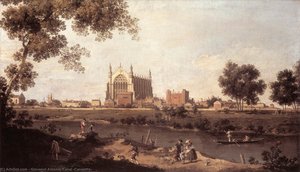
- eton college (1746-1756), a testament to his influence in england. collaboration with his nephew bellotto, who became an accomplished artist in his own right.
artistic style and technique
canaletto's use of precise perspective and meticulous preparatory drawings has led some experts to believe he may have employed a camera obscura for topographical accuracy. however, his primary concern remained the compositional design, ensuring his works were not merely accurate recordings but also visually stunning.
legacy and collections
canaletto's work can be found in various museums, including the national gallery, london, which showcases his influence on 18th-century art. his legacy extends to the numerous artists he inspired, cementing his place as a master of venetian landscapes.
- view canaletto's works at https://ArtsDot.com/@/giovanni-antonio-canal
- explore more about canaletto on wikipedia
- discover the beauty of venetian art at the palumbo-fossati collection (venice, italy)
key dates
- october 18, 1697: born in venice, italy
- 1718: traveled to rome
- 1725: painted the stonemason's yard
- 1746-1756: visited england, painting notable works like eton college
- april 19, 1768: passed away in venice, italy
remember to explore the world of art at https://ArtsDot.com for more biographies and artworks.
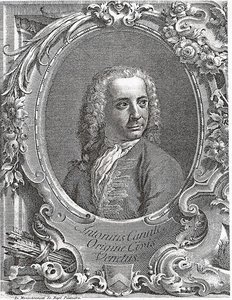
Canaletto
1697 - 1768 , Italy
Quick Facts
- Artistic Movement Or Style: Vedute Venice
- Artists Or Movements Influenced By This Artist: ['Tintoretto']
- Artists Who Influenced This Artist: ['Giovanni Paolo Pannini']
- Date Of Birth: October 18, 1697
- Date Of Death: April 19, 1768
- Full Name: Giovanni Antonio Canal
- Nationality: Italian
- Notable Artworks:
- The Stonemason's Yard
- Regatta on the Grand Canal
- Eton College
- Place Of Birth: Venice, Italy
Related Articles
Giovanni Antonio Canal (Canaletto): A Venetian Master of Light, Space & Societal Observation
Explore the life & art of Giovanni Antonio Canal (Canaletto), a Venetian master renowned for his breathtaking cityscapes. Discover his techniques, legacy, and captivating depictions of 18th-century Venice & London.

Beyond the Horizon: 10 Landscape Masterpieces for Your Home Decor
Journey through 10 breathtaking landscape paintings by Monet, Van Gogh & more! Explore iconic artworks, artistic techniques & find inspiration for your home decor. Museum-quality reproductions at ArtsDot.com. Discover all masterpieces on ArtsDot.com
Michelangelo Morlaiter: Venetian Landscapes & the Pursuit of Atmospheric Realism
Explore the captivating landscapes of Michelangelo Morlaiter, a key figure in 18th-century Venetian painting. Discover his mastery of atmospheric perspective and lasting influence on Italian art history. Learn more at ArtsDot.

Jacopo Tintoretto's Masterpieces: 25 Paintings That Define Venetian Drama | ArtsDot
Explore 25 breathtaking masterpieces by Jacopo Tintoretto, the Venetian master of drama and light. Discover the stories behind iconic Renaissance paintings & find museum-quality art reproductions to elevate your home decor on ArtsDot.com.

Romantic Landscapes: 10 Masterpieces for Your Home | ArtsDot
Journey through 10 Romantic landscape masterpieces by Friedrich, Turner & Cole. Explore emotional art, sublime nature scenes & iconic 19th-century paintings. Find museum-quality reproductions for your home at ArtsDot.com – discover the full collection online!