 Preview
 Send
Send Share
Share
 Details

 Download
 Similars
 X-Ray
X-Ray Diaporama
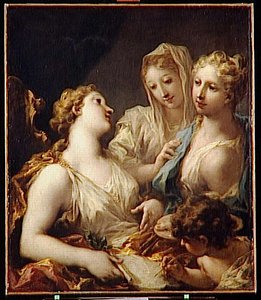
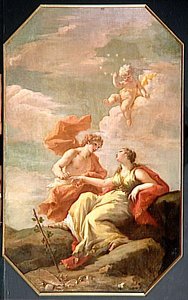
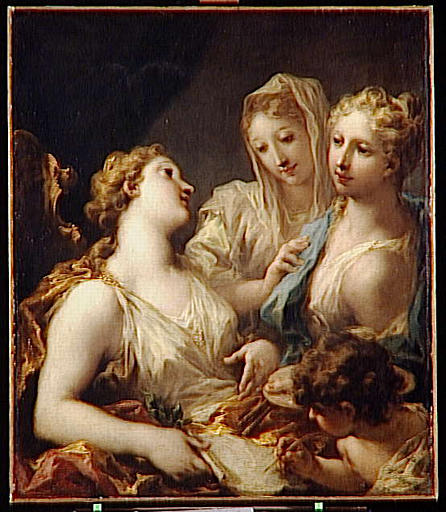
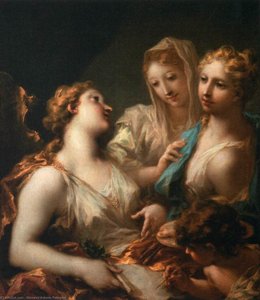
LA PEINTURE ET LE DESSIN FAISANT L'EDUCATION DE L'AMOUR


 Read More
Hand Made Oil Reproduction
Hand-painted oil on canvas in your size and frame, made to order by our artists. ( Buy Print Buy Image)




P118B $10

P118H $10

P118W $10

P438Z $10

P508JH $12

P508YH $12

P805H $10

P805Z $10

P919BZ $10

P919G $10

P919XJ $10

P959ZH $10

P968JZ $12

W106C $8

W218G $10

W218JH $8

W218Y $10

W307PJ $10

W316G $10

W316PJ $8

W316Y $10

W398PJ $8

W4111J $10

W500HY $15

W500JH $15

W692G $12

W849H $8

W940BG $15

W953PJ $8




Pick from our preset sizes that match the artwork's original proportions.

You may enter your own dimensions to fit a specific frame or space. If your selected size does not match the original image's proportions, we will either crop the artwork or extend the painting with additional hand-painted elements. A digital mockup will be sent for your approval before production begins.
Please note that the on-screen preview does not reflect the actual cropping or extension. Only the mockup will accurately show the final composition.
While custom sizes are available, we recommend selecting a dimension from the predefined list to preserve the original proportions.
After order, ArtsDot.com team will email client for instructions and provide a mockup preview
Worldwide Delivery () in 3/4 weeks instead of standard 5 weeks. (3 September). No compromise on quality.

Free Worldwide Express Shipping

High-Quality Linen Canvas

Full Shipping Insurance

Customs Tax Refund Guarantee

True Color Matching Guarantee

60-Day Return Policy (Defects Only)

100% Money-Back Guarantee

Bulk Discount Offer
 Glass option is only available in size under 110 CM

LA PEINTURE ET LE DESSIN FAISANT L'EDUCATION DE L'AMOUR
Reproduction Medium
Reproduction Size
-


Total Price
$ 313
An Allegory of Art's Gentle Guidance
To gaze upon this magnificent canvas is to step directly into an idealized moment of intellectual and emotional blossoming. Titled "LA PEINTURE ET LE DESSIN FAISANT L'EDUCATION DE L'AMOUR," the work transcends mere portraiture; it is a profound meditation on the very nature of inspiration. The composition draws the viewer into a shallow, intimate space where three figures—two elegantly draped women and a cherubic child—are gathered in quiet communion. The arrangement itself forms a graceful pyramid, lending an inherent stability to the scene while simultaneously suggesting upward aspiration. One senses not just paint upon canvas, but the very breath of classical allegory made visible.
The Echoes of Baroque Grace
Stylistically, the painting resonates deeply with the opulent currents of the late Baroque or early Rococo periods, hallmarks of Venetian mastery. The artist, working in a tradition exemplified by masters like Giovanni Antonio Pellegrini, employs dramatic and directional lighting that seems to emanate from an unseen source to the left. This masterful use of chiaroscuro carves out the figures from the deep, velvety darkness of the background, lending them an almost ethereal luminescence. Observe how the light catches the luminous quality of the skin and the rich folds of the drapery; these highlights are not accidental but carefully orchestrated moments designed to enhance volume and draw the eye through the narrative flow.
Symbolism Woven in Silk and Brushstroke
The subject matter invites deep contemplation. The title itself points toward the transformative power of the arts—painting and drawing—as educators of love. The two women, positioned in close dialogue, appear to represent different facets of knowledge or affection being imparted. Meanwhile, the child seated at their base acts as a poignant symbol of innocence, the receptive mind ready to absorb the wisdom shared above. Every curving line in the voluminous drapery, every gentle gesture between the figures, guides our understanding toward themes of virtue, learning, and the cultivation of the heart. It is an emotional tableau rendered with academic precision.
Technique and Tactile Beauty for the Modern Collector
The technical execution speaks to a high degree of virtuosity. The artist has achieved remarkable textural contrasts: the apparent smoothness of flesh against the rich, palpable weight of the fabric folds. While the overall impression is one of soft, flowing curves, the underlying structure remains classical and deliberate. For those who appreciate fine art reproduction for their interiors or collections, this piece offers unparalleled depth. Reproducing such a work requires an understanding not only of the subject but also of the subtle layering of oil paint—the blending that creates seamless transitions while retaining the visible evidence of skilled brushwork. It is a masterpiece designed to evoke serenity and intellectual richness within any grand setting.
Related Artworks


Artist Biography
The Venetian Master of Light and Motion
In the vibrant, water-bound splendor of 18th-century Venice, a new era of painterly elegance was being forged by the brush of Giovanni Antonio Pellegrini. Born in 1675 to a humble shoemaker, Pellegrini’s ascent from the streets of Venice to the royal courts of Europe is a testament to a singular talent that bridged the gap between the structured grandeur of the Renaissance and the emotive, swirling energy of the Baroque. His work does not merely sit upon a surface; it breathes with an atmospheric lightness, capturing a sense of spontaneous movement that would later inspire the great Giambattista Tiepolo. To look upon a Pellegrini is to witness the transition of an era, where the heavy shadows of the past began to dissolve into the luminous, airy compositions of a new age.
The foundations of his mastery were laid under the guidance of Paolo Pagani, a mentor who rooted him in the disciplined Milanese tradition. However, it was his encounter with the expressive brilliance of Sebastiano Ricci that truly ignited his creative spirit. From Ricci, Pellegrini inherited a sophisticated command of color and a penchant for dynamic, sweeping compositions. This stylistic evolution was further refined during his travels through Rome, where the whispers of emerging Neoclassical currents prompted him to experiment with more structured principles, creating a unique tension between classical order and Baroque theatricality.
A European Odyssey of Grandeur
Pellegrini was not a painter confined by borders; he was a true cosmopolitan of the arts. His reputation for capturing light and atmosphere propelled him across the continent, earning him prestigious commissions from the most influential patrons of his time. His journey took him through the Netherlands, Germany, Austria, and France, but it was in England where his legacy left an indelible mark on the architectural landscape. At magnificent estates such as Kimbolton Castle and Castle Howard, Pellegrini’s murals transformed ceilings into celestial gateways, utilizing a technique that mimicked the effortless grace of fresco painting to create vast, illusionistic vistas.
These international endeavors showcased his unparalleled ability to manipulate light, making heavy stone surfaces appear as weightless as clouds. His work in England served as a bridge, bringing the sophisticated aesthetic of the Venetian school to the British aristocracy and influencing the development of decorative painting in Northern Europe. Each commission was an opportunity for him to showcase his signature spontaneity—a quality that allowed his figures to dance across the canvas with a lifelike vitality that felt both monumental and intimately human.
Legacy and Artistic Significance
The historical significance of Giovanni Antonio Pellegrini lies in his role as a pivotal evolutionary link. He stood at the crossroads of history, synthesizing the perspectival depth of the Renaissance with the dramatic, emotive fervor of the Baroque. His mastery of the fresco technique and his ability to decorate massive architectural spaces—most notably the breathtaking dome above the staircase at San Rocco in Venice—demonstrated a technical prowess that few could match.
Ultimately, Pellegrini’s influence can be traced through the lineage of great Venetian masters. By softening the edges of the Baroque and introducing a luminous, airy quality to his compositions, he paved the way for the Rococo movement and provided the essential stylistic groundwork for Tiepolo. His life's work remains a celebration of movement, light, and the enduring power of the Venetian spirit, marking him as one of the most innovative and influential painters of the early 18th century.
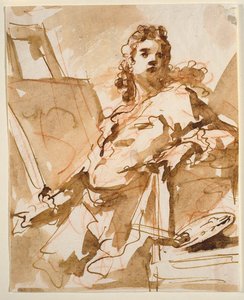
Giovanni Antonio Pellegrini
1675 - 1741 , Italy
Quick Facts
- Artistic Movement Or Style: Baroque & Renaissance
- Artists Or Movements Influenced By This Artist: ['Giovanni Battista Tiepolo']
- Artists Who Influenced This Artist:
- Paolo Veronese
- Luca Giordano
- Date Of Birth: Venice, Italy (1675)
- Date Of Death: 1741
- Full Name: Giovanni Antonio Pellegrini
- Nationality: Italian
- Notable Artworks:
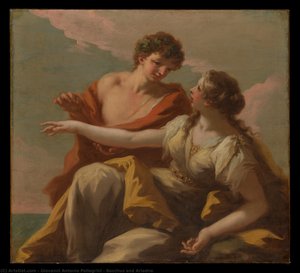
- Bacchus and Ariadne
- Allegory of Sculpture
- Place Of Birth: Venice
Related Articles

Jacopo Tintoretto's Masterpieces: 25 Paintings That Define Venetian Drama | ArtsDot
Explore 25 breathtaking masterpieces by Jacopo Tintoretto, the Venetian master of drama and light. Discover the stories behind iconic Renaissance paintings & find museum-quality art reproductions to elevate your home decor on ArtsDot.com.

The Dramatic Flourish: Exploring the Baroque Movement's Enduring Legacy in Art History
Explore the dramatic world of Baroque art! Discover iconic artists like Caravaggio & Rubens, defining techniques, and its lasting impact on art history. Expert insights for collectors & enthusiasts at ArtsDot.

Baroque Drama: Bringing Opulence & Emotion into Contemporary Interiors
Explore the opulent world of Baroque interior design! Discover key elements, modern applications & how to bring dramatic elegance into your home with 's authentic reproductions.

Baroque Masterpieces: 10 Paintings That Defined an Era |
Journey through the drama & grandeur of Baroque art! Explore 10 masterpieces by Caravaggio, Rembrandt, Rubens & more. Discover stunning oil paintings, rich colors & timeless stories. Find museum-quality reproductions at .
Decoding Baroque Grandeur: A Guide to the Drama and Emotion of 17th-Century Art
Explore the breathtaking drama of 17th-century Baroque art. Our expert guide decodes the use of chiaroscuro, emotional intensity, and historical grandeur to help you appreciate and curate timeless masterpieces for your collection.