 Preview
 Send
Send Share
Share
 Details

 Download
 Similars
 X-Ray
X-Ray Diaporama
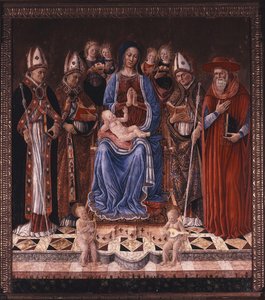
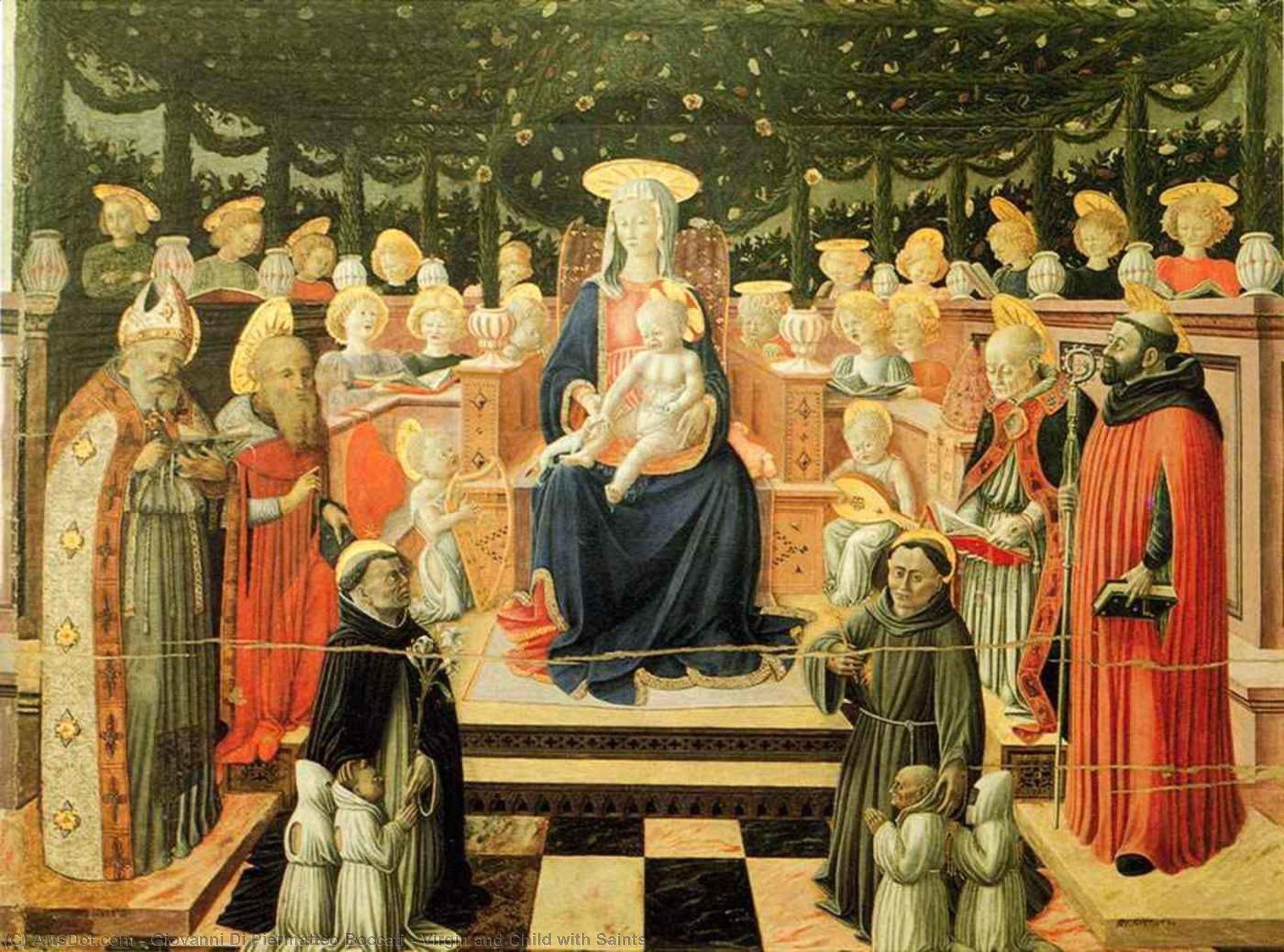
Virgin and Child with Saints
 Tempera On Panel
- Early Renaissance
 1446
1446- Renaissance
 248.0 x 187.0 cm
 Galleria Nazionale dell'Umbria
 Read More
Giclée / Art Print
Museum-quality giclée or canvas print with fast production and flexible finish options. ( Buy Hand Made Painting Buy Image)




P118B $10

P118H $10

P118W $10

P438Z $10

P508JH $12

P508YH $12

P805H $10

P805Z $10

P919BZ $10

P919G $10

P919XJ $10

P959ZH $10

P968JZ $12

W106C $8

W218G $10

W218JH $8

W218Y $10

W307PJ $10

W316G $10

W316PJ $8

W316Y $10

W398PJ $8

W4111J $10

W500HY $15

W500JH $15

W692G $12

W849H $8

W940BG $15

W953PJ $8




Pick from our preset sizes that match the artwork's original proportions.

You may enter your own dimensions to fit a specific frame or space. If your selected size does not match the original image's proportions, we will either crop the artwork or extend the image with a mirrored or solid-fill edge. A digital mockup will be sent for your approval before production begins.
Please note that the on-screen preview does not reflect the actual cropping or extension. Only the mockup will accurately show the final composition.
While custom sizes are available, we recommend selecting a dimension from the predefined list to preserve the original proportions.
Worldwide Delivery () in 2 weeks instead of standard 4/5 weeks. (25 August)

Free Worldwide Express Shipping

High-Quality Linen Canvas

Full Shipping Insurance

Customs Tax Refund Guarantee

True Color Matching Guarantee

60-Day Return Policy (Defects Only)

100% Money-Back Guarantee

Bulk Discount Offer
 Glass option is only available in size under 110 CM

Virgin and Child with Saints
Giclée / Art Print
Reproduction Size
-


Total Price
$ 63
Collectible Description
A Celestial Gathering: The Majesty of Boccati’s Vision
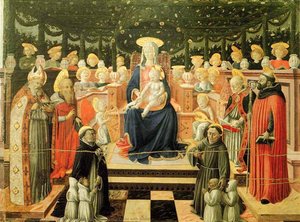
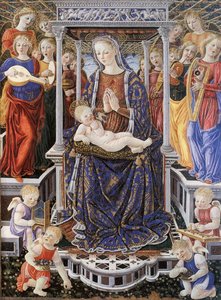
In the grand tapestry of the Italian Renaissance, few works capture the profound intersection of divine grace and earthly devotion as exquisitely as Giovanni di Piermatteo Boccati’s Virgin and Child with Saints. Created in 1446, this monumental masterpiece serves as a window into a period where the boundaries between the mortal and the divine were rendered through meticulous brushwork and vibrant, saturated pigments. The painting presents a breathtakingly complex scene, centered upon the Virgin Mary and the Christ Child, who sit enthroned amidst a sea of celestial and terrestrial witnesses. It is not merely a portrait of religious figures, but a choreographed spectacle of faith, where clergy, nobles, and commoners converge in a singular moment of spiritual coronation.
The composition is a masterclass in Early Renaissance hierarchy. Boccati utilizes a sophisticated layering technique to guide the viewer’s eye upward toward the central figures, creating a sense of depth that, while retaining the characteristic flattened perspective of the era, feels remarkably immersive. The architectural elements—stately arches and geometric thrones—provide a structured framework that contains the bustling energy of the crowd. Through the careful use of overlapping forms, the artist builds a dense, rhythmic movement across the 248 x 187 cm canvas, ensuring that every saint and onlooker contributes to the overwhelming sense of grandeur and liturgical importance.
Technique, Light, and the Language of Devotion
To behold this work is to witness the technical prowess of the Umbrian school. Boccati, likely trained in the luminous traditions of Fra Angelico, employs a technique reminiscent of tempera or oil on panel, which allows for an extraordinary level of detail in the drapery and facial expressions. The lighting within the piece is nothing short of dramatic; strong contrasts between light and shadow—a precursor to the more intense chiaroscuro of later eras—are used to sculpt the human forms, lending them a palpable volume and presence. This interplay of light does more than define shape; it illuminates the sanctity of the subject, casting a divine glow upon the Virgin’s countenance.
The color palette is rich and opulent, designed to evoke the splendor of a heavenly court. Deep, saturated tones anchor the composition, while delicate highlights catch the eye, drawing attention to the intricate textures of fine fabrics and the symbolic attributes held by the surrounding saints. Every stroke of the brush serves a narrative purpose, contributing to an atmosphere of solemnity and reverence. For the discerning collector or interior designer, this piece offers more than just visual beauty; it provides a profound emotional resonance, making it a commanding focal point for any space dedicated to contemplation, history, or classical elegance.
A Timeless Legacy for the Modern Collector
Beyond its aesthetic brilliance, Virgin and Child with Saints is a vessel of deep symbolism. It represents the divine right of Mary and the enduring power of religious authority, acting as a visual sermon on piety and the interconnectedness of the human hierarchy under the watchful eye of the Creator. The painting evokes a sense of awe, inviting the viewer to step out of the temporal world and into a space of eternal significance.
For those seeking to adorn a curated collection or a sophisticated interior with a high-quality reproduction, this artwork offers an unparalleled opportunity. A hand-painted tribute to Boccati’s vision brings the weight of history and the warmth of Renaissance humanism into the contemporary home. It is a piece that does not merely decorate a wall but transforms a room, offering a continuous dialogue between the artistic triumphs of 1446 and the refined tastes of the present day.
Related Artworks
Artist Biography
Giovanni Boccati: Umbrian Painter of Devotion and Detail
Giovanni di Piermatteo Boccati (c. 1420 – after 1487) stands as a significant figure in the Umbrian Renaissance, renowned for his meticulous frescoes and altarpieces that embody the artistic spirit of the period. Born in Camerino, Italy—a region steeped in medieval tradition yet embracing humanist ideals—Boccati’s career unfolded across several prominent cities including Perugia, Padua, and Urbino, cementing his reputation as a versatile artist deeply rooted in religious iconography.- Early Life & Training: Precise biographical details surrounding Boccati's formative years remain elusive. However, evidence suggests he honed his skills within the artistic milieu of Camerino, absorbing influences from masters like Fra Angelico and Filippo Lippi—artists who championed serene beauty and spiritual contemplation. His training likely involved studying classical principles alongside Byzantine traditions, shaping his distinctive approach to painting.
- Notable Works: Boccati’s artistic output is characterized by a remarkable sensitivity to color and texture. Among his most celebrated achievements are the frescoes adorning the Palazzo Ducale in Urbino—a testament to his ability to capture grandeur and elegance—and the altarpiece commissioned for Orvieto Cathedral, showcasing masterful composition and dramatic lighting. His “Madonna dell’Orchestra” (1447) exemplifies his dedication to portraying biblical narratives with profound emotional depth.
Technique & Artistic Style
Boccati's artistic style is defined by a meticulous attention to detail and an unwavering commitment to realism. He skillfully employed tempera paint on panel, achieving luminous colors and subtle gradations that convey the ethereal quality of religious subjects. His frescoes demonstrate a masterful understanding of perspective and spatial illusion—techniques borrowed from Florentine artists like Brunelleschi—creating immersive environments that engage the viewer’s senses. Furthermore, Boccati's use of glazing techniques—applying thin layers of translucent pigment over underlying colors—enhanced the vibrancy and luminosity of his paintings, resulting in works imbued with an unparalleled sense of atmosphere.- Frescoes in Urbino: The Palazzo Ducale frescoes represent Boccati’s pinnacle achievement. These monumental panels depict scenes from biblical history and heraldic emblems, demonstrating his mastery of color theory and compositional planning.
- The Orvieto Altarpiece: This ambitious project showcases Boccati's ability to convey emotion and narrative complexity through intricate iconography and dynamic drapery folds.
Influence & Legacy
Boccati’s artistic legacy extends beyond his individual masterpieces. He served as a teacher and mentor, fostering the talents of younger artists who would contribute to Umbrian art history. His work profoundly impacted subsequent generations of painters, establishing him as a pivotal figure in the dissemination of Renaissance ideals—particularly those concerning piety and artistic excellence. Today, Boccati’s paintings reside in prestigious institutions such as the Galleria Nazionale dell'Umbria and the Sinebrychoff Art Museum in Helsinki, ensuring that his contribution to Umbrian art continues to inspire admiration and scholarly study.Major Achievements
Boccati achieved considerable renown during his lifetime for his artistic skill and devotion. He was recognized as a respected artist and craftsman, securing commissions from influential patrons—including the Duke of Urbino—who valued his ability to elevate religious art through meticulous execution and expressive artistry. His enduring fame rests upon the preservation of his paintings and frescoes—remarkable achievements that stand as symbols of Umbrian Renaissance artistic prowess.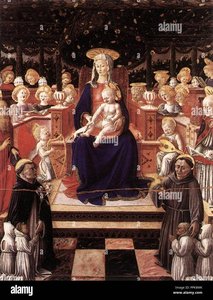
giovanni di piermatteo boccati
1420 - 1487 , Italy
Quick Facts
- Artistic Movement Or Style: Renaissance
- Artists Or Movements Influenced By This Artist: ['Early Renaissance']
- Artists Who Influenced This Artist:
- Fra Angelico
- Filippo Lippi
- Domenico Veneziano
- Date Of Birth: c. 1420
- Date Of Death: after 1487
- Full Name: Giovanni di Piermatteo Boccati
- Nationality: Italian
- Notable Artworks:
- Madonna del Pergolato
- Madonna dell’orchestra
- Pietà
- Virgin and Child Enthroned with Saints
- Adoration of the Magi
- Place Of Birth: Camerino, Italy
Related Articles
Fra Angelico's Masterpieces: 25 Renaissance Paintings for Your Home | ArtsDot
Explore 25 breathtaking masterpieces by Fra Angelico, a Renaissance master. Discover the stories behind his iconic frescoes, Annunciations & religious art. Find museum-quality reproductions and elevate your home decor with ArtsDot.com.
Giovanni Fattori: Realism, Identity & the Tuscan Landscape – A Macchiaioli Master
Explore the life & art of Giovanni Fattori, a leading figure of the Macchiaioli movement. Discover his revolutionary realism, captivating Tuscan landscapes, and lasting impact on Italian painting. Learn more at ArtsDot.
Giotto's Masterpieces: 25 Renaissance Artworks for Your Home | ArtsDot
Explore 25 breathtaking artworks by Giotto di Bondone, a Renaissance master. Discover the stories behind iconic frescoes & paintings like the Scrovegni Chapel cycle. Find museum-quality Giotto reproductions and elevate your home decor with ArtsDot.com.
Giovanni Giacometti: Sculpting Existentialism – A Study of Form, Space, and the Human Condition
Explore the profound artistic journey of Giovanni Giacometti, father to Alberto. Discover his unique transition from Surrealism to Existentialist sculpture and painting – a compelling study for elite collectors and art enthusiasts.
Jacob Henricus Maris: A Master of Dutch Atmospheric Realism & the Intimate Landscape
Explore the captivating world of Jacob Henricus Maris, a leading figure of the Dutch Hague School. Discover his atmospheric landscapes, signature brushstrokes & lasting influence on 19th-century art. Learn more at ArtsDot.