 Preview
 Send
Send Share
Share
 Details

 Download
 Similars
 X-Ray
X-Ray Diaporama
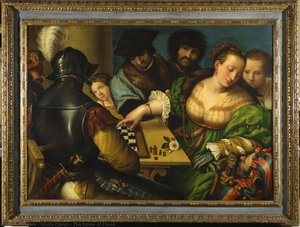
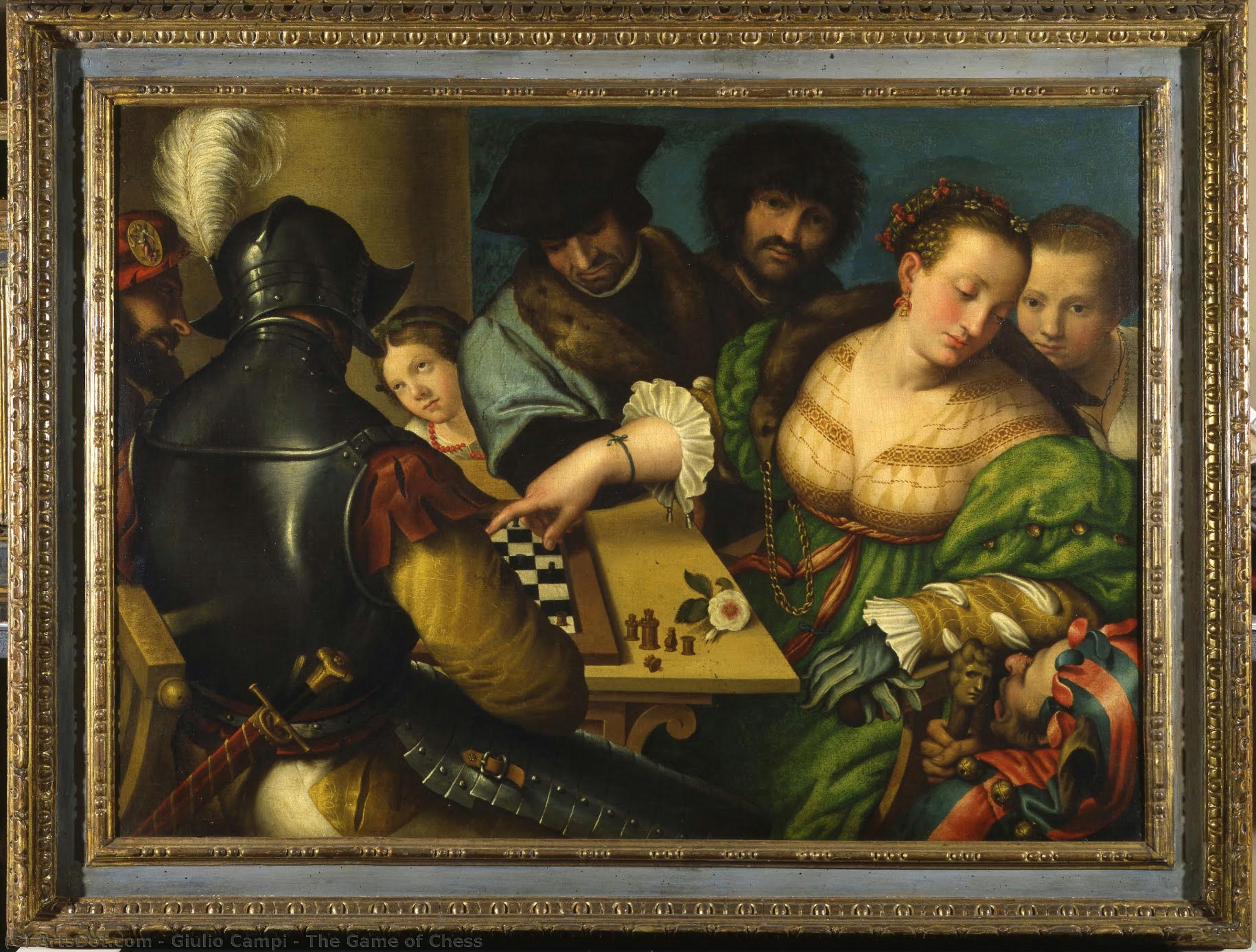
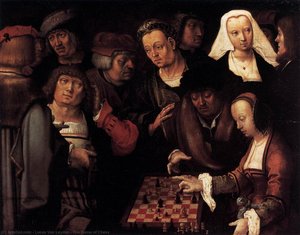
The Game of Chess
 Oil
Oil- WallArt
- Renaissance
 Renaissance
 127.0 x 90.0 cm
 Palazzo Madama
 Read More
Hand Made Oil Reproduction
Hand-painted oil on canvas in your size and frame, made to order by our artists. ( Buy Print Buy Image)




P118B $10

P118H $10

P118W $10

P438Z $10

P508JH $12

P508YH $12

P805H $10

P805Z $10

P919BZ $10

P919G $10

P919XJ $10

P959ZH $10

P968JZ $12

W106C $8

W218G $10

W218JH $8

W218Y $10

W307PJ $10

W316G $10

W316PJ $8

W316Y $10

W398PJ $8

W4111J $10

W500HY $15

W500JH $15

W692G $12

W849H $8

W940BG $15

W953PJ $8




Pick from our preset sizes that match the artwork's original proportions.

You may enter your own dimensions to fit a specific frame or space. If your selected size does not match the original image's proportions, we will either crop the artwork or extend the painting with additional hand-painted elements. A digital mockup will be sent for your approval before production begins.
Please note that the on-screen preview does not reflect the actual cropping or extension. Only the mockup will accurately show the final composition.
While custom sizes are available, we recommend selecting a dimension from the predefined list to preserve the original proportions.
After order, ArtsDot.com team will email client for instructions and provide a mockup preview
Worldwide Delivery () in 3/4 weeks instead of standard 5 weeks. (20 August). No compromise on quality.

Free Worldwide Express Shipping

High-Quality Linen Canvas

Full Shipping Insurance

Customs Tax Refund Guarantee

True Color Matching Guarantee

60-Day Return Policy (Defects Only)

100% Money-Back Guarantee

Bulk Discount Offer
 Glass option is only available in size under 110 CM

The Game of Chess
Reproduction Medium
Reproduction Size
-


Total Price
$ 263
Artwork Description
A Renaissance Gathering: The Intimacy of The Game of Chess
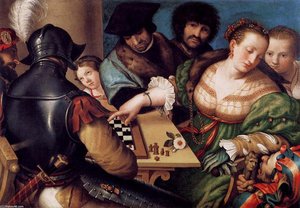
In the quiet, amber-hued atmosphere of Giulio Campi’s The Game of Chess, the viewer is not merely an observer but an uninvited guest at a sophisticated Renaissance gathering. This masterful composition captures a moment suspended in time, where the intellectual rigor of a chess match meets the soft, social grace of a private salon. The scene is alive with the subtle interplay of glances and gestures; figures are positioned with a deliberate balance that draws the eye across the canvas, from the focused players at the center to the contemplative souls lingering in the periphery. There is a profound sense of depth achieved through the careful arrangement of chairs, tables, and background elements, creating an inviting environment that feels both expansive and intimately cozy.
The painting serves as a rich tapestry of human connection and potential allegory. While at first glance it appears to be a lively group portrait, art historians often look beneath the surface to find deeper meanings. The presence of certain figures may allude to classical deities, such as Venus or Mars, suggesting that the game itself is a metaphor for the strategic maneuvers of love and conflict. Furthermore, the painting may hold personal significance for the artist; the melancholy gaze of the young man looking directly at us is widely believed to be a self-portrait of Giulio Campi himself. This layer of introspection adds an emotional weight to the piece, transforming a social scene into a profound meditation on identity and presence.
Mastery of the Cremonese School
Giulio Campi, a prominent figure of the Cremonese school, brings his unique training under the legendary Giulio Romano to this work. The technique displays a seamless blend of Lombard naturalism and the grand, architectural dynamism characteristic of Roman influence. Every brushstroke contributes to a sense of tactile reality, from the heavy fabrics of the garments to the smooth, polished surface of the chessboard. The lighting is particularly evocative, casting soft shadows that define the musculature of the man-at-arms and the delicate features of the women, lending the entire scene a luminous, lifelike quality.
For the discerning collector or interior designer, The Game of Chess offers more than just aesthetic beauty; it provides a focal point of intellectual and historical prestige. A high-quality reproduction of this work brings the sophisticated spirit of the Italian Renaissance into a modern space, acting as a conversation piece that invites scrutiny and admiration. Whether placed in a formal study, a grand dining room, or a curated gallery wall, the painting’s balanced composition and rich narrative depth provide an enduring sense of elegance and timelessness.
Related Artworks

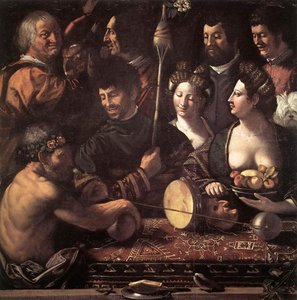

Artist Biography
Giulio Campi: Life and Legacy
Early Life and Training
- Born: Cremona, Italy in 1502.
- Family of Artists: Giulio Campi came from a prominent family of painters; his father, Galeazzo (1475–1536), provided him with initial artistic training.
- Early Studies: In 1522, he traveled to Mantua and studied painting, architecture, and modelling under the tutelage of Giulio Romano.
- His education continued with a visit to Rome where he became deeply engaged in studying classical antiquity.
Artistic Development and Influences
- Blending Traditions: Campi skillfully combined Lombard and Roman artistic traditions, influenced by his studies with Romano and his exploration of ancient art.
- Collaboration: He collaborated with Camillo Boccaccino, son of Boccaccio Boccaccino, potentially receiving further training from him.
- Key Influences: Giulio Romano’s influence is evident in Campi's dynamic compositions and architectural elements. His study of classical art instilled a sense of grandeur and anatomical accuracy.
Major Works and Style
- Masterpiece: At the age of 27, Campi completed his masterpiece, “Virgin and Child with Sts Celsus and Nazarus”, for the church of Sant'Abondio. It is celebrated for its freedom of drawing and vibrant color.
- Notable Works: Other significant works include the “Descent from the Cross” in San Sigismondo, Cremona, and frescoes within the dome of San Girolamo in Mantua.
- Artistic Characteristics: Campi’s paintings are characterized by grand conceptions, free drawing, vigorous coloring, a lofty style, and broad handling. A deep piety is evident throughout his work.
- He was involved in the reconstruction and decoration of the church of Santa Rita in Cremona.
Historical Significance and Legacy
- “Ludovico Carracci of Cremona”: Campi is often referred to by this title due to his significant influence on the artistic landscape of Cremona, mirroring Ludovico Carracci’s impact on Bologna.
- Regional Importance: He played a crucial role in shaping Renaissance art within the Cremonese school.
- Engravings by Ghiso: His altar-piece in San Sigismondo and his “Labours of Hercules” were engraved by Giorgio Ghisi, further disseminating his work.
- Lasting Impact: Campi’s influence extended beyond his lifetime, inspiring subsequent generations of artists in the region.
Death and Remembrance
- Died: Cremona, Italy in 1572.
- Giulio Campi remains a significant figure in Italian Renaissance art, celebrated for his artistic skill, religious devotion, and lasting influence on the Cremonese school of painting.

Giulio Campi
1502 - 1572 , Italy
Quick Facts
- Birth Date: 1502
- Birth Place: Cremona, Italy
- Death Date: 1572
- Influenced: Ludovico Carracci (in Cremona)
- Influenced By: Giulio Romano
- Movement: Renaissance, Mannerism
- Name: Giulio Campi
- Nationality: Italian
- Notable Works:
- Virgin and Child with Sts Celsus and Nazarus
- Descent from the Cross (San Sigismondo)
- Frescoes in San Girolamo (Mantua)
Related Articles
Pixelated Prestige: Exploring Scarcity, Value, and Cultural Impact in Limited Edition Gaming Paintings
Explore the world of limited edition gaming paintings! Discover investment strategies, artist insights & preservation tips for collectors. Trusted expertise in rare video game art.
Beyond Pixels and Play: The Aesthetic and Identity Significance of Gaming Art for the Modern Collector
Explore the rising world of gaming art! Discover why collectors are investing in vintage games & interactive experiences. Expert insights on value, trends & cultural significance.
Pixel & Palette: Exploring the Artistic Craftsmanship of Hand-Painted Game Universes and the Artists Who Bring Them to Life
Explore the artistry of hand-painted game universes! Discover techniques, artists & history behind this unique style. Expert insights for collectors & developers.

From Pixels to Pavement: How Gaming Aesthetics Are Shaping Pop Culture
Explore the exciting convergence of gaming aesthetics and pop culture! Discover how video games are influencing fashion, streetwear, art & more. Stay ahead of the trends with .
Bridging Realities: Exploring Aesthetic Crossovers Between Video Game Universes and Fine Art Traditions
Explore the fascinating intersection of video game aesthetics & fine art traditions. Discover how gaming influences design, collect iconic art reproductions, and elevate your space with expert guidance from ArtsDot.