 Preview
 Send
Send Share
Share
 Details

 Download
 Similars
 X-Ray
X-Ray Diaporama
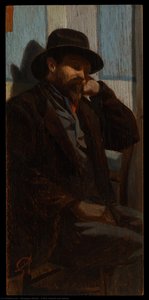
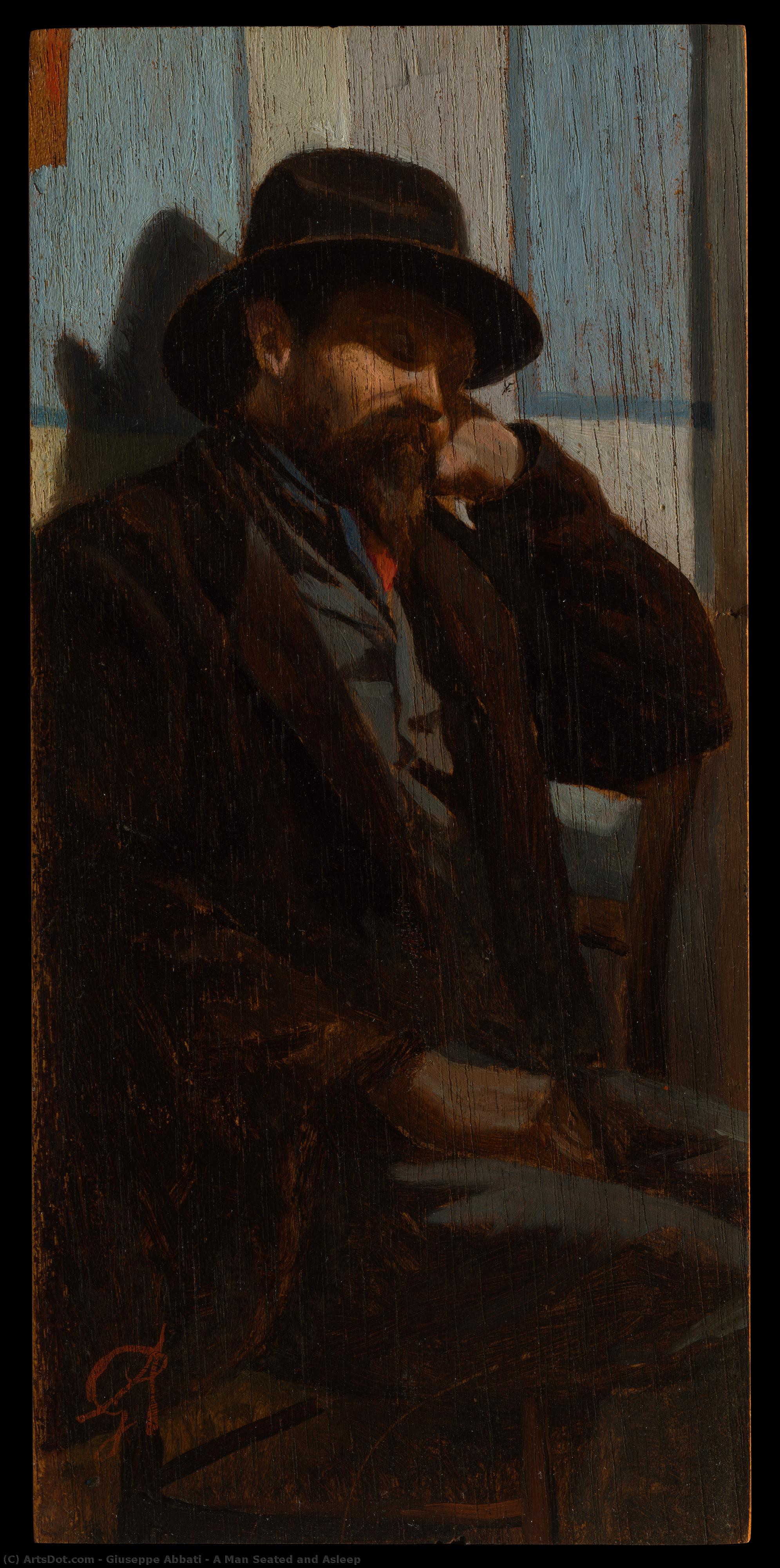
A Man Seated and Asleep
 Acrylic On Canvas
- WallArt
- Contemporary Realism
 1865
1865 26.0 x 12.0 cm
 Metropolitan Museum of Art
 Read More
Hand Made Oil Reproduction
Hand-painted oil on canvas in your size and frame, made to order by our artists. ( Buy Print Buy Image)




P118B $10

P118H $10

P118W $10

P438Z $10

P508JH $12

P508YH $12

P805H $10

P805Z $10

P919BZ $10

P919G $10

P919XJ $10

P959ZH $10

P968JZ $12

W106C $8

W218G $10

W218JH $8

W218Y $10

W307PJ $10

W316G $10

W316PJ $8

W316Y $10

W398PJ $8

W4111J $10

W500HY $15

W500JH $15

W692G $12

W849H $8

W940BG $15

W953PJ $8




Pick from our preset sizes that match the artwork's original proportions.

You may enter your own dimensions to fit a specific frame or space. If your selected size does not match the original image's proportions, we will either crop the artwork or extend the painting with additional hand-painted elements. A digital mockup will be sent for your approval before production begins.
Please note that the on-screen preview does not reflect the actual cropping or extension. Only the mockup will accurately show the final composition.
While custom sizes are available, we recommend selecting a dimension from the predefined list to preserve the original proportions.
After order, ArtsDot.com team will email client for instructions and provide a mockup preview
Worldwide Delivery () in 3/4 weeks instead of standard 5 weeks. (17 August). No compromise on quality.

Free Worldwide Express Shipping

High-Quality Linen Canvas

Full Shipping Insurance

Customs Tax Refund Guarantee

True Color Matching Guarantee

60-Day Return Policy (Defects Only)

100% Money-Back Guarantee

Bulk Discount Offer
 Glass option is only available in size under 110 CM

A Man Seated and Asleep
Reproduction Medium
Reproduction Size
-


Total Price
$ 263
Artwork Description
Giuseppe Abbati’s “A Man Seated and Asleep”: A Tuscan Echo of Romantic Realism
The painting "A Man Seated and Asleep," executed by Giuseppe Abbati in 1865, stands as a testament to the burgeoning Macchiaioli movement and its profound influence on Italian art during the Risorgimento. More than just a depiction of repose, it embodies a deliberate aesthetic choice—the “macchia”—that sought to capture fleeting moments of experience with uncompromising honesty. Abbati’s work resonates deeply within the broader context of French Impressionism, reflecting similar aspirations for capturing sensory impressions and conveying emotional nuance.The Macchiaioli Aesthetic: Spotlighting Emotion Through Texture
Born in Naples in 1836, Abbati honed his artistic skills under the tutelage of his father, Vincenzo Abbati, who specialized in architectural interiors—a stylistic lineage that subtly informs Abbati’s own approach. However, it was Florence and the Caffè Michelangiolo where Abbati truly found his artistic companions: Giovanni Fattori, Silvestro Lega, and others who championed the Macchiaioli style. This movement rejected academic conventions, prioritizing direct observation of nature and employing bold brushstrokes—often “spots”—to convey emotion rather than precise representation. As Abbati himself described it, "Macchia" signifies a deliberate stain or blot of color, juxtaposed against pools of shadow, mirroring the Tuscan vernacular term “aiolo,” referencing humble forms of labor. The textured surface of the painting is crucial to its expressive power; it invites viewers to contemplate not just what they see but how it feels.Technical Innovation and Impressionistic Resonance
Abbati’s technique aligns closely with the innovations occurring in French art during the 1850s and 60s—the period of Italian unification known as the Risorgimento. Like Monet and Renoir, Abbati sought to capture the ephemeral quality of light and atmosphere, prioritizing color and texture over meticulous detail. The muted blues of the wall serve as a grounding element against which the vibrant hues of the man’s attire and the sunlit passages emerge—a masterful orchestration of tonal contrasts that enhances the painting's emotional impact. Abbati skillfully utilizes glazing techniques to build up layers of pigment, achieving luminous effects reminiscent of Impressionistic masterpieces.Symbolism Within Simplicity: Restlessness Beneath Tranquility
Despite its apparent stillness, “A Man Seated and Asleep” is imbued with subtle symbolism. The man’s posture—seated on a chair, head resting on his hand—suggests contemplation or perhaps even weariness. The hat perched atop his head adds to the sense of everyday life, grounding the scene in tangible reality. Furthermore, the presence of two figures in the background—one standing and one seated—introduces an element of narrative complexity, hinting at a broader social context. Abbati’s deliberate choice of subject matter—a man lost in thought—reflects the anxieties and aspirations of his time, mirroring the Romantic preoccupation with inner experience and psychological depth.Emotional Impact: A Moment Frozen in Time
Ultimately, “A Man Seated and Asleep” succeeds in conveying a profound emotional resonance. The painting captures not merely an image but a feeling—a quiet melancholy tempered by acceptance. Abbati’s masterful use of color and texture invites viewers to immerse themselves in the scene, prompting reflection on themes of solitude, contemplation, and the passage of time. It remains a powerful example of Macchiaioli realism—a celebration of sensory experience and an unwavering commitment to portraying the human condition with sensitivity and insight.Related Artworks

Artist Biography
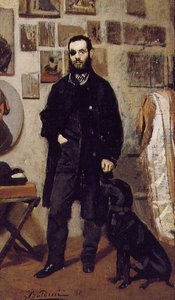
Giuseppe Abbati: Life and Legacy
Early Life and Training
Giuseppe Abbati was born in Naples, Italy, on January 13, 1836. He received his initial artistic training from his father, Vincenzo Abbati, who specialized in paintings of architectural interiors. This early influence is evident in Giuseppe’s first works, which also focused on interior scenes.
Military Service and the Macchiaioli
Abbati's life took a dramatic turn when he participated in Garibaldi’s 1860 campaign for Italian unification. During the Battle of Capua, he tragically lost his right eye. Following this experience, he moved to Florence, a pivotal moment that shaped his artistic trajectory. In Florence, at the famed Caffè Michelangiolo, he connected with key figures who would become known as the Macchiaioli – Giovanni Fattori, Silvestro Lega, and others.
Artistic Development and Style
Initially recognized for his interior views—for which he even received a medal at the National Exposition in Florence in 1861 (which he refused as protest against the jury)—Abbati soon embraced plein air painting, influenced by his new circle of artists. His style became characterized by a bold treatment of light and shadow, focusing on capturing luminous effects in landscapes. He often depicted scenes viewed through doorways or windows, creating a sense of depth and atmosphere.
Key Characteristics of Abbati’s Work
- Bold Light Effects: A defining feature of his paintings.
- Plein Air Painting: Embracing the practice of painting outdoors to capture natural light.
- Horizontal Formats: Many of his landscapes, like “View of Castiglioncello,” are elongated horizontally, a common preference among the Macchiaioli.
- Dramatic Contrasts: Juxtaposing luminous outdoor scenes with darkened interiors.
Later Life and Untimely Death
Abbati’s artistic pursuits were again interrupted in 1866 when he enlisted in the army for the Third Independence War. He was captured by Austrian forces in Croatia before returning to civilian life at the end of the year. He spent his final year painting in the countryside near Castelnuovo della Misericordia. Tragically, Abbati died on February 21, 1868, in Florence, after being bitten by his own dog and contracting rabies.
Influences and Historical Significance
Abbati was significantly influenced by the ideals of the Macchiaioli movement, which sought to break away from academic traditions and embrace a more realistic depiction of Italian life. He contributed to the Risorgimento artistic expression through his depictions of landscapes and everyday scenes. While his career was cut short, Abbati’s work remains important for its innovative use of light, its connection to the Macchiaioli aesthetic, and its reflection of a pivotal period in Italian history.
Notable Works
- “View from the Wine Cellar of Diego Martelli” (1866)
- “Landscape at Castiglioncello” (1867)
- “Cloister” (1861)
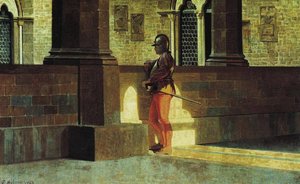
- “Gallery with Armor Bearer” (1864)
Giuseppe Abbati
1836 - 1868 , Italy
Quick Facts
- Birth Date: 1836-01-13
- Birth Place: Naples, Italy
- Death Date: 1868-02-21
- Movement: Macchiaioli
- Name: Giuseppe Abbati
- Nationality: Italian
- Notable Works:
- View from the Wine Cellar of Diego Martelli
- Landscape at Castiglioncello
- Cloister
- Gallery with Armor Bearer
Related Articles
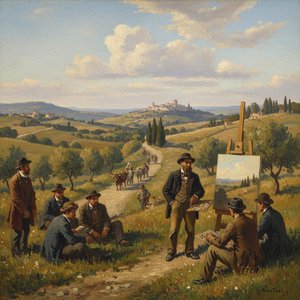
Giovanni Fattori: Realism, Identity & the Tuscan Landscape – A Macchiaioli Master
Explore the life & art of Giovanni Fattori, a leading figure of the Macchiaioli movement. Discover his revolutionary realism, captivating Tuscan landscapes, and lasting impact on Italian painting. Learn more at ArtsDot.

Impressionism's Masterpieces: 10 Paintings That Defined a Movement | ArtsDot
Journey through Impressionism's heart with 10 iconic paintings by Monet, Renoir & Degas. Explore light, color & the stories behind these masterpieces. Find museum-quality art reproductions and elevate your home decor on ArtsDot.com.
Fleeting Moments & Radiant Light: Exploring the Enduring Legacy of Impressionism
Explore the captivating world of Impressionism! Discover its history, key artists like Monet & Renoir, defining techniques, and lasting impact on modern art. Expert insights for collectors.
Federico Zandomeneghi: Bridging Venetian Tradition & Parisian Impressionism
Discover Federico Zandomeneghi (1841-1917), a captivating Italian Impressionist bridging Venetian tradition and Parisian modernity. Explore his intimate scenes, unique style & legacy with ArtsDot.
Uffizi's 25 Masterpieces: Renaissance Art & Timeless Decor Inspiration
Journey through the Uffizi Gallery's 25 most iconic Renaissance artworks! Explore Botticelli, Leonardo da Vinci & Michelangelo’s masterpieces. Find museum-quality art reproductions and curated decor ideas to bring timeless Italian beauty into your home. Discover all masterpieces on ArtsDot.com