 Preview
 Send
Send Share
Share
 Details

 Download
 Similars
 X-Ray
X-Ray Diaporama
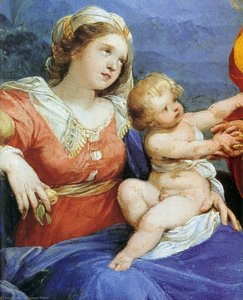
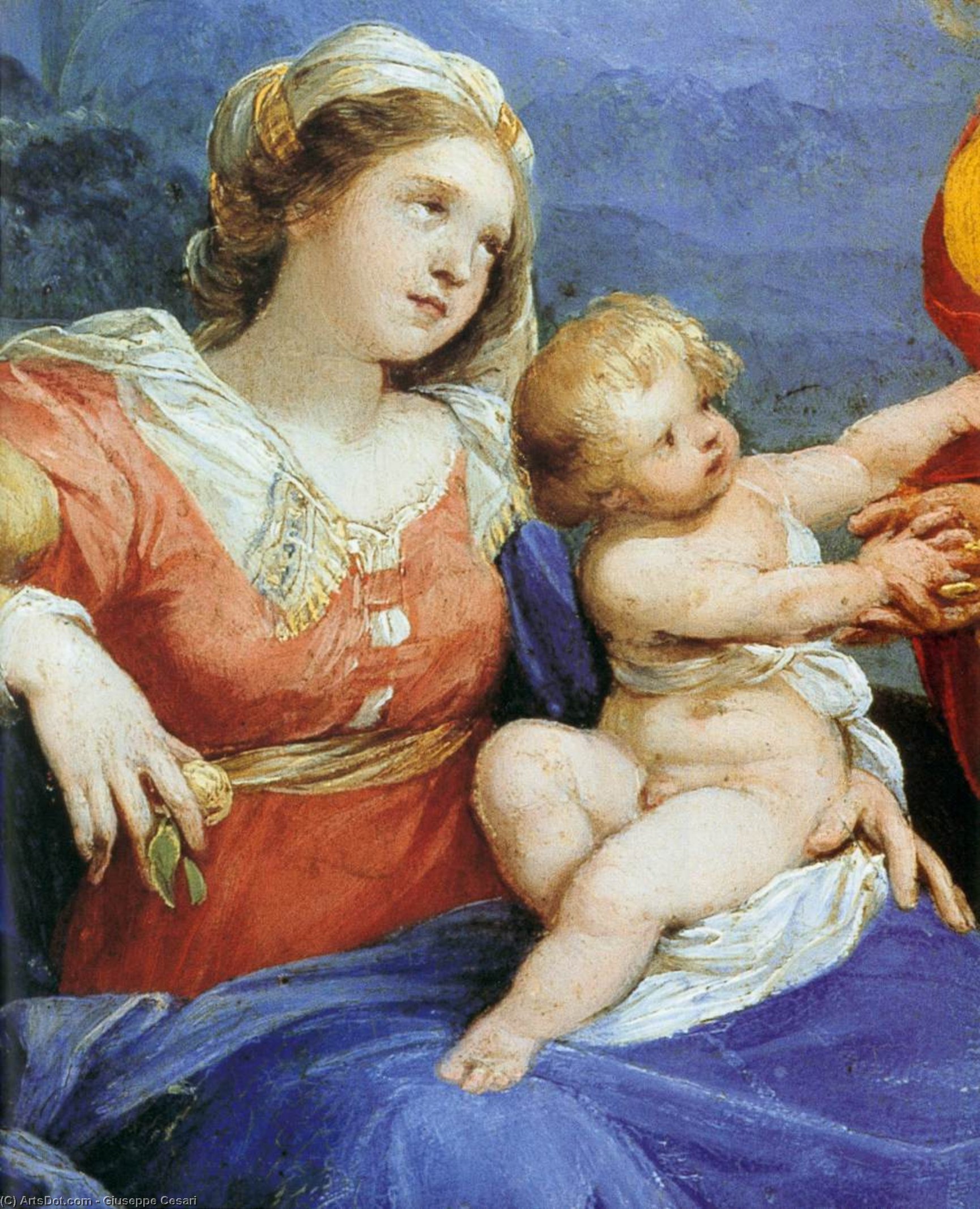
The Rest on the Flight into Egypt (detail)


 Read More
Hand Made Oil Reproduction
Hand-painted oil on canvas in your size and frame, made to order by our artists. ( Buy Print Buy Image)




P118B $10

P118H $10

P118W $10

P438Z $10

P508JH $12

P508YH $12

P805H $10

P805Z $10

P919BZ $10

P919G $10

P919XJ $10

P959ZH $10

P968JZ $12

W106C $8

W218G $10

W218JH $8

W218Y $10

W307PJ $10

W316G $10

W316PJ $8

W316Y $10

W398PJ $8

W4111J $10

W500HY $15

W500JH $15

W692G $12

W849H $8

W940BG $15

W953PJ $8




Pick from our preset sizes that match the artwork's original proportions.

You may enter your own dimensions to fit a specific frame or space. If your selected size does not match the original image's proportions, we will either crop the artwork or extend the painting with additional hand-painted elements. A digital mockup will be sent for your approval before production begins.
Please note that the on-screen preview does not reflect the actual cropping or extension. Only the mockup will accurately show the final composition.
While custom sizes are available, we recommend selecting a dimension from the predefined list to preserve the original proportions.
After order, ArtsDot.com team will email client for instructions and provide a mockup preview
Worldwide Delivery () in 3/4 weeks instead of standard 5 weeks. (16 August). No compromise on quality.

Free Worldwide Express Shipping

High-Quality Linen Canvas

Full Shipping Insurance

Customs Tax Refund Guarantee

True Color Matching Guarantee

60-Day Return Policy (Defects Only)

100% Money-Back Guarantee

Bulk Discount Offer
 Glass option is only available in size under 110 CM

The Rest on the Flight into Egypt (detail)
Reproduction Medium
Reproduction Size
-


Total Price
$ 263
Artwork Description
A Moment of Sacred Tenderness
In the quietude of Giuseppe Cesari’s masterful composition, we find ourselves drawn into an intimate fragment of a much larger, more perilous journey. This detail from The Rest on the Flight into Egypt captures a profound moment of stillness amidst the chaos of escape. The painting centers on the tender embrace of a mother and child, where the weight of the world seems to momentarily lift, replaced by the soft, rhythmic breathing of an infant at rest. The woman’s gaze and her gentle cradling of the babe evoke a universal sense of maternal protection, creating a sanctuary of peace that transcends the historical moment depicted. As we observe the figures, there is a palpable sense of warmth; the way the light catches the contours of the child's face and the mother's protective posture invites the viewer to share in this fleeting, holy respite.
The composition is enriched by the presence of secondary figures, whose subtle placement adds layers of narrative depth. These onlookers, partially veiled in the soft shadows of the background, suggest a larger gathering—perhaps a group of travelers or companions sharing in this brief intermission of their flight. Their presence transforms the scene from a solitary portrait into a communal experience of shared humanity and faith. For the discerning collector, this piece offers more than just a depiction of a biblical event; it provides a window into the human condition, where even in times of great uncertainty, there exists a profound capacity for connection and care.
The Elegance of Mannerist Mastery
Technically, this work serves as a stunning testament to the Mannerist style that defined the late 16th century. Giuseppe Cesari, often navigating the transition between the balanced ideals of the Renaissance and the burgeoning drama of the Baroque, utilizes a sophisticated palette and fluid brushwork to guide the eye. The artist employs a delicate interplay of light and shadow—a precursor to the more intense chiaroscuro that would later dominate Roman painting—to sculpt the forms of the subjects. This technique lends a sculptural quality to the mother’s arms and the infant's soft features, making the figures feel remarkably present and tactile.
The brushwork is both precise and emotive, capturing the subtle textures of skin and fabric with an effortless grace. There is a rhythmic flow to the composition that leads the viewer from the central emotional core out toward the periphery, where the secondary figures reside in a more muted, atmospheric light. For interior designers seeking to introduce a sense of classical sophistication into a space, this painting offers a perfect balance of complexity and serenity. Its ability to anchor a room with historical weight while maintaining an air of delicate beauty makes it an incomparable choice for high-end decor.
A Timeless Addition to the Modern Collection
Beyond its historical significance, The Rest on the Flight into Egypt (detail) possesses an enduring emotional resonance that makes it a captivating subject for any art lover. The symbolism of the "rest" is profound—it represents the necessity of pause, the sanctity of family, and the resilience of hope in the face of adversity. This theme remains as relevant in our fast-paced modern era as it was in 1597.
When considering a high-quality reproduction for a curated collection or a luxury residential project, one must appreciate how this piece interacts with light and environment. The soft tones and classical subject matter allow it to integrate seamlessly into various aesthetics, from traditional European-inspired galleries to contemporary spaces that crave a touch of Old World soul. Owning a piece that captures such a delicate balance of Mannerist grandeur and intimate human emotion is an opportunity to possess a fragment of history, rendered with the reverence and skill that only a master like Cesari could command.
Related Artworks

Artist Biography
Giuseppe Cesari: A Master of Mannerist Grandeur
Giuseppe Cesari, born in Arpino around 1568 and tragically passing away in Rome in 1640, remains a fascinating yet somewhat enigmatic figure within the rich tapestry of Italian art history. While not always celebrated with the fervent acclaim afforded to his contemporaries – particularly those associated with the High Renaissance or the Baroque – Cesari’s career spanned an extraordinary period, witnessing and actively participating in pivotal shifts within artistic style and patronage. His story is one interwoven with ambition, technical skill, and a persistent struggle to establish a lasting legacy amidst the brilliance of Rome's artistic scene. He was a key figure during the Mannerist period, a stylistic bridge between the classical ideals of the Renaissance and the dramatic innovations that would define the Baroque era. Cesari’s early life remains somewhat shrouded in mystery, though it is generally accepted he was born in Arpino, a small town nestled between Rome and Naples. His father, also named Giuseppe, was a painter, providing young Giuseppe with an initial grounding in artistic techniques. However, it was his relocation to Rome that truly shaped his career trajectory. The city, at the heart of papal patronage and a magnet for artists from across Italy and beyond, offered unparalleled opportunities – and fierce competition. He initially apprenticed under Benedetto Cesani, a painter known for his frescoes in the Vatican, before eventually finding himself associated with the renowned architect Carlo Maderno. This connection proved crucial, opening doors to significant commissions and introducing him to influential figures within the Roman art world.The Rise of a Court Painter
Cesari’s career truly ascended during the reign of Pope Clement VIII (1592-1605). He quickly established himself as a highly sought-after painter, securing prestigious commissions that cemented his reputation and brought him considerable wealth. His most celebrated achievement undoubtedly lies in his involvement with the decoration of St. Peter’s Basilica. Between 1603 and 1612, he was entrusted with designing the magnificent mosaics adorning the dome – a monumental undertaking that showcased his technical prowess and artistic ambition. These mosaics, depicting scenes from the life of Christ and the Virgin Mary, are considered among the finest examples of Mannerist mosaic art. Beyond St. Peter’s, Cesari received numerous other commissions, including frescoes for palaces, churches, and private residences throughout Rome. He was a prolific artist, producing a vast body of work that reflects his diverse range of skills and stylistic preferences.Style and Technique
Cesari's artistic style is often described as Mannerist, characterized by its elegance, refinement, and intricate detail. His compositions are typically balanced and symmetrical, reflecting the influence of artists like Giulio Romano and Pontormo. He employed a rich palette of colors, often utilizing gold leaf to create a sense of opulence and grandeur. While he demonstrated considerable skill in fresco painting – particularly evident in his work at St. Peter’s – he was equally adept at producing cabinet pictures (small-scale paintings intended for private display). These works frequently depicted religious or mythological subjects, executed with meticulous attention to detail and a distinctly Flemish influence. His style is often described as polished and somewhat mannered, lacking the raw emotional intensity of later Baroque artists like Caravaggio.Influences and Legacy
Cesari’s artistic development was undoubtedly shaped by his exposure to the diverse styles prevalent in Rome during his time. He absorbed influences from the High Renaissance masters – Raphael and Michelangelo – while also engaging with the more eccentric tendencies of Mannerism. His association with Carlo Maderno, a leading architect of the period, further broadened his artistic horizons, exposing him to innovative architectural concepts and design principles. Despite his considerable success, Cesari’s legacy remains somewhat ambiguous. While he enjoyed widespread popularity during his lifetime, his work is often viewed as technically proficient but lacking in originality or profound emotional depth. However, his contributions to the decoration of St. Peter's Basilica ensure that his name will forever be associated with one of the most iconic landmarks in Christendom.A Forgotten Master?
Giuseppe Cesari’s story serves as a poignant reminder of the challenges faced by artists navigating the complex and competitive world of Renaissance patronage. His career, marked by both triumph and obscurity, offers valuable insights into the dynamics of artistic production and reception during a pivotal period in European art history. Despite being overshadowed by more celebrated contemporaries, Cesari’s work continues to be studied and appreciated for its technical skill, elegant style, and significant contribution to the visual landscape of Rome. Further research and critical reassessment may yet reveal a deeper understanding of this often-overlooked master of Mannerist grandeur.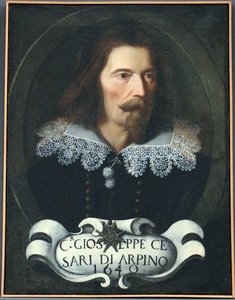
Giuseppe Cesari
1568 - 1640 , Italy
Quick Facts
- Artistic Movement Or Style: Mannerist
- Artists Or Movements Influenced By This Artist: ['Flemish Mannerism']
- Artists Who Influenced This Artist: ['Caravaggio']
- Date Of Birth: 1568
- Date Of Death: 1640
- Full Name: Giuseppe Cesari
- Nationality: Italian
- Notable Artworks: ["St. Peter's mosaics"]
- Place Of Birth: Arpino, Italy
Related Articles
Giuseppe Maria Crespi: Pioneering Genre Painting & the Bolognese Baroque
Explore the life & art of Giuseppe Maria Crespi, a pivotal Bolognese Baroque painter. Discover his groundbreaking genre scenes, religious works, and lasting influence on Italian art history. Learn more at ArtsDot.
Jacopo Pontormo: A Bridge Between Renaissance Tradition & Mannerist Emotion
Explore the captivating world of Jacopo Pontormo, a pivotal Italian Mannerist painter. Discover his unique style, influences & masterpieces – and find museum-quality reproductions at ArtsDot.

Émile Munier: Capturing 19th-Century French Life with Tender Realism
Discover Émile Munier's tender depictions of 19th-century French life. Explore his Realist style, charming paintings of children & pets, and lasting artistic legacy. Expert insights at ArtsDot.

Mary Cassatt: Modernity, Motherhood & the Impressionist Gaze – A Timeless Legacy
Explore the life & art of Mary Cassatt, a pivotal American Impressionist renowned for intimate portrayals of women & children. Discover her unique style, legacy, and groundbreaking techniques at ArtsDot.
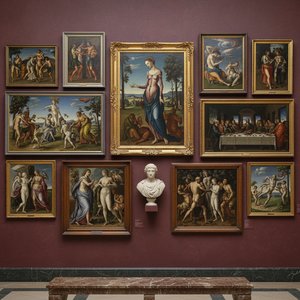
Mannerism's Masters: 10 Artworks That Redefined Renaissance Style | ArtsDot
Explore 10 defining Mannerism masterpieces – from Pontormo to El Greco. Discover the stories behind these Renaissance paintings, their unique style & symbolism. Find museum-quality art reproductions at ArtsDot.com and elevate your home decor.