 Preview
 Send
Send Share
Share
 Details

 Download
 Similars
 X-Ray
X-Ray Diaporama
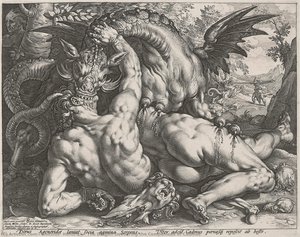
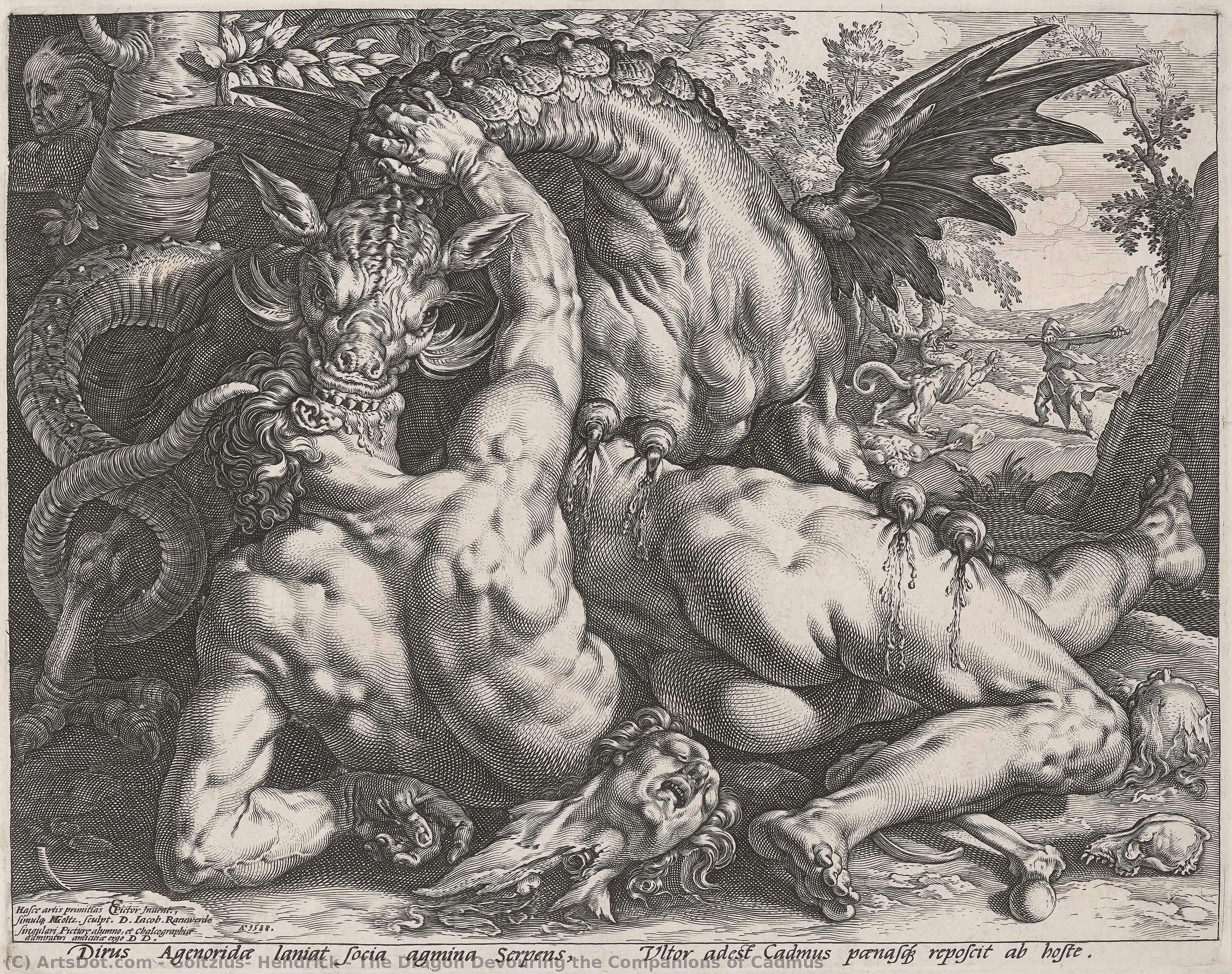
The Dragon Devouring the Companions of Cadmus
 Engraving
- Northern Mannerism
 1588
1588 25.0 x 32.0 cm
 National Gallery of Canada
 Read More
Giclée / Art Print
Museum-quality giclée or canvas print with fast production and flexible finish options. ( Buy Hand Made Painting Buy Image)




P118B $10

P118H $10

P118W $10

P438Z $10

P508JH $12

P508YH $12

P805H $10

P805Z $10

P919BZ $10

P919G $10

P919XJ $10

P959ZH $10

P968JZ $12

W106C $8

W218G $10

W218JH $8

W218Y $10

W307PJ $10

W316G $10

W316PJ $8

W316Y $10

W398PJ $8

W4111J $10

W500HY $15

W500JH $15

W692G $12

W849H $8

W940BG $15

W953PJ $8




Pick from our preset sizes that match the artwork's original proportions.

You may enter your own dimensions to fit a specific frame or space. If your selected size does not match the original image's proportions, we will either crop the artwork or extend the image with a mirrored or solid-fill edge. A digital mockup will be sent for your approval before production begins.
Please note that the on-screen preview does not reflect the actual cropping or extension. Only the mockup will accurately show the final composition.
While custom sizes are available, we recommend selecting a dimension from the predefined list to preserve the original proportions.
Worldwide Delivery () in 2 weeks instead of standard 4/5 weeks. (30 August)

Free Worldwide Express Shipping

High-Quality Linen Canvas

Full Shipping Insurance

Customs Tax Refund Guarantee

True Color Matching Guarantee

60-Day Return Policy (Defects Only)

100% Money-Back Guarantee

Bulk Discount Offer
 Glass option is only available in size under 110 CM

The Dragon Devouring the Companions of Cadmus
Giclée / Art Print
Reproduction Size
-


Total Price
$ 63
The Dragon Devouring the Companions of Cadmus: A Triumph of Mannerist Drama
Hendrick Goltzius’s “The Dragon Devouring the Companions of Cadmus,” created in 1588, stands as a monumental achievement within the Northern Mannerist movement and exemplifies the dramatic intensity characteristic of that era. More than just a depiction of mythic horror—inspired by Ovid's Metamorphoses—it represents a masterful demonstration of engraving technique and a profound exploration of themes related to mortality, heroism, and divine retribution.A Mythical Narrative Brought to Life
The artwork recounts the tale of Cadmus, King of Tyre, who embarked on a perilous quest to find a spring blessed by Zeus after his sister Europa was abducted by the god—a narrative rife with symbolism concerning loss, perseverance, and the confrontation between human ambition and divine power. Goltzius’s engraving captures two pivotal moments from this story: Cadmus battling the dragon guarding the spring and Cadmus himself engaging in a desperate struggle to avenge the deaths of his companions. The scene unfolds with visceral immediacy, conveying the terror and brutality inherent in the mythological conflict.Technical Innovation and Artistic Flair
Goltzius’s genius lies not merely in capturing the narrative but in executing it with unparalleled skill. He pioneered the “swelling line” technique—a revolutionary approach to engraving that allowed for nuanced tonal shading from a considerable distance, creating an illusion of depth and texture previously unattainable. This method was skillfully employed to depict the musculature of the figures and the menacing presence of the dragon, enhancing the dramatic impact of the composition. Furthermore, Goltzius drew inspiration from Michelangelo’s sculptures—specifically the Belvedere Torso—incorporating elements of classical anatomy into his depiction of human form.Symbolism and Emotional Resonance
The artwork is laden with symbolic significance. The dragon itself represents chaos and destruction, embodying the forces opposing Cadmus's heroic endeavor. The intertwined nude bodies of the soldiers symbolize vulnerability and mortality, highlighting the fragility of human existence against the overwhelming power of nature and divine wrath. Goltzius’s masterful portrayal evokes a palpable sense of horror and despair, mirroring the tragic consequences of defiance against fate. The inclusion of birds—flying and perched—adds an element of unsettling beauty to the scene, subtly reinforcing the overarching theme of transformation and decay.Legacy and Influence
“The Dragon Devouring the Companions of Cadmus” cemented Goltzius’s reputation as a leading engraver of his time and profoundly influenced subsequent artists. Its dramatic composition and innovative technique served as a benchmark for Baroque engraving, demonstrating the enduring power of Mannerist aesthetics to convey emotion and intellectual depth. Today, reproductions of this iconic artwork continue to inspire admiration for its artistic brilliance and its ability to capture the essence of human drama within a mythological framework.Related Artworks
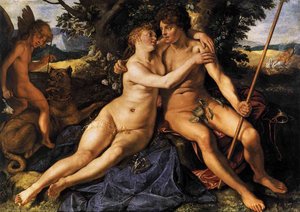
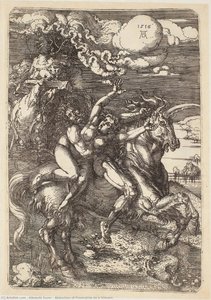
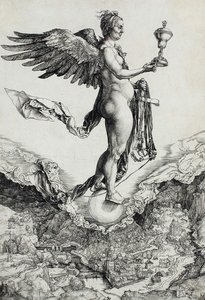
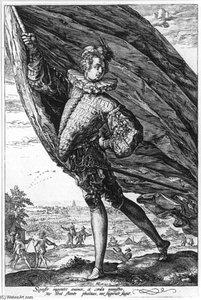
Artist Biography
Hendrick Goltzius: Life and Legacy
Early Life and Training
- Born: 1558 in Bracht, near Viersen, North Rhine-Westphalia, Germany.
- Goltzius’s artistic journey began with training under his father, learning the craft of painting on glass.
- A pivotal moment came when he received instruction in engraving from Dirck Volckertszoon Coornhert in Cleves. This foundational training would shape his future mastery.
Artistic Development and Style
- Goltzius quickly rose to prominence as the leading Dutch engraver of the early Baroque period, also known as Northern Mannerism.
- His work is characterized by sophisticated technique, technical mastership, and a sense of “exuberance” in its compositions.
- Innovative Techniques: He pioneered the use of the "swelling line," manipulating lines to create tonal effects from a distance. He also developed the "dot and lozenge" technique for refined shading.
- Initially influenced by the style of Cornelis van Haarlem, Goltzius moved towards more dynamic and expressive forms.
Notable Works
- The Dragon Devouring the Companions of Cadmus: A print showcasing his mastery over engraving and dramatic storytelling.
- Lot and His Daughters: An example of his work held in the collection of the Rijksmuseum, demonstrating his skill in depicting complex narratives.
- Numerous portraits and mythological scenes further demonstrate his versatility and technical prowess.
Influences and Legacy
- Influenced By: Dirck Volckertszoon Coornhert played a crucial role in Goltzius’s early development as an engraver.
- Goltzius, in turn, significantly influenced subsequent generations of Dutch and European printmakers.
- As noted by A. Hyatt Mayor, he “was the last professional engraver who drew with the authority of a good painter and the last who invented many pictures for others to copy.”
- His innovative techniques and masterful engravings left an indelible mark on the art world.
Historical Significance
- Goltzius’s work reflects the artistic climate of the late 16th and early 17th centuries, bridging the gap between Mannerism and Baroque styles.
- His prints were widely circulated and admired, contributing to the dissemination of artistic ideas throughout Europe.
- Museum Collections: His works are featured in prominent museums such as Museum Boijmans Van Beuningen (Rotterdam), Rijksmuseum Amsterdam, Blanton Museum of Art (Austin), and The Metropolitan Museum of Art (New York City).
- He remains a celebrated figure in the history of printmaking, recognized for his technical skill, artistic vision, and lasting impact.
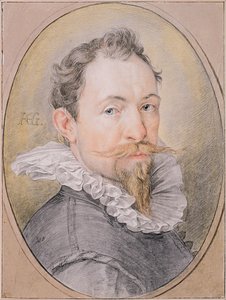
goltzius, hendrick
1558 - 1617 , Germany
Quick Facts
- Birth Date: 1558
- Birth Place: Bracht, Germany
- Death Date: 1617
- Influenced By: Dirck Volckertszoon Coornhert
- Movement:
- Northern Mannerism
- Early Baroque
- Name: Hendrick Goltzius
- Nationality: Dutch
- Notable Works:
- The Dragon Devouring the Companions of Cadmus
- Lot and his Daughters
Related Articles
Hendrick Goltzius: Master Engraver & the Flourishing of Dutch Mannerism
Explore the life & art of Hendrick Goltzius, a master engraver of Dutch Mannerism. Discover his innovative techniques, iconic engravings like 'Jahel', and lasting influence on Baroque art. Learn about collecting Goltzius today.

Dutch Baroque Masters: 10 Paintings That Shaped an Era | ArtsDot
Journey through the Golden Age with our guide to the Top 10 Dutch Baroque masterpieces! Explore iconic paintings by Rembrandt, Vermeer & Frans Hals. Find museum-quality art reproductions and elevate your home decor at ArtsDot.com.

Golden Age Reflections: Dutch Baroque Painting & Cultural Innovation
Explore the Dutch Golden Age of painting! Discover key artists like Vermeer & ter Borch, their innovative techniques, and the rich cultural context behind these Baroque masterpieces. Learn about collecting & appreciating this iconic art period.
Engraving's Golden Age: 10 Masterpieces That Redefined Art | ArtsDot
Journey through art history with our Top 10 Legendary Engravings! Explore masterpieces by Dürer, Rembrandt & Goya. Discover the stories behind these iconic prints and find museum-quality reproductions for your home at ArtsDot.com.
Engraving: A Historical Survey of Technique, Artistic Expression & Enduring Legacy
Explore the rich history of engraving with ArtsDot. Discover techniques, iconic artists like Dürer & Callot, collecting tips, and expert guidance for preserving your art investment. Learn about intaglio printing & more!