 Preview
 Send
Send Share
Share
 Details

 Download
 Similars
 X-Ray
X-Ray Diaporama
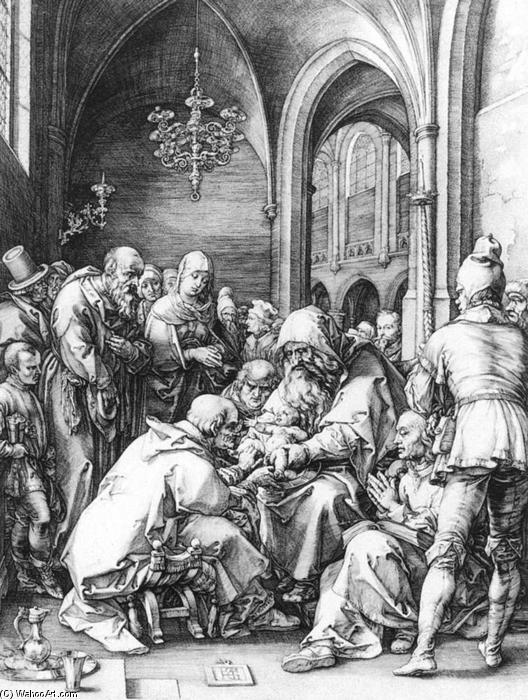
Circumcision in the Church of St Bavo at Haarlem
 Engraving
- WallArt
- Northern Mannerism
 1594
1594 470.0 x 355.0 cm
 British Museum
 Read More
Hand Made Oil Reproduction
Hand-painted oil on canvas in your size and frame, made to order by our artists. ( Buy Print Buy Image)




P118B $10

P118H $10

P118W $10

P438Z $10

P508JH $12

P508YH $12

P805H $10

P805Z $10

P919BZ $10

P919G $10

P919XJ $10

P959ZH $10

P968JZ $12

W106C $8

W218G $10

W218JH $8

W218Y $10

W307PJ $10

W316G $10

W316PJ $8

W316Y $10

W398PJ $8

W4111J $10

W500HY $15

W500JH $15

W692G $12

W849H $8

W940BG $15

W953PJ $8




Pick from our preset sizes that match the artwork's original proportions.

You may enter your own dimensions to fit a specific frame or space. If your selected size does not match the original image's proportions, we will either crop the artwork or extend the painting with additional hand-painted elements. A digital mockup will be sent for your approval before production begins.
Please note that the on-screen preview does not reflect the actual cropping or extension. Only the mockup will accurately show the final composition.
While custom sizes are available, we recommend selecting a dimension from the predefined list to preserve the original proportions.
After order, ArtsDot.com team will email client for instructions and provide a mockup preview
Worldwide Delivery () in 3/4 weeks instead of standard 5 weeks. (31 August). No compromise on quality.

Free Worldwide Express Shipping

High-Quality Linen Canvas

Full Shipping Insurance

Customs Tax Refund Guarantee

True Color Matching Guarantee

60-Day Return Policy (Defects Only)

100% Money-Back Guarantee

Bulk Discount Offer
 Glass option is only available in size under 110 CM

Circumcision in the Church of St Bavo at Haarlem
Reproduction Medium
Reproduction Size
-


Total Price
$ 688
Circumcision in St Bavo at Haarlem: A Renaissance Masterpiece Revisited
This engraving by Hendrick Goltzius, created in 1594, offers a captivating glimpse into the artistic fervor of the Northern Mannerist period. More than just a depiction of biblical narrative—the circumcision ceremony—it’s a testament to Goltzius's unparalleled skill as an engraver and his profound understanding of visual language. Examining this artwork reveals layers of meaning interwoven with meticulous craftsmanship, inviting contemplation on faith, artistry, and the enduring legacy of Renaissance ideals.- Composition & Setting: The scene unfolds within a grand Gothic church interior—specifically St Bavo’s Church in Haarlem—a space deliberately chosen to convey solemnity and spiritual significance. Goltzius skillfully employs linear perspective to create depth, guiding the viewer's eye through the architectural framework towards the central group of figures engaged in the ritual. The arrangement is densely populated, reflecting the artistic conventions of the time and emphasizing the importance of the event depicted.
- Technique & Style: Goltzius’s mastery lies in his innovative ‘swelling line’ technique—a hallmark of Mannerism—which distinguishes him from earlier Renaissance engravers like Dürer. This method involves applying pressure to the burin tool to create lines that subtly vary in thickness, generating shading and volume that imbues the image with remarkable realism. The engraving's surface texture mirrors the materiality of its subject matter, capturing the smoothness of skin and the solidity of stone with impressive accuracy.
- Symbolism & Narrative: At the heart of the composition is the circumcision ceremony itself—a pivotal moment in Jewish tradition symbolizing purification and covenant renewal. The figures surrounding the ritual are rendered with meticulous detail, conveying emotion and portraying roles within the religious hierarchy. Goltzius’s artistic choices resonate with broader humanist concerns about human dignity and spiritual contemplation.
- Historical Context: Produced during Philip II's reign in Spain, this engraving reflects the intellectual currents of the Renaissance—characterized by a renewed interest in classical art and philosophy alongside fervent devotion to Christianity. Goltzius’s ambition was to surpass his predecessors, notably Dürer, demonstrating that he could achieve artistic excellence while simultaneously adhering to established stylistic conventions.
- Emotional Impact: The engraving's monochrome palette—achieved through masterful hatching and cross-hatching—creates a mood of solemn reverence. Goltzius’s careful attention to detail captures not only the visual elements but also the psychological atmosphere of the scene, prompting viewers to consider themes of faith, ritual observance, and artistic virtuosity.
Related Artworks
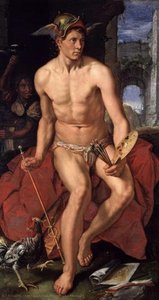
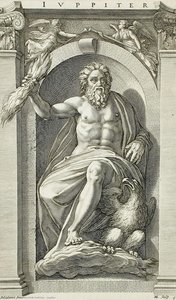
Artist Biography
early life and training
hendrick goltzius, a german-born dutch printmaker, draftsman, and painter, was born in january or february 1558. he was the leading dutch engraver of the early baroque period, or northern mannerism, lauded for his sophisticated technique and "exuberance" of his compositions. according to a. hyatt mayor, goltzius "was the last professional engraver who drew with the authority of a good painter and the last who invented many pictures for others to copy". goltzius's family moved to duisburg when he was 3 years old, and after studying painting on glass under his father, he learned engraving from the dutch polymath dirck volckertszoon coornhert.artistic career
in 1577, goltzius moved with coornhert to haarlem in the dutch republic, where he remained based for the rest of his life. he was also employed by philip galle to engrave a set of prints of the history of lucretia. goltzius had a malformed right hand from a fire when he was a baby, which turned out to be especially well-suited to holding the burin. this unique physical characteristic allowed him to master a commanding swing of line, making his engravings highly distinctive. hendrick goltzius brought to an unprecedented level the use of the "swelling line", where the burin is manipulated to make lines thicker or thinner to create a tonal effect from a distance.technique and style
goltzius was a pioneer of the "dot and lozenge" technique, where dots are placed in the middle of lozenge-shaped spaces created by cross-hatching to further refine tonal shading. his command of the burin is said to rival dürer, and he made engravings of bartholomeus spranger's paintings, thus increasing the fame of the latter – and his own. goltzius began painting at the age of forty-two; some of his paintings can be found in vienna. he also executed a few chiaroscuro woodcuts.public collections and legacy
most major print rooms will have a group of goltzius's many engravings, including the museum boijmans van beuningen, rijksmuseum amsterdam, and the metropolitan museum of art. his legacy can be seen in the works of other artists, such as jacques bellange, who was also a master of northern mannerist printmaking. goltzius's engravings and paintings continue to inspire art lovers and scholars alike, and his work can be found on ArtsDot.com and in the wikipedia article dedicated to his life and work.- some of goltzius's notable works include: jupiter, minerva, and the prophet baruch
- museums with his work: los angeles county museum of art, philadelphia museum of art, and british museum
- techniques used by goltzius: "swelling line" and "dot and lozenge" technique
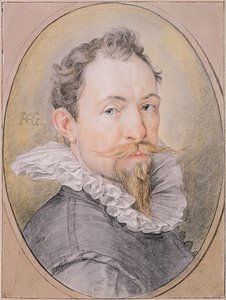
hendrik goltzius
1558 - 1617 , Italy
Quick Facts
- Artistic Movement Or Style: Northern Mannerism & Baroque engraving
- Artists Or Movements Influenced By This Artist: ['Jacques Bellange']
- Artists Who Influenced This Artist:
- Dirck Volckertszoon Coornhert
- Bartholomeus Spranger
- Date Of Birth: January or February 1558
- Full Name: Hendrick Goltzius
- Nationality: Dutch
- Notable Artworks:
- The Adoration of the Shepherds
- Arcadian Landscape
- Head of a Siren
- Hercules Killing Cacus
- Demogorgon and the Deities
- Apollo Belvedere
- The Last Supper
- Vries, Frederik de (died 1613)
- Place Of Birth: Braunschweig, Italy
Related Articles
Hendrick Goltzius: Master Engraver & the Flourishing of Dutch Mannerism
Explore the life & art of Hendrick Goltzius, a master engraver of Dutch Mannerism. Discover his innovative techniques, iconic engravings like 'Jahel', and lasting influence on Baroque art. Learn about collecting Goltzius today.
Mannerism: Bridging Renaissance Harmony & Baroque Drama – A Study of Style & Affectation
Explore the fascinating world of Mannerism! Discover its key characteristics, pioneering artists like Pontormo & Bronzino, and its pivotal role in bridging Renaissance harmony to Baroque drama. A comprehensive guide for art enthusiasts.
Northern Renaissance Masters: 10 Artworks That Shaped History |
Journey through the Northern Renaissance! Explore 10 iconic paintings by Jan van Eyck, Dürer & Bosch. Discover their stories, techniques & lasting impact. Find museum-quality art reproductions & elevate your home decor on .
Renaissance Mannerism: Style, Subtlety & the Transition from Harmony to Artifice
Explore the captivating world of Renaissance Mannerism! Discover its key characteristics, pioneering artists like Pontormo & Bronzino, and its pivotal role in art history. Expert insights & museum-quality reproductions at ArtsDot.
Mannerism's Masters: 10 Artworks That Redefined Renaissance Style | ArtsDot
Explore 10 defining Mannerism masterpieces – from Pontormo to El Greco. Discover the stories behind these Renaissance paintings, their unique style & symbolism. Find museum-quality art reproductions at ArtsDot.com and elevate your home decor.