 Preview
 Send
Send Share
Share
 Details

 Download
 Similars
 X-Ray
X-Ray Diaporama
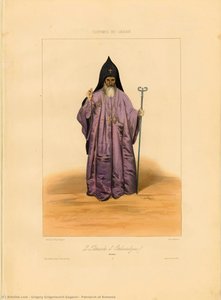
Patriarch of Armenia
 Acrylic On Canvas
- WallArt
- Impressionism
 1855
1855 59.0 x 42.0 cm
 Art Palace of Georgia - Museum of Cultural History
 Read More
Hand Made Oil Reproduction
Hand-painted oil on canvas in your size and frame, made to order by our artists. ( Buy Print Buy Image)




P118B $10

P118H $10

P118W $10

P438Z $10

P508JH $12

P508YH $12

P805H $10

P805Z $10

P919BZ $10

P919G $10

P919XJ $10

P959ZH $10

P968JZ $12

W106C $8

W218G $10

W218JH $8

W218Y $10

W307PJ $10

W316G $10

W316PJ $8

W316Y $10

W398PJ $8

W4111J $10

W500HY $15

W500JH $15

W692G $12

W849H $8

W940BG $15

W953PJ $8




Pick from our preset sizes that match the artwork's original proportions.

You may enter your own dimensions to fit a specific frame or space. If your selected size does not match the original image's proportions, we will either crop the artwork or extend the painting with additional hand-painted elements. A digital mockup will be sent for your approval before production begins.
Please note that the on-screen preview does not reflect the actual cropping or extension. Only the mockup will accurately show the final composition.
While custom sizes are available, we recommend selecting a dimension from the predefined list to preserve the original proportions.
After order, ArtsDot.com team will email client for instructions and provide a mockup preview
Worldwide Delivery () in 3/4 weeks instead of standard 5 weeks. (26 August). No compromise on quality.

Free Worldwide Express Shipping

High-Quality Linen Canvas

Full Shipping Insurance

Customs Tax Refund Guarantee

True Color Matching Guarantee

60-Day Return Policy (Defects Only)

100% Money-Back Guarantee

Bulk Discount Offer
 Glass option is only available in size under 110 CM

Patriarch of Armenia
Reproduction Medium
Reproduction Size
-


Total Price
$ 263
Artwork Description
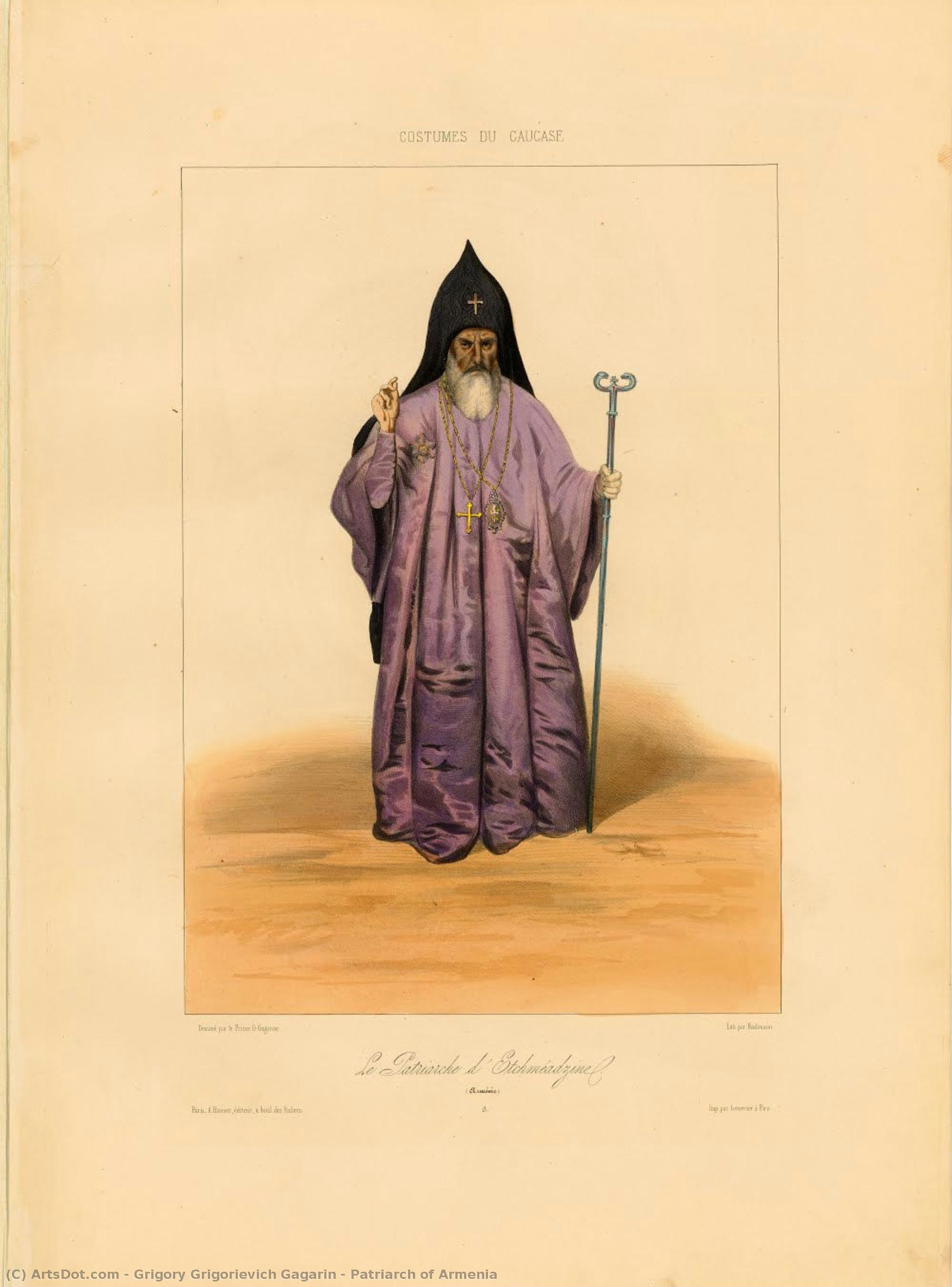
A Vision of Faith: Grigory Gagarin’s “Patriarch of Armenia”
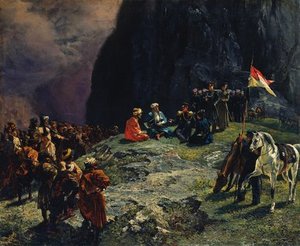
Grigory Gagarin's "Patriarch of Armenia," painted in 1855, stands as a remarkable testament to both artistic skill and the spiritual fervor of its time—a pivotal moment in Armenian history and culture. Commissioned by Tsar Alexander II during the turbulent years of the Caucasian War, this monumental canvas transcends mere depiction; it embodies a profound yearning for unity and resilience within the Armenian Orthodox faith. Measuring 59 x 42 cm and housed at the Art Palace of Georgia – Museum of Cultural History in Tbilisi, the painting offers a glimpse into Gagarin’s artistic vision and his engagement with the broader cultural landscape of Imperial Russia.- Subject Matter: The artwork portrays Saint Gregory Mamikonian, Archbishop of Armenia and Catholicos of All Armenians—a figure revered as the patron saint of Armenia and credited with converting Armenia to Christianity in 301 AD. Gagarin meticulously captures his solemn posture, radiating wisdom and authority, against a backdrop of earthy tones that evoke the rugged beauty of Armenian highlands.
- Style: Gagarin’s style aligns closely with Romanticism, prevalent throughout Europe during the mid-nineteenth century. Characterized by dramatic lighting, expressive brushstrokes, and idealized figures—reflecting an interest in biblical narratives and moral themes—the painting prioritizes conveying emotion over strict realism.
- Technique: Gagarin employed oil paint on canvas, utilizing a glazing technique that allowed for layering colors to achieve depth and luminosity. The artist’s meticulous attention to detail is evident in the rendering of drapery folds and facial features, demonstrating mastery of artistic observation and execution.
- Symbolism: The purple robes worn by Saint Gregory represent royal dignity and spiritual holiness—a visual allusion to Armenia’s ancient monarchy and its unwavering faith. The staff he holds signifies leadership and guidance—reflecting the Catholicos' role as protector of Armenian Christendom.
- Emotional Impact: “Patriarch of Armenia” evokes a sense of solemn contemplation and reverence, inviting viewers to contemplate themes of faith, resilience, and national identity. Gagarin’s masterful use of color and composition contributes to an atmosphere of grandeur and spiritual aspiration—capturing the essence of Armenian Orthodox piety.
Related Artworks
Artist Biography
early life and education
grigory grigorievich gagarin, a russian painter, major general, and administrator, was born in 1810 in saint petersburg to the noble rurikid princely gagarin family. his father, prince grigory ivanovich gagarin, was a russian diplomat in france and later the ambassador to italy. despite not receiving a formal artistic education, grigory took private lessons from the renowned russian painter karl briullov.artistic career and notable works
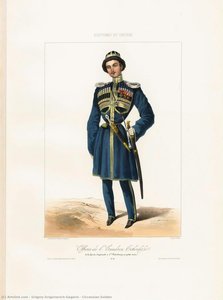
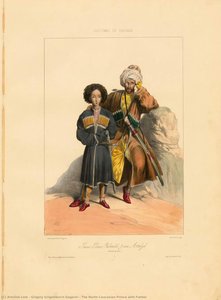
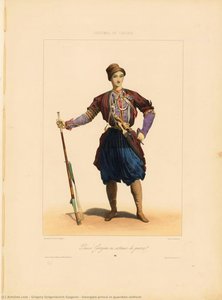
grigory's artistic career is marked by his association with prominent literary figures of his time, including alexander pushkin and mikhail lermontov. he illustrated pushkin's works, such as "the queen of spades" and "the tale of tsar saltan." some of his notable paintings include:- caucasian prince (59 x 42 cm, art palace of georgia - museum of cultural history, tbilisi, georgia, paper) - a testament to his time in the caucasus region.
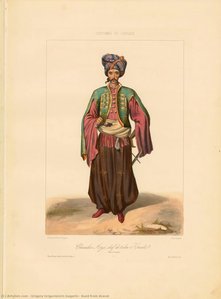
- circassian woman (59 x 42 cm, art palace of georgia - museum of cultural history, tbilisi, georgia, paper) - reflecting his interest in portraiture and regional studies.
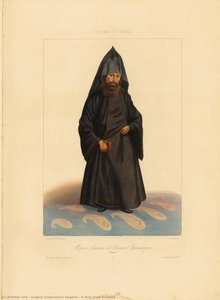
- a prist from armenia (59 x 42 cm, art palace of georgia - museum of cultural history, tbilisi, georgia, paper) - demonstrating his fascination with the diverse cultures of the region.
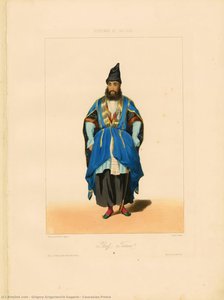
- kurd from ararat (59 x 42 cm, art palace of georgia - museum of cultural history, tbilisi, georgia, paper) - showcasing his ability to capture the essence of different ethnic groups.
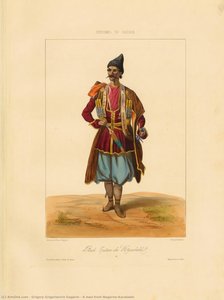
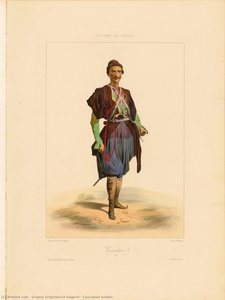
- georgian man (59 x 42 cm, art palace of georgia - museum of cultural history, tbilisi, georgia, paper) - a portrait that highlights his skill in capturing the subtleties of human expression.
military and diplomatic career
grigory served as a russian diplomat in paris, rome, and constantinople, with a notable stint in munich. his return to russia in 1839 marked a significant shift in his career, as he became involved in various administrative roles. key points: * born into the noble rurikid princely gagarin family * trained under karl briullov despite not receiving formal artistic education * associated with alexander pushkin and mikhail lermontov * served as a diplomat in several european cities * notable for his portraits of regional figures and groupslegacy
grigory grigorievich gagarin's legacy is multifaceted, reflecting both his artistic talents and his diplomatic service. his paintings offer a unique window into the cultures and landscapes he encountered during his lifetime.- view more of grigory grigorievich gagarin's artworks on ArtsDot.com
- explore the collections of the taganrog art museum, which features works by renowned russian artists, on ArtsDot.com
- discover more about russian art and its history on wikipedia: russian art
references:
- caucasian prince, ArtsDot.com
- russian art, wikipedia
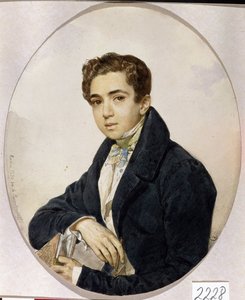
grigory grigorievich gagarin
1810 - 1893 , Russia
Quick Facts
- Artistic Movement Or Style: Romanticism
- Artists Who Influenced This Artist: ['Karl Briullov']
- Date Of Birth: May 29 April 1810
- Date Of Death: January 30 January 1893
- Full Name: Grigory Grigorievich Gagarin
- Nationality: Russian
- Notable Artworks:
- Caucasian Prince
- Circassian Woman
- A Priest from Armenia
- Kurds from Ararat
- Georgian Man
- Place Of Birth: Saint Petersburg, Russia
Related Articles

The Fresco as Family Legacy: Preserving Heritage Through Wall Art
Explore the rich history & enduring legacy of fresco painting. Discover how to preserve family heritage through stunning wall art. Expert insights & restoration guidance.

The Enduring Legacy of Fresco Painting: Techniques, History & Contemporary Relevance
Explore the rich history & enduring artistry of fresco painting – from Giotto to Michelangelo! Discover techniques, conservation efforts, & modern applications. Learn how ArtsDot brings this timeless art form to your home.

The Enduring Legacy of Fresco: Technique, History & Artistic Expression Across Cultures
Explore the rich history & enduring legacy of fresco painting! Discover ancient techniques, Giotto's masterpieces, and modern applications. Expert insights for art lovers & professionals.

Art That Lives With You: The Emotional Power of a Custom Interior Fresco
Discover the emotional power & timeless beauty of custom interior frescoes. Explore history, design tips & expert guidance from – creating lasting legacies.
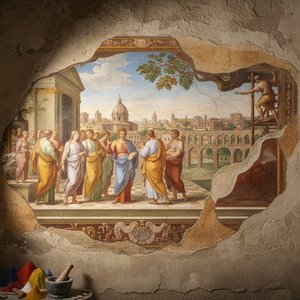
The Enduring Legacy of Fresco: Technique, History & Artistic Expression
Explore the rich history & enduring artistry of fresco painting. Discover techniques from Giotto to Michelangelo, conservation efforts, & modern applications. Learn how ArtsDot brings this timeless art form to your home.