 Preview
 Send
Send Share
Share
 Details

 Download
 Similars
 X-Ray
X-Ray Diaporama
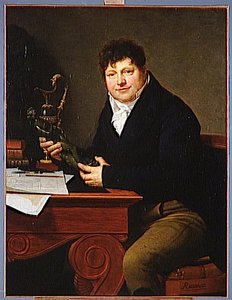
ANTOINE ANDRE RAVRIO (1759 1814)


 Read More
Hand Made Oil Reproduction
Hand-painted oil on canvas in your size and frame, made to order by our artists. ( Buy Print Buy Image)




P118B $10

P118H $10

P118W $10

P438Z $10

P508JH $12

P508YH $12

P805H $10

P805Z $10

P919BZ $10

P919G $10

P919XJ $10

P959ZH $10

P968JZ $12

W106C $8

W218G $10

W218JH $8

W218Y $10

W307PJ $10

W316G $10

W316PJ $8

W316Y $10

W398PJ $8

W4111J $10

W500HY $15

W500JH $15

W692G $12

W849H $8

W940BG $15

W953PJ $8




Pick from our preset sizes that match the artwork's original proportions.

You may enter your own dimensions to fit a specific frame or space. If your selected size does not match the original image's proportions, we will either crop the artwork or extend the painting with additional hand-painted elements. A digital mockup will be sent for your approval before production begins.
Please note that the on-screen preview does not reflect the actual cropping or extension. Only the mockup will accurately show the final composition.
While custom sizes are available, we recommend selecting a dimension from the predefined list to preserve the original proportions.
After order, ArtsDot.com team will email client for instructions and provide a mockup preview
Worldwide Delivery () in 3/4 weeks instead of standard 5 weeks. (16 August). No compromise on quality.

Free Worldwide Express Shipping

High-Quality Linen Canvas

Full Shipping Insurance

Customs Tax Refund Guarantee

True Color Matching Guarantee

60-Day Return Policy (Defects Only)

100% Money-Back Guarantee

Bulk Discount Offer
 Glass option is only available in size under 110 CM

ANTOINE ANDRE RAVRIO (1759 1814)
Reproduction Medium
Reproduction Size
-


Total Price
$ 263
Artwork Description
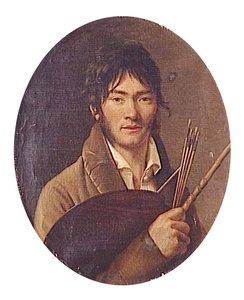
A Portrait of an Artisan’s Dignity: Henri François Riesener's Antoine André Ravrio
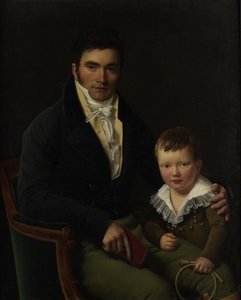
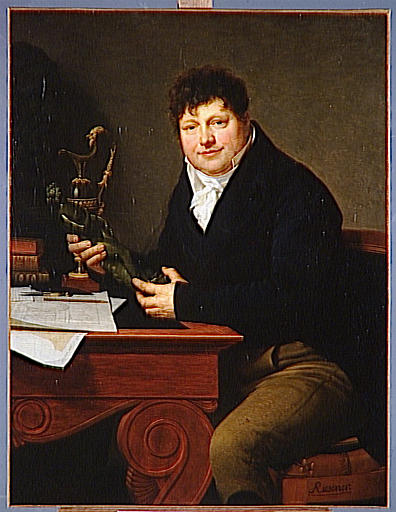
Henri François Riesener’s portrait of Antoine André Ravrio offers a captivating glimpse into the world of 18th-century Parisian craftsmanship and aristocratic patronage. Completed around 1812, this oil painting transcends a simple likeness; it’s a carefully constructed tableau of status, profession, and quiet intellectualism, embodying the Neoclassical ideals that defined its era. The subject, Ravrio – a bronzier (bronze caster) renowned for his work at Napoleon's court – is depicted seated at a meticulously rendered desk, radiating an air of dignified composure. Riesener’s skill lies not merely in capturing a physical likeness but in imbuing the portrait with a profound sense of character and atmosphere.
The painting immediately draws the eye to Ravrio's face – rendered with subtle modeling and delicate attention to detail, revealing a thoughtful gaze that suggests both experience and quiet contemplation. The muted color palette—dominated by browns, creams, and touches of red—evokes the formality and restraint characteristic of Neoclassicism. The lighting is soft and diffused, casting gentle shadows across Ravrio’s features and highlighting the textures of his clothing – a rich coat draped over his chair, a crisp white shirt collar, and the worn leather of the desk. The background, deliberately darker, serves to further emphasize the subject and create a sense of intimacy, drawing the viewer into the scene.
Neoclassical Composition and Architectural Detail
Riesener’s mastery is evident in the painting's meticulously constructed composition. The arrangement adheres strictly to Neoclassical principles: Ravrio is positioned centrally within a shallow space, creating a sense of immediacy and direct engagement. The architectural elements—a sturdy desk, elegant columns, and a simple chair—are rendered with precise detail, reflecting the era’s fascination with order, symmetry, and classical forms. These aren't merely decorative; they subtly reinforce Ravrio’s profession as an artisan skilled in creating objects of refined beauty and precision.
The use of lines is particularly noteworthy. The straight edges of the desk and columns create a sense of stability and control, while the folds of Ravrio’s clothing introduce a subtle dynamism. Shapes are largely geometric – rectangular surfaces, square papers, cylindrical columns – yet softened by the organic curves of the human form. This careful balance between structure and fluidity is characteristic of Riesener's style and contributes to the painting’s overall sense of harmony.
Symbolism and Historical Context
Beyond its formal beauty, the portrait holds subtle symbolic weight. The desk itself, laden with papers and tools, speaks to Ravrio’s profession as a craftsman and artisan. The presence of a cup – likely containing ink or wine – hints at intellectual pursuits and artistic creation. Considering the historical context—the Napoleonic era marked by both artistic flourishing and political upheaval—the portrait can be interpreted as a celebration of skilled labor within a society grappling with profound change. Ravrio’s dignified demeanor suggests resilience and stability amidst uncertainty.
Further research reveals that Riesener was deeply connected to the Parisian art world, apprenticed under masters like François-André Vincent and Jacques-Louis David. His work reflects both the influence of these formative experiences and his own artistic sensibilities. The portrait’s inclusion in the Salon of 1812—a prestigious annual exhibition showcasing the finest works of French art—testifies to its quality and recognition within the artistic community. The painting's provenance, tracing back to the Louvre Museum, underscores its historical significance and enduring appeal.
A Reproduction Worthy of Display
Reproductions of this captivating portrait offer a remarkable opportunity to bring Riesener’s masterful composition into any interior space. The rich textures, subtle color gradations, and carefully rendered details are faithfully reproduced in high-quality prints, capturing the essence of the original painting. Whether adorning a study, salon, or gallery wall, this artwork serves as a testament to the enduring legacy of Neoclassical art and the artistry of Henri François Riesener.
Related Artworks

Artist Biography
A Legacy of Elegance: The Life and Art of Henri François Riesener
In the grand, sweeping tapestry of French art history, few names evoke the refined grace of the Napoleonic era quite like Henri François Riesener. Born in Paris in 1767, Riesener was a man shaped by both the meticulous precision of craftsmanship and the turbulent winds of revolution. He descended from a prestigious lineage of German cabinetmakers, most notably his father, Jean-Henri Riesener, whose legendary skill in creating exquisite furniture for the French court instilled in the younger Riesener an innate appreciation for fine detail and aesthetic harmony. This heritage provided a foundation of discipline that would later define his approach to the delicate medium of miniature painting and the commanding presence of his larger portraits.
Riesener’s artistic journey was far from a quiet studio existence; it was a life lived amidst the very heart of historical transformation. His formal education brought him under the guidance of masters such as François-André Vincent and the titan of Neoclassicism, Jacques-Louis David. From these mentors, he absorbed the rigorous anatomical accuracy and the dignified, structured compositions that characterized the era. Yet, his horizons were expanded far beyond the borders of Paris. Driven by a spirit of adventure, Riesener joined Napoleon’s army during the Italian campaigns and later traveled to Egypt. These expeditions exposed him to the exoticism of distant cultures and the stark beauty of ancient landscapes, infusing his later work with a subtle psychological depth and a worldly perspective that set him apart from his contemporaries.
Mastery of the Portrait and the Miniature
Upon his return to a post-war Paris, Riesener established himself as a premier portraitist, a role that allowed him to navigate the highest echel's of society. His ability to capture not just the physical likeness, but the very essence of his subjects, made him a favorite among the elite. His canvases served as windows into the Napoleonic age, documenting the faces of power and culture. Whether he was rendering the authoritative presence of Maurice Quay or the intellectual dignity of figures like Charles Maurice de Talleyrand-Périgord, Riesener utilized a Neoclassical technique that emphasized clarity, light, and a sense of timelessness.
Beyond the grand scale of oil portraiture, Riesener found profound success as a miniaturist. This medium required an extraordinary level of patience and a delicate touch, qualities he possessed in abundance. His miniatures were prized for their intimacy, offering a portable piece of art that could be held close to the heart. His repertoire was remarkably diverse, ranging from:
- The commanding portraits of military and political figures such as Eugène de Beauharnais.
- Captivating depictions of celebrated opera singers, which brought a sense of movement and lyricism to his work.
- Intimate studies of the Parisian socialites, including Madame Sallandrouze.
- Tributes to fellow artists, such as his poignant portrait of the sculptor Antoine André Ravrio, now preserved in the Louvre Museum.
Historical Significance and Enduring Impression
The significance of Henri François Riesener lies in his role as a visual chronicler of a pivotal era. As France transitioned from the twilight of the Enlightenment through the fervor of the Revolution and into the grandeur of the First Empire, Riesener’s brush captured the shifting moods of a nation. His work embodies the tension between the structured elegance of Neoclassicism and the burgeoning emotional intensity of Romanticism. Through his portraits, we gain an intimate understanding of the faces that shaped modern Europe, seeing them not merely as historical icons, but as living, breathing individuals caught in the currents of change.
Today, Riesener’s legacy continues to resonate through the prestigious collections of the Louvre and other world-class institutions. His ability to blend the technical precision inherited from his father's craft with the grand stylistic innovations of his teachers ensures that his work remains a vital subject of study for art historians. To look upon a Riesener portrait is to witness the intersection of personal artistry and historical destiny, a testament to a life spent capturing the fleeting beauty and enduring dignity of the human spirit.
henri françois riesener
1767 - 1828 , France
Quick Facts
- Artistic Movement Or Style: Neoclassical Portraiture
- Artists Or Movements Influenced By This Artist: ['Classical Portraiture']
- Artists Who Influenced This Artist:
- François-André Vincent
- Jacques-Louis David
- Date Of Birth: Paris, France (1767)
- Date Of Death: 1828
- Full Name: Henri François Riesener
- Nationality: French
- Notable Artworks:
- Portrait de François Adrien Boieldieu
- Portrait of Sofia Apraxina
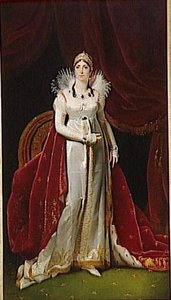
- Portrait en pied de l’Impératrice Joséphine
- Place Of Birth: Paris
Related Articles
The Revival of Antiquity: Exploring Ideals of Beauty & Power in Neoclassical Portraiture
Explore the captivating world of Neoclassical portraiture! Discover the power & ideals behind masterpieces by David, Girodet & more. Expert analysis, custom reproductions & art appraisal at ArtsDot.
The Enduring Legacy of Formal Portraiture: Power, Identity & Artistic Exploration
Explore the rich history of formal portraiture & its enduring power to capture identity and shape perception. Discover investment-worthy artworks, expert appraisals, and custom reproduction services at ArtsDot.

The Revival of Antiquity: Exploring the Neoclassical Movement & its Enduring Legacy
Explore the revival of classical art with our deep dive into Neoclassicism! Discover key artists like Jacques-Louis David, Enlightenment influences & lasting impact on art history. High-quality reproductions at ArtsDot.
Neoclassical Art: 10 Masterpieces That Shaped History |
Explore 10 defining Neoclassical masterpieces by David, Ingres & Canova. Discover the history, symbolism & artistry behind these iconic paintings and sculptures. Find museum-quality art reproductions at – elevate your home with timeless beauty.
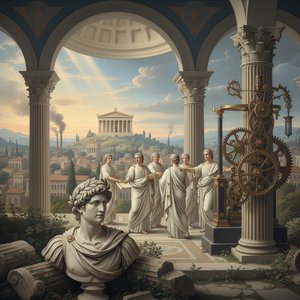
The Revival of Antiquity: Exploring the Ideals & Innovations of Neoclassical Art
Explore the revival of classical art with our deep dive into Neoclassicism! Discover key artists like Jacques-Louis David, Enlightenment influences & lasting impact on art history. Learn more now.