 Preview
 Send
Send Share
Share
 Details

 Download
 Similars
 X-Ray
X-Ray Diaporama
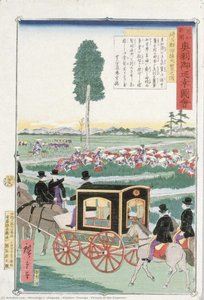
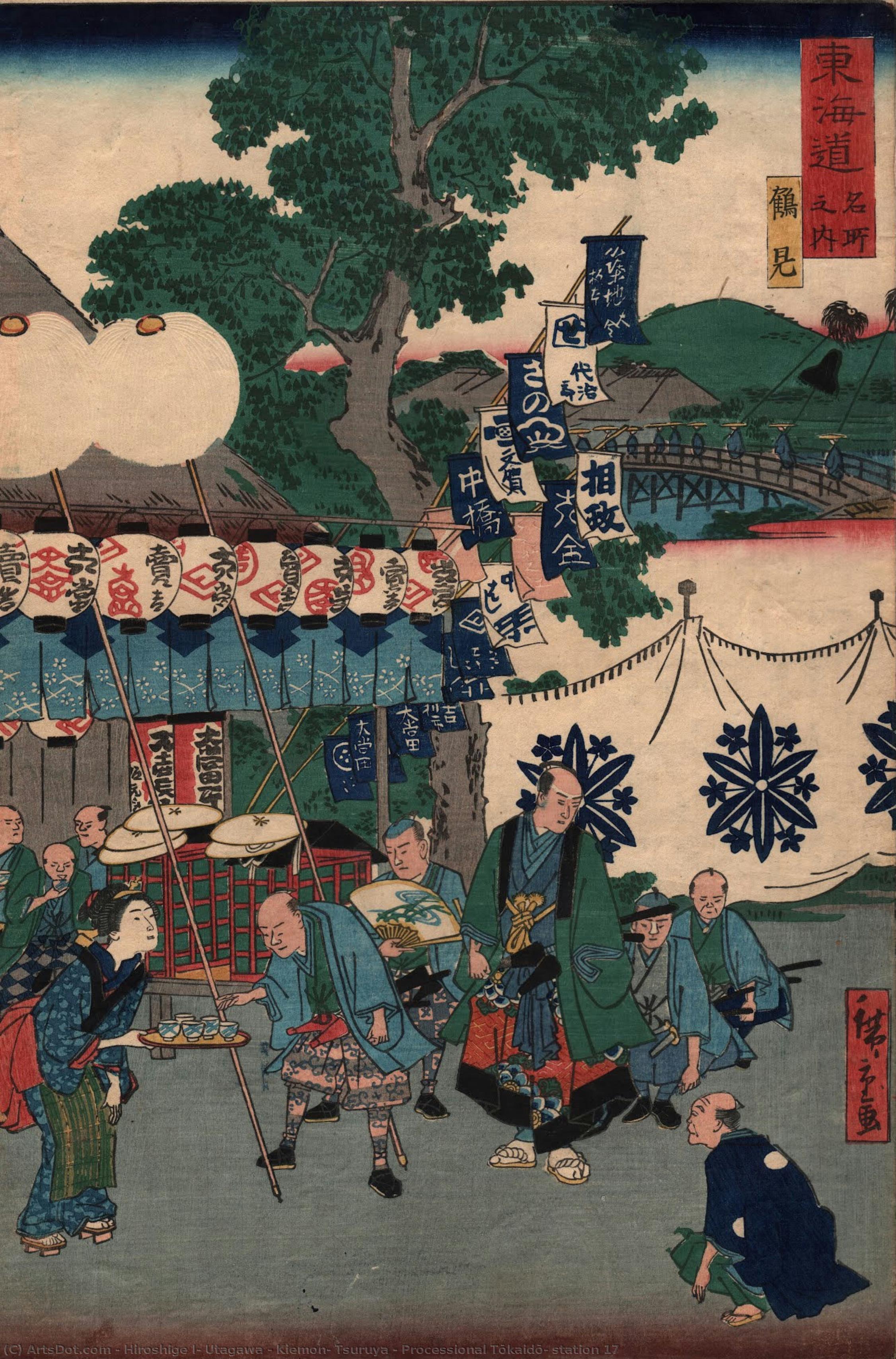
Processional Tōkaidō, station 17
 Woodblock Print
- Ukiyo-e
 1863
1863- 19th Century
 38.0 x 26.0 cm
 Bujalance Collection
 Read More
Hand Made Oil Reproduction
Hand-painted oil on canvas in your size and frame, made to order by our artists. ( Buy Print Buy Image)




P118B $10

P118H $10

P118W $10

P438Z $10

P508JH $12

P508YH $12

P805H $10

P805Z $10

P919BZ $10

P919G $10

P919XJ $10

P959ZH $10

P968JZ $12

W106C $8

W218G $10

W218JH $8

W218Y $10

W307PJ $10

W316G $10

W316PJ $8

W316Y $10

W398PJ $8

W4111J $10

W500HY $15

W500JH $15

W692G $12

W849H $8

W940BG $15

W953PJ $8




Pick from our preset sizes that match the artwork's original proportions.

You may enter your own dimensions to fit a specific frame or space. If your selected size does not match the original image's proportions, we will either crop the artwork or extend the painting with additional hand-painted elements. A digital mockup will be sent for your approval before production begins.
Please note that the on-screen preview does not reflect the actual cropping or extension. Only the mockup will accurately show the final composition.
While custom sizes are available, we recommend selecting a dimension from the predefined list to preserve the original proportions.
After order, ArtsDot.com team will email client for instructions and provide a mockup preview
Worldwide Delivery () in 3/4 weeks instead of standard 5 weeks. (16 August). No compromise on quality.

Free Worldwide Express Shipping

High-Quality Linen Canvas

Full Shipping Insurance

Customs Tax Refund Guarantee

True Color Matching Guarantee

60-Day Return Policy (Defects Only)

100% Money-Back Guarantee

Bulk Discount Offer
 Glass option is only available in size under 110 CM

Processional Tōkaidō, station 17
Reproduction Medium
Reproduction Size
-


Total Price
$ 263
Artwork Description
A Journey Through Time: The Living Spirit of the Tōkaidō
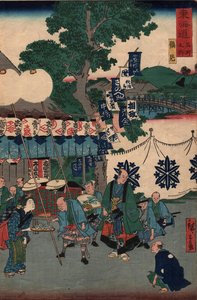
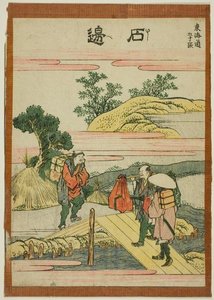
In the delicate dance of lines and colors found within Processional Tōkaidō, station 17, we are transported to a vanished era of Japanese history. Created in 1863, this exquisite work captures a fleeting moment of movement along one of Japan's most legendary travel routes. The scene unfolds with a rhythmic grace, as a procession of travelers winds through the landscape, their lives momentarily intertwined with the natural world. Through the masterful hand of Hiroshige I, the viewer does not merely observe a historical event but feels the very pulse of the Edo period—the soft rustle of umbrellas, the steady cadence of walking feet, and the quiet atmosphere of a roadside encounter.
The composition is a masterclass in the ukiyo-e tradition, where the boundaries between humanity and nature are beautifully blurred. A central tree anchors the scene, providing a sense of permanence against the transient movement of the travelers. Above, the sky is punctuated by the subtle presence of birds, adding a layer of ethereal lightness to the composition. This interplay between the grounded, earthly procession and the soaring elements of the sky creates a profound sense of balance, inviting the observer to contemplate the harmony that once defined the relationship between man and his environment.
Mastery of Color and the Ukiyo-e Legacy
The technical brilliance of this piece lies in its ability to evoke atmosphere through a sophisticated use of color and detail. As a cornerstone of the woodblock printing tradition, the work utilizes vibrant yet harmonious tones that breathe life into the landscape. The artist’s collaboration with the publisher Tsuruya Kiemon allowed for a level of precision and tonal depth that remains breathtaking even in high-quality reproductions. Every stroke serves a purpose, from the intricate textures of the travelers' garments to the soft, atmospheric washes that suggest the humidity and light of a Japanese afternoon.
For the discerning collector or interior designer, this artwork offers more than just aesthetic beauty; it provides a window into a cultural zenith. The meticulous detail found in the small objects—the bowls, the umbrellas, the subtle gestures of the figures—creates a narrative richness that rewards repeated viewing. It is a piece that commands attention through its storytelling, making it an ideal focal point for spaces that value historical depth and a sense of serene sophistication.
An Invitation to Elegance and Reflection
Integrating a reproduction of Processional Tōkaidō, station 17 into a contemporary interior is an act of bringing timeless tranquility into the modern home. The artwork possesses a unique emotional resonance, evoking feelings of nostalgia, wanderlust, and peace. It serves as a quiet reminder of the beauty found in the journey itself, rather than just the destination. Whether placed in a sunlit study or a grand living area, the piece acts as a conversational anchor, sparking curiosity about the rich heritage of Japanese art.
Owning such a work is an opportunity to celebrate the enduring legacy of Hiroshige I, an artist whose influence reached far beyond the borders of Japan to inspire the great Impressionists of Europe. This painting is not merely a depiction of a road; it is an invitation to step onto that road and experience the timeless elegance of a world captured in perfect, permanent motion.
Related Artworks
Artist Biography
introduction to the artist
hiroshige i, utagawa & kiemon, tsuruya, a renowned japanese ukiyo-e artist, is best known for his landscapes, such as the fifty-three stations of the tōkaidō and the sixty-nine stations of the kiso kaidō. born in 1797, he was considered one of the last great artists in the ukiyo-e tradition. his collaboration with tsuruya kiemon, a japanese publisher and printer, resulted in some of the most iconic prints of the era.artistic style and techniques
hiroshige i, utagawa & kiemon, tsuruya's artistic style is characterized by his use of vibrant colors and detailed depictions of landscapes. his woodblock prints are highly prized for their beauty and historical significance. the artist's collaboration with tsuruya kiemon led to the creation of several notable works, including processional tōkaidō, station 17, which is part of the bujalance collection in spain.notable works and collaborations
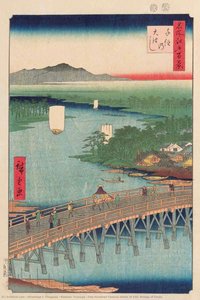
some of hiroshige i, utagawa & kiemon, tsuruya's most notable works include:- one hundred famous views of edo: bridge of senju, a stunning example of japanese art from the 19th century.
- kanadeon chushingura, act 1, a remarkable example of japanese ukiyo-e art, created in 1855.
- picture of the emperor, a multicolored woodblock print depicting emperor meiji's visit to the tōhoku region and hokkaido.
legacy and impact
hiroshige i, utagawa & kiemon, tsuruya's legacy can be seen in his influence on western art. his landscapes have been widely admired and studied by artists around the world. the artist's page on ArtsDot.com provides a comprehensive overview of his life and work, including his notable collaborations with tsuruya kiemon. the saitama prefectural museum of history and folklore in japan is home to several of the artist's works, including picture of the emperor.conclusion
hiroshige i, utagawa & kiemon, tsuruya's biography serves as a testament to his enduring legacy in the world of japanese art. his collaboration with tsuruya kiemon resulted in some of the most iconic prints of the era, and his influence can be seen in western art to this day. as a renowned ukiyo-e artist, hiroshige i, utagawa & kiemon, tsuruya's work continues to inspire artists and art enthusiasts around the world.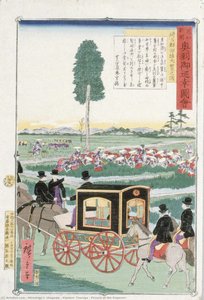
hiroshige i, utagawa & kiemon, tsuruya
1797 - 1858 , Japan
Quick Facts
- Artistic Movement Or Style: Ukiyo-e
- Artists Or Movements Influenced By This Artist: ['Western Impressionists']
- Date Of Birth: Tokyo, Japan (1797)
- Full Name: Hiroshige I, Utagawa & Kiemon
- Nationality: Japanese
- Notable Artworks:
- The Fifty-three Stations of the Tōkaidō
- Kanadeon Chushingura Act 1
- Picture of the Emperor
- Place Of Birth: Tokyo
Related Articles

Hokusai's Masterpieces: 25 Iconic Prints & Paintings for Art Lovers | ArtsDot
Journey through Katsushika Hokusai’s 25 most iconic artworks, including *The Great Wave*. Explore the ukiyo-e master's history, style & timeless Japanese woodblock prints. Find museum-quality reproductions for your home at ArtsDot.com.
Ukiyo-e's Greatest Hits: 10 Masterpieces That Shaped a Movement | ArtsDot
Journey into Japan's 'Floating World'! Explore 10 Ukiyo-e masterpieces by Hokusai, Hiroshige & more. Discover the stories behind these iconic woodblock prints and bring timeless Japanese art to your home with ArtsDot.com. Explore the full collection online.
Serenity on Canvas: A Guide to the Timeless Beauty of Japanese Landscape Painting
Discover the serene beauty of Japanese landscape painting. From Hokusai's iconic woodblock prints to meditative sumi-e ink washes, explore a visual journey through the 'floating world' and learn how to bring this timeless Zen aesthetic into your modern home decor.
Floating World: The Captivating Art and Legacy of Japanese Ukiyo-e
Explore the profound beauty of Japanese Ukiyo-e. Discover the history, masters like Hokusai, and the enduring legacy of the 'Floating World' through an expert art-historical lens.
Ukiyo-e's Poetic Visionary: Hiroshige Ando & the Transformation of Landscape in 19th-Century Japan
Explore the life & art of Ando Hiroshige, Japan's last great ukiyo-e master. Discover his iconic landscapes, poetic style, and profound influence on Western Impressionism. Learn about The Fifty-Three Stations & more!