 Preview
 Send
Send Share
Share
 Details

 Download
 Similars
 X-Ray
X-Ray Diaporama
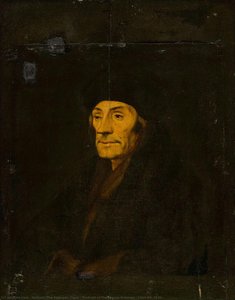
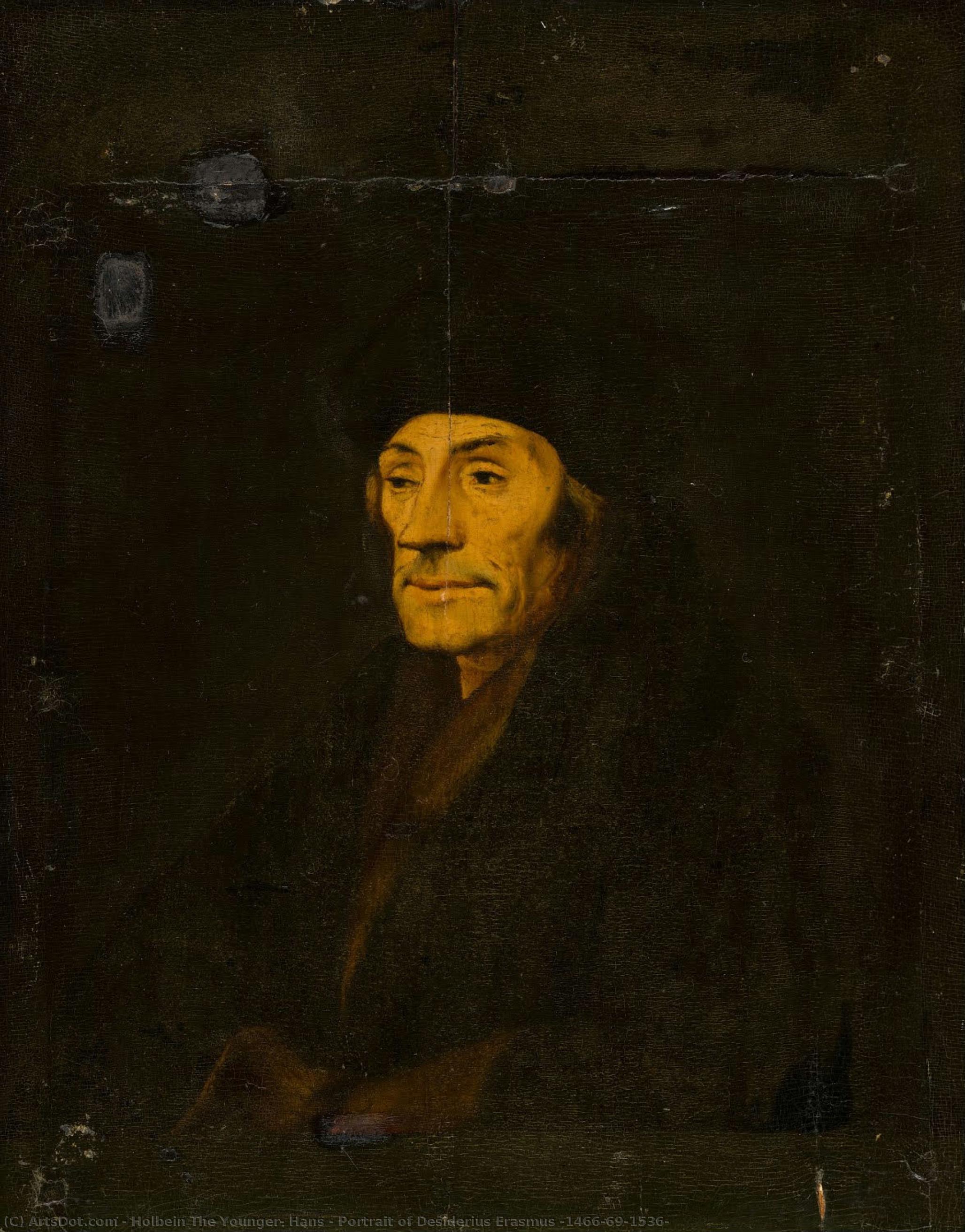
Portrait of Desiderius Erasmus (1466/69-1536)
 Oil On Canvas
- WallArt
- Renaissance Portraiture
 Renaissance
 24.0 x 19.0 cm
 Mauritshuis
 Read More
Hand Made Oil Reproduction
Hand-painted oil on canvas in your size and frame, made to order by our artists. ( Buy Print Buy Image)




P118B $10

P118H $10

P118W $10

P438Z $10

P508JH $12

P508YH $12

P805H $10

P805Z $10

P919BZ $10

P919G $10

P919XJ $10

P959ZH $10

P968JZ $12

W106C $8

W218G $10

W218JH $8

W218Y $10

W307PJ $10

W316G $10

W316PJ $8

W316Y $10

W398PJ $8

W4111J $10

W500HY $15

W500JH $15

W692G $12

W849H $8

W940BG $15

W953PJ $8




Pick from our preset sizes that match the artwork's original proportions.

You may enter your own dimensions to fit a specific frame or space. If your selected size does not match the original image's proportions, we will either crop the artwork or extend the painting with additional hand-painted elements. A digital mockup will be sent for your approval before production begins.
Please note that the on-screen preview does not reflect the actual cropping or extension. Only the mockup will accurately show the final composition.
While custom sizes are available, we recommend selecting a dimension from the predefined list to preserve the original proportions.
After order, ArtsDot.com team will email client for instructions and provide a mockup preview
Worldwide Delivery () in 3/4 weeks instead of standard 5 weeks. (3 September). No compromise on quality.

Free Worldwide Express Shipping

High-Quality Linen Canvas

Full Shipping Insurance

Customs Tax Refund Guarantee

True Color Matching Guarantee

60-Day Return Policy (Defects Only)

100% Money-Back Guarantee

Bulk Discount Offer
 Glass option is only available in size under 110 CM

Portrait of Desiderius Erasmus (1466/69-1536)
Reproduction Medium
Reproduction Size
-


Total Price
$ 263
A Renaissance Encounter with Intellect
In the quiet, profound gaze of Hans Holbein the Younger’s Portrait of Desiderius Erasmus, we encounter more than just a likeness; we enter the very heart of the Northern Renaissance. Completed around 1526, this masterpiece serves as a window into an era defined by the transformative power of humanism. The subject, Erasmus of Rotterdam, was perhaps the most influential scholar of his age, a man whose pen shaped the religious and intellectual landscape of Europe. Holbein does not merely present a face; he captures a mind in contemplation. Through a masterful command of light and shadow, the artist invites the viewer into a private moment of scholarly introspection, making the painting an essential piece for any collection dedicated to the enduring legacy of human thought.
The composition is a masterclass in understated power. Eschewing the flamboyant ornamentation often found in later eras, Holbein utilizes a somber and sophisticated palette dominated by deep blacks, earthy browns, and subtle, warm yellows. This restrained color scheme directs all emotional weight toward the subject's expression. The lighting, striking from the left, creates a dramatic chiaroscuro effect that carves the features of Erasmus out of the darkness. This technique lends a sculptural three-dimensionality to the face, highlighting the furrowed brow and the intelligent, piercing eyes that seem to look through the viewer toward a distant, philosophical horizon. For the interior designer, this painting offers a sense of grounded authority and timeless elegance, perfect for creating a focal point in a study or a sophisticated gallery space.
The Artistry of Precision and Soul
Technically, the work is a testament to Holbein’s unparalleled ability to render texture and truth. Using oil on canvas, the artist employed meticulous layering to achieve a lifelike quality that remains breathtaking centuries later. One can almost feel the weight of the heavy, dark fabric of Erasmus's attire and the soft, tactile nature of his skin. The subtle gradations of tone in the shadows are not merely absences of light but are rich with depth, suggesting the complexity of the man himself. Every brushstroke, though blended to a smooth finish, serves the purpose of anatomical precision, from the structure of the jaw to the delicate folds of the scholar's clothing.
Beyond its technical brilliance, the portrait vibrates with symbolic resonance. The directness of Erasmus’s gaze establishes an intimate connection, bridging the gap between the sixteenth century and the modern day. It is a portrait of virtue, stability, and the pursuit of truth. For collectors and lovers of fine art, owning a high-quality reproduction of this work means bringing a piece of history into the home—a piece that embodies the dignity of the human spirit. Whether placed in a contemporary setting to provide a historical anchor or within a classical room to enhance its traditional grandeur, this portrait remains an evocative symbol of intellectual depth and artistic perfection.
Related Artworks

Artist Biography
early life and career
hans holbein the younger, a german-swiss painter and printmaker, was born in augsburg, germany, around 1497. he worked in a northern renaissance style, renowned for his precise renderings of drawings. holbein's early career began in basel, switzerland, where he apprenticed with hans herbster, a leading painter.rise to prominence
holbein's big break came when he painted portraits of the humanist desiderius erasmus of rotterdam. this led to his international recognition and a recommendation from erasmus to work in england. in 1526, holbein traveled to england, where he was welcomed into the humanist circle of thomas more.notable works and patrons
* the ambassadors (1533), a famous painting featuring two envoys, is one of holbein's most recognized works. * portrait of henry viii, a masterpiece showcasing the king's authority, is a testament to holbein's skill in capturing the essence of his subjects.- holbein's art was prized from early in his career, with french poet and reformer nicholas bourbon dubbing him "the apelles of our time."
- by 1535, holbein became king's painter to king henry viii, producing not only portraits but also designs for jewelry, plate, and other precious objects.
- his portraits of the royal family and nobles are a record of the court during henry's supremacy over the english church.
legacy and museum collections
holbein's art can be found in various museums, including: * the national gallery, london, which features several of his notable works. * the louvre, paris, has an extensive collection of holbein's paintings and prints.- view hans holbein the younger's artworks on ArtsDot.
- read more about holbein's life and work on wikipedia.
conclusion
hans holbein the younger's impact on the art world is undeniable. his precise renderings and captivating portraits have made him a master of northern renaissance. explore his works and legacy through the provided links to gain a deeper understanding of this remarkable artist. important dates: * born: 1497, augsburg, germany * died: 1543, london, england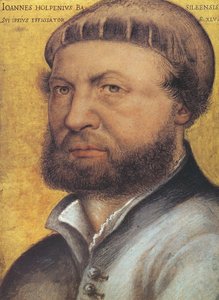
holbein the younger, hans
1497 - 1543 , Germany
Quick Facts
- Artistic Movement Or Style: Northern Renaissance
- Artists Or Movements Influenced By This Artist: ['Renaissance']
- Artists Who Influenced This Artist: ['Hans Herbster']
- Date Of Birth: c. 1497
- Date Of Death: October or November 1543
- Full Name: Hans Holbein the Younger
- Nationality: German, Swiss
- Notable Artworks:
- The Ambassadors
- Portrait of Henry VIII
- Place Of Birth: Augsburg, Germany
Related Articles
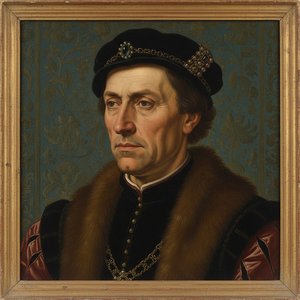
Hans Holbein the Younger: A Renaissance Portraitist's Mastery of Realism & Psychological Insight
Explore the life & art of Hans Holbein the Younger, a Renaissance master renowned for his strikingly realistic portraits and psychological insight. Discover iconic works like 'The Ambassadors' and delve into his lasting legacy.
The Enduring Legacy of Formal Portraiture: Power, Identity & Artistic Exploration
Explore the rich history of formal portraiture & its enduring power to capture identity and shape perception. Discover investment-worthy artworks, expert appraisals, and custom reproduction services at ArtsDot.
The Grandeur of Presence: Exploring Representations of Stately Bearing in Western Portraiture
Explore the art of stately bearing in Western portraiture with expert analysis of Renaissance & Baroque masterpieces. Discover symbolism, techniques, and the legacy of iconic portraits – a guide for discerning collectors.
The Enduring Gaze: Classical Portraiture & Societal Values
Explore the rich history of classical portraiture & its reflection of societal values. Discover artistic techniques, symbolism, and enduring influence on art collecting with ArtsDot.
The Enduring Gaze: Portraiture's Historical & Psychological Evolution
Explore the rich history of portraiture with expert analysis from ArtsDot. Discover iconic Renaissance masterpieces, symbolism & techniques that shaped identity. Find museum-quality art for your collection.