- Home

- Print on canvas
- isaac donald everly is not the same person, edward maria wingfield is not the same person, don wingfield is a photographer based in washington d.c.
 Preview
 Send
Send Share
Share
 Details

 Download
 Similars
 X-Ray
X-Ray Diaporama
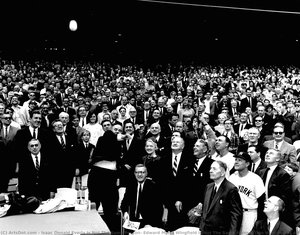
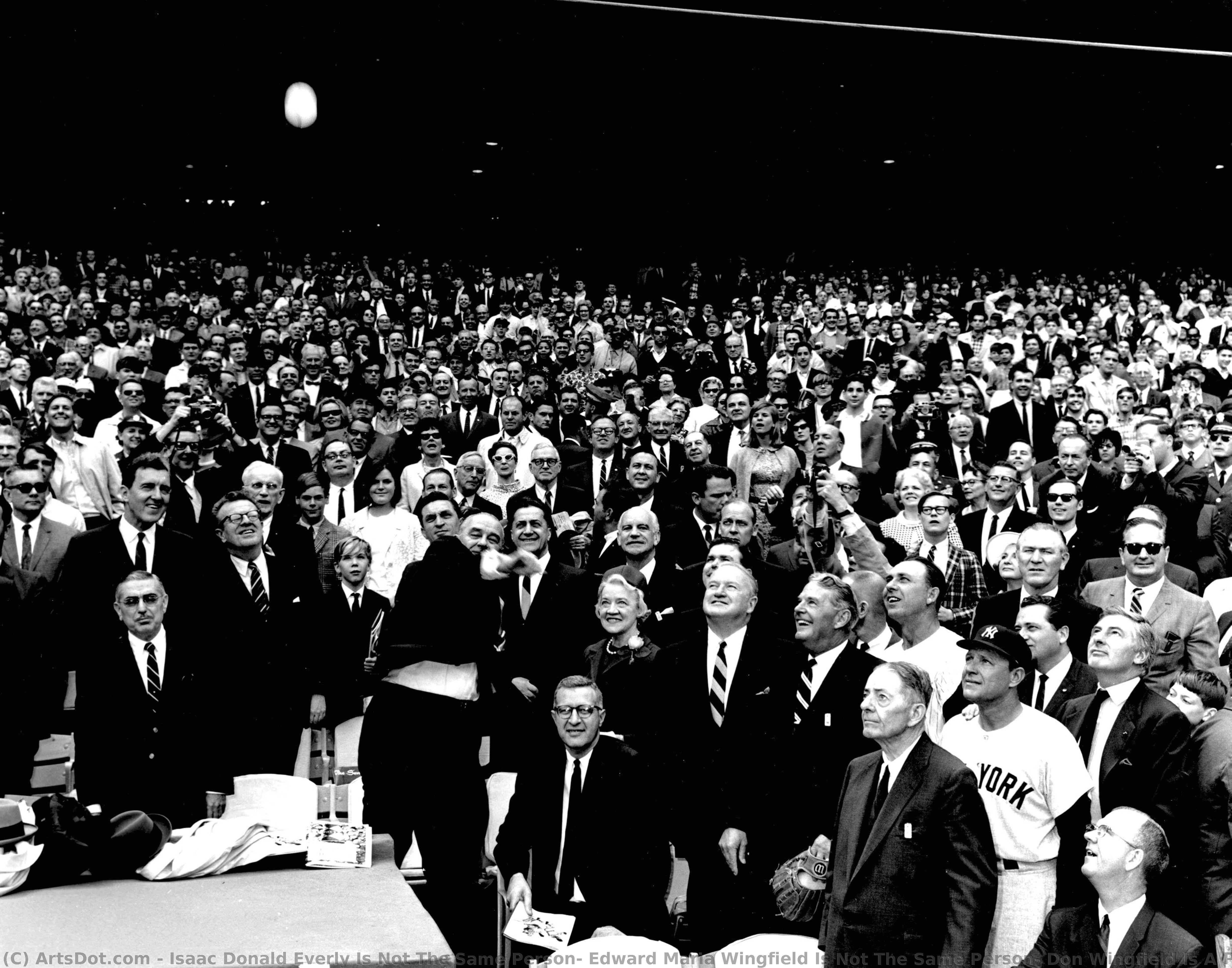
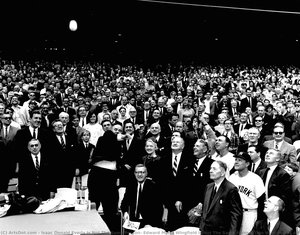
President Lyndon B. Johnson First Pitch Photograph


 Read More
Giclée / Art Print
Museum-quality giclée or canvas print with fast production and flexible finish options. ( Buy Hand Made Painting Buy Image)




P118B $10

P118H $10

P118W $10

P438Z $10

P508JH $12

P508YH $12

P805H $10

P805Z $10

P919BZ $10

P919G $10

P919XJ $10

P959ZH $10

P968JZ $12

W106C $8

W218G $10

W218JH $8

W218Y $10

W307PJ $10

W316G $10

W316PJ $8

W316Y $10

W398PJ $8

W4111J $10

W500HY $15

W500JH $15

W692G $12

W849H $8

W940BG $15

W953PJ $8




Pick from our preset sizes that match the artwork's original proportions.

You may enter your own dimensions to fit a specific frame or space. If your selected size does not match the original image's proportions, we will either crop the artwork or extend the image with a mirrored or solid-fill edge. A digital mockup will be sent for your approval before production begins.
Please note that the on-screen preview does not reflect the actual cropping or extension. Only the mockup will accurately show the final composition.
While custom sizes are available, we recommend selecting a dimension from the predefined list to preserve the original proportions.
Worldwide Delivery () in 2 weeks instead of standard 4/5 weeks. (27 August)

Free Worldwide Express Shipping

High-Quality Linen Canvas

Full Shipping Insurance

Customs Tax Refund Guarantee

True Color Matching Guarantee

60-Day Return Policy (Defects Only)

100% Money-Back Guarantee

Bulk Discount Offer
 Glass option is only available in size under 110 CM

President Lyndon B. Johnson First Pitch Photograph
Giclée / Art Print
Reproduction Size
-


Total Price
$ 63
Related Artworks
Artist Biography
The Lens of the Golden Era: The Life and Vision of Don Wingfield
In the vibrant tapestry of American sports history, few threads are as evocative or as visually arresting as the photography of Don Wingfield. A master of the candid moment, the Washington D.C.-based photographer did not merely document the passage of time; he captured the very soul of baseball’s "Golden Era." Born in 1939, Wingfield’s journey into the heart of visual storytelling was forged through the disciplined lens of military service. This early period of technical training instilled in him a profound precision, a way of seeing that allowed him to navigate the chaotic energy of a stadium and find the quiet, human truth hidden within the roar of the crowd. His work stands as a testament to the idea that photography is not just about capturing an action, but about preserving a feeling.
Wingfield’s artistic sensibility was deeply rooted in the humanist tradition. He drew significant inspiration from the legendary Henri Cartier-Bresson, adopting a philosophy that sought the "decisive moment"—that fleeting instant where composition and emotion converge perfectly. This influence is palpable in his ability to move beyond the standard action shot. While his contemporaries might have focused solely on the trajectory of a ball or the slide into second base, Wingfield looked for the sweat on a brow, the shared glance between teammates, and the weary dignity of legends. He possessed a rare gift for building rapport with the athletes he photographed, treating them not as subjects to be observed from afar, but as collaborators in a shared narrative of athletic excellence and human vulnerability.
A Legacy Captured in Ink and Paper
The professional trajectory of Don Wingfield is inextricably linked to the most iconic era of American baseball. During the 1950s and 60s, his lens became a vital part of the sporting lexicon through his work with prestigious publications such as The Sporting News and The Washington Senators. His presence in the dugout and around the clubhouse allowed him to document pivotal games and create intimate portraits that would eventually become historical landmarks. However, perhaps his most enduring contribution to popular culture lies in his extensive collaboration with the Topps Company Inc.
Through his work on baseball cards, Wingfield helped shape the visual identity of an entire generation of fans. These were not merely cardboard collectibles; they were carefully curated windows into a world of heroism. His images for Topps were designed to evoke emotion, turning players into larger-than-life figures while maintaining a sense of grounded reality. This ability to blend journalistic truth with artistic myth-making is what elevates his work from mere documentation to fine art. He captured the charisma of icons like Jackie Robinson, presenting portraits that revealed the profound humanity and the immense cultural weight carried by these athletes during a transformative period in American history.
The significance of Wingfield’s body of work extends far beyond the boundaries of the baseball diamond. His photographs serve as a visual archive of an era defined by both triumph and social upheaval. By documenting the intersection of sports, celebrity, and the cultural landscape of Washington D.C., he created a legacy that continues to resonate with historians and art enthusiasts alike. To look upon a Wingfield photograph is to step back into a time of unmistakable character, where every shadow and highlight tells a story of a game—and a nation—in motion.
isaac donald everly is not the same person, edward maria wingfield is not the same person, don wingfield is a photographer based in washington d.c.
1939 - 1980 , United States of America
Quick Facts
- Artistic Movement Or Style: Baseball photography
- Date Of Birth: 1939
- Full Name: Don Wingfield
- Nationality: American
- Notable Artworks:
- President Lyndon B. Johnson First Pitch Photograph
- President Eisenhower First Pitch Photograph
- Place Of Birth: Washington, D.C.
Related Articles
William H. Johnson: A Life Painted in Bold Strokes – Race, Identity & Modernism
Explore the powerful life & art of William H. Johnson – a pivotal American painter who captured African American experiences with bold expressionism and folk art style. Discover his legacy at ArtsDot.

Documentary Photography's Defining Moments: 10 Masterpieces for Your Home |
Explore 10 defining documentary photography masterpieces – from Dorothea Lange to Robert Capa. Discover powerful stories, iconic images & timeless art for your home. Museum-quality prints at .
David Johnson: A Luminist Master of the Hudson River School & Beyond
Explore the captivating landscapes of David Johnson, a key figure in the Hudson River School & Luminism movement. Discover his artistic evolution, legacy, and how to collect his works with ArtsDot.
Resurrecting Memories: Artistic Reconstruction of Low-Resolution Photographs into High-Fidelity Oil Paintings
Transform cherished low-resolution photos into stunning, high-fidelity oil paintings. Expert restoration & museum-quality reproductions by skilled artists. Preserve your memories with lasting beauty.
Aaron Siskind: Deconstructing Reality – A Photographic Exploration of Texture, Form & the Abstract Landscape
Explore the transformative journey of Aaron Siskind, from social realism to pioneering abstract photography. Discover his iconic series & lasting influence on modern art. A guide for collectors.