 Preview
 Send
Send Share
Share
 Details

 Download
 Similars
 X-Ray
X-Ray Diaporama
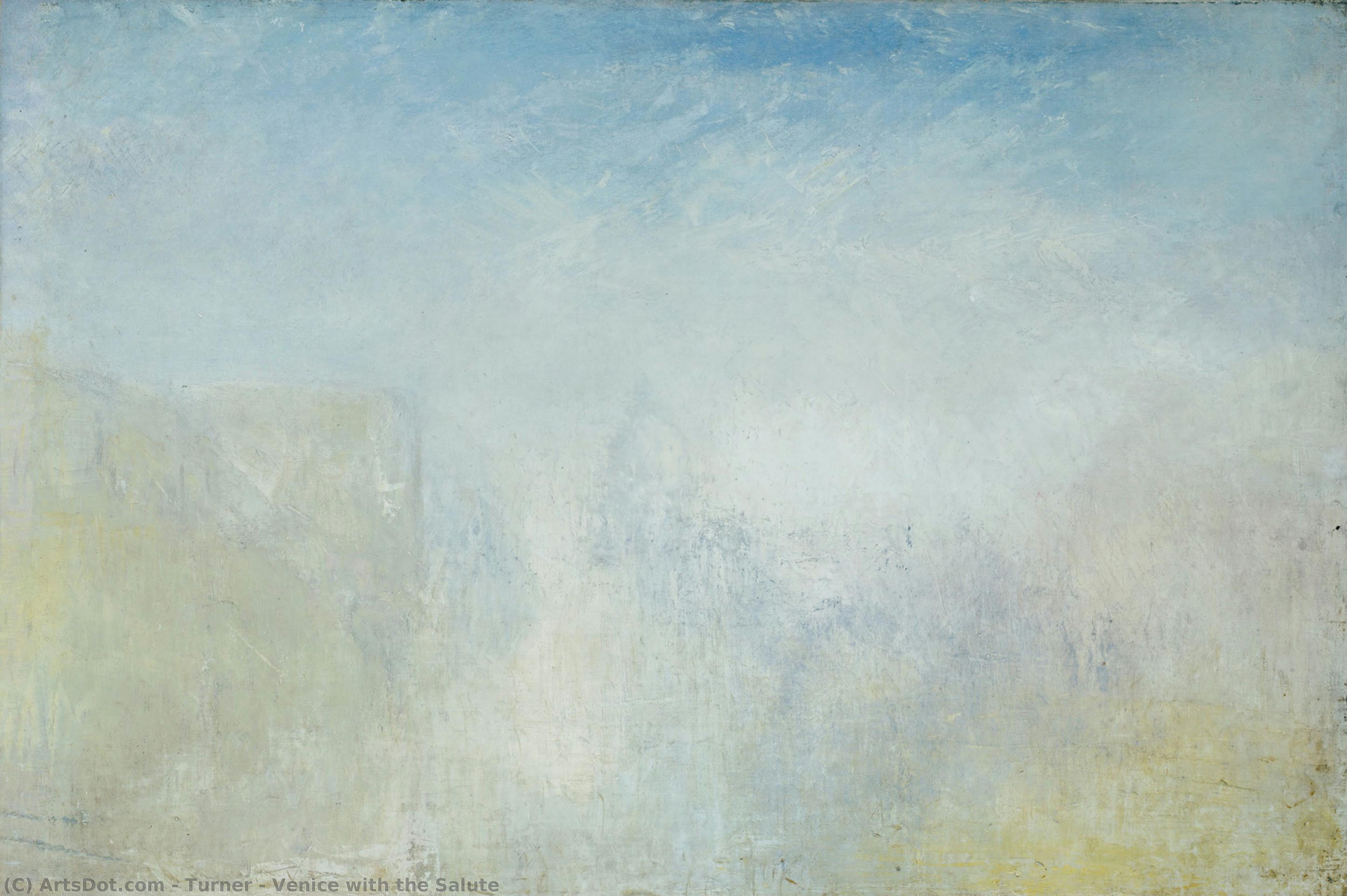
Venice with the Salute
 Oil On Canvas
- WallArt
- Impressionistic Landscape
 1840
1840 92.0 x 62.0 cm
 Tate Britain
 Read More
Hand Made Oil Reproduction
Hand-painted oil on canvas in your size and frame, made to order by our artists. ( Buy Print Buy Image)




P118B $10

P118H $10

P118W $10

P438Z $10

P508JH $12

P508YH $12

P805H $10

P805Z $10

P919BZ $10

P919G $10

P919XJ $10

P959ZH $10

P968JZ $12

W106C $8

W218G $10

W218JH $8

W218Y $10

W307PJ $10

W316G $10

W316PJ $8

W316Y $10

W398PJ $8

W4111J $10

W500HY $15

W500JH $15

W692G $12

W849H $8

W940BG $15

W953PJ $8




Pick from our preset sizes that match the artwork's original proportions.

You may enter your own dimensions to fit a specific frame or space. If your selected size does not match the original image's proportions, we will either crop the artwork or extend the painting with additional hand-painted elements. A digital mockup will be sent for your approval before production begins.
Please note that the on-screen preview does not reflect the actual cropping or extension. Only the mockup will accurately show the final composition.
While custom sizes are available, we recommend selecting a dimension from the predefined list to preserve the original proportions.
After order, ArtsDot.com team will email client for instructions and provide a mockup preview
Worldwide Delivery () in 3/4 weeks instead of standard 5 weeks. (16 August). No compromise on quality.

Free Worldwide Express Shipping

High-Quality Linen Canvas

Full Shipping Insurance

Customs Tax Refund Guarantee

True Color Matching Guarantee

60-Day Return Policy (Defects Only)

100% Money-Back Guarantee

Bulk Discount Offer
 Glass option is only available in size under 110 CM

Venice with the Salute
Reproduction Medium
Reproduction Size
-


Total Price
$ 263
Artwork Description
A Vision of Venetian Tranquility: Exploring Turner’s “Venice with the Salute”
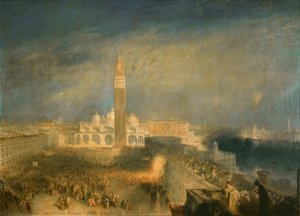
This evocative painting by Joseph Mallord William Turner—titled "Venice with the Salute"—captures not merely a cityscape but an atmosphere, embodying the Romantic spirit's fascination with light and emotion. Completed around 1840-5, it remains unfinished, offering a glimpse into Turner’s creative process and cementing its place as one of his most beloved works by collectors worldwide. The painting depicts the lower end of Venice’s Grand Canal, dominated by the magnificent dome of Santa Maria della Salute—a church that commemorates the miraculous deliverance from plague—illuminated by the warm glow of afternoon sunlight.Composition and Technique: Embracing Atmospheric Perspective
Turner's masterful technique is immediately apparent in his deliberate use of atmospheric perspective. Layers upon layers of hazy blues and greys recede into the distance, creating a profound illusion of depth that transcends mere topographical accuracy. Vertical forms representing buildings along the canal are subtly blurred, merging with horizontal strokes mirroring the shimmering surface of the water—a characteristic stylistic choice reflecting Turner’s commitment to capturing fleeting moments of beauty rather than striving for photographic realism. Loose brushstrokes contribute to the painting's ethereal quality, conveying a sense of movement and dynamism despite its stillness. Impasto is visible in certain areas, particularly along the lower edge, emphasizing textural richness and reinforcing the impression of misty air.Historical Context: Venice at the Crossroads
Painted during Turner’s final years—a period marked by experimentation and a profound engagement with Impressionism—"Venice with the Salute" reflects the broader artistic currents of its time. The Romantic movement championed emotion and imagination, prioritizing subjective experience over objective observation. Turner's Venetian landscapes were particularly successful in resonating with audiences who sought solace and inspiration amidst the anxieties of industrialization and social upheaval. Furthermore, the painting’s subject matter—the iconic church dome—holds symbolic significance, representing faith and resilience in the face of adversity—a theme powerfully conveyed by Turner’s masterful rendering of light and color.Color Palette and Emotional Resonance: A Symphony of Cool Blues
The dominant color palette is undeniably cool, dominated by shades of blue, grey, white, and pale yellow. These hues coalesce into a harmonious blend that evokes feelings of tranquility and melancholy—a palpable reflection of Turner’s own contemplative disposition. The gradual transition from warmer yellows at the bottom to cooler blues towards the top underscores the interplay between earthly warmth and celestial luminescence, mirroring the biblical narrative commemorated by Santa Maria della Salute. This careful orchestration of color contributes significantly to the painting's emotional impact, transporting viewers into a dreamlike realm where beauty transcends time.Symbolism: Light as Revelation
Beyond its aesthetic qualities, “Venice with the Salute” speaks to deeper symbolic concerns. Turner’s preoccupation with light—particularly diffused sunlight—represents not merely illumination but also revelation—a metaphor for spiritual enlightenment and artistic inspiration. The hazy atmosphere symbolizes the passage of time and the ephemeral nature of beauty, reminding us that moments of sublime experience are fleeting yet eternally cherished. Ultimately, this painting stands as a testament to Turner’s genius—his ability to transform visual perception into profound emotional resonance.Related Artworks
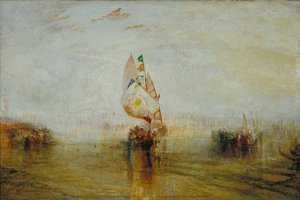
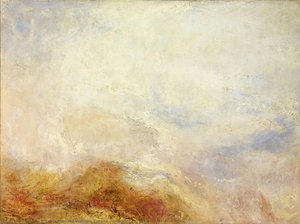
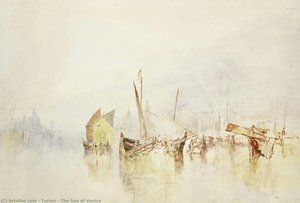
Artist Biography
A Life Painted in Light: The World of J.M.W. Turner
Joseph Mallord William Turner, known to the world as J.M.W. Turner, was more than just a painter; he was a visionary who redefined landscape art and paved the way for modern abstraction. Born in Maiden Lane, Covent Garden, London, in 1775, his beginnings were humble – the son of a barber and wig maker. Yet, even as a child, a remarkable talent blossomed within him. By age fourteen, he was enrolled at the Royal Academy, exhibiting his first work just a year later. This early promise wasn’t merely technical skill; it hinted at an innate understanding of light, color, and atmosphere that would become the hallmarks of his extraordinary career. He supplemented his artistic education with practical experience as an architectural draftsman, honing his perspective and compositional abilities – skills that would prove invaluable in rendering both detailed topographical views and vast, emotive landscapes. Turner’s early life was marked by a dedication to his craft, fueled by a natural aptitude and a relentless pursuit of artistic excellence.The Romantic Tempest: Style and Influences
Turner emerged during the height of the Romantic era, but he wasn't simply a follower of its conventions. He absorbed influences from various sources – the Dutch masters like Claude Lorrain and Aelbert Cuyp for their luminous landscapes, and artists such as Richard Wilson for his poetic approach to nature. However, Turner didn’t merely imitate; he synthesized these influences into something entirely new. His work is characterized by an expressive use of color, often employing bold contrasts and vibrant hues to convey emotion and atmosphere. He was fascinated by the power and drama of nature – turbulent seascapes, fiery sunsets, and swirling storms became recurring motifs in his paintings. He wasn’t interested in simply depicting what he saw; he sought to capture the *feeling* of a place, the sublime awe inspired by the natural world. This pursuit led him to experiment with increasingly loose brushwork, dissolving forms into washes of color and light – techniques that would anticipate the Impressionist movement decades later. From 1840, his work gained significant recognition thanks to the championing of John Ruskin, who elevated landscape painting to a new level of critical acclaim.A Prolific Legacy: The Scope of Turner’s Output
The sheer volume of Turner's artistic output is astonishing. He created over 550 oil paintings, nearly 2,000 watercolors, and an astounding 30,000 works on paper. This prolificacy wasn’t simply a matter of quantity; it reflected his tireless exploration of different subjects, techniques, and styles. His paintings range from detailed topographical views of British landscapes to dramatic historical scenes and evocative maritime paintings. He was equally adept at capturing the tranquility of a pastoral scene and the terrifying power of a raging storm. Works like “Fort Vimieux” exemplify his mastery of depicting atmospheric effects – the swirling clouds, the crashing waves, and the intense light all contribute to a sense of drama and sublime beauty. Similarly, "Scene in the Campagna" showcases his ability to capture the warmth and serenity of the Italian countryside with delicate brushwork and luminous colors. Beyond painting, Turner was also a skilled printmaker, further disseminating his artistic vision through engravings and lithographs.Eccentricity and Remembrance: The Man Behind the Masterpieces
Turner’s personal life was as complex and enigmatic as his art. He remained intensely private and reclusive, often shunning social gatherings and preferring the solitude of his studio or the open road. He fathered two daughters, Evelina and Georgiana, with Sarah Danby, the wife of a fellow artist, but maintained a distant relationship with them. His later years were marked by increasing eccentricity and declining health. After his father’s death in 1829, he became increasingly morose and withdrawn, living in squalor and neglecting his appearance. He adopted the pseudonym “Mr. Booth” to avoid recognition and even rowed his boat into the Thames during a census to remain untraceable. Despite his eccentricities, or perhaps because of them, Turner remains one of Britain’s most beloved artists. His final years were spent in Chelsea where he passed away on December 19, 1851, at the age of 76. In a fitting tribute to his enduring legacy, he is buried in St Paul's Cathedral, alongside other British luminaries – a testament to his profound impact on art and culture. His work continues to inspire artists and captivate audiences worldwide, ensuring that the light of J.M.W. Turner will continue to shine for generations to come.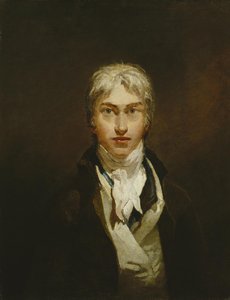
J.M.W. Turner
1775 - 1851 , United Kingdom
Quick Facts
- Artistic Movement Or Style: Romanticism
- Artists Or Movements Influenced By This Artist:
- Impressionism
- Abstract Art
- Artists Who Influenced This Artist:
- John Robert Cozens
- Richard Wilson
- Date Of Birth: April 23, 1775
- Date Of Death: December 19, 1851
- Full Name: Joseph Mallord William Turner
- Nationality: British
- Notable Artworks:
- Fort Vimieux
- Scene in the Campagna
- Place Of Birth: London, United Kingdom
Related Articles
J.M.W. Turner: Light, Atmosphere & the Romantic Sublime
Explore the life & art of J.M.W. Turner, a master of Romantic landscape painting. Discover his innovative techniques, key works, and lasting influence on Impressionism. Find high-quality reproductions at ArtsDot.
Luca della Robbia: Renaissance Sculpture & the Innovation of Terracotta Glazing
Discover the innovative terracotta glazing techniques of Luca della Robbia, a Renaissance master sculptor. Explore his iconic works, legacy, and collecting tips with ArtsDot.
Maria Primachenko: A Legacy of Ukrainian Folk Art & Naive Expression
Discover the captivating world of Maria Primachenko, Ukraine's celebrated naive artist. Explore her vibrant paintings, unique style, and enduring legacy with ArtsDot – your source for authentic art insights & reproductions.
Piero della Francesca: Renaissance Perspective, Divine Proportion & the Pursuit of Ideal Form
Explore the revolutionary art of Piero della Francesca – master of perspective, divine proportion & Renaissance humanism. Discover his iconic paintings & lasting influence on art history.
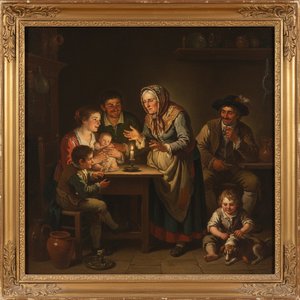
Giuseppe Maria Crespi: Pioneering Genre Painting & the Bolognese Baroque
Explore the life & art of Giuseppe Maria Crespi, a pivotal Bolognese Baroque painter. Discover his groundbreaking genre scenes, religious works, and lasting influence on Italian art history. Learn more at ArtsDot.