 Preview
 Send
Send Share
Share
 Details

 Download
 Similars
 X-Ray
X-Ray Diaporama
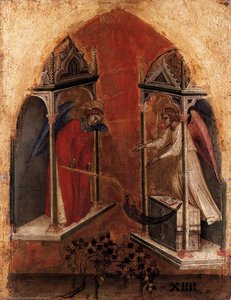
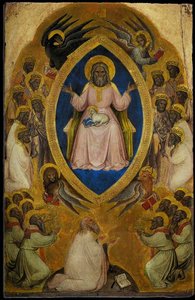
Polyptych of the Apocalypse
 Tempera On Panel
- Medieval Art
 1360
1360- Late Medieval
 95.0 x 61.0 cm
 Gallerie dell'Accademia
 Read More
Hand Made Oil Reproduction
Hand-painted oil on canvas in your size and frame, made to order by our artists. ( Buy Print Buy Image)




P118B $10

P118H $10

P118W $10

P438Z $10

P508JH $12

P508YH $12

P805H $10

P805Z $10

P919BZ $10

P919G $10

P919XJ $10

P959ZH $10

P968JZ $12

W106C $8

W218G $10

W218JH $8

W218Y $10

W307PJ $10

W316G $10

W316PJ $8

W316Y $10

W398PJ $8

W4111J $10

W500HY $15

W500JH $15

W692G $12

W849H $8

W940BG $15

W953PJ $8




Pick from our preset sizes that match the artwork's original proportions.

You may enter your own dimensions to fit a specific frame or space. If your selected size does not match the original image's proportions, we will either crop the artwork or extend the painting with additional hand-painted elements. A digital mockup will be sent for your approval before production begins.
Please note that the on-screen preview does not reflect the actual cropping or extension. Only the mockup will accurately show the final composition.
While custom sizes are available, we recommend selecting a dimension from the predefined list to preserve the original proportions.
After order, ArtsDot.com team will email client for instructions and provide a mockup preview
Worldwide Delivery () in 3/4 weeks instead of standard 5 weeks. (21 August). No compromise on quality.

Free Worldwide Express Shipping

High-Quality Linen Canvas

Full Shipping Insurance

Customs Tax Refund Guarantee

True Color Matching Guarantee

60-Day Return Policy (Defects Only)

100% Money-Back Guarantee

Bulk Discount Offer
 Glass option is only available in size under 110 CM

Polyptych of the Apocalypse
Reproduction Medium
Reproduction Size
-


Total Price
$ 263
Artwork Description
A Vision of Divine Turmoil: Exploring the Polyptych of the Apocalypse
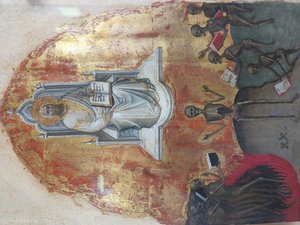
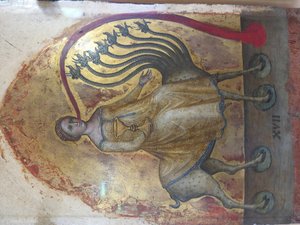
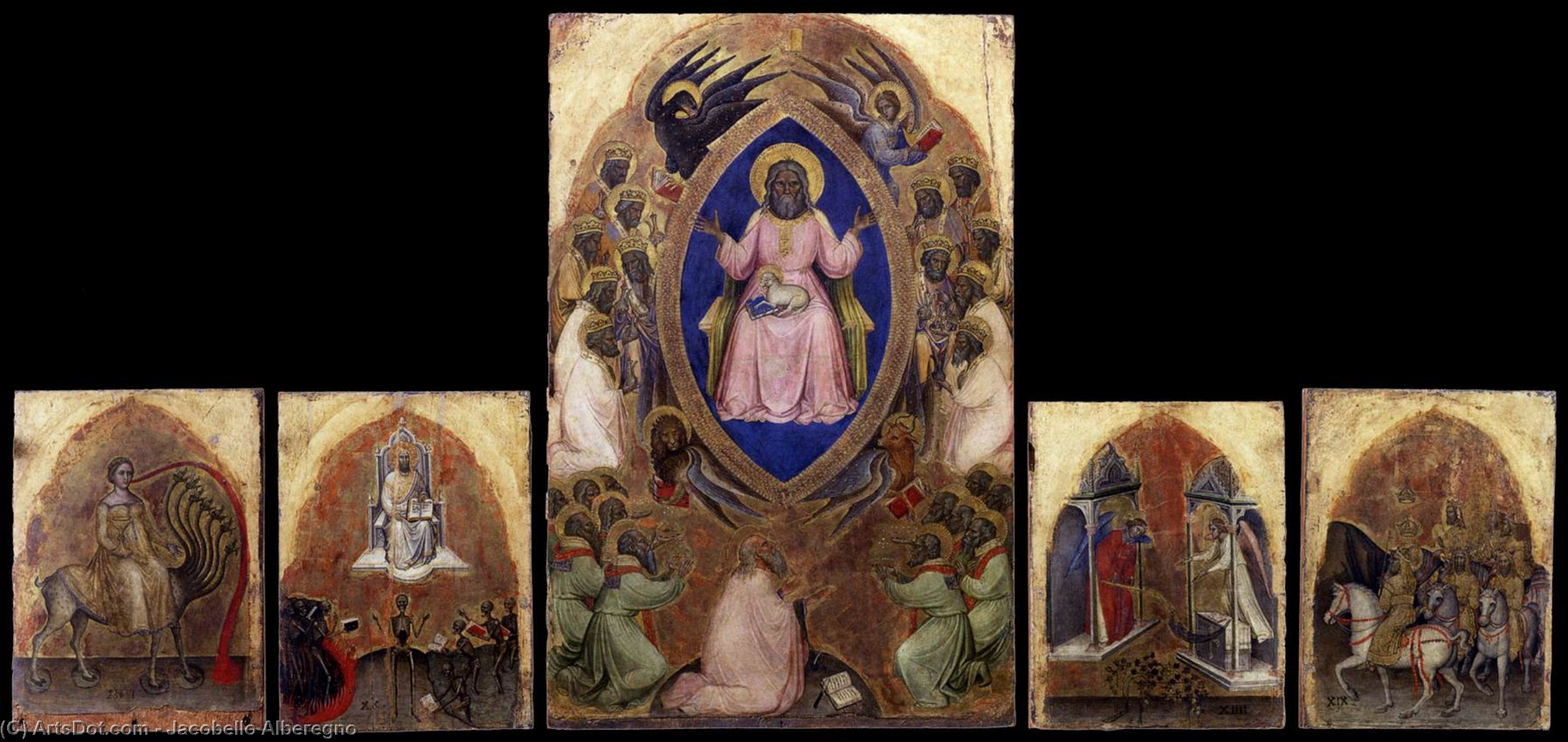
To stand before the Polyptych of the Apocalypse is to confront a moment suspended between earthly life and ultimate divine reckoning. Created by the masterful hand of Jacobello Alberegno in 1360, this monumental tempera on wood panel painting does not merely depict a scene; it immerses the viewer within the very drama of prophecy. The work pulses with the vibrant energy characteristic of early Venetian Gothic art, yet its subject matter—the Apocalypse—lends it an air of profound, almost terrifying majesty. One cannot help but feel the weight of history pressing down, witnessing the artistic genius of a painter working at the cusp of monumental change in European art.
Mastery in Tempera and Wood: A Technical Marvel
The technical brilliance evident in this polyptych is breathtaking. Alberegno’s choice of tempera on wood panels was not incidental; it speaks to the established, enduring traditions of Italian panel painting. The medium allowed for an unparalleled luminosity and detail that remains startling even after centuries. Observe how the pigments—the deep celestial blues, the passionate reds, and the rich ochres—have survived the passage of time, retaining their initial vibrancy. This careful application of paint across multiple interconnected panels creates a unified yet complex visual experience. The structure itself, composed of several distinct sections, guides the eye through different facets of the grand narrative, demanding close contemplation from the admirer.
Symbolism and the Weight of Prophecy
The iconography at the heart of the piece is overwhelmingly religious, centering on the tumultuous themes associated with the Apocalypse. The central panel commands attention with its large circular composition, anchoring a divine figure—perhaps Christ himself—amidst swirling narratives of judgment and revelation. Surrounding this core vision, the subsidiary panels unfold like chapters in an epic scripture. Each smaller scene seems to capture a specific moment from the unfolding end times: moments of struggle, transformation, and ultimate divine order. The symbolism is dense, inviting scholars and lay admirers alike to decode the visual language that speaks across the centuries.
Echoes for the Modern Sanctuary
For the contemporary collector or designer seeking an object imbued with deep historical resonance, this polyptych offers unparalleled depth. While its original setting at the Gallerie dell'Accademia in Venice is unmatched, owning a high-quality reproduction allows one to bring a piece of such profound narrative power into a modern sanctuary. The emotional impact of the work—a blend of awe, piety, and dramatic tension—is palpable. It serves not just as decoration, but as a focal point for meditation, reminding us of the enduring human fascination with destiny, divine intervention, and the grand sweep of history.
Related Artworks





Artist Biography
Jacobello Alberegno (1367 - 1396): Venetian Visionary of Apocalypse
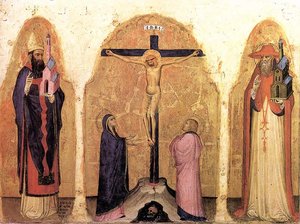
Jacobello Alberegno remains an enigmatic figure in the annals of Venetian art, shrouded in obscurity despite his undeniable contribution to the artistic landscape of the late fourteenth century. Precise biographical details are scarce, primarily reliant on a single document referencing his death – July 14th, 1397 – and bolstered by the discovery of a solitary signed masterpiece: the tempera on panel triptych depicting the Crucifixion with Saints Ambrose and Jerome housed in the Gallerie dell’Accademia di Venezia. This poignant testament to Alberegno's artistic legacy underscores the challenge posed by reconstructing his life story from fragmentary evidence.- Early Life & Training: Little is known about Alberegno’s formative years, fueling speculation regarding his origins and artistic influences. Scholars posit connections to Byzantine traditions propagated by Paolo Veneziano and Giusto de Menabuoi, recognizing Alberegno's embrace of Venetian stylistic innovations alongside a steadfast adherence to established iconography.
- The Crucifixion Triptych: This pivotal work—the cornerstone of Alberegno’s oeuvre—offers invaluable insight into his artistic sensibilities. Executed around 1360-65, the triptych exemplifies Giotto's influence through its compositional choices and meticulous attention to detail, mirroring the stylistic trends prevalent in Padua during Alberegno’s time.
- The Polyptych of the Apocalypse: Arguably Alberegno’s most celebrated achievement—though tragically incomplete—the Polyptych of the Apocalypse stands as a testament to his ambition and artistic prowess. Initially venerated in San Giovanni Evangelista di Torcello, this monumental complex comprised five panels depicting episodes from Revelation, reflecting Giusto de Menabuoi's stylistic vision for Padua’s Baptistery.
- Influence & Legacy: Alberegno’s impact extended beyond his immediate contemporaries, shaping Venetian artistic discourse and establishing precedents for subsequent generations of painters. His embrace of Byzantine iconography alongside Venetian innovation cemented his position as a pivotal figure in the burgeoning Renaissance movement, marking a decisive break from medieval conventions.
Notable Works & Artistic Style
Jacobello Alberegno’s artistic style is characterized by a harmonious blend of Byzantine tradition and Venetian innovation—a stylistic duality that distinguishes him from his peers. His meticulous attention to detail, evident in the Crucifixion Triptych and the Polyptych of the Apocalypse, reflects Giotto's influence through its compositional choices and masterful rendering of textures. The artist skillfully employed tempera on panel, incorporating gold leaf to heighten visual impact and imbue his paintings with spiritual resonance—techniques consistent with Venetian artistic practices during Alberegno’s lifetime.- The Crucifixion Triptych: This masterpiece exemplifies Giotto's influence through its compositional choices and meticulous attention to detail, mirroring the stylistic trends prevalent in Padua during Alberegno’s time.
- Polyptych of the Apocalypse: The Polyptych of the Apocalypse showcases Alberegno’s ambition and artistic prowess—a monumental complex reflecting Giusto de Menabuoi's stylistic vision for Padua’s Baptistery.
Historical Context & Artistic Significance
Jacobello Alberegno emerged during a period of profound cultural transformation in Venice, witnessing the gradual adoption of Byzantine artistic ideals alongside the burgeoning influence of Giotto—a pivotal moment marking a decisive break from medieval conventions. His unwavering commitment to Venetian stylistic traditions—coupled with his embrace of Byzantine iconography—established him as a cornerstone of the Venetian Renaissance, shaping artistic discourse and bequeathing enduring legacies to subsequent generations of painters. Alberegno’s contribution solidified Venice's position as a vanguard of European artistic innovation, securing his place in art history as a visionary artist who bridged the gap between medieval piety and humanist inquiry.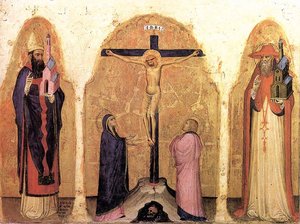
jacobello alberegno
1367 - 1396 , Italy
Quick Facts
- Artistic Movement Or Style: Renaissance
- Artists Or Movements Influenced By This Artist:
- Lorenzo di Bonomo
- Jacobello di Bonomo
- Artists Who Influenced This Artist:
- Paolo Veneziano
- Giusto de Menabuoi
- Date Of Birth: Venice, Italy (1367)
- Date Of Death: 1396
- Full Name: Jacobello Alberegno
- Nationality: Italian
- Notable Artworks: ['Polyptych of the Apocalypse']
- Place Of Birth: Venice
Related Articles
Illuminating Surfaces: A Comprehensive Exploration of Tempera on Panel Painting Techniques & Historical Significance
Explore the rich history & techniques of tempera painting! Discover Renaissance masters like Botticelli & Fra Angelico, conservation insights, and the enduring legacy of this captivating art form. Learn more now!
High Medieval Art: 10 Masterpieces That Shaped an Era | ArtsDot
Journey through High Medieval Art! Explore 10 iconic masterpieces – from Giotto's frescoes to stunning Gothic cathedrals. Discover the stories behind these timeless paintings, sculptures & illuminated manuscripts. Find museum-quality art reproductions at ArtsDot.com.
Illuminating History: A Comprehensive Exploration of Tempera Painting Techniques & Artistic Legacy
Explore the rich history & techniques of tempera painting! Discover Renaissance masters like Botticelli & Fra Angelico, conservation insights, and the enduring legacy of this captivating art form.

Jacopo Tintoretto's Masterpieces: 25 Paintings That Define Venetian Drama | ArtsDot
Explore 25 breathtaking masterpieces by Jacopo Tintoretto, the Venetian master of drama and light. Discover the stories behind iconic Renaissance paintings & find museum-quality art reproductions to elevate your home decor on ArtsDot.com.
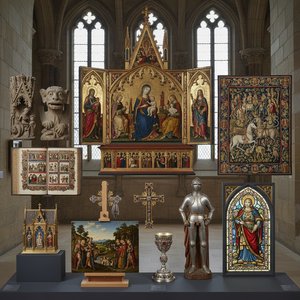
Late Medieval Masterpieces: 10 Artworks That Defined an Era | ArtsDot
Journey through 10 defining Late Medieval masterpieces – from Giotto's frescoes to Jan van Eyck’s realism. Explore the stories, techniques & vibrant colors of Gothic art. Find museum-quality reproductions and elevate your home decor with ArtsDot.com! Discover all masterpieces on ArtsDot.com