 Preview
 Send
Send Share
Share
 Details

 Download
 Similars
 X-Ray
X-Ray Diaporama
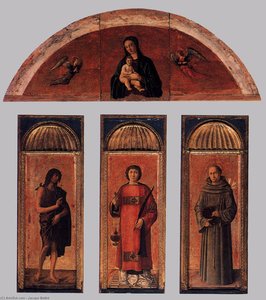
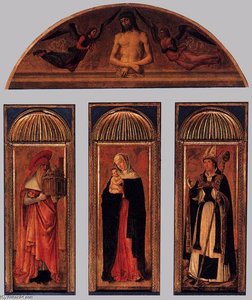
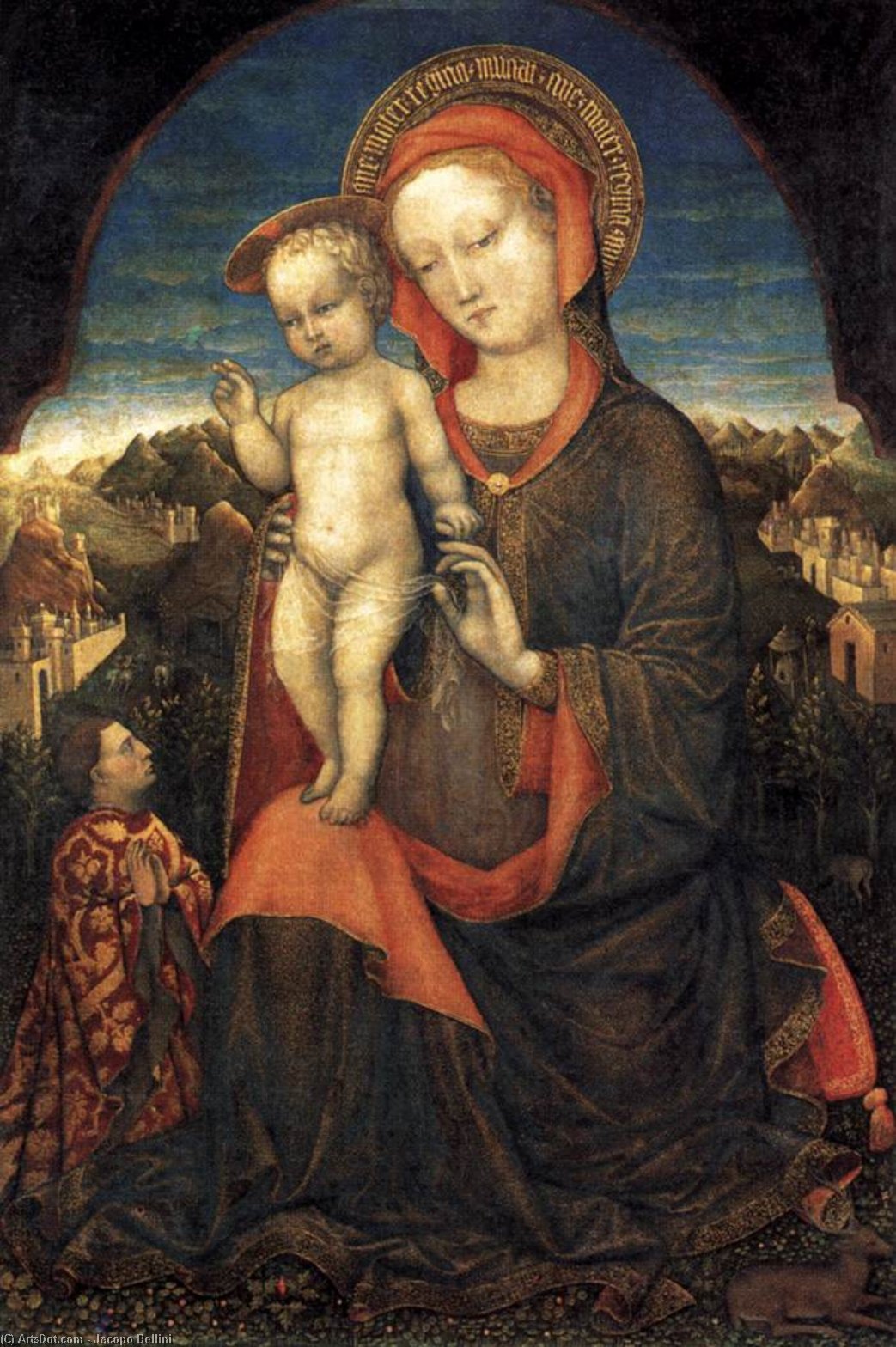
Madonna and Child Adored by Lionello d'Este
 Tempera On Panel
- WallArt
- Early Renaissance
 1450
1450- Renaissance
 60.0 x 40.0 cm
 The Louvre
 Read More
Hand Made Oil Reproduction
Hand-painted oil on canvas in your size and frame, made to order by our artists. ( Buy Print Buy Image)




P118B $10

P118H $10

P118W $10

P438Z $10

P508JH $12

P508YH $12

P805H $10

P805Z $10

P919BZ $10

P919G $10

P919XJ $10

P959ZH $10

P968JZ $12

W106C $8

W218G $10

W218JH $8

W218Y $10

W307PJ $10

W316G $10

W316PJ $8

W316Y $10

W398PJ $8

W4111J $10

W500HY $15

W500JH $15

W692G $12

W849H $8

W940BG $15

W953PJ $8




Pick from our preset sizes that match the artwork's original proportions.

You may enter your own dimensions to fit a specific frame or space. If your selected size does not match the original image's proportions, we will either crop the artwork or extend the painting with additional hand-painted elements. A digital mockup will be sent for your approval before production begins.
Please note that the on-screen preview does not reflect the actual cropping or extension. Only the mockup will accurately show the final composition.
While custom sizes are available, we recommend selecting a dimension from the predefined list to preserve the original proportions.
After order, ArtsDot.com team will email client for instructions and provide a mockup preview
Worldwide Delivery () in 3/4 weeks instead of standard 5 weeks. (25 August). No compromise on quality.

Free Worldwide Express Shipping

High-Quality Linen Canvas

Full Shipping Insurance

Customs Tax Refund Guarantee

True Color Matching Guarantee

60-Day Return Policy (Defects Only)

100% Money-Back Guarantee

Bulk Discount Offer
 Glass option is only available in size under 110 CM

Madonna and Child Adored by Lionello d'Este
Reproduction Medium
Reproduction Size
-


Total Price
$ 263
Artwork Description
A Renaissance Vision of Devotion
In the quiet, luminous realm of the Venetian Early Renaissance, few works capture the intersection of divine grace and human tenderness as poignantly as Jacopo Bellini’s Madonna and Child Adored by Lionello d'Este. Created around 1450, this masterpiece serves as a profound window into a period when the spiritual fervor of the Middle Ages began to merge with the burgeoning humanist intellect of Italy. The painting is far more than a mere religious icon; it is an exquisite exploration of beauty, stability, and the idealized human form. As the viewer gazes upon Mary cradling the infant Jesus, they are not just witnessing a biblical moment, but participating in a carefully orchestrated symphony of faith and artistry that has resonated through the centuries.
The composition is a masterclass in Renaissance harmony, characterized by a balanced, serene arrangement that directs the eye with effortless grace. At the heart of the work sits the Virgin Mary, her presence radiating a calm, maternal strength. The way she holds the Christ child—with a delicate yet secure grip—estapablishes an emotional anchor for the entire piece. Surrounding this central duo, the artist has woven intricate details that invite closer inspection: the subtle presence of other figures and the whimsical inclusion of birds that dance through the upper reaches of the scene. These elements are not mere decorations; they contribute to a sense of a living, breathing world where the sacred and the natural coexist in perfect equilibrium.
The Mastery of Perspective and Light
What truly distinguishes Bellini’s work from the flatter, more symbolic Byzantine traditions that preceded him is his pioneering use of linear perspective. As one of the foundational architects of the Venetian Renaissance style, Bellini utilized mathematical principles to create a convincing illusion of depth on a two-dimensional surface. This technique allows the viewer to feel as though they are looking through a window into another dimension. The architectural nuances and the carefully rendered landscapes in the background suggest a world that extends far beyond the edges of the frame, providing a sense of grandeur and spatial reality that was revolutionary for its time.
The technique employed—likely tempera on panel—allows for a meticulous level of detail that is essential to the painting's emotional impact. Every brushstroke contributes to the rich textures of the drapery and the soft, lifelike glow of the skin tones. This dedication to precision reflects the intellectual commitment of the era: an attempt to understand and replicate the divine order of the universe through observation and science. For the collector or the interior designer, this level of craftsmanship offers a profound sense of permanence and sophistication, making it a centerpiece capable of anchoring a room with its historical weight and aesthetic elegance.
Symbolism and Timeless Emotional Resonance
Beyond its technical brilliance, the painting is steeped in layers of symbolic meaning. The very title, which references the adoration by Lionello d'Este, connects the piece to the powerful patronage of the Italian Renaissance, where art served as both a tool for devotion and a symbol of prestige. The presence of the birds may symbolize the soul or the fleeting nature of life, while the balanced composition reflects the humanist ideal of cosmic order. There is an inherent stillness in the work, a meditative quality that invites the observer to pause and reflect amidst the chaos of modern life.
For those seeking to bring a piece of history into their personal or professional spaces, a high-quality reproduction of this Bellini masterpiece offers more than just decoration. It provides an opportunity to surround oneself with the quiet dignity of the Renaissance. Whether placed in a sunlit study or a grand gallery, the Madonna and Child Adored by Lionello d'Este acts as a bridge between eras, offering a timeless sense of peace, a celebration of human skill, and an enduring testament to the power of beauty to transcend time.
Related Artworks


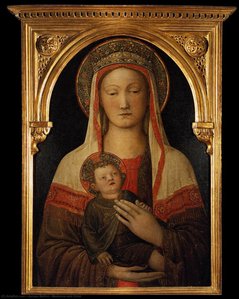

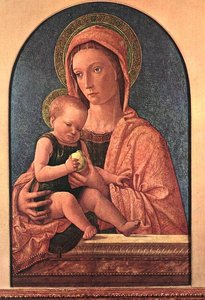



Artist Biography
The Venetian Pioneer of Renaissance Perspective
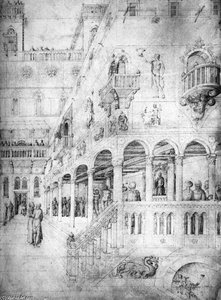
Jacopo Bellini stands as a pivotal figure in the burgeoning Renaissance style of painting that flourished in Venice and northern Italy. He was far more than a mere painter; he was one of the foundational innovators of his era, shaping artistic sensibilities through a meticulous observation of nature and a masterful incorporation of linear perspective—a technique that was previously largely absent from the Venetian tradition. While few of Bellini's original canvases survive today to be viewed in their full glory, his profound legacy resides primarily within his exquisite sketchbooks, such as those housed in the British Museum and the Louvre. These drawings reveal a deep fascination with sweeping landscape vistas and elaborate architectural designs, offering invaluable insight into an artistic process that foreshadowed the stylistic revolutions of the centuries to follow.
Born in Venice around 1396, Jacopo’s formative years were steeped in the rich, decorative traditions of the late Gothic period. His early training suggests he was a pupil of the celebrated Gentile da Fabriano, an artist whose workshop produced some of the most ambitious and ornate frescoes of the era. This prestigious association undoubtedly instilled in Bellini a lifelong appreciation for intricate detail, color harmony, and a certain decorative complexity. His early career saw him active in Foligno between 1411 and 1412, where he collaborated on the monumental frescoes of the Palazzo Trinci, working alongside the very masters who defined the international Gothic style.
A Journey Through the Heart of the Renaissance
A significant turning point arrived when Bellini traveled to Florence around 1423. This journey placed him at the epicenter of an intense period of artistic experimentation led by luminaries such as Brunelleschi, Donatello, and Masaccio. In Florence, he encountered the burgeoning science of linear perspective, a discovery that would fundamentally alter his approach to space and depth. By blending the lyrical, decorative elegance of his Venetian roots with the structural rigor and spatial clarity of the Florentine innovators, Bellini began to forge a unique visual language. This synthesis allowed him to move beyond the flat, symbolic planes of the Middle Ages toward a more immersive, window-like depiction of the world.
As his career progressed, Bellini became a central figure in establishing a family dynasty that would dominate Venetian art for generations. His influence was not merely personal but pedagogical, as he passed his innovations down to his sons, Gentile and Giovanni. Through them, the seeds of his experimentation with light, landscape, and perspective blossomed into the high Renaissance splendor associated with the Bellini name. His work served as a bridge between the ornamental traditions of the past and the humanistic realism of the future, making him an indispensable link in the evolution of Italian art.
Legacy and Historical Significance
The historical significance of Jacopo Bellini lies in his role as a catalyst for change. Though much of his output remains captured in the intimate medium of ink and pen, those sketches serve as a blueprint for the Venetian Renaissance. His ability to envision complex, multi-layered landscapes and mathematically coherent architectures provided the groundwork for his successors to explore the atmospheric beauty of the Venetian lagoon. To study Bellini is to witness the very moment when the eye of the artist began to truly master the illusion of depth, forever changing how humanity perceives the painted world.
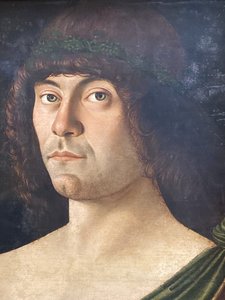
Jacopo Bellini
1396 - 1470 , Italy
Quick Facts
- Artistic Movement Or Style: Renaissance
- Artists Or Movements Influenced By This Artist: ['Masaccio']
- Artists Who Influenced This Artist: ['Gentile da Fabriano']
- Date Of Birth: Venice, Italy (1396)
- Date Of Death: c. 1470
- Full Name: Jacopo Bellini
- Nationality: Italian
- Notable Artworks:
- The Crucifixion in Verona Cathedral
- Madonna and Child
- Place Of Birth: Venice
Related Articles

Jacopo Tintoretto's Masterpieces: 25 Paintings That Define Venetian Drama | ArtsDot
Explore 25 breathtaking masterpieces by Jacopo Tintoretto, the Venetian master of drama and light. Discover the stories behind iconic Renaissance paintings & find museum-quality art reproductions to elevate your home decor on ArtsDot.com.
Raphael's Masterpieces: 25 Iconic Paintings & Renaissance Art for Your Home
Explore 25 breathtaking Raphael paintings! Journey through the Italian Renaissance with masterpieces like 'School of Athens' & iconic Madonnas. Find museum-quality art reproductions and elevate your home decor on ArtsDot.com.
Musée d'Orsay Masterpieces: 25 Iconic Paintings & Art Decor Ideas
Journey through the Musée d'Orsay’s 25 most iconic artworks! Explore Impressionist & Post-Impressionist masterpieces by Monet, Van Gogh, Degas & more. Find museum-quality art reproductions and curated decor ideas to bring timeless beauty home. Discover all masterpieces on ArtsDot.com

Jacopo Bassano: A Venetian Master of Color, Family & the Renaissance Landscape
Explore the life & art of Jacopo Bassano, a Venetian master renowned for his vibrant colorism and innovative religious scenes. Discover his family legacy & enduring influence on Renaissance painting with ArtsDot.
Uffizi's 25 Masterpieces: Renaissance Art & Timeless Decor Inspiration
Journey through the Uffizi Gallery's 25 most iconic Renaissance artworks! Explore Botticelli, Leonardo da Vinci & Michelangelo’s masterpieces. Find museum-quality art reproductions and curated decor ideas to bring timeless Italian beauty into your home. Discover all masterpieces on ArtsDot.com