 Preview
 Send
Send Share
Share
 Details

 Download
 Similars
 X-Ray
X-Ray Diaporama
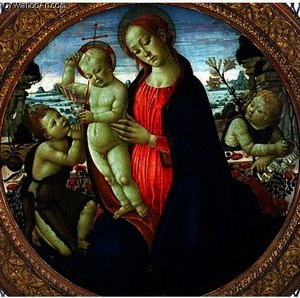
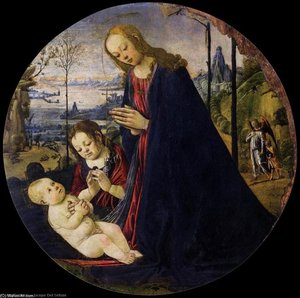
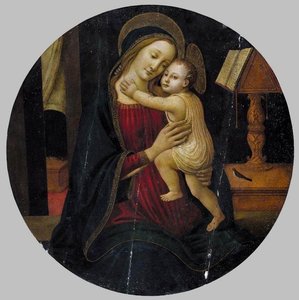
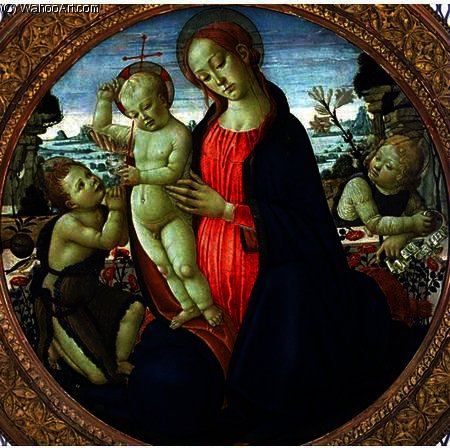
Madonna and Child with Infant St John the Baptist and Attending Angel
 Oil On Panel
- Early Renaissance
 1485
1485 85.0 x 85.0 cm
 Fine Arts Museums of San Francisco
 Read More
Giclée / Art Print
Museum-quality giclée or canvas print with fast production and flexible finish options. ( Buy Hand Made Painting Buy Image)




P118B $10

P118H $10

P118W $10

P438Z $10

P508JH $12

P508YH $12

P805H $10

P805Z $10

P919BZ $10

P919G $10

P919XJ $10

P959ZH $10

P968JZ $12

W106C $8

W218G $10

W218JH $8

W218Y $10

W307PJ $10

W316G $10

W316PJ $8

W316Y $10

W398PJ $8

W4111J $10

W500HY $15

W500JH $15

W692G $12

W849H $8

W940BG $15

W953PJ $8




Pick from our preset sizes that match the artwork's original proportions.

You may enter your own dimensions to fit a specific frame or space. If your selected size does not match the original image's proportions, we will either crop the artwork or extend the image with a mirrored or solid-fill edge. A digital mockup will be sent for your approval before production begins.
Please note that the on-screen preview does not reflect the actual cropping or extension. Only the mockup will accurately show the final composition.
While custom sizes are available, we recommend selecting a dimension from the predefined list to preserve the original proportions.
Worldwide Delivery () in 2 weeks instead of standard 4/5 weeks. (29 August)

Free Worldwide Express Shipping

High-Quality Linen Canvas

Full Shipping Insurance

Customs Tax Refund Guarantee

True Color Matching Guarantee

60-Day Return Policy (Defects Only)

100% Money-Back Guarantee

Bulk Discount Offer
 Glass option is only available in size under 110 CM

Madonna and Child with Infant St John the Baptist and Attending Angel
Giclée / Art Print
Reproduction Size
-


Total Price
$ 63
A Vision of Divine Grace: Madonna and Child with Infant St John
To gaze upon this exquisite panel is to step directly into the luminous heart of the Florentine Renaissance. This Madonna and Child with Infant St John the Baptist and Attending Angel, dating from 1485, is far more than a devotional image; it is a profound meditation on motherhood, divine lineage, and spiritual anticipation. The composition immediately draws the eye to the Virgin Mary, whose presence anchors the entire scene. She cradles the Christ Child upon her lap with an almost palpable tenderness, while beside them stands Saint John the Baptist, his gesture directing our gaze outward toward the promise of a future unfolding in the distant landscape. The artistry here speaks volumes of the period's deep commitment to both idealized beauty and narrative depth.
Mastery of Form and Light: Technique and Style
Jacopo del Sellaio’s handling of this oil on panel is nothing short of masterful. One can observe the characteristic smoothness of the oil paint, allowing the rich pigments—dominated by warm reds, deep golds, and earthy browns—to coalesce into a unified, glowing surface. The technique employed suggests an early Renaissance adherence to classical balance, yet it breathes with the emerging naturalism that defined the era. While the perspective possesses a certain gentle flattening typical of the period's stylistic evolution, the artist achieves remarkable volume through careful delineation of form and drapery. Notice how the soft, diffused lighting bathes the figures, creating a gentle luminescence that seems to emanate from within the sacred subjects themselves.
The Weight of Symbolism: Piety and Prophecy
Symbolically, every element contributes to a rich tapestry of Christian meaning. The Madonna represents the embodiment of divine grace and human motherhood; the Christ Child embodies salvation itself. And then there is Saint John, positioned as the herald—the voice crying out in the wilderness. His inclusion elevates the narrative from a simple portrait to a moment charged with prophecy. The entire arrangement speaks eloquently of piety, guiding the viewer through themes of anticipation and divine destiny. It is an artwork that invites contemplation on the sacred cycle of life, birth, and revelation.
A Timeless Presence for Modern Spaces
For the collector or designer seeking a piece imbued with history and soulful depth, this reproduction offers unparalleled resonance. The original scale of 85 x 85 cm provides a commanding yet harmonious focal point for any grand hall, chapel, or richly decorated drawing-room. Owning a representation of this work is not merely decorating; it is curating an atmosphere steeped in Renaissance contemplation. It allows the warmth and quiet drama of Jacopo del Sellaio’s vision to permeate your space, connecting the modern viewer with the enduring power of sacred art.
Related Artworks
Artist Biography
A Florentine Artisan of Grace: The World of Jacopo del Sellaio
Jacopo del Sellaio, a name perhaps less immediately recognized than those of his celebrated contemporaries like Botticelli or Ghirlandaio, nevertheless occupies a vital and enchanting niche within the vibrant tapestry of 15th-century Florentine art. Born in Florence around 1442, Jacopo emerged during a period of extraordinary artistic ferment, a time when the Renaissance was blossoming into full flower. While details surrounding his earliest training remain somewhat elusive, it is known that he entered the world of painting and by 1473 had established a collaborative studio with Filippo di Giuliano – a partnership suggesting a shared dedication to craft and a reciprocal exchange of artistic knowledge. This early association speaks volumes about Jacopo’s ambition and willingness to learn within the dynamic environment of Florentine workshops, where skills were honed through practice and observation. His father was a saddlemaker—hence the nickname “Sellaio,” meaning ‘saddle maker’—a trade that perhaps instilled in him an appreciation for meticulous detail and refined craftsmanship, qualities that would become hallmarks of his artistic style.Cassoni and Devotional Panels: A Synthesis of Skill
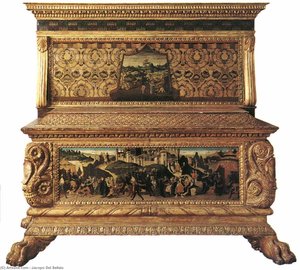
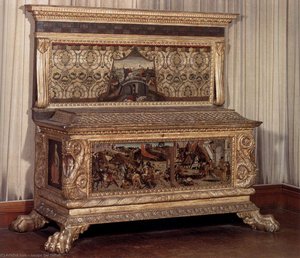
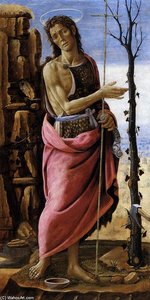
Jacopo del Sellaio's artistic output was remarkably diverse, yet he is particularly renowned for his exquisitely decorated *cassoni*, or wedding chests. These weren’t merely functional objects; they were potent symbols of status, family heritage, and the hopes invested in a new union. His most celebrated example, “The Story of Cupid and Psyche,” commissioned for a 15th-century Florentine marriage, is a testament to his narrative skill and delicate artistry. The panels unfold the ancient Roman tale with grace and sensitivity, showcasing Jacopo’s ability to imbue mythological subjects with emotional resonance. Beyond these grand commissions, he also excelled in creating smaller devotional panels featuring saints like Saint Jerome and Saint John the Baptist, works that catered to the growing demand for personal piety among private patrons. These intimate pieces reveal a refined sensibility and an attention to detail that elevates them beyond simple religious iconography. The “Nerli Cassone,” created in collaboration with Zanobi di Domenico and Biagio d'Antonio in 1472, further demonstrates his collaborative spirit and ability to seamlessly integrate his artistic vision within a team effort. His panel "The Banquet of Ahasuerus," part of a larger series, reveals a mastery of complex compositions and narrative storytelling.Echoes of Masters: Influences and Artistic Development
To understand Jacopo del Sellaio’s art is to recognize the subtle yet profound influences that shaped his style. The lyrical grace and elegant figure drawing characteristic of Sandro Botticelli are clearly discernible in many of his compositions, particularly those depicting mythological scenes. He absorbed Botticelli's ability to create figures imbued with a sense of ethereal beauty and emotional depth. Simultaneously, Jacopo drew inspiration from Domenico Ghirlandaio’s realistic portrayals of figures and meticulous attention to detail—a grounding influence that prevented his work from becoming overly stylized or mannered. This synthesis of influences allowed him to develop a distinctive voice, blending traditional techniques with the emerging artistic trends of the Renaissance. He wasn't simply imitating; he was absorbing, adapting, and ultimately transforming these influences into something uniquely his own.A Legacy Within the Florentine Renaissance
Jacopo del Sellaio’s historical significance lies not in achieving superstar status but in representing a crucial segment of the artistic landscape of 15th-century Florence. He embodies the generation of skilled artisans who skillfully balanced tradition with innovation, contributing to the rich and multifaceted character of Florentine art. His work provides invaluable insight into the decorative arts—the *cassoni* being prime examples—and the private devotional practices that flourished during this period. While he may not have garnered the same level of fame as some of his more celebrated peers, his contributions to both cassone painting and religious art are undeniably noteworthy. He passed away in Florence in 1493, leaving behind a legacy of beautifully crafted artworks that continue to captivate and inspire those who encounter them today. His son, Arcangelo di Jacopo del Sellaio, continued the family tradition as a painter, further cementing their place within the artistic heritage of Florence.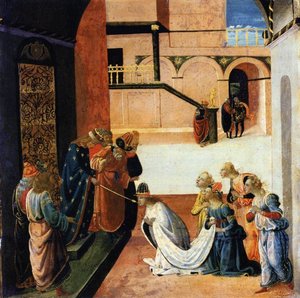
Jacopo del Sellaio
1442 - 1493 , Italy
Quick Facts
- Artistic Movement Or Style: Early Renaissance
- Artists Who Influenced This Artist:
- Botticelli
- Ghirlandaio
- Filippino Lippi
- Date Of Birth: 1442
- Date Of Death: 1493
- Full Name: Jacopo del Sellaio
- Nationality: Italian
- Notable Artworks:
- Story of Cupid & Psyche
- The Nerli Cassone
- Banquet of Ahasuerus
- Saint Jerome
- Saint John the Baptist
- Place Of Birth: Florence, Italy
Related Articles

Jacopo Tintoretto's Masterpieces: 25 Paintings That Define Venetian Drama | ArtsDot
Explore 25 breathtaking masterpieces by Jacopo Tintoretto, the Venetian master of drama and light. Discover the stories behind iconic Renaissance paintings & find museum-quality art reproductions to elevate your home decor on ArtsDot.com.
Raphael's Masterpieces: 25 Iconic Paintings & Renaissance Art for Your Home
Explore 25 breathtaking Raphael paintings! Journey through the Italian Renaissance with masterpieces like 'School of Athens' & iconic Madonnas. Find museum-quality art reproductions and elevate your home decor on ArtsDot.com.
Andrea del Sarto: Florentine Grace, Technical Mastery & Artistic Ambition
Explore the life & art of Andrea del Sarto, a Florentine Renaissance master renowned for harmonious compositions & technical brilliance. Discover his frescoes, portraits, and lasting influence on art history.
Prado Masterpieces: Explore 25 Iconic Artworks & Bring Spanish Beauty Home
Journey through 25 Prado Museum masterpieces! Explore Velázquez, Goya & El Greco's iconic Spanish art. Discover the stories behind these timeless paintings and find museum-quality reproductions for your home at ArtsDot.com.
Jacopo Bassano: A Venetian Master of Color, Family & the Renaissance Landscape
Explore the life & art of Jacopo Bassano, a Venetian master renowned for his vibrant colorism and innovative religious scenes. Discover his family legacy & enduring influence on Renaissance painting with ArtsDot.