 Preview
 Send
Send Share
Share
 Details

 Download
 Similars
 X-Ray
X-Ray Diaporama
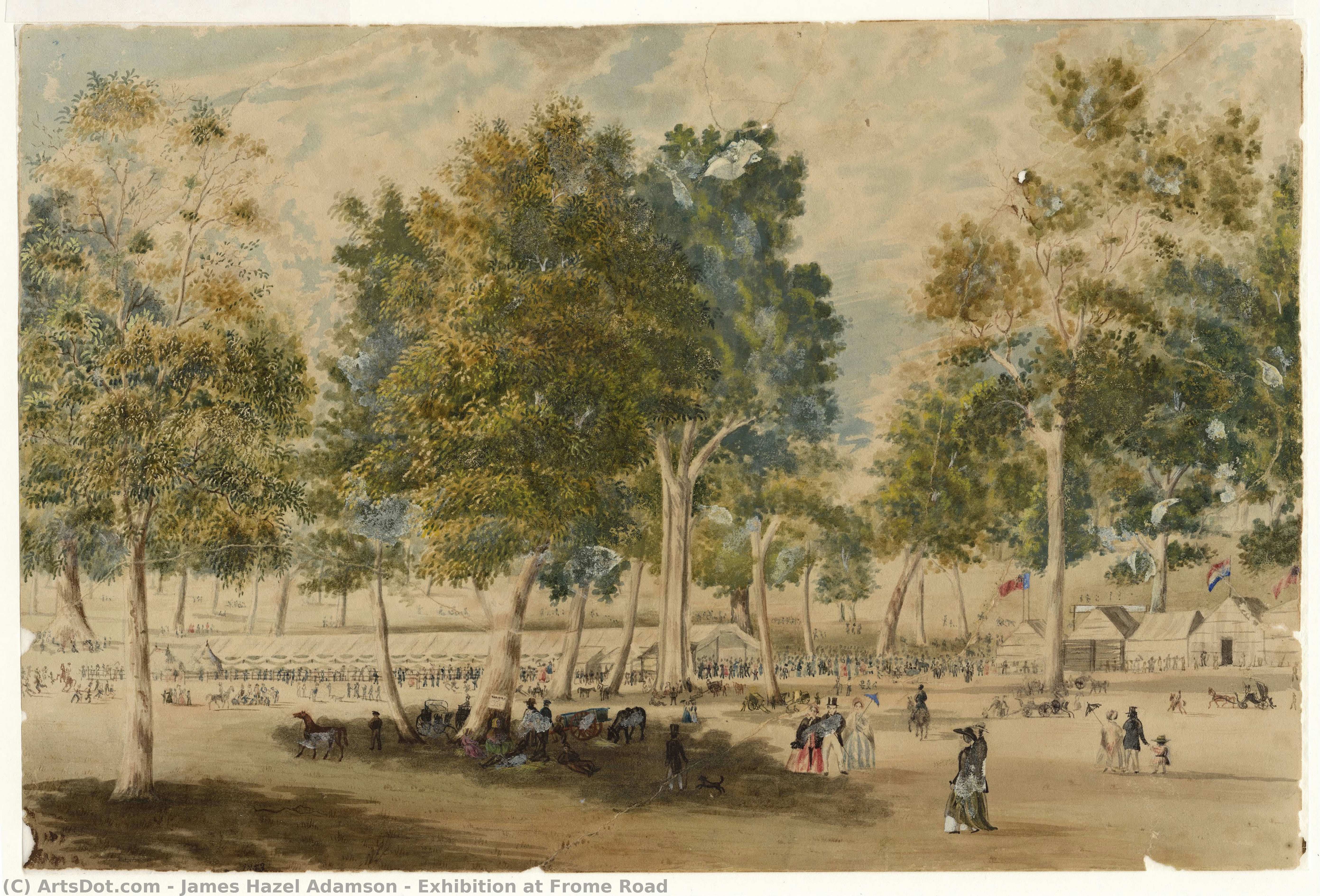
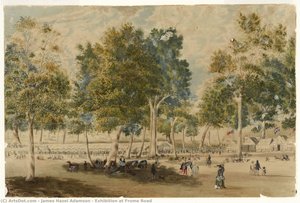
Exhibition at Frome Road
 Contemporary Realism
 1853
1853 21.0 x 31.0 cm
 State Library of South Australia
 Read More
Hand Made Oil Reproduction
Hand-painted oil on canvas in your size and frame, made to order by our artists. ( Buy Print Buy Image)




































Pick from our preset sizes that match the artwork's original proportions.

You may enter your own dimensions to fit a specific frame or space. If your selected size does not match the original image's proportions, we will either crop the artwork or extend the painting with additional hand-painted elements. A digital mockup will be sent for your approval before production begins.
Please note that the on-screen preview does not reflect the actual cropping or extension. Only the mockup will accurately show the final composition.
While custom sizes are available, we recommend selecting a dimension from the predefined list to preserve the original proportions.
After order, ArtsDot.com team will email client for instructions and provide a mockup preview
Worldwide Delivery () in 3/4 weeks instead of standard 5 weeks. (26 August). No compromise on quality.

Free Worldwide Express Shipping

High-Quality Linen Canvas

Full Shipping Insurance

Customs Tax Refund Guarantee

True Color Matching Guarantee

60-Day Return Policy (Defects Only)

100% Money-Back Guarantee

Bulk Discount Offer
 Glass option is only available in size under 110 CM

Exhibition at Frome Road
Reproduction Medium
Reproduction Size
-


Total Price
$ 313
Artwork Description
Related Artworks
Artist Biography
The Visionary of the South Australian Coast
James Hazel Adamson stands as a remarkable figure in the artistic landscape of early colonial Australia, primarily recognized for his captivating marine paintings and engravings that immortalized the rugged beauty of South Australia’s coastline. Born on 27 June 1829 in Hawick, Roxburghshire, Scotland, Adamson was part of a family of skilled craftsmen; his father was a wheelwright, and he grew up amidst the industrious spirit of the Scottish Borders. This early exposure to mechanics and technical precision would later become a defining characteristic of his artistic approach, blending the meticulous eye of an inventor with the soulful gaze of a Romantic painter. When his family immigrated to South Australia in 1839, Adamson arrived in a burgeoning colony, a landscape that would soon provide the dramatic inspiration for his life's work.
The transition from a young immigrant to a celebrated artist was marked by a profound engagement with the Australian environment. While he possessed a keen interest in mechanics—even building a water-powered flour mill in 1853—it was the sweeping vistas of the South Australian coast that truly captured his imagination. By 1854, Adamson had begun to translate the windswept cliffs and crashing waves of the region into evocative imagery. His early exhibitions, such as those held in Rundle Street, showcased views of the River Murray, Goolwa, and Port Elliot, establishing him as a chronicler of the colonial frontier. His ability to capture the essence of the landscape was not merely about documentation; it was an attempt to find the sublime within the new world.
A Fusion of Technical Precision and Romantic Spirit
Adamson’s artistic style is characterized by a distinct blend of Romantic idealism and meticulous observation. Influenced by the atmospheric legacies of luminaries such as Turner and Constable, he sought to capture the ephemeral qualities of light, mist, and water. However, his background as a machinist and inventor lent his work a unique structural integrity. In his marine paintings, one can observe a profound respect for the physical reality of ships and coastal topography, rendered with an accuracy that speaks to his technical training. This duality allowed him to move seamlessly between the delicate nuances of watercolor and the bold, dramatic textures of oil painting.
His achievements during the mid-19th century were significant milestones in the development of Australian colonial art:
- Award-Winning Mastery: At the first exhibition of the South Australian Society of Arts in 1857, Adamson’s work The First Steamer on the Murray and The Surprise of the Natives earned him first prize, cementing his reputation among his peers.
- Versatility in Medium: Beyond oils, he was a master of lithography, releasing series of prints that brought the beauty of the River Murray to a wider audience.
- Expansion of Vision: His artistic journey eventually led him to Victoria, where he exhibited panoramic views of Melbourne, demonstrating an ability to capture both the intimate coastal scenes of South Australia and the growing urban grandeur of the colonies.
Legacy of an Artist-Inventor
The life of James Hazel Adamson was a testament to the polymathic spirit of the 19th century. He did not see a boundary between the mechanical and the aesthetic; to him, the precision of an invention and the sweep of a wave were both subjects worthy of intense study and devotion. Even as he pursued scientific interests—creating complex instruments like an orrery and a Foucault gyroscope—his heart remained tethered to the sea and the shorelines he so lovingly documented.
Today, Adamson is remembered not just as a painter, but as a visual historian of early South Australia. His works serve as windows into a period of profound transformation, capturing a landscape before the heavy hand of industrialization altered its character. Through his engravings and paintings, the rugged, untamed beauty of the Australian coast continues to breathe, preserved by the hand of an artist who saw both the mechanics of the world and the poetry within it.
james hazel adamson
1829 - 1902 , United Kingdom
Quick Facts
- Artistic Movement Or Style: Romanticism
- Artists Or Movements Influenced By This Artist: ['Hudson Lowe']
- Artists Who Influenced This Artist:
- Turner
- Ruskin
- Date Of Birth: 1829
- Full Name: James Hazel Adamson
- Nationality: British
- Notable Artworks:
- The Coral Reef
- Sunset Over Port Adelaide
- Place Of Birth: United Kingdom (London)
Related Articles

Watercolor Wonders: 10 Masterpieces That Redefined Art History | ArtsDot
Journey through 10 legendary watercolor masterpieces by Sargent, Turner & Homer! Explore iconic landscapes, portraits & floral art that redefined history. Find museum-quality reproductions and curated decor ideas at ArtsDot.com.

Ephemeral Visions: Exploring the Artistic Legacy & Contemporary Practice of Watercolor Painting
Explore the captivating world of watercolor painting! Discover its rich history, essential techniques, influential artists & collecting tips. A comprehensive guide for art enthusiasts from ArtsDot.

Ephemeral Visions: Exploring the History & Emotional Resonance of Watercolor Painting
Explore the captivating history of watercolor painting, from ancient techniques to modern masters like Kandinsky & Blake. Discover essential artists, collecting tips & the emotional power of this luminous medium. Expert insights for art enthusiasts.

Ephemeral Visions: Exploring the Artistic Legacy & Nuances of Watercolor Painting
Explore the captivating world of watercolor painting! Discover its rich history, essential techniques, influential artists & collecting tips from art experts. A comprehensive guide for enthusiasts.
Whistler's Masterpieces: Explore 25 Iconic Paintings & Aesthetic Art for Your Home
Journey through 25 iconic James Abbott McNeill Whistler paintings! Explore his masterpieces of Aestheticism, from 'Nocturne in Black and Gold' to captivating portraits. Find museum-quality art reproductions & elevate your home decor with ArtsDot.com. Discover the full collection online.