 Preview
 Send
Send Share
Share
 Details

 Download
 Similars
 X-Ray
X-Ray Diaporama
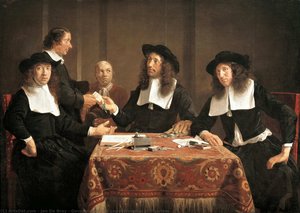
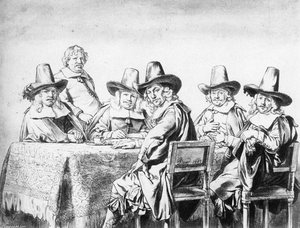
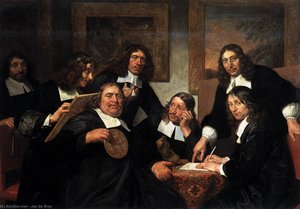
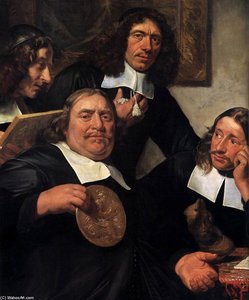
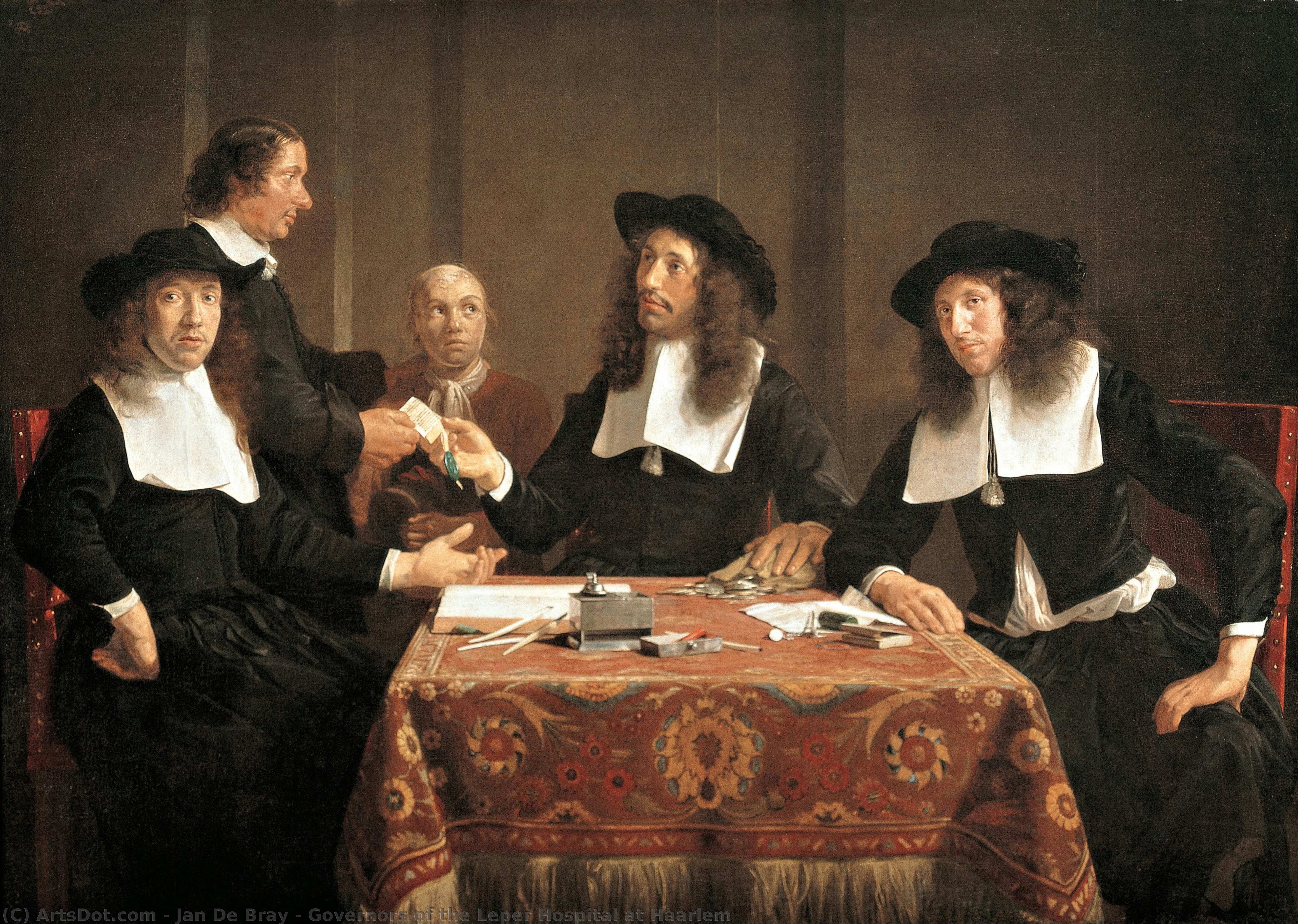
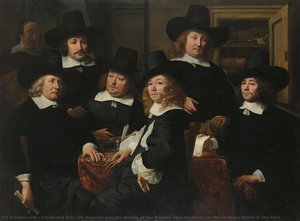
Governors of the Leper Hospital at Haarlem


 Read More
Hand Made Oil Reproduction
Hand-painted oil on canvas in your size and frame, made to order by our artists. ( Buy Print Buy Image)




P118B $10

P118H $10

P118W $10

P438Z $10

P508JH $12

P508YH $12

P805H $10

P805Z $10

P919BZ $10

P919G $10

P919XJ $10

P959ZH $10

P968JZ $12

W106C $8

W218G $10

W218JH $8

W218Y $10

W307PJ $10

W316G $10

W316PJ $8

W316Y $10

W398PJ $8

W4111J $10

W500HY $15

W500JH $15

W692G $12

W849H $8

W940BG $15

W953PJ $8




Pick from our preset sizes that match the artwork's original proportions.

You may enter your own dimensions to fit a specific frame or space. If your selected size does not match the original image's proportions, we will either crop the artwork or extend the painting with additional hand-painted elements. A digital mockup will be sent for your approval before production begins.
Please note that the on-screen preview does not reflect the actual cropping or extension. Only the mockup will accurately show the final composition.
While custom sizes are available, we recommend selecting a dimension from the predefined list to preserve the original proportions.
After order, ArtsDot.com team will email client for instructions and provide a mockup preview
Worldwide Delivery () in 3/4 weeks instead of standard 5 weeks. (31 August). No compromise on quality.

Free Worldwide Express Shipping

High-Quality Linen Canvas

Full Shipping Insurance

Customs Tax Refund Guarantee

True Color Matching Guarantee

60-Day Return Policy (Defects Only)

100% Money-Back Guarantee

Bulk Discount Offer
 Glass option is only available in size under 110 CM

Governors of the Leper Hospital at Haarlem
Reproduction Medium
Reproduction Size
-


Total Price
$ 263
A Glimpse into Charity's Heart: Jan de Bray’s Governors of the Leper Hospital at Haarlem
Jan de Bray’s “Governors of the Leper Hospital at Haarlem,” painted in 1667, is more than a simple portrait; it’s a poignant window into the social and charitable landscape of 17th-century Holland. Commissioned to depict the regents – the governing board – of the city's leper hospital, this work reveals a complex interplay of duty, compassion, and the tangible realities of disease and care. De Bray, already establishing himself as a successor to the esteemed Johannes Verspronck and Frans Hals, masterfully captures not just likenesses but also the very essence of these men’s roles within a vital institution.
- Subject Matter: The scene unfolds around a richly adorned table, dominated by an Indian carpet – a symbol of wealth and status readily available to the city's elite. Four men are seated, engaged in administrative tasks: reviewing accounts, issuing certificates of infection, and overseeing the admission of a young patient afflicted with leprosy.
- Composition & Technique: De Bray’s bold composition immediately draws the viewer into the scene. The figures are rendered with remarkable realism, utilizing his signature technique of sharp detail and dramatic lighting to create a sense of immediacy. Note the meticulous depiction of the boy's sores – a stark reminder of the devastating illness he carries – and the careful rendering of the ruffled collars and luxurious clothing worn by the trustees.
- Historical Context: The painting’s creation coincides with a period of significant social reform in Haarlem, driven by concerns about public health and welfare. The leper hospital itself was an anomaly, established outside the city walls to minimize risk, highlighting the community's efforts to contain and care for those afflicted.
Symbolism & Emotional Resonance
Beyond its documentary value, “Governors of the Leper Hospital” is rich in symbolism. The act of handing over a certificate of infection represents not just bureaucratic procedure but also the profound responsibility these men bore – to assess, categorize, and ultimately provide sanctuary for those deemed ‘unclean.’ The inclusion of the Indian carpet speaks to the wealth that funded this institution, while the boy’s vulnerability underscores the fragility of human life. De Bray skillfully evokes a sense of quiet dignity and solemn purpose within the group, suggesting not just administrative competence but also genuine concern for their patients.
De Bray's Legacy & Artistic Influence
Painted in the wake of Verspronck’s and Hals’s deaths, this work solidified De Bray’s position as a leading portrait painter in Haarlem. His style, characterized by its dynamism and attention to detail, reflects the broader artistic trends of the era – a move away from the static formality of earlier portraits towards a more engaging and psychologically nuanced representation of his subjects. His ability to capture not just physical appearance but also character and social standing was highly valued by the institutions he served, as evidenced by the trustees’ enthusiastic commission.
A Hand-Painted Reproduction – Bringing History Home
ArtsDot offers a meticulously crafted hand-painted reproduction of “Governors of the Leper Hospital at Haarlem,” capturing the essence of De Bray's masterpiece. Each reproduction is created by skilled artisans, ensuring an unparalleled level of detail and authenticity. This artwork will not only grace your walls but also serve as a tangible link to a pivotal moment in Dutch history – a testament to compassion, responsibility, and the enduring power of art to illuminate the human condition.
Related Artworks

Artist Biography
Jan Siberechts: Bridging the Divide Between Flanders and England
Jan Siberechts, born in Antwerp around 1627 and passing away in England circa 1700, represents a fascinating confluence of artistic influences – a testament to the dynamic exchange between the Netherlands and Britain during the late 17th century. His story isn’t one of singular innovation, but rather a skillful synthesis of Flemish landscape tradition with the evolving tastes of English aristocratic patrons. Siberechts's career unfolded against the backdrop of significant political and religious shifts; he arrived in England as a Catholic amidst a period of increasing tensions between Protestantism and Catholicism, adding another layer to his artistic journey.- Early Life and Training: Siberechts’s father was a sculptor, providing him with an early exposure to the visual arts. He received formal training at the Guild of St Luke in Antwerp, a crucial step towards establishing himself as a professional artist. This foundation instilled within him a deep understanding of classical composition and artistic technique.
- Italian Influence: Initial works reveal a clear debt to Italianate landscape painting – a stylistic trend prevalent throughout Europe during this period. These early pieces demonstrate his study of the idealized landscapes favored by artists like Titian and Canaletto, showcasing a meticulous attention to detail and atmospheric perspective.
- Flemish Roots in England: Siberechts’s style gradually evolved as he spent time in England, absorbing influences from the local landscape and adapting to the specific demands of his English clientele. He developed a distinctive approach that blended Flemish compositional techniques with depictions of the British countryside – particularly the Peak District.
A Patron's Eye: Landscapes for Country Houses
Siberechts’s most significant contribution lies in his role as a landscape painter for wealthy English landowners. He was commissioned to create views of prestigious country houses, including Longleat, Chevely, Chatsworth, and Wollaton – each painting offering a glimpse into the grandeur and lifestyle of the elite. These commissions weren't merely exercises in topographical accuracy; they were carefully crafted representations designed to enhance the prestige and status of their patrons. Siberechts skillfully employed atmospheric perspective, creating a sense of depth and distance that emphasized the scale and beauty of these estates.- The Peak District: He became particularly renowned for his depictions of the rugged landscapes of the Peak District, capturing its dramatic cliffs, rolling hills, and meandering rivers with remarkable precision.
- Royal Connections: Siberechts’s work gained favor within the court of George Villiers, 2nd Duke of Buckingham, who had previously admired some of his paintings in Antwerp. This connection opened doors to further commissions from influential figures.
- A Reflection of Status: The landscapes he painted were not simply representations of scenery; they were carefully constructed statements about wealth, power, and the appreciation of nature – all vital elements within the social fabric of 17th-century England.
Beyond the View: Siberechts’s Artistic Techniques
While often categorized as a landscape painter, Siberechts's work demonstrates a sophisticated understanding of artistic principles beyond mere representation. He was particularly adept at capturing light and shadow, creating a sense of realism and atmosphere that set his paintings apart. His meticulous attention to detail—evident in the rendering of foliage, rocks, and water—reveals a deep appreciation for the natural world.- Compositional Mastery: Siberechts’s compositions are characterized by a balanced use of space, color, and form, reflecting his training in Flemish landscape tradition.
- Use of Color: He skillfully employed a muted palette—dominated by earthy tones—to create a sense of realism and atmospheric depth.
- Perspective Techniques: Siberechts’s mastery of perspective is particularly evident in his depictions of distant landscapes, where he used atmospheric haze to suggest depth and distance.
Legacy and Historical Context
Jan Siberechts's work holds a unique place in the history of British landscape painting. He represents one of the earliest examples of topographical views created in England, laying the groundwork for subsequent generations of artists who would explore the country’s diverse landscapes. His paintings offer valuable insights into the social and cultural life of 17th-century England, reflecting the tastes and aspirations of its wealthy landowners. Siberechts's journey from Antwerp to England exemplifies the interconnectedness of European artistic networks during a period of significant change and demonstrates how artists could adapt their styles while retaining their core traditions. His legacy endures through his meticulously rendered landscapes, which continue to captivate viewers with their beauty and historical significance.
jan de bray
1627 - 1697 , Netherlands
Quick Facts
- Artistic Movement Or Style: Netherlands-trained
- Artists Or Movements Influenced By This Artist: ['British landscape painting']
- Artists Who Influenced This Artist: ['Rembrandt van Rijn']
- Date Of Birth: 1627
- Date Of Death: c.1700
- Full Name: Jan Siberechts
- Nationality: Dutch
- Notable Artworks:
- A View from Richmond Hill
- Later Stuart landscapes
- Place Of Birth: Antwerp, Belgium
Related Articles

Dutch Masters: 10 Golden Age Paintings That Still Inspire |
Journey into the Dutch Golden Age! Explore 10 iconic paintings by Rembrandt, Vermeer & Hals. Discover the stories behind these Baroque masterpieces and find museum-quality art reproductions to elevate your home decor on .
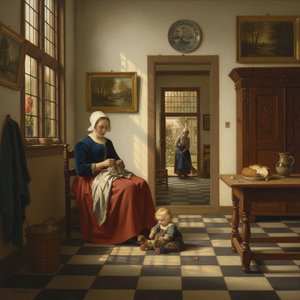
Pieter de Hooch: Illuminating Dutch Domestic Life & Golden Age Charm
Explore the captivating world of Pieter de Hooch, a master of Dutch Golden Age painting. Discover his innovative use of light, intimate domestic scenes, and lasting influence on art history. Learn more at ArtsDot.
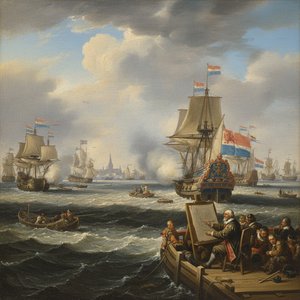
Willem van de Velde the Elder: Master of Maritime Painting & Chronicler of the Dutch Golden Age
Discover the captivating maritime paintings of Willem van de Velde the Elder, a master chronicler of the Dutch Golden Age. Explore his unparalleled realism and lasting influence on naval art history.

Golden Age Reflections: Dutch Baroque Painting & Cultural Innovation
Explore the Dutch Golden Age of painting! Discover key artists like Vermeer & ter Borch, their innovative techniques, and the rich cultural context behind these Baroque masterpieces. Learn about collecting & appreciating this iconic art period.

Illuminating Innovation: Exploring the Dutch Golden Age of Painting
Explore the Dutch Golden Age of painting with ArtsDot. Discover Rembrandt, Vermeer & other Masters. Learn about key characteristics, iconic artworks, and lasting influence. Expert insights for collectors & enthusiasts.