 Preview
 Send
Send Share
Share
 Details

 Download
 Similars
 X-Ray
X-Ray Diaporama
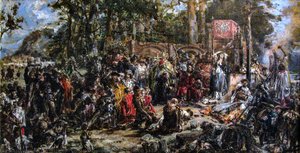
Battle of Grunwald (detail) (10)
 Oil On Canvas
- WallArt
- Romanticism
 1878
1878- 19th Century
 426.0 x 987.0 cm
 Warsaw National Museum
 Read More
Hand Made Oil Reproduction
Hand-painted oil on canvas in your size and frame, made to order by our artists. ( Buy Print Buy Image)




P118B $10

P118H $10

P118W $10

P438Z $10

P508JH $12

P508YH $12

P805H $10

P805Z $10

P919BZ $10

P919G $10

P919XJ $10

P959ZH $10

P968JZ $12

W106C $8

W218G $10

W218JH $8

W218Y $10

W307PJ $10

W316G $10

W316PJ $8

W316Y $10

W398PJ $8

W4111J $10

W500HY $15

W500JH $15

W692G $12

W849H $8

W940BG $15

W953PJ $8




Pick from our preset sizes that match the artwork's original proportions.

You may enter your own dimensions to fit a specific frame or space. If your selected size does not match the original image's proportions, we will either crop the artwork or extend the painting with additional hand-painted elements. A digital mockup will be sent for your approval before production begins.
Please note that the on-screen preview does not reflect the actual cropping or extension. Only the mockup will accurately show the final composition.
While custom sizes are available, we recommend selecting a dimension from the predefined list to preserve the original proportions.
After order, ArtsDot.com team will email client for instructions and provide a mockup preview
Worldwide Delivery () in 3/4 weeks instead of standard 5 weeks. (16 August). No compromise on quality.

Free Worldwide Express Shipping

High-Quality Linen Canvas

Full Shipping Insurance

Customs Tax Refund Guarantee

True Color Matching Guarantee

60-Day Return Policy (Defects Only)

100% Money-Back Guarantee

Bulk Discount Offer
 Glass option is only available in size under 110 CM

Battle of Grunwald (detail) (10)
Reproduction Medium
Reproduction Size
-


Total Price
$ 313
Artwork Description
The Epic Battle of Grunwald
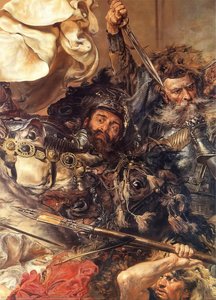
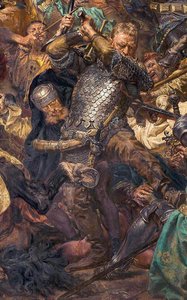
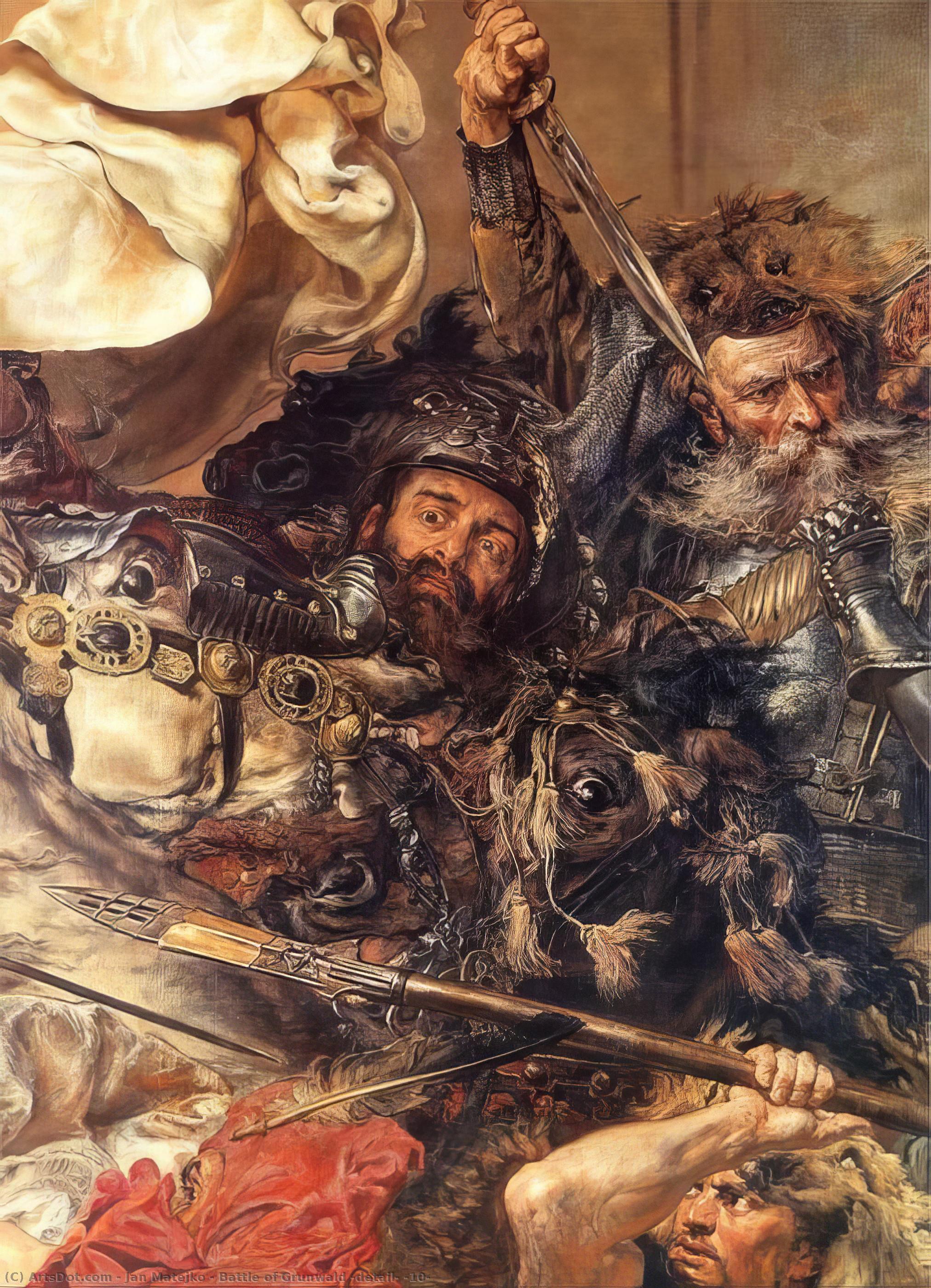
Jan Matejko's "Battle of Grunwald (detail) (10)" is a breathtaking portrayal of one of the most pivotal moments in Polish-Lithuanian history. This 1878 masterpiece captures the intensity and chaos of the historic battle fought on July 15, 1410, where the combined forces of Poland and Lithuania decisively defeated the Teutonic Order. The artwork is a testament to Matejko's skill in bringing historical events to life with vivid detail and emotional depth.
A Dramatic Composition
The composition is dense with figures engaged in fierce combat, creating a sense of turmoil and conflict. The central focus is on two main figures locked in battle, surrounded by soldiers and horses. The background features a celestial or divine figure, adding a layer of symbolic meaning to the scene. Matejko's use of dynamic and jagged lines conveys movement and tension, while irregular and fragmented shapes contribute to the sense of chaos.
Rich Color Palette
The color palette is dominated by earthy tones such as browns, blacks, and grays, which depict the armor, clothing, and weapons of the soldiers. Splashes of red, particularly in the lower left corner, represent blood or a banner, adding stark contrast to the otherwise muted colors. The dramatic use of light and shadow highlights the central figures and creates a sense of depth, enhancing the overall impact of the artwork.
Historical Context
The Battle of Grunwald was a turning point in Central and Eastern European history, marking the rise of the Polish-Lithuanian union as a dominant regional force. Matejko's painting serves as a powerful reminder of this significant victory, capturing the bravery and determination of the Polish and Lithuanian soldiers. The artwork is not just a historical record but also a symbol of national pride and resistance against foreign invaders.
Symbolism and Emotional Impact
The inclusion of a celestial figure in the background suggests divine intervention or commentary on the scene below, adding a layer of spiritual significance to the battle. The emotional intensity of the artwork conveys feelings of struggle, violence, and heroism, making it a powerful representation of human conflict. Matejko's meticulous detailing and high level of realism bring the scene to life, immersing viewers in the chaos and drama of the battle.
Style and Technique
Matejko's style is characterized by its dramatic use of light and shadow, dynamic composition, and emotional intensity. The technique involves meticulous detailing and a high level of realism in the rendering of figures and textures. The materials likely include oil paints on canvas, given the rich texture and depth of color. This Baroque-style painting is a testament to Matejko's skill as one of Poland's most celebrated artists.
Why Choose This Artwork?
"Battle of Grunwald (detail) (10)" is an ideal choice for art lovers, collectors, and interior designers seeking a piece that combines historical significance with artistic brilliance. The dramatic composition and rich color palette make it a striking addition to any space, while the emotional depth and symbolism offer a deeper connection to the artwork. Whether you are looking to inspire your guests or add a touch of grandeur to your collection, this masterpiece is sure to impress.
Own a Piece of History
Bring the epic drama of the Battle of Grunwald into your home with a high-quality reproduction of Jan Matejko's iconic artwork. Each hand-painted reproduction captures the intricate details and vibrant colors of the original, ensuring a piece that is both visually stunning and historically significant. Elevate your space with this timeless masterpiece and experience the power and emotion of one of history's most pivotal battles.
Related Artworks

![The Battle Of Grunwald [tannenberg] — Jan Matejko, Romantic Historical Painting](/media/artworks/images/thumbnails/3d/0e/3d0e7fdbfd494a6fa807757d11601cf9.jpg)
Artist Biography
early life and education
jan alojzy matejko, a renowned polish painter, was born on june 24, 1838, in kraków, poland. his father, franciszek ksawery matejko, was a czech-born tutor and music teacher. jan's early life was marked by the kraków revolution of 1846 and the 1848 siege of kraków by the austrians, events that would later influence his artistic themes. matejko attended st. ann's high school but dropped out in 1851 due to poor grades. however, he showed exceptional talent for art from an early age. he studied at the school of fine arts in kraków from 1852 to 1858, specializing in historical painting under the tutelage of wojciech korneli stattler and władysław łuszczkiewicz.artistic career
matejko's first major work, tsars shuyski before zygmunt iii, was completed in 1853. he began exhibiting his historical paintings at the kraków society of friends of fine arts in 1855. notable works include:- rejtan (1866): a large oil on canvas painting depicting a pivotal moment in polish history.
- union of lublin (1869): a significant piece showcasing matejko's skill in capturing historical events.
- battle of grunwald (1878): a masterpiece that highlights his ability to convey the intensity of battle scenes.
museological contributions and legacy
matejko spent most of his life in kraków, eventually becoming a director at the jan matejko academy of fine arts, formerly known as the kraków academy of fine arts. his students included prominent painters such as maurycy gottlieb, jacek malczewski, józef mehoffer, and stanisław wyspiański. notable works available on ArtsDot:- jan matejko: varna (romanticism)
- jan matejko: still life (romanticism)
- jan matejko: the union of lublin (298 x 512 cm, romanticism, oil on canvas)
references:
discovering the masterpieces of muzeum narodowe krakow, poland (wikipedia.org)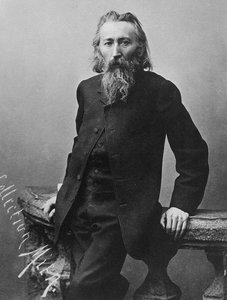
Jan Matejko
1838 - 1893 , Poland
Quick Facts
- Artistic Movement Or Style: Romanticism
- Artists Or Movements Influenced By This Artist: ['Maurycy Gottlieb']
- Artists Who Influenced This Artist:
- Wojciech Korneli Stattler
- Władysław Łuszczkiewicz
- Date Of Birth: June 24, 1838
- Date Of Death: November 1, 1893
- Full Name: Jan Alojzy Matejko
- Nationality: Polish
- Notable Artworks:
- Battle of Grunwald
- Union of Lublin
- Place Of Birth: Kraków, Poland
Related Articles
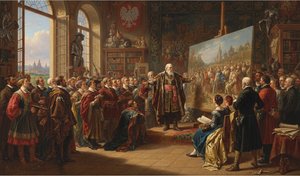
Jan Matejko: Historical Narrative & National Identity in 19th-Century Polish Painting
Explore the powerful historical paintings of Jan Matejko, Poland's national artist. Discover his iconic works & learn how he shaped Polish identity in the 19th century. High-quality reproductions available.
Stanisław Wyspiański: Symbolism, National Identity & the Polish Secession
Explore the life & work of Stanisław Wyspiański, a pivotal figure in Polish Symbolism and the Young Poland movement. Discover his iconic paintings, dramas, and stained glass designs reflecting national identity & artistic innovation.
Jan Gossaert (Mabuse): Pioneering Renaissance Style & the Birth of Netherlandish Antiquity
Explore the groundbreaking art of Jan Gossaert (Mabuse), a pioneer of Renaissance painting in the Low Countries. Discover his Romanist style, stunning portraits, and influence on Northern European art history.

Early Netherlandish Masters: 10 Paintings That Revolutionized Art & Decor
Journey into the world of Early Netherlandish painting! Explore 10 masterpieces by Jan van Eyck, Rogier van der Weyden & more. Discover stunning detail, symbolism & Renaissance art for your home decor. Find museum-quality reproductions on ArtsDot.com
Jan Brueghel the Elder: A Master of Flemish Landscape & Allegory – Exploring Innovation & Influence
Explore the captivating world of Jan Brueghel the Elder, a Flemish Baroque master renowned for his stunning landscapes & allegorical paintings. Discover his collaborations with Rubens and lasting artistic legacy.