 Preview
 Send
Send Share
Share
 Details

 Download
 Similars
 X-Ray
X-Ray Diaporama
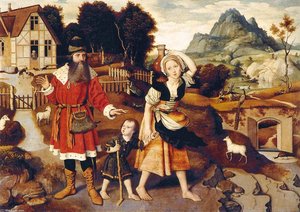
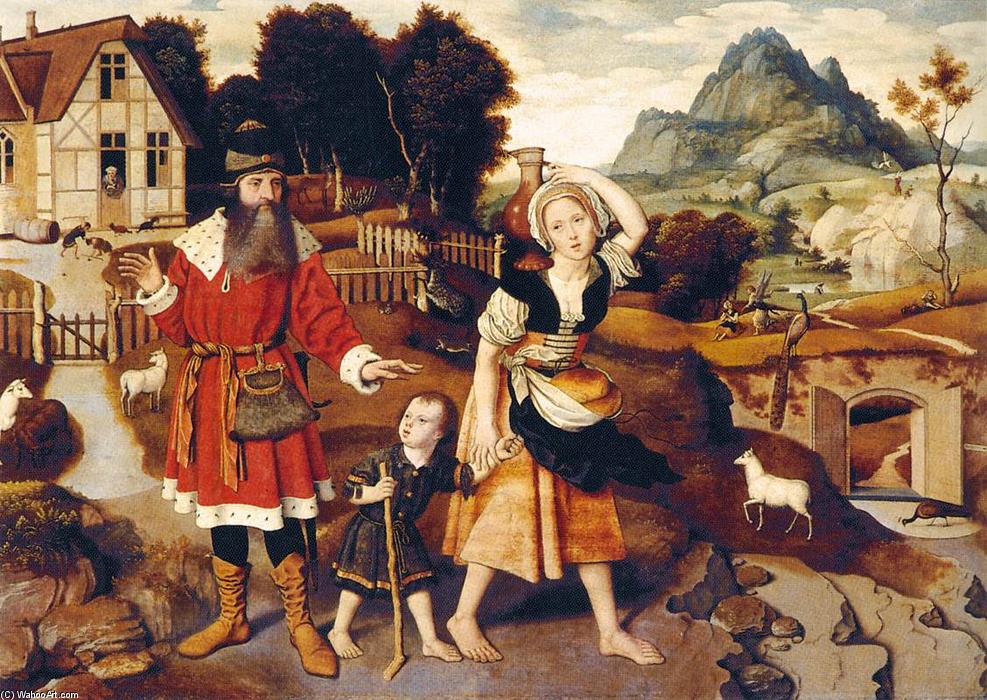
Abraham and Hagar
 Oil On Panel
- Renaissance
 Renaissance
 94.0 x 131.0 cm
 Museo Thyssen-Bornemisza
 Read More
Hand Made Oil Reproduction
Hand-painted oil on canvas in your size and frame, made to order by our artists. ( Buy Print Buy Image)




P118B $10

P118H $10

P118W $10

P438Z $10

P508JH $12

P508YH $12

P805H $10

P805Z $10

P919BZ $10

P919G $10

P919XJ $10

P959ZH $10

P968JZ $12

W106C $8

W218G $10

W218JH $8

W218Y $10

W307PJ $10

W316G $10

W316PJ $8

W316Y $10

W398PJ $8

W4111J $10

W500HY $15

W500JH $15

W692G $12

W849H $8

W940BG $15

W953PJ $8




Pick from our preset sizes that match the artwork's original proportions.

You may enter your own dimensions to fit a specific frame or space. If your selected size does not match the original image's proportions, we will either crop the artwork or extend the painting with additional hand-painted elements. A digital mockup will be sent for your approval before production begins.
Please note that the on-screen preview does not reflect the actual cropping or extension. Only the mockup will accurately show the final composition.
While custom sizes are available, we recommend selecting a dimension from the predefined list to preserve the original proportions.
After order, ArtsDot.com team will email client for instructions and provide a mockup preview
Worldwide Delivery () in 3/4 weeks instead of standard 5 weeks. (17 August). No compromise on quality.

Free Worldwide Express Shipping

High-Quality Linen Canvas

Full Shipping Insurance

Customs Tax Refund Guarantee

True Color Matching Guarantee

60-Day Return Policy (Defects Only)

100% Money-Back Guarantee

Bulk Discount Offer
 Glass option is only available in size under 110 CM

Abraham and Hagar
Reproduction Medium
Reproduction Size
-


Total Price
$ 263
Artwork Description
A Journey Through Faith and Landscape
In the quiet, evocative masterpiece Abraham and Hagar, Jan Mostaert invites the viewer into a sacred moment of biblical narrative, where the earthly and the divine intersect amidst a serene Netherlandish landscape. The painting captures a profound sense of pilgrimage, portraying an elderly man—likely Abraham or Jacob, as the artist weaves layers of scriptural resonance—traversing a rugged yet beautiful terrain alongside his companions. As the central figure gestures forward with an outstretched hand, he seems to be pointing toward a divine vision or a promised blessing, guiding the woman and child through the rolling hills. This movement across the landscape serves as a powerful metaphor for the human journey of faith, making the piece an emotionally resonant choice for those who find beauty in themes of guidance, family, and spiritual perseverance.
The composition is a masterclass in the Early Netherlandish style, characterized by an extraordinary attention to minute detail that rewards prolonged contemplation. Mostaert employs a technique of layering thin, translucent glazes of oil paint on wood panel, a method that imbues the work with a luminous, inner glow. This brilliance is most evident in the textures of the figures' garments—the heavy folds of the man’s earthy red tunic and the crisp, clean white of the woman’s headcovering. Every element, from the coarse hair of the nearby goat to the weathered skin of the travelers, is rendered with a meticulous realism that brings the scene to life. The landscape itself, featuring a distant stone bridge, a small stream, and a modest farmhouse, provides a sense of stability and domestic peace that balances the epic scale of the mountain range in the far distance.
The Artistry of the Renaissance Transition
Jan Mostaert stands as a pivotal figure in art history, acting as a bridge between the meticulous traditions of the late Middle Ages and the burgeoning innovations of the Northern Renaissance. His ability to synthesize the detailed, symbolic language of earlier Haarlem masters with a more modern, atmospheric approach to perspective creates a work that feels both timeless and historically grounded. The color palette is a sophisticated arrangement of organic tones—deep ochres, mossy greens, and rich browns—which anchors the spiritual subject matter in a tangible, physical world. This harmony of color and form makes the painting not only a piece of historical significance but also a versatile element for high-end interior design.
For the discerning collector or interior designer, Abraham and Hagar offers more than mere decoration; it provides a focal point of quiet contemplation. The soft, diffused lighting creates an atmosphere of tranquility, making it an ideal centerpiece for spaces designed for reflection, such as a private library, a study, or a formal living area. Whether viewed as a window into the religious devotion of the 16th century or as a stunning example of Renaissance technique, this reproduction captures the enduring power of Mostaert’s vision. It is a piece that speaks to the soul, offering a sense of historical depth and an aesthetic elegance that transcends the boundaries of time.
Related Artworks
Artist Biography
A Dutch Master of Renaissance Transition
Jan Mostaert, a name resonating softly through the annals of 16th-century Dutch art, occupies a fascinating position as a bridge between the late medieval traditions and the burgeoning innovations of the Renaissance. Born around 1475 in Haarlem – though precise details remain elusive – he emerged during a period of significant artistic ferment within the Netherlands. While biographical accounts are often colored by the recollections of Karel van Mander, a later art historian whose reliability is debated, Mostaert’s impact on portraiture and religious painting is undeniable. He wasn't merely replicating existing styles; he was synthesizing them, absorbing influences from earlier Haarlem masters like Geertgen tot Sint Jans while simultaneously responding to the evolving tastes of his patrons, including Margaret of Austria, governor of the Habsburg Netherlands. His career unfolded against a backdrop of political and religious upheaval, yet he managed to establish himself as a respected figure within the Guild of St. Luke in Haarlem, serving multiple terms as deacon and demonstrating a consistent involvement in the artistic community.Early Training and Artistic Development
The formative years of Jan Mostaert’s artistic journey are somewhat shrouded in mystery. Karel van Mander suggests an apprenticeship under Jacob van Haarlem, potentially linking him to the anonymous Master of the Brunswick Diptych – a connection that would explain certain stylistic affinities evident in his early works. This initial training likely instilled within him a meticulous attention to detail and a reverence for traditional religious iconography. However, Mostaert wasn’t content with mere imitation. He possessed an innate ability to infuse his paintings with a quiet emotional depth, drawing inspiration from the refined style of Geertgen tot Sint Jans. This early influence is visible in the delicate rendering of figures and the thoughtful compositions that characterize his initial religious pieces. Around 1510-1516, a noticeable shift occurred within his artistic approach. His figures became more graceful, inhabiting landscapes bathed in brighter light, hinting at an increasing awareness of Italian Renaissance principles filtering into Northern European art. This period saw him developing a unique style, blending the meticulous detail of Netherlandish painting with a newfound sense of spatial depth and atmospheric perspective.Patronage and Courtly Commissions
A pivotal moment in Mostaert’s career arrived in 1518 with his appointment as “peintre d’honneur” (painter of honor) by Margaret of Austria. While the exact nature of his service at her court remains a subject of scholarly debate, it is clear that this association elevated his status and provided access to a more sophisticated clientele. He was tasked with producing both portraits and devotional images for Margaret and other members of the Dutch nobility, demonstrating an ability to capture not only physical likeness but also aristocratic bearing and social standing. Mostaert became adept at reproducing existing portraits based on models, skillfully adding touches that conveyed prestige and refinement – a testament to his understanding of courtly expectations. This patronage allowed him financial stability and artistic freedom, enabling him to explore new techniques and experiment with different subject matter. His involvement in guild affairs continued alongside these prestigious commissions, solidifying his position as a leading artist within Haarlem’s vibrant art scene.Landscapes, Portraits, and Lasting Legacy
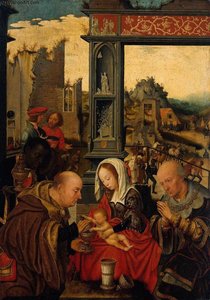
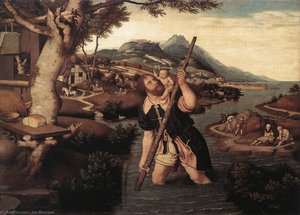
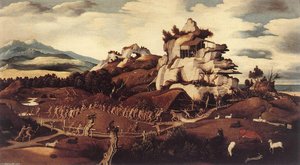
Jan Mostaert's artistic output was remarkably diverse, encompassing religious scenes, portraits, and – perhaps most notably – innovative landscapes. His *Adoration of the Magi* exemplifies his refined brushwork and evolving landscape style, showcasing a delicate balance between detailed figures and expansive backgrounds. However, it is his *West Indies Landscape*, though unfinished according to Karel van Mander, that truly sets him apart. This ambitious work, depicting an exotic and imagined New World setting, reveals a fascination with exploration and the unknown – a reflection of the era’s burgeoning global consciousness. His portraits, often three-quarter length compositions featuring sitters posed elegantly on cushions, demonstrate his mastery of capturing both physical resemblance and psychological depth. The influence of Joachim Patinir's panoramic landscapes became increasingly apparent in works like *St. Christopher*, blurring the lines between traditional religious iconography and a more modern interest in naturalistic representation. Tragically, much of Mostaert’s oeuvre was lost during the Great Fire of Haarlem in 1576, and subsequent reattributions have further diminished the number of securely attributed works. Despite these losses, Jan Mostaert remains a significant figure in Dutch Renaissance art – a skilled craftsman whose paintings offer invaluable insights into the artistic currents and cultural sensibilities of his time. He stands as a testament to the enduring power of artistic innovation within a period of profound transformation.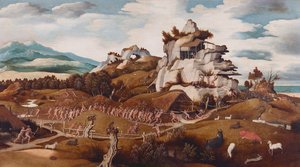
Jan Mostaert
1475 - 1555 , Spain
Quick Facts
- Artistic Movement Or Style: Dutch Renaissance
- Artists Who Influenced This Artist:
- Geertgen tot Sint Jans
- Joachim Patinir
- Date Of Birth: c. 1475
- Date Of Death: c. 1553/1555
- Full Name: Jan Mostaert
- Nationality: Dutch
- Notable Artworks:
- West Indies Landscape
- Adoration of the Magi
- St. Christopher
- Portrait of A. Coulster
- Place Of Birth: Haarlem, Netherlands
Related Articles
Jan Steen: A Master of Dutch Genre Painting & the Golden Age
Explore the life & art of Jan Steen, a leading Dutch Golden Age painter renowned for his humorous genre scenes & insightful social commentary. Discover his techniques, legacy, and collecting tips.

Dutch Masters: 10 Golden Age Paintings That Still Inspire |
Journey into the Dutch Golden Age! Explore 10 iconic paintings by Rembrandt, Vermeer & Hals. Discover the stories behind these Baroque masterpieces and find museum-quality art reproductions to elevate your home decor on .
Abraham Hulk Senior: Pioneering Maritime Topography of the Dutch Golden Age
Explore the captivating seascapes of Abraham Hulk Senior, a leading Anglo-Dutch marine painter of the 19th century. Discover his signature style, family legacy & collectable artworks at ArtsDot.

Golden Age Reflections: Dutch Baroque Painting & Cultural Innovation
Explore the Dutch Golden Age of painting! Discover key artists like Vermeer & ter Borch, their innovative techniques, and the rich cultural context behind these Baroque masterpieces. Learn about collecting & appreciating this iconic art period.
Jan Jansz Wijnants: A Study in Dutch Golden Age Still Life & Floral Transience
Explore the captivating world of Jan Wijnants and Dutch Golden Age still life painting. Discover symbolism, masterful techniques & lasting influence on floral art history. Learn more!