 Preview
 Send
Send Share
Share
 Details

 Download
 Similars
 X-Ray
X-Ray Diaporama
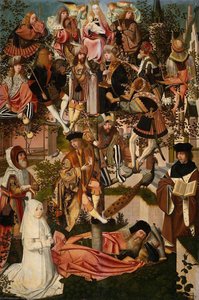
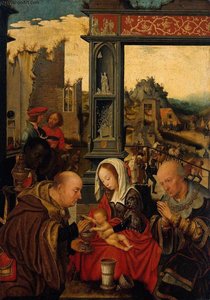
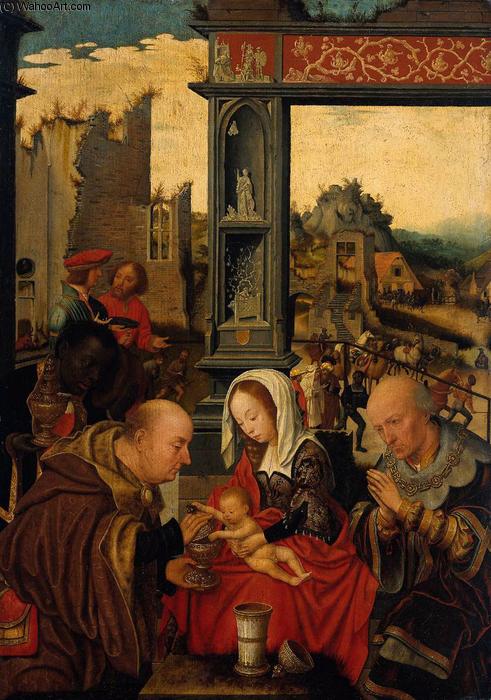
Adoration of the Magi
 Oil On Panel
- Northern Renaissance
 1515
1515- Renaissance
 49.0 x 35.0 cm
 Rijksmuseum
 Read More
Hand Made Oil Reproduction
Hand-painted oil on canvas in your size and frame, made to order by our artists. ( Buy Print Buy Image)




P118B $10

P118H $10

P118W $10

P438Z $10

P508JH $12

P508YH $12

P805H $10

P805Z $10

P919BZ $10

P919G $10

P919XJ $10

P959ZH $10

P968JZ $12

W106C $8

W218G $10

W218JH $8

W218Y $10

W307PJ $10

W316G $10

W316PJ $8

W316Y $10

W398PJ $8

W4111J $10

W500HY $15

W500JH $15

W692G $12

W849H $8

W940BG $15

W953PJ $8




Pick from our preset sizes that match the artwork's original proportions.

You may enter your own dimensions to fit a specific frame or space. If your selected size does not match the original image's proportions, we will either crop the artwork or extend the painting with additional hand-painted elements. A digital mockup will be sent for your approval before production begins.
Please note that the on-screen preview does not reflect the actual cropping or extension. Only the mockup will accurately show the final composition.
While custom sizes are available, we recommend selecting a dimension from the predefined list to preserve the original proportions.
After order, ArtsDot.com team will email client for instructions and provide a mockup preview
Worldwide Delivery () in 3/4 weeks instead of standard 5 weeks. (22 August). No compromise on quality.

Free Worldwide Express Shipping

High-Quality Linen Canvas

Full Shipping Insurance

Customs Tax Refund Guarantee

True Color Matching Guarantee

60-Day Return Policy (Defects Only)

100% Money-Back Guarantee

Bulk Discount Offer
 Glass option is only available in size under 110 CM

Adoration of the Magi
Reproduction Medium
Reproduction Size
-


Total Price
$ 263
Artwork Description
Jan Mostaert’s Reverent Vision of Divine Infancy
Jan Mostaert, a pivotal figure in the artistic landscape of early 16th-century Haarlem, stands as an exemplar of Renaissance transition—a masterful synthesist who absorbed the grandeur of Italian Mannerism while simultaneously grounding his work in the traditions of Northern European painting. Born around 1475, biographical details remain somewhat elusive, primarily gleaned from Karel van Mander’s later writings, whose veracity has been debated by scholars. Nevertheless, Mostaert's legacy is undeniable; he elevated Haarlem portraiture to new heights and profoundly influenced religious iconography, securing his place amongst the luminaries of his era. His artistic journey unfolded during a turbulent period marked by political maneuvering between Habsburg Spain and Protestant factions, yet he persevered, demonstrating remarkable resilience and adapting his style to resonate with discerning patrons like Margaret of Austria.- Subject Matter: The painting depicts the Adoration of the Magi—a cornerstone biblical narrative portraying King Herod, accompanied by three wise men bearing gifts for Jesus Christ’s newborn infant. This scene transcends mere depiction; it embodies profound theological contemplation concerning humility, faith, and divine grace.
- Style & Technique: Mostaert's approach exemplifies Mannerist tendencies – characterized by stylized figures, dramatic poses, and a deliberate manipulation of perspective—yet retains the meticulous detail characteristic of Haarlem’s artistic heritage. Employing oil paint on panel, he achieved remarkable luminosity and textural richness, capturing subtle nuances in drapery folds and facial expressions with exceptional precision.
- Historical Context: Created circa 1520-1525, *The Adoration of the Magi* reflects the broader artistic currents circulating throughout Europe during this formative period. The influence of Italian Renaissance masters like Raphael is palpable, particularly in the idealized depiction of Mary and Jesus—however, Mostaert’s stylistic choices subtly underscore the anxieties surrounding religious reformation prevalent at the time.
- Emotional Impact: Mostaert’s masterful composition evokes a palpable sense of reverence and solemn contemplation. The carefully orchestrated lighting enhances the dramatic tension, drawing the viewer's gaze towards the central figures—Mary and Jesus—creating an immersive experience that speaks to the viewer’s deepest spiritual convictions.
- Provenance & Reproduction: Currently housed in Museo Thyssen-Bornemisza, this artwork has captivated audiences for centuries. ArtsDot offers exceptional reproductions of *The Adoration of the Magi*, meticulously crafted by skilled artisans using archival pigments and printing techniques to faithfully recreate Mostaert’s original vision—allowing collectors and interior designers alike to appreciate its beauty and artistic merit in a contemporary setting.
Related Artworks

Artist Biography
A Dutch Master of Renaissance Transition
Jan Mostaert, a name resonating softly through the annals of 16th-century Dutch art, occupies a fascinating position as a bridge between the late medieval traditions and the burgeoning innovations of the Renaissance. Born around 1475 in Haarlem – though precise details remain elusive – he emerged during a period of significant artistic ferment within the Netherlands. While biographical accounts are often colored by the recollections of Karel van Mander, a later art historian whose reliability is debated, Mostaert’s impact on portraiture and religious painting is undeniable. He wasn't merely replicating existing styles; he was synthesizing them, absorbing influences from earlier Haarlem masters like Geertgen tot Sint Jans while simultaneously responding to the evolving tastes of his patrons, including Margaret of Austria, governor of the Habsburg Netherlands. His career unfolded against a backdrop of political and religious upheaval, yet he managed to establish himself as a respected figure within the Guild of St. Luke in Haarlem, serving multiple terms as deacon and demonstrating a consistent involvement in the artistic community.Early Training and Artistic Development
The formative years of Jan Mostaert’s artistic journey are somewhat shrouded in mystery. Karel van Mander suggests an apprenticeship under Jacob van Haarlem, potentially linking him to the anonymous Master of the Brunswick Diptych – a connection that would explain certain stylistic affinities evident in his early works. This initial training likely instilled within him a meticulous attention to detail and a reverence for traditional religious iconography. However, Mostaert wasn’t content with mere imitation. He possessed an innate ability to infuse his paintings with a quiet emotional depth, drawing inspiration from the refined style of Geertgen tot Sint Jans. This early influence is visible in the delicate rendering of figures and the thoughtful compositions that characterize his initial religious pieces. Around 1510-1516, a noticeable shift occurred within his artistic approach. His figures became more graceful, inhabiting landscapes bathed in brighter light, hinting at an increasing awareness of Italian Renaissance principles filtering into Northern European art. This period saw him developing a unique style, blending the meticulous detail of Netherlandish painting with a newfound sense of spatial depth and atmospheric perspective.Patronage and Courtly Commissions
A pivotal moment in Mostaert’s career arrived in 1518 with his appointment as “peintre d’honneur” (painter of honor) by Margaret of Austria. While the exact nature of his service at her court remains a subject of scholarly debate, it is clear that this association elevated his status and provided access to a more sophisticated clientele. He was tasked with producing both portraits and devotional images for Margaret and other members of the Dutch nobility, demonstrating an ability to capture not only physical likeness but also aristocratic bearing and social standing. Mostaert became adept at reproducing existing portraits based on models, skillfully adding touches that conveyed prestige and refinement – a testament to his understanding of courtly expectations. This patronage allowed him financial stability and artistic freedom, enabling him to explore new techniques and experiment with different subject matter. His involvement in guild affairs continued alongside these prestigious commissions, solidifying his position as a leading artist within Haarlem’s vibrant art scene.Landscapes, Portraits, and Lasting Legacy
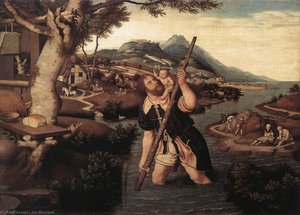
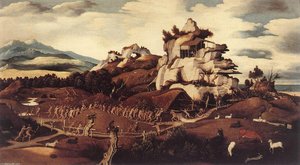
Jan Mostaert's artistic output was remarkably diverse, encompassing religious scenes, portraits, and – perhaps most notably – innovative landscapes. His *Adoration of the Magi* exemplifies his refined brushwork and evolving landscape style, showcasing a delicate balance between detailed figures and expansive backgrounds. However, it is his *West Indies Landscape*, though unfinished according to Karel van Mander, that truly sets him apart. This ambitious work, depicting an exotic and imagined New World setting, reveals a fascination with exploration and the unknown – a reflection of the era’s burgeoning global consciousness. His portraits, often three-quarter length compositions featuring sitters posed elegantly on cushions, demonstrate his mastery of capturing both physical resemblance and psychological depth. The influence of Joachim Patinir's panoramic landscapes became increasingly apparent in works like *St. Christopher*, blurring the lines between traditional religious iconography and a more modern interest in naturalistic representation. Tragically, much of Mostaert’s oeuvre was lost during the Great Fire of Haarlem in 1576, and subsequent reattributions have further diminished the number of securely attributed works. Despite these losses, Jan Mostaert remains a significant figure in Dutch Renaissance art – a skilled craftsman whose paintings offer invaluable insights into the artistic currents and cultural sensibilities of his time. He stands as a testament to the enduring power of artistic innovation within a period of profound transformation.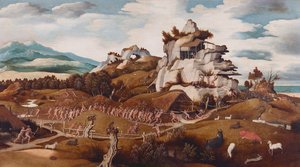
Jan Mostaert
1475 - 1555 , Spain
Quick Facts
- Artistic Movement Or Style: Dutch Renaissance
- Artists Who Influenced This Artist:
- Geertgen tot Sint Jans
- Joachim Patinir
- Date Of Birth: c. 1475
- Date Of Death: c. 1553/1555
- Full Name: Jan Mostaert
- Nationality: Dutch
- Notable Artworks:
- West Indies Landscape
- Adoration of the Magi
- St. Christopher
- Portrait of A. Coulster
- Place Of Birth: Haarlem, Netherlands
Related Articles

The Enduring Legacy of Oil on Canvas: Technique, History & Aesthetic Impact
Explore the rich history & techniques of oil painting – from Renaissance masters to Impressionism. Discover pigments, layering methods, and why this timeless medium endures. Expert insights for artists & art enthusiasts.

Oil on Canvas: A Historical & Technical Exploration of a Timeless Artistic Medium
Explore the rich history & enduring techniques of oil painting on canvas. Discover the science behind its longevity, conservation practices, and contemporary relevance. Expert insights for art enthusiasts.

The Enduring Power of Painting: A Historical & Contemporary Exploration of Form and Emotion
Explore the rich history & enduring techniques of oil painting with ArtsDot. Discover masterpieces, learn about art collecting, and find authentic handmade reproductions crafted by skilled artists.

The Enduring Legacy of Oil on Canvas: Technique, History & Contemporary Practice
Explore the rich history & enduring techniques of oil painting on canvas. Discover the science behind its longevity, conservation practices, and contemporary relevance. Expert insights for art enthusiasts.
Oil on Board Masters: 10 Paintings That Redefined Art | ArtsDot
Explore 10 legendary 'Oil on Board' masterpieces by Van Gogh, Monet & more! Discover art history, iconic styles like Impressionism, and find museum-quality reproductions to elevate your home decor. Explore the full collection online at ArtsDot.com.