 Preview
 Send
Send Share
Share
 Details

 Download
 Similars
 X-Ray
X-Ray Diaporama
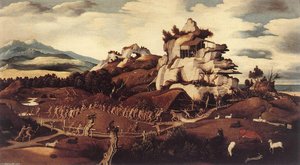
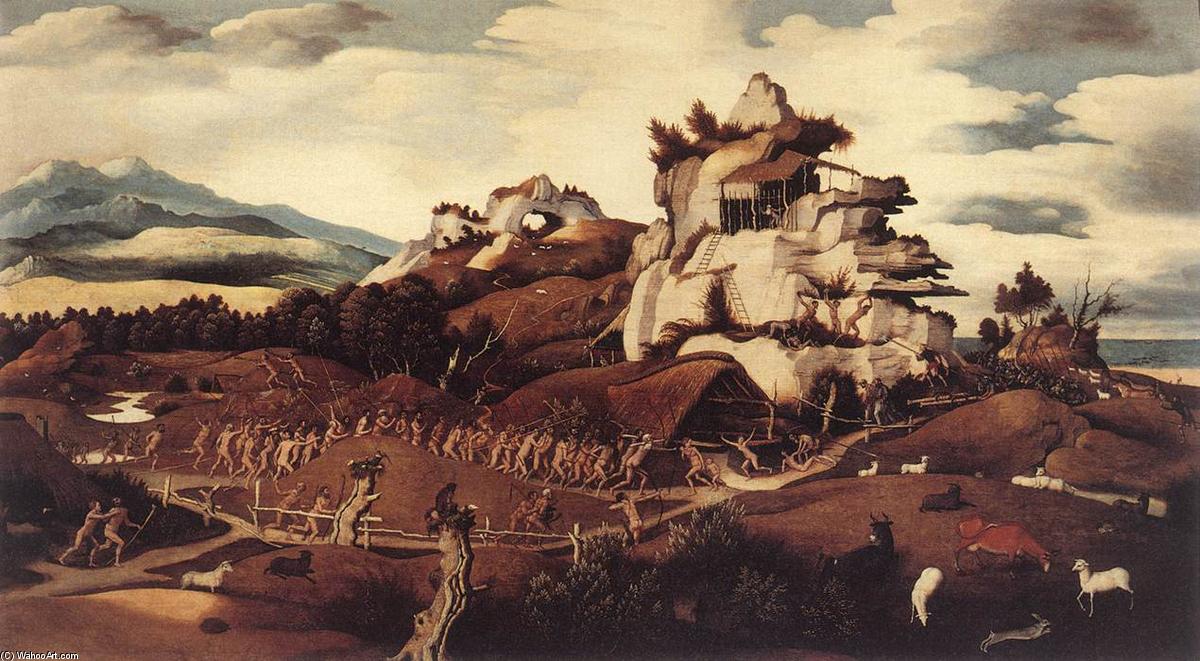
West Indian Landscape
 Acrylic On Canvas
- WallArt
 1540
1540 86.0 x 152.0 cm
 Frans Halsmuseum
 Read More
Hand Made Oil Reproduction
Hand-painted oil on canvas in your size and frame, made to order by our artists. ( Buy Print Buy Image)




P118B $10

P118H $10

P118W $10

P438Z $10

P508JH $12

P508YH $12

P805H $10

P805Z $10

P919BZ $10

P919G $10

P919XJ $10

P959ZH $10

P968JZ $12

W106C $8

W218G $10

W218JH $8

W218Y $10

W307PJ $10

W316G $10

W316PJ $8

W316Y $10

W398PJ $8

W4111J $10

W500HY $15

W500JH $15

W692G $12

W849H $8

W940BG $15

W953PJ $8




Pick from our preset sizes that match the artwork's original proportions.

You may enter your own dimensions to fit a specific frame or space. If your selected size does not match the original image's proportions, we will either crop the artwork or extend the painting with additional hand-painted elements. A digital mockup will be sent for your approval before production begins.
Please note that the on-screen preview does not reflect the actual cropping or extension. Only the mockup will accurately show the final composition.
While custom sizes are available, we recommend selecting a dimension from the predefined list to preserve the original proportions.
After order, ArtsDot.com team will email client for instructions and provide a mockup preview
Worldwide Delivery () in 3/4 weeks instead of standard 5 weeks. (17 August). No compromise on quality.

Free Worldwide Express Shipping

High-Quality Linen Canvas

Full Shipping Insurance

Customs Tax Refund Guarantee

True Color Matching Guarantee

60-Day Return Policy (Defects Only)

100% Money-Back Guarantee

Bulk Discount Offer
 Glass option is only available in size under 110 CM

West Indian Landscape
Reproduction Medium
Reproduction Size
-


Total Price
$ 263
Artwork Description
Composition and Details
The painting features a large rock formation at its center, surrounded by various elements of nature and human activity. On the left side, figures are engaged in different activities, such as carrying goods or playing musical instruments. The right side depicts figures interacting with animals like cows and goats, suggesting a rural setting.The background of the painting features a body of water that reflects the sky above, adding depth to the scene. Beyond the water, mountains rise up, providing a majestic backdrop. The clouds in the sky add a sense of dynamism to the otherwise static landscape.
Artistic Significance
The West Indian Landscape is a testament to Jan Mostaert's skill in portraying both the natural world and human activity with precision and care. This painting is a valuable addition to the collection of the Frans Halsmuseum, which is dedicated to preserving and promoting the works of Dutch Golden Age artists.For those interested in learning more about Jan Mostaert and his work, visit the ArtsDot website to explore a wide range of handmade oil painting reproductions. The Frans Halsmuseum is also home to other notable works, including paintings by Hendrick Goltzius and Jan Miense Molenaer, which can be found on the ArtsDot website.
Some notable works from the Frans Halsmuseum include:
- Jupiter and Antiope by Hendrick Goltzius
- Family Making Music by Jan Miense Molenaer
- Jolly Toper by Judith Leyster
Related Artworks
Artist Biography
A Dutch Master of Renaissance Transition
Jan Mostaert, a name resonating softly through the annals of 16th-century Dutch art, occupies a fascinating position as a bridge between the late medieval traditions and the burgeoning innovations of the Renaissance. Born around 1475 in Haarlem – though precise details remain elusive – he emerged during a period of significant artistic ferment within the Netherlands. While biographical accounts are often colored by the recollections of Karel van Mander, a later art historian whose reliability is debated, Mostaert’s impact on portraiture and religious painting is undeniable. He wasn't merely replicating existing styles; he was synthesizing them, absorbing influences from earlier Haarlem masters like Geertgen tot Sint Jans while simultaneously responding to the evolving tastes of his patrons, including Margaret of Austria, governor of the Habsburg Netherlands. His career unfolded against a backdrop of political and religious upheaval, yet he managed to establish himself as a respected figure within the Guild of St. Luke in Haarlem, serving multiple terms as deacon and demonstrating a consistent involvement in the artistic community.Early Training and Artistic Development
The formative years of Jan Mostaert’s artistic journey are somewhat shrouded in mystery. Karel van Mander suggests an apprenticeship under Jacob van Haarlem, potentially linking him to the anonymous Master of the Brunswick Diptych – a connection that would explain certain stylistic affinities evident in his early works. This initial training likely instilled within him a meticulous attention to detail and a reverence for traditional religious iconography. However, Mostaert wasn’t content with mere imitation. He possessed an innate ability to infuse his paintings with a quiet emotional depth, drawing inspiration from the refined style of Geertgen tot Sint Jans. This early influence is visible in the delicate rendering of figures and the thoughtful compositions that characterize his initial religious pieces. Around 1510-1516, a noticeable shift occurred within his artistic approach. His figures became more graceful, inhabiting landscapes bathed in brighter light, hinting at an increasing awareness of Italian Renaissance principles filtering into Northern European art. This period saw him developing a unique style, blending the meticulous detail of Netherlandish painting with a newfound sense of spatial depth and atmospheric perspective.Patronage and Courtly Commissions
A pivotal moment in Mostaert’s career arrived in 1518 with his appointment as “peintre d’honneur” (painter of honor) by Margaret of Austria. While the exact nature of his service at her court remains a subject of scholarly debate, it is clear that this association elevated his status and provided access to a more sophisticated clientele. He was tasked with producing both portraits and devotional images for Margaret and other members of the Dutch nobility, demonstrating an ability to capture not only physical likeness but also aristocratic bearing and social standing. Mostaert became adept at reproducing existing portraits based on models, skillfully adding touches that conveyed prestige and refinement – a testament to his understanding of courtly expectations. This patronage allowed him financial stability and artistic freedom, enabling him to explore new techniques and experiment with different subject matter. His involvement in guild affairs continued alongside these prestigious commissions, solidifying his position as a leading artist within Haarlem’s vibrant art scene.Landscapes, Portraits, and Lasting Legacy
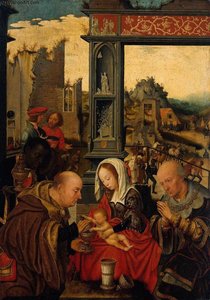
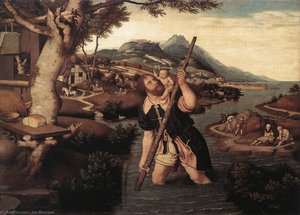
Jan Mostaert's artistic output was remarkably diverse, encompassing religious scenes, portraits, and – perhaps most notably – innovative landscapes. His *Adoration of the Magi* exemplifies his refined brushwork and evolving landscape style, showcasing a delicate balance between detailed figures and expansive backgrounds. However, it is his *West Indies Landscape*, though unfinished according to Karel van Mander, that truly sets him apart. This ambitious work, depicting an exotic and imagined New World setting, reveals a fascination with exploration and the unknown – a reflection of the era’s burgeoning global consciousness. His portraits, often three-quarter length compositions featuring sitters posed elegantly on cushions, demonstrate his mastery of capturing both physical resemblance and psychological depth. The influence of Joachim Patinir's panoramic landscapes became increasingly apparent in works like *St. Christopher*, blurring the lines between traditional religious iconography and a more modern interest in naturalistic representation. Tragically, much of Mostaert’s oeuvre was lost during the Great Fire of Haarlem in 1576, and subsequent reattributions have further diminished the number of securely attributed works. Despite these losses, Jan Mostaert remains a significant figure in Dutch Renaissance art – a skilled craftsman whose paintings offer invaluable insights into the artistic currents and cultural sensibilities of his time. He stands as a testament to the enduring power of artistic innovation within a period of profound transformation.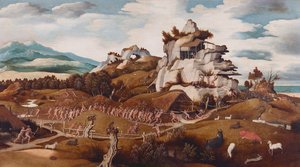
Jan Mostaert
1475 - 1555 , Spain
Quick Facts
- Artistic Movement Or Style: Dutch Renaissance
- Artists Who Influenced This Artist:
- Geertgen tot Sint Jans
- Joachim Patinir
- Date Of Birth: c. 1475
- Date Of Death: c. 1553/1555
- Full Name: Jan Mostaert
- Nationality: Dutch
- Notable Artworks:
- West Indies Landscape
- Adoration of the Magi
- St. Christopher
- Portrait of A. Coulster
- Place Of Birth: Haarlem, Netherlands
Related Articles
Golden Light & Dutch Skies: Bringing the Magic of Dutch Golden Age Landscapes into Your Home
Transform your home with the breathtaking light of Dutch Golden Age landscapes. Discover how hand-painted oil reproductions of masterworks like Ruisdael and Vermeer bring timeless elegance, atmosphere, and soulful texture to modern interiors. Elevate your space with museum-quality art.
Jan van Goyen: Master of Dutch Landscape & Atmospheric Perspective
Discover Jan van Goyen, the master of Dutch landscape painting. Explore his subtle technique, atmospheric realism & lasting influence on art history. Learn about this 17th-century pioneer at ArtsDot.
Nicolaes Berchem: Dutch Golden Age Pastoralism & the Evolution of Landscape Painting
Explore the captivating world of Nicolaes Berchem, a leading Dutch Golden Age painter. Discover his idyllic landscapes, masterful technique & lasting influence on art history. Learn more at ArtsDot.
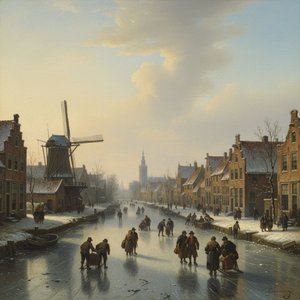
Charles Leickert: Capturing the Dutch Golden Age Light – A Comprehensive Study of Technique, Context, and Legacy
Explore the captivating winter landscapes of Charles Leickert, a master of Dutch Golden Age light & atmosphere. Discover his techniques, symbolism, and lasting legacy – a comprehensive study for art enthusiasts and collectors.
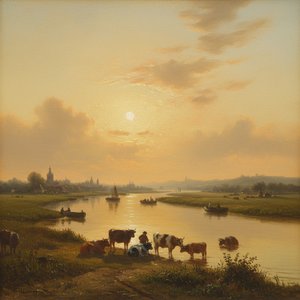
Aelbert Cuyp: Illuminating the Dutch Golden Age with Light & Landscape
Explore the luminous landscapes of Aelbert Cuyp, a master of the Dutch Golden Age. Discover his unique light, serene riverside scenes & lasting influence on art history. Learn more at ArtsDot.