 Preview
 Send
Send Share
Share
 Details

 Download
 Similars
 X-Ray
X-Ray Diaporama
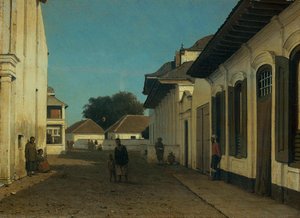
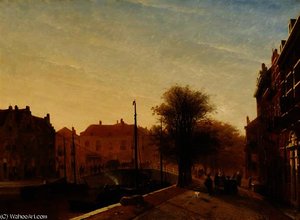
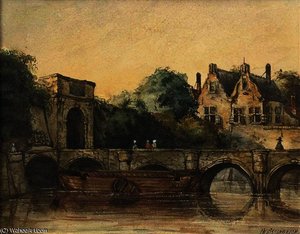
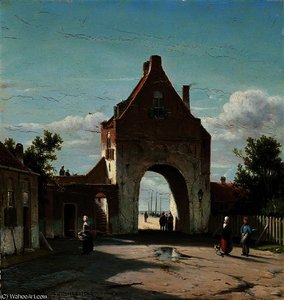
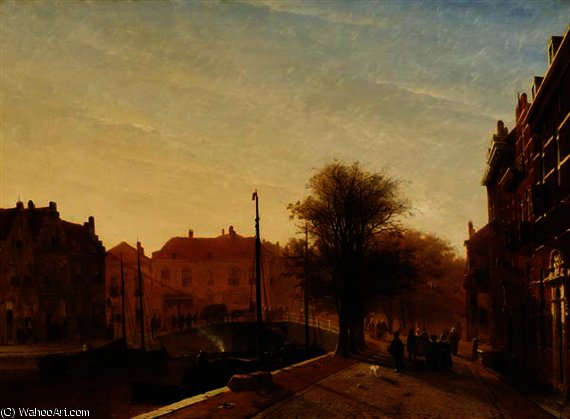
The dunne bierkade in the hague

 Read More
Hand Made Oil Reproduction
Hand-painted oil on canvas in your size and frame, made to order by our artists. ( Buy Print Buy Image)




































Pick from our preset sizes that match the artwork's original proportions.

You may enter your own dimensions to fit a specific frame or space. If your selected size does not match the original image's proportions, we will either crop the artwork or extend the painting with additional hand-painted elements. A digital mockup will be sent for your approval before production begins.
Please note that the on-screen preview does not reflect the actual cropping or extension. Only the mockup will accurately show the final composition.
While custom sizes are available, we recommend selecting a dimension from the predefined list to preserve the original proportions.
After order, ArtsDot.com team will email client for instructions and provide a mockup preview
Worldwide Delivery () in 3/4 weeks instead of standard 5 weeks. (16 August). No compromise on quality.

Free Worldwide Express Shipping

High-Quality Linen Canvas

Full Shipping Insurance

Customs Tax Refund Guarantee

True Color Matching Guarantee

60-Day Return Policy (Defects Only)

100% Money-Back Guarantee

Bulk Discount Offer
 Glass option is only available in size under 110 CM

The dunne bierkade in the hague
Reproduction Medium
Reproduction Size
-


Total Price
$ 263
Artwork Description
Jan Weissenbruch: A Master of Dutch Atmospheric Landscapes
Early Life and Artistic Beginnings
- Born: June 19, 1824, in The Hague, Netherlands.
- Jan Weissenbruch came from an artistic family; his father, Johannes Weissenbruch, was a painter and art collector.
- Early exposure to works by artists like Andreas Schelfhout and Bartholomeus van Hove through his father’s collection significantly influenced him.
- He received drawing lessons from Johannes Low at age sixteen and later attended evening classes taught by Bartholomeus van hove at the Hague Academy of Art in 1843.
"The Dunne Bierkade in The Hague": A Captivating Sunset Scene
“The Dunne Bierkade in The Hague” is a beautiful watercolor painting that transports viewers to a picturesque city street in The Hague during sunset. Jan Weissenbruch masterfully captures the ambiance of this waterfront scene, showcasing his skill in depicting atmospheric landscapes characteristic of the Hague School.
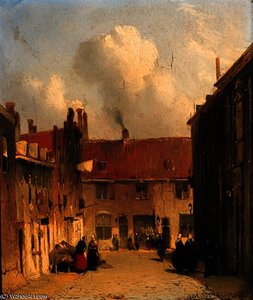
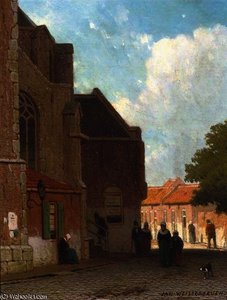
The composition features buildings lining both sides of the street, creating a sense of urban charm. A vibrant orange sky dominates the upper portion of the painting, casting a warm and inviting glow over the entire scene. The presence of several boats along the waterfront adds to the picturesque quality, evoking a feeling of tranquility and connection to the water.
Numerous figures are scattered throughout the image – some leisurely walking, others standing near the water's edge, engaging in everyday activities. A dog on the right side further enhances the sense of realism and daily life within the scene. The overall effect is one of captivating beauty, blending natural elements like trees and boats with the urban setting represented by buildings and people.
Style and Technique: Hague School Impressionism
Weissenbruch’s style aligns closely with that of the Hague School, a Dutch artistic movement known for its realistic depictions of everyday life and landscapes. This particular work exemplifies the school's focus on capturing atmospheric effects and natural light. The use of watercolor allows for delicate gradations of color and a luminous quality, perfectly conveying the soft glow of sunset.
Influenced by the Barbizon School in France, Weissenbruch moved away from the more dramatic Romantic style of earlier generations, opting instead for a quieter, more observational approach. He sought to portray the beauty of ordinary scenes with honesty and sensitivity, reflecting the changing social and artistic landscape of 19th-century Netherlands.
Historical Context and Symbolism
Painted around 1847, "The Dunne Bierkade in The Hague" reflects a period of significant urban development and prosperity in the Netherlands. The painting offers a glimpse into the daily life of the city's inhabitants, showcasing their connection to the waterways that were vital for trade and transportation.
While not overtly symbolic, the sunset itself can be interpreted as representing hope, renewal, and the passage of time. The presence of people enjoying the waterfront suggests a sense of community and leisure, highlighting the importance of social interaction in Dutch culture. The painting serves as a valuable historical document, preserving a visual record of a specific place and moment in time.
Emotional Impact and Legacy
“The Dunne Bierkade in The Hague” evokes a feeling of peacefulness and nostalgia. The warm colors, gentle light, and realistic depiction of everyday life create an inviting atmosphere that resonates with viewers. Weissenbruch’s ability to capture the essence of a fleeting moment—a sunset over a bustling city street—is what makes this painting so enduringly appealing.
Jan Weissenbruch's legacy lies in his contribution to the Hague School and his dedication to portraying the beauty of the Dutch landscape with honesty and sensitivity. His works continue to be admired for their atmospheric quality, technical skill, and ability to transport viewers to a bygone era.
Related Artworks

Artist Biography
Jan Weissenbruch: A Master of Dutch Atmospheric Landscapes
Early Life and Artistic Beginnings
- Born: June 19, 1824, in The Hague, Netherlands.
- Jan Weissenbruch came from an artistic family; his father, Johannes Weissenbruch, was a painter and art collector.
- Early exposure to works by artists like Andreas Schelfhout and Bartholomeus van Hove through his father’s collection significantly influenced him.
- He received drawing lessons from Johannes Low at age sixteen and later attended evening classes taught by Bartholomeus van hove at the Hague Academy of Art in 1843.
Artistic Development and Influences
- Early Influences: Weissenbruch’s initial work showed a strong resemblance to the Romantic style of Andreas Schelfhout.
- Ruisdael's Impact: He deeply admired the 17th-century landscape painter Jacob van Ruisdael, whose works he studied at the Mauritshuis in The Hague. This inspired his magnificent and dramatic skies.
- Evolving Style: Over time, Weissenbruch’s use of color became more restrained, and his application of paint grew broader and looser, resulting in increasingly atmospheric landscapes.
Key Characteristics and Artistic Style
- Atmospheric Landscapes: Weissenbruch is renowned for his ability to capture the subtle nuances of light and atmosphere in his paintings.
- Watercolor Mastery: He was particularly noted for his exceptional watercolor skills, creating delicate and evocative scenes.
- Hague School Representation: His work embodies the characteristics of the Hague School – a focus on realistic depictions of Dutch landscapes and everyday life.
Notable Works and Exhibitions
- He first exhibited at the Exhibition of Living Masters in 1847, marking his entry into the art world.
- Founding Member: Weissenbruch was one of the founders of Pulchri Studio, a prestigious artists’ society in The Hague.
- Early Recognition: In 1849, just two years after his first exhibition, the Teylers Museum in Haarlem acquired one of his panoramic landscapes.
- Significant Paintings: Some of his most celebrated works include “Shipping Canal at Rijswijk,” “Landscape with Mill near Schiedam,” and “Forest View Near Barbizon.”
Later Life and Legacy
- Barbizon Influence: In 1900, at the age of seventy, Weissenbruch traveled to Barbizon, France, where he painted his famous “Forest View Near Barbizon.”
- Working Outdoors: He preferred working outdoors, finding inspiration in the countryside surrounding The Hague.
- Death and Remembrance: Jan Weissenbruch passed away in 1903, leaving behind a legacy as one of the best representatives of the Hague School. His delicate brushstrokes and restrained color palette continue to captivate art lovers today.
Historical Significance
- Dutch Landscape Tradition: Weissenbruch played a vital role in continuing the Dutch tradition of landscape painting, building upon the legacy of earlier masters like Ruisdael.
- Hague School Contribution: His work helped define the aesthetic and philosophical principles of the Hague School, emphasizing realism, atmosphere, and a connection to nature.
- Lasting Influence: He remains an important figure in Dutch art history, inspiring generations of landscape painters with his sensitive depictions of the natural world.
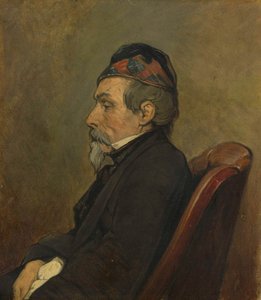
jan weissenbruch
1824 - 1903 , Netherlands
Quick Facts
- Birth Date: 1824-06-19
- Birth Place: The Hague, Netherlands
- Death Date: 1903
- Influenced By:
- Andreas Schelfhout
- Jacob van Ruisdael
- Movement: Hague School
- Name: Jan Weissenbruch
- Nationality: Dutch
- Notable Works:
- Shipping Canal at Rijswijk
- Landscape with Mill near Schiedam
- Forest View Near Barbizon
Related Articles
Watercolor Wonders: 10 Masterpieces That Redefined Art History | ArtsDot
Journey through 10 legendary watercolor masterpieces by Sargent, Turner & Homer! Explore iconic landscapes, portraits & floral art that redefined history. Find museum-quality reproductions and curated decor ideas at ArtsDot.com.
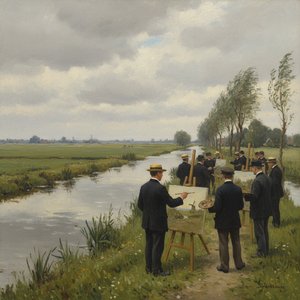
The Hague School: Realism, Atmosphere & the Dawn of Dutch Impressionism
Explore the Hague School's pivotal role in Dutch art history. Discover realism, atmospheric landscapes & its influence on Impressionism. Learn about key artists like Mauve & Maris with ArtsDot.
Ephemeral Visions: Exploring the Artistic Legacy & Contemporary Practice of Watercolor Painting
Explore the captivating world of watercolor painting! Discover its rich history, essential techniques, influential artists & collecting tips. A comprehensive guide for art enthusiasts from ArtsDot.
Ephemeral Visions: Exploring the History & Emotional Resonance of Watercolor Painting
Explore the captivating history of watercolor painting, from ancient techniques to modern masters like Kandinsky & Blake. Discover essential artists, collecting tips & the emotional power of this luminous medium. Expert insights for art enthusiasts.
Ephemeral Visions: Exploring the Artistic Legacy & Nuances of Watercolor Painting
Explore the captivating world of watercolor painting! Discover its rich history, essential techniques, influential artists & collecting tips from art experts. A comprehensive guide for enthusiasts.