 Preview
 Send
Send Share
Share
 Details

 Download
 Similars
 X-Ray
X-Ray Diaporama
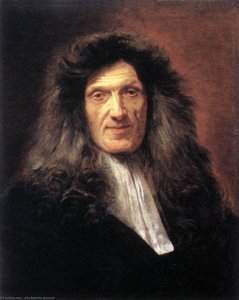
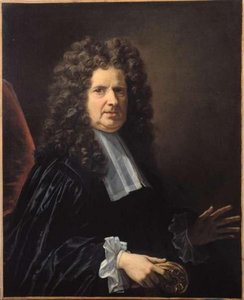
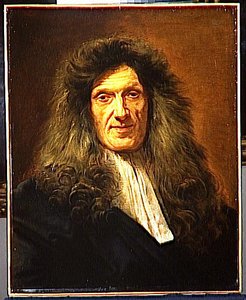
Dr Raymond Finot
 Oil On Canvas
- WallArt
- Baroque
 1704
1704 73.0 x 59.0 cm
 The Louvre
 Read More
Hand Made Oil Reproduction
Hand-painted oil on canvas in your size and frame, made to order by our artists. ( Buy Print Buy Image)




P118B $10

P118H $10

P118W $10

P438Z $10

P508JH $12

P508YH $12

P805H $10

P805Z $10

P919BZ $10

P919G $10

P919XJ $10

P959ZH $10

P968JZ $12

W106C $8

W218G $10

W218JH $8

W218Y $10

W307PJ $10

W316G $10

W316PJ $8

W316Y $10

W398PJ $8

W4111J $10

W500HY $15

W500JH $15

W692G $12

W849H $8

W940BG $15

W953PJ $8




Pick from our preset sizes that match the artwork's original proportions.

You may enter your own dimensions to fit a specific frame or space. If your selected size does not match the original image's proportions, we will either crop the artwork or extend the painting with additional hand-painted elements. A digital mockup will be sent for your approval before production begins.
Please note that the on-screen preview does not reflect the actual cropping or extension. Only the mockup will accurately show the final composition.
While custom sizes are available, we recommend selecting a dimension from the predefined list to preserve the original proportions.
After order, ArtsDot.com team will email client for instructions and provide a mockup preview
Worldwide Delivery () in 3/4 weeks instead of standard 5 weeks. (17 August). No compromise on quality.

Free Worldwide Express Shipping

High-Quality Linen Canvas

Full Shipping Insurance

Customs Tax Refund Guarantee

True Color Matching Guarantee

60-Day Return Policy (Defects Only)

100% Money-Back Guarantee

Bulk Discount Offer
 Glass option is only available in size under 110 CM

Dr Raymond Finot
Reproduction Medium
Reproduction Size
-


Total Price
$ 263
Artwork Description
The Weight of Years: Dr Raymond Finot by Jean-Baptiste Jouvenet
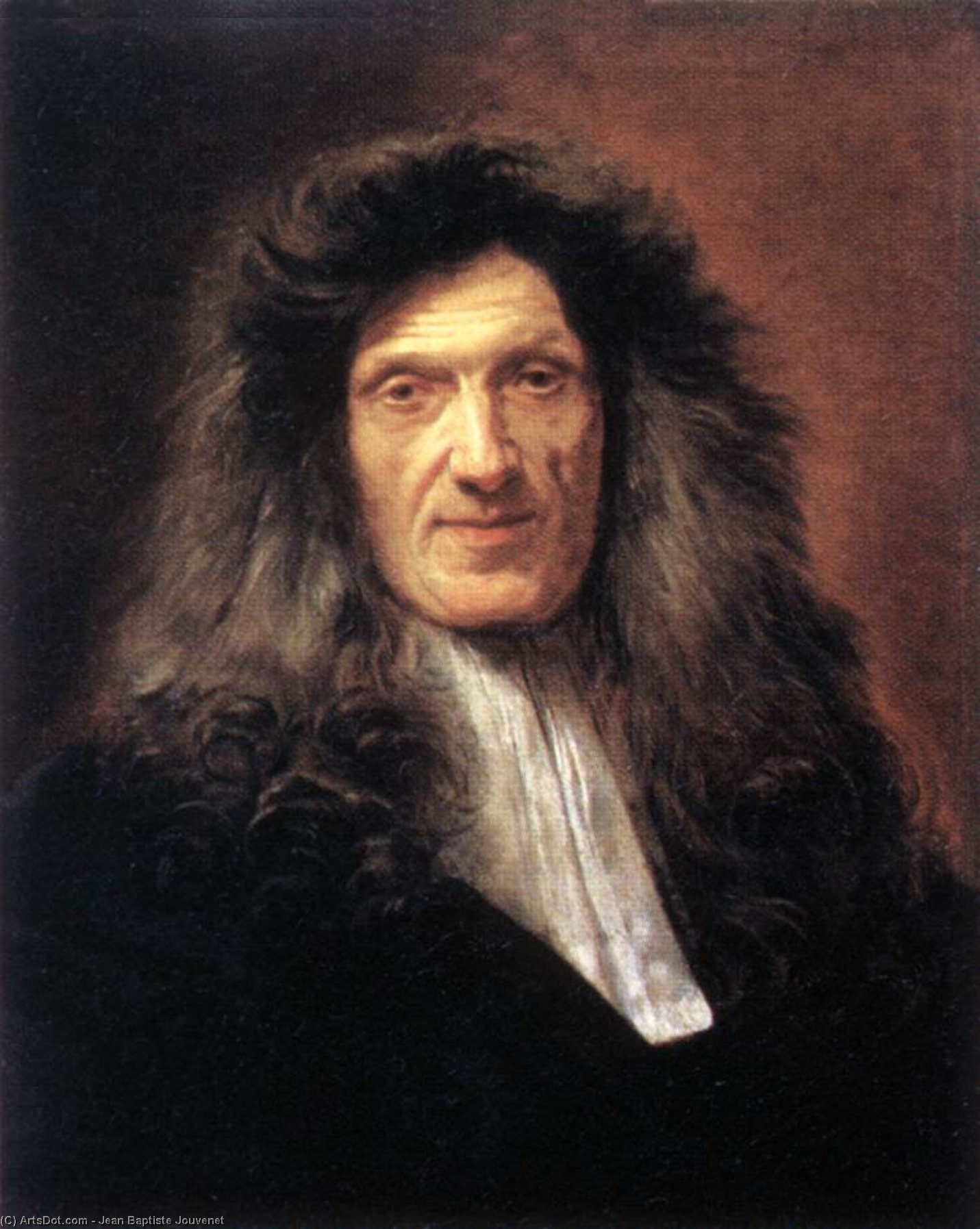
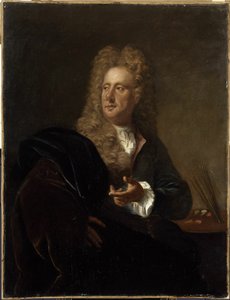
Jean-Baptiste Jouvenet’s “Dr Raymond Finot,” painted in 1704, isn't merely a portrait; it’s a carefully constructed meditation on time, wisdom, and the quiet dignity of age. Housed within the hallowed halls of the Louvre Museum in Paris, this oil on canvas offers a rare glimpse into the world of 18th-century French society through the eyes of a discerning artist. More than just a likeness, it’s a study in subtle expression, masterful technique, and the profound beauty found in the weathered face of experience.
The subject himself, Dr. Raymond Finot, remains somewhat shrouded in historical detail, adding to the painting's enigmatic allure. However, within the context of 1704, he represents a figure of considerable standing – likely a respected physician and member of the Parisian elite. Jouvenet’s skill lies not in flamboyant display but in capturing the essence of this man through carefully observed details: the deep lines etched into his face, each one telling a silent story; the slightly furrowed brow suggesting contemplation; and the gentle curve of his lips hinting at both wisdom and perhaps a touch of melancholy. The painting avoids idealization, presenting an honest and unvarnished portrayal of a man nearing the end of his life.
A Baroque Masterpiece: Technique and Style
Jouvenet’s style is firmly rooted in the Baroque tradition, yet he possesses a remarkable restraint that distinguishes him from some of his more overtly dramatic contemporaries. The composition is balanced and harmonious, with the figure centrally positioned within a muted, earth-toned background – a deliberate choice that draws all attention to the subject's face. The artist employs a technique known as *chiaroscuro*, skillfully manipulating light and shadow to create depth and volume. Notice how the light catches the highlights of his hair and clothing, while simultaneously deepening the shadows around his eyes and mouth, adding to the painting’s dramatic effect.
His brushwork is remarkably controlled and precise, particularly evident in the rendering of the wrinkles and folds of his garments. This meticulous attention to detail speaks volumes about Jouvenet's dedication to realism and his ability to capture the textures and nuances of the human form. The use of oil paints allows for a rich, luminous quality that enhances the painting’s overall impact. The subtle gradations of color create a sense of atmosphere and contribute to the feeling of intimacy within the scene.
Symbolism and Historical Context
“Dr Raymond Finot” is not simply a portrait; it's imbued with symbolic meaning reflective of its time. The setting, though understated, speaks volumes about the social standing of the subject. The painting was created during the reign of Louis XIV, the “Sun King,” and reflects the values and priorities of the French court – a focus on order, reason, and refinement. The doctor’s attire, while elegant, is not ostentatious, suggesting a man of intellect and character rather than wealth or status.
Furthermore, the painting's creation coincided with a period of significant intellectual ferment in Europe, marked by the rise of scientific inquiry and philosophical debate. The subject’s contemplative gaze can be interpreted as an invitation to reflect on the mysteries of life, death, and the pursuit of knowledge – themes that resonated deeply within the cultural landscape of 18th-century France. The painting's placement in the Louvre Museum underscores its enduring significance as a testament to both artistic skill and historical insight.
A Timeless Portrait: Reproduction Possibilities
Today, “Dr Raymond Finot” remains a captivating work of art, offering viewers an opportunity to connect with a bygone era. High-quality reproductions are available through platforms like ArtsDot, allowing art enthusiasts worldwide to experience the painting’s beauty and nuance firsthand. When commissioning a reproduction, consider the meticulous hand-painted process employed by skilled artists – ensuring that every brushstroke captures the essence of Jouvenet's original vision. A faithful reproduction will not only adorn your walls but also serve as a tangible link to the rich artistic heritage of France.
Related Artworks
Artist Biography
A Legacy of Divine Light: The Life and Art of Jean-Baptiste Jouvenet
In the grand, sweeping tapestry of the French Baroque, few threads shine with as much dramatic intensity and spiritual depth as those woven by Jean-Baptiste Jouvenet. Born in 1644 in the historic city of Rouen, Jouvenet was destined for a life steeped in the pigments and philosophies of his ancestors. He emerged from an illustrious artistic lineage; his father, Laurent Jouvenet, provided his initial guidance, while whispers of a connection to the legendary Nicolas Poussin through his grandfather, Noel Jouvenet, suggest a pedigree rooted in the very foundations of European classical tradition. This early immersion in the language of art allowed him to develop a sensitivity to light and form that would eventually captivate the most prestigious courts in France.
Jouvenet’s ascent within the Parisian art world was nothing short of meteoric. Upon arriving in the capital, his prodigious talent caught the eye of Charles Le Brun, the titan of French royal painting. Under Le Brun’s mentorship, Jouvenet found himself at the heart of the most significant artistic endeavor of the age: the decoration of the Salon de Mars at Versailles. This period of intense collaboration and exposure to royal grandeur served as a crucible for his developing style. By 1675, he had been admitted into the Académie Royale de Peinture et de Sculpture, an achievement that signaled his transition from a promising pupil to a master in his own right. His influence within the Academy grew steadily, eventually leading him to the prestigious roles of professor and one of the four perpetual rectors, where he shaped the aesthetic sensibilities of the next generation of French painters.
The Mastery of Baroque Naturalism
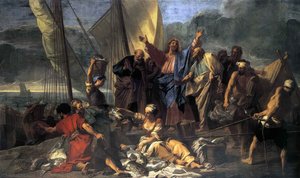
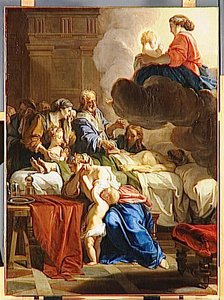
What truly distinguishes Jouvenet from his contemporaries was his ability to marry the monumental scale of the Baroque with a profound, touching naturalism. While many artists of the era leaned heavily into the theatrical and the artificial, Jouvenet sought a deeper truth in his subjects. His religious compositions, though grand in scope, possess an intimate emotional resonance that draws the viewer into the sacred narrative. Whether depicting the tender domesticity found in Jesus Christ chez Marthe et Marie or the dynamic, swirling energy of La Peche Miraculeuse, he utilized a rich palette and masterful chiaroscuro to breathe life into the divine.
His technical prowess was particularly evident in his handling of movement and light. In works such as Saint Philippe, one can observe how he employs vibrant colors and a sense of rhythmic motion to convey the majesty of Christ. This ability to balance the epic with the human allowed him to undertake massive fresco projects in iconic locations like the Louvre and the Tuileries Palace, where his brushwork could command vast architectural spaces without losing its essential intimacy. His portraits, such as the evocative Dr Raymond Finot, further demonstrate this versatility, showcasing a keen eye for psychological depth and a realistic rendering of character that remains strikingly modern.
Historical Significance and Enduring Influence
The historical importance of Jean-Baptiste Jouvenet lies in his role as a bridge between the rigid classicism of the early 17th century and the more emotive, fluid styles that would follow. He was a central figure in the Le Brun school, yet he infused that tradition with a unique vitality that prevented it from becoming stagnant. His career, which spanned the height of Louis XIV's reign, mirrored the era's shift toward a more sophisticated and emotionally complex visual language.
As we reflect on his body of work today, several key elements of his legacy remain unmistakable:
- The Synthesis of Styles: His unique ability to blend the structural discipline of the French classical tradition with the dramatic emotionalism of the Baroque.
- Spiritual Naturalism: A transformative approach to religious iconography that emphasized human emotion and tangible reality over mere allegory.
- Academic Leadership: His profound impact on the Académie Royale, ensuring the continuity of high-level technical training in France.
- Versatility of Scale: The rare skill required to execute both monumental palace frescoes and intimate, psychologically complex portraiture.
Though he passed away in Paris in 1717, the echoes of Jouvenet’s brush can still be felt in the halls of the great museums of Europe. He remains a master of the "divine moment," an artist who could capture the intersection of the earthly and the eternal with unparalleled grace.
jean baptiste jouvenet
1644 - 1717 , France
Quick Facts
- Artistic Movement Or Style: Baroque
- Artists Who Influenced This Artist:
- Nicolas poussin
- Le Brun
- Raphael
- Date Of Birth: May 1, 1644
- Date Of Death: April 5, 1717
- Full Name: Jean Baptiste Jouvenet
- Nationality: French
- Notable Artworks:
- The Miraculous Draught Fishes
- Saint Jean
- Apothéose de Saint Jean
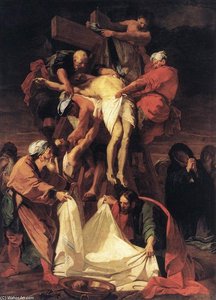
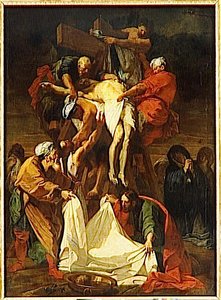
- Descent from the Cross
- Place Of Birth: Rouen, France
Related Articles
Simon Vouet: A Baroque Master's Journey from Italian Influence to French Classicism
Explore the life & art of Simon Vouet, a pivotal French Baroque painter who introduced Italian styles to France. Discover his masterpieces and lasting influence on 17th-century art.
Jean-Baptiste Oudry: Rococo Painter of Aristocratic Life & Naturalistic Detail
Explore the exquisite Rococo paintings of Jean-Baptiste Oudry (1686-1755). Discover his mastery of animal depictions, royal commissions, and tapestry designs. A deep dive into 18th-century French artistry.
Jean-Baptiste Pater: Rococo Charm & Ephemeral Beauty of 18th-Century France
Explore the captivating world of Jean-Baptiste Pater, a master of Rococo painting. Discover his elegant *fête galante* scenes and shimmering portraits – a glimpse into 18th-century French aristocracy. Learn about his legacy & find high-quality reproductions.

Baroque Drama: Bringing Opulence & Emotion into Contemporary Interiors
Explore the opulent world of Baroque interior design! Discover key elements, modern applications & how to bring dramatic elegance into your home with 's authentic reproductions.
From Grandeur to Grace: Exploring the Evolution of Baroque & Rococo Art
Explore the captivating evolution from Baroque's drama to Rococo's grace! Discover key artists, characteristics & lasting influence of these art movements with expert insights at ArtsDot.