 Preview
 Send
Send Share
Share
 Details

 Download
 Similars
 X-Ray
X-Ray Diaporama
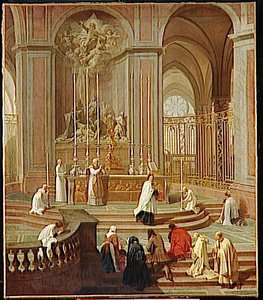
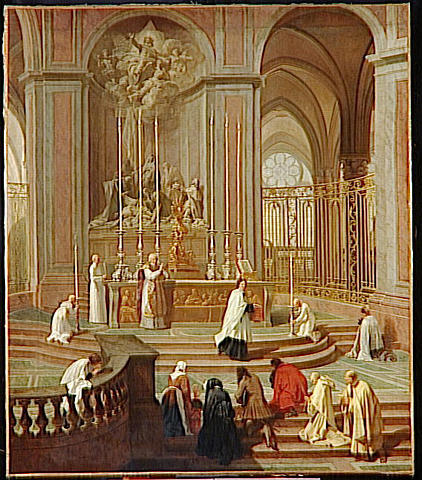
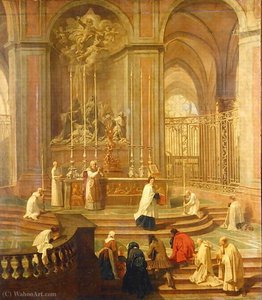
LA MESSE DU CHANOINE DE LA PORTE OU LE MAITRE AUTEL DE NOTRE DAME


 Read More
Giclée / Art Print
Museum-quality giclée or canvas print with fast production and flexible finish options. ( Buy Hand Made Painting Buy Image)




P118B $10

P118H $10

P118W $10

P438Z $10

P508JH $12

P508YH $12

P805H $10

P805Z $10

P919BZ $10

P919G $10

P919XJ $10

P959ZH $10

P968JZ $12

W106C $8

W218G $10

W218JH $8

W218Y $10

W307PJ $10

W316G $10

W316PJ $8

W316Y $10

W398PJ $8

W4111J $10

W500HY $15

W500JH $15

W692G $12

W849H $8

W940BG $15

W953PJ $8




Pick from our preset sizes that match the artwork's original proportions.

You may enter your own dimensions to fit a specific frame or space. If your selected size does not match the original image's proportions, we will either crop the artwork or extend the image with a mirrored or solid-fill edge. A digital mockup will be sent for your approval before production begins.
Please note that the on-screen preview does not reflect the actual cropping or extension. Only the mockup will accurately show the final composition.
While custom sizes are available, we recommend selecting a dimension from the predefined list to preserve the original proportions.
Worldwide Delivery () in 2 weeks instead of standard 4/5 weeks. (2 September)

Free Worldwide Express Shipping

High-Quality Linen Canvas

Full Shipping Insurance

Customs Tax Refund Guarantee

True Color Matching Guarantee

60-Day Return Policy (Defects Only)

100% Money-Back Guarantee

Bulk Discount Offer
 Glass option is only available in size under 110 CM

LA MESSE DU CHANOINE DE LA PORTE OU LE MAITRE AUTEL DE NOTRE DAME
Giclée / Art Print
Reproduction Size
-


Total Price
$ 63
A Sanctuary in Paint: The Grandeur of Sacred Ritual
To stand before this depiction of La Messe du Chanoine de la Porte ou Le Maître Autel de Notre Dame is to be transported across the centuries, into the hushed, echoing majesty of a great Gothic cathedral. One does not merely observe a painting; one steps through a portal into a moment suspended in time—a profound act of devotion unfolding beneath vaulted, heaven-reaching arches. The scene captures the solemnity of a high religious service, where every gesture, every fold of vestment, speaks to centuries of tradition and unwavering faith. The air itself seems thick with incense and whispered prayers, inviting the viewer into the sacred circle of worship.
Baroque Drama and Naturalistic Detail
The artistic hand at work here belongs to a master steeped in the dramatic currents of the Baroque period, echoing the profound spiritual fervor of the 17th century. The technique employed is one of remarkable realism, allowing the artist to render with breathtaking accuracy both the cold permanence of carved stone and the soft vulnerability of human flesh. Observe how the light—seemingly emanating from unseen clerestory windows—catches the polished wood of the altar and illuminates the rich textures of the liturgical garments. This masterful use of chiaroscuro, the dramatic interplay between light and shadow, does more than just illuminate; it directs the eye inexorably toward the central rite taking place at the altar.
Symbolism Woven into Stone and Cloth
Every element within this composition is imbued with deep symbolic weight. The towering Gothic architecture itself symbolizes humanity’s aspiration towards the divine, reaching ever upward toward the celestial realm. In the foreground, the kneeling figures represent the universal posture of humility before God, while the central priest, vested in his ceremonial robes and holding the sacred book, embodies the continuity of doctrine and ritual knowledge. The altar, adorned with statues and candles, is not merely furniture; it is the focal point where the earthly meets the eternal. It speaks to a theology rich with mystery and profound meaning.
An Echo for the Modern Collector
For those who find solace or inspiration in art that speaks of enduring human spirit, this piece offers an unparalleled depth. Whether adorning a grand hall, a library, or a private chapel, a reproduction of this work brings with it not just decoration, but a palpable sense of history and reverence. It is a testament to the power of organized devotion, executed with the technical brilliance characteristic of Jean Baptiste Jouvenet’s era. Owning this vision allows one to curate an atmosphere of contemplative grandeur, making any space feel imbued with timeless, sacred dignity.
Related Artworks



Artist Biography
A Legacy of Divine Light: The Life and Art of Jean-Baptiste Jouvenet
In the grand, sweeping tapestry of the French Baroque, few threads shine with as much dramatic intensity and spiritual depth as those woven by Jean-Baptiste Jouvenet. Born in 1644 in the historic city of Rouen, Jouvenet was destined for a life steeped in the pigments and philosophies of his ancestors. He emerged from an illustrious artistic lineage; his father, Laurent Jouvenet, provided his initial guidance, while whispers of a connection to the legendary Nicolas Poussin through his grandfather, Noel Jouvenet, suggest a pedigree rooted in the very foundations of European classical tradition. This early immersion in the language of art allowed him to develop a sensitivity to light and form that would eventually captivate the most prestigious courts in France.
Jouvenet’s ascent within the Parisian art world was nothing short of meteoric. Upon arriving in the capital, his prodigious talent caught the eye of Charles Le Brun, the titan of French royal painting. Under Le Brun’s mentorship, Jouvenet found himself at the heart of the most significant artistic endeavor of the age: the decoration of the Salon de Mars at Versailles. This period of intense collaboration and exposure to royal grandeur served as a crucible for his developing style. By 1675, he had been admitted into the Académie Royale de Peinture et de Sculpture, an achievement that signaled his transition from a promising pupil to a master in his own right. His influence within the Academy grew steadily, eventually leading him to the prestigious roles of professor and one of the four perpetual rectors, where he shaped the aesthetic sensibilities of the next generation of French painters.
The Mastery of Baroque Naturalism
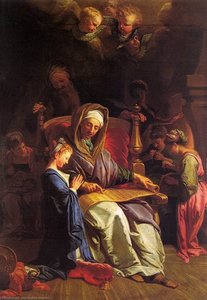
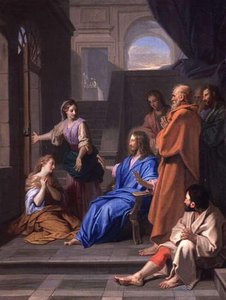
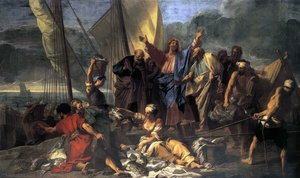
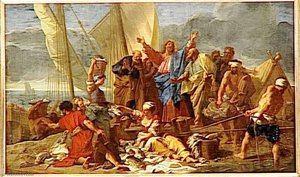
What truly distinguishes Jouvenet from his contemporaries was his ability to marry the monumental scale of the Baroque with a profound, touching naturalism. While many artists of the era leaned heavily into the theatrical and the artificial, Jouvenet sought a deeper truth in his subjects. His religious compositions, though grand in scope, possess an intimate emotional resonance that draws the viewer into the sacred narrative. Whether depicting the tender domesticity found in Jesus Christ chez Marthe et Marie or the dynamic, swirling energy of La Peche Miraculeuse, he utilized a rich palette and masterful chiaroscuro to breathe life into the divine.
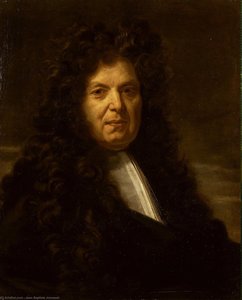
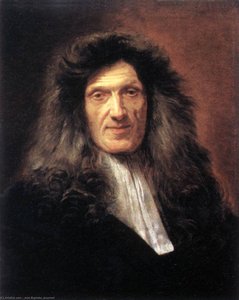
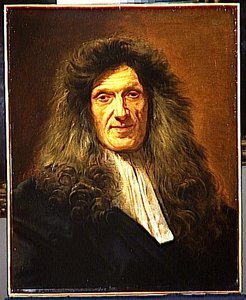
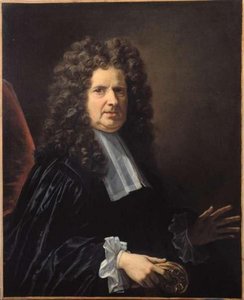
His technical prowess was particularly evident in his handling of movement and light. In works such as Saint Philippe, one can observe how he employs vibrant colors and a sense of rhythmic motion to convey the majesty of Christ. This ability to balance the epic with the human allowed him to undertake massive fresco projects in iconic locations like the Louvre and the Tuileries Palace, where his brushwork could command vast architectural spaces without losing its essential intimacy. His portraits, such as the evocative Dr Raymond Finot, further demonstrate this versatility, showcasing a keen eye for psychological depth and a realistic rendering of character that remains strikingly modern.
Historical Significance and Enduring Influence
The historical importance of Jean-Baptiste Jouvenet lies in his role as a bridge between the rigid classicism of the early 17th century and the more emotive, fluid styles that would follow. He was a central figure in the Le Brun school, yet he infused that tradition with a unique vitality that prevented it from becoming stagnant. His career, which spanned the height of Louis XIV's reign, mirrored the era's shift toward a more sophisticated and emotionally complex visual language.
As we reflect on his body of work today, several key elements of his legacy remain unmistakable:
- The Synthesis of Styles: His unique ability to blend the structural discipline of the French classical tradition with the dramatic emotionalism of the Baroque.
- Spiritual Naturalism: A transformative approach to religious iconography that emphasized human emotion and tangible reality over mere allegory.
- Academic Leadership: His profound impact on the Académie Royale, ensuring the continuity of high-level technical training in France.
- Versatility of Scale: The rare skill required to execute both monumental palace frescoes and intimate, psychologically complex portraiture.
Though he passed away in Paris in 1717, the echoes of Jouvenet’s brush can still be felt in the halls of the great museums of Europe. He remains a master of the "divine moment," an artist who could capture the intersection of the earthly and the eternal with unparalleled grace.
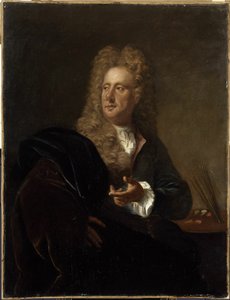
jean baptiste jouvenet
1644 - 1717 , France
Quick Facts
- Artistic Movement Or Style: Baroque
- Artists Who Influenced This Artist:
- Nicolas poussin
- Le Brun
- Raphael
- Date Of Birth: May 1, 1644
- Date Of Death: April 5, 1717
- Full Name: Jean Baptiste Jouvenet
- Nationality: French
- Notable Artworks:
- The Miraculous Draught Fishes
- Saint Jean
- Apothéose de Saint Jean
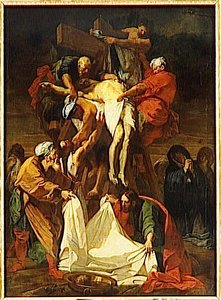
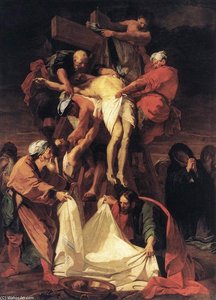
- Descent from the Cross
- Place Of Birth: Rouen, France
Related Articles

The Dramatic Flourish: Exploring the Baroque Movement's Enduring Legacy in Art History
Explore the dramatic world of Baroque art! Discover iconic artists like Caravaggio & Rubens, defining techniques, and its lasting impact on art history. Expert insights for collectors & enthusiasts at ArtsDot.
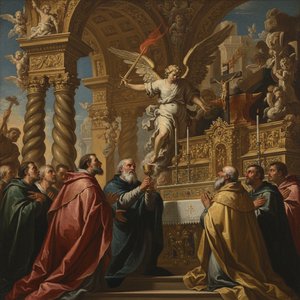
The Golden Age Reforged: Dramatic Realism & Religious Zeal in Spanish Baroque Art
Explore the dramatic world of Spanish Baroque art! Discover masters like Zurbarán & the powerful influence of religious zeal on painting techniques – a guide for collectors and enthusiasts.

The Visceral Stage: Exploring Dramatic Narratives & Emotional Intensity in Baroque Art
Explore the dramatic world of Baroque art! Discover iconic masters like Caravaggio & Rembrandt, their techniques, and the movement's lasting impact. Expert insights for collectors & enthusiasts at ArtsDot.

Baroque Drama: Bringing Opulence & Emotion into Contemporary Interiors
Explore the opulent world of Baroque interior design! Discover key elements, modern applications & how to bring dramatic elegance into your home with 's authentic reproductions.
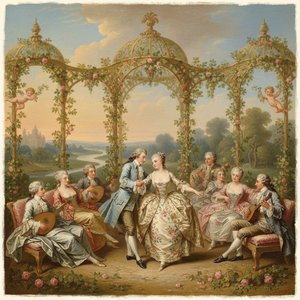
Jean-Baptiste Pater: Rococo Charm & Ephemeral Beauty of 18th-Century France
Explore the captivating world of Jean-Baptiste Pater, a master of Rococo painting. Discover his elegant *fête galante* scenes and shimmering portraits – a glimpse into 18th-century French aristocracy. Learn about his legacy & find high-quality reproductions.