 Preview
 Send
Send Share
Share
 Details

 Download
 Similars
 X-Ray
X-Ray Diaporama
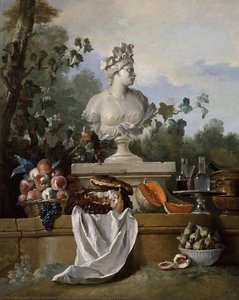
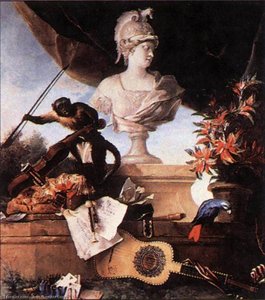
Still life with the bust of America


 Read More
Hand Made Oil Reproduction
Hand-painted oil on canvas in your size and frame, made to order by our artists. ( Buy Print Buy Image)




P118B $10

P118H $10

P118W $10

P438Z $10

P508JH $12

P508YH $12

P805H $10

P805Z $10

P919BZ $10

P919G $10

P919XJ $10

P959ZH $10

P968JZ $12

W106C $8

W218G $10

W218JH $8

W218Y $10

W307PJ $10

W316G $10

W316PJ $8

W316Y $10

W398PJ $8

W4111J $10

W500HY $15

W500JH $15

W692G $12

W849H $8

W940BG $15

W953PJ $8




Pick from our preset sizes that match the artwork's original proportions.

You may enter your own dimensions to fit a specific frame or space. If your selected size does not match the original image's proportions, we will either crop the artwork or extend the painting with additional hand-painted elements. A digital mockup will be sent for your approval before production begins.
Please note that the on-screen preview does not reflect the actual cropping or extension. Only the mockup will accurately show the final composition.
While custom sizes are available, we recommend selecting a dimension from the predefined list to preserve the original proportions.
After order, ArtsDot.com team will email client for instructions and provide a mockup preview
Worldwide Delivery () in 3/4 weeks instead of standard 5 weeks. (16 August). No compromise on quality.

Free Worldwide Express Shipping

High-Quality Linen Canvas

Full Shipping Insurance

Customs Tax Refund Guarantee

True Color Matching Guarantee

60-Day Return Policy (Defects Only)

100% Money-Back Guarantee

Bulk Discount Offer
 Glass option is only available in size under 110 CM

Still life with the bust of America
Reproduction Medium
Reproduction Size
-


Total Price
$ 263
Artwork Description
Jean-Baptiste Oudry’s Still Life with the Bust of America: A Celebration of New World Bounty
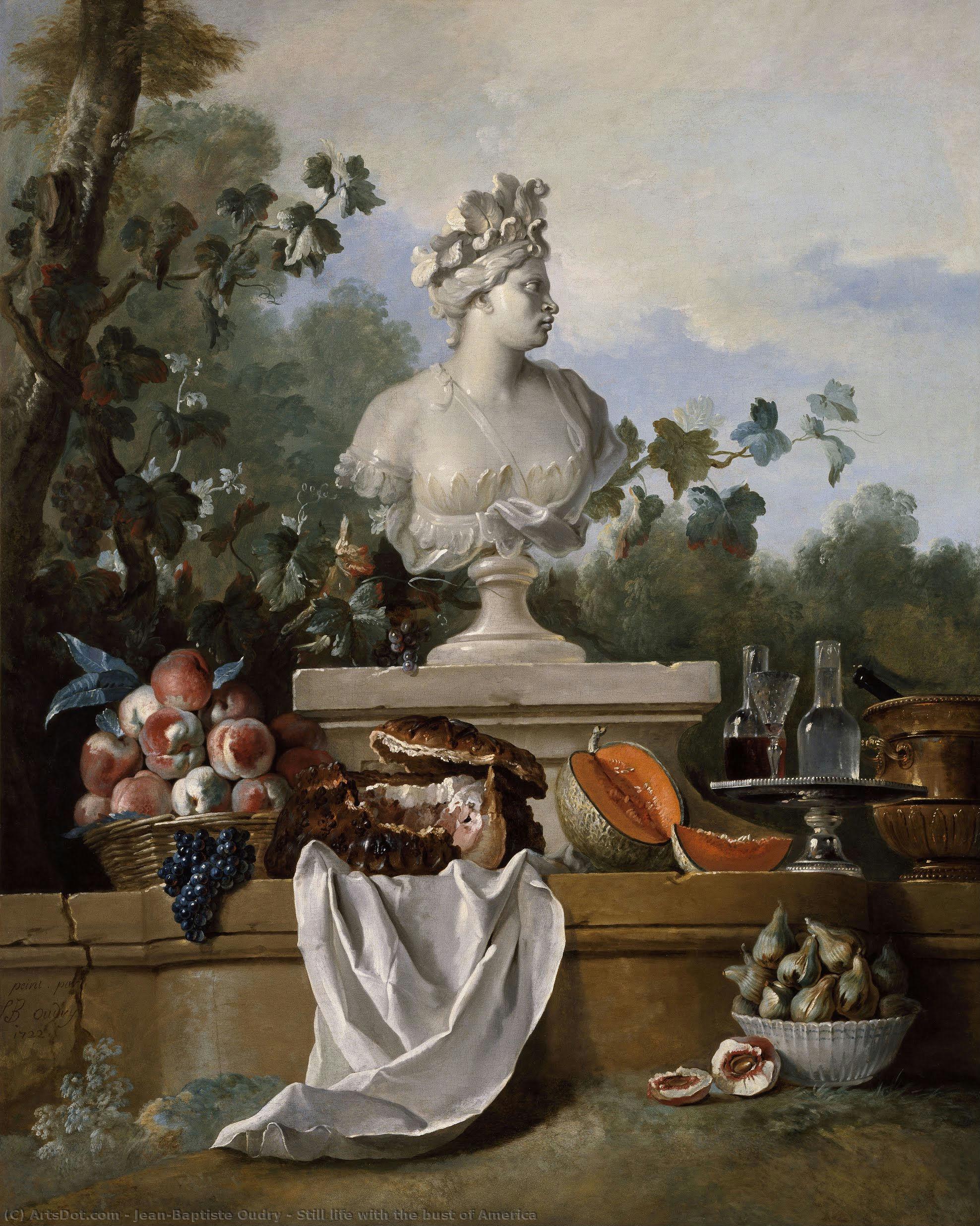
Jean-Baptiste Oudry's "Still life with the bust of America," painted in 1722, is more than a simple arrangement of fruits and delicacies; it’s a vibrant tableau capturing the spirit of an era – the opulent court of Louis XV and his fascination with the treasures arriving from the New World. This exquisite piece offers a glimpse into a world where tradition and innovation danced together on the table, reflecting a burgeoning appetite for exotic goods and a celebration of French artistry.
Oudry, a master of naturalistic painting, particularly renowned for his depictions of animals and hunting scenes, skillfully employs light and shadow to bring this still life to life. The composition is meticulously balanced, drawing the eye from the gleaming silver dishes and carafes in the foreground towards the central figure – the allegorical bust of America herself. Notice how Oudry’s brushwork isn't about stark outlines but rather a delicate layering of tones that imbue each object with a palpable sense of texture and volume. The peaches, melons, grapes, and pâté en croûte aren’t merely presented; they are rendered with an almost obsessive attention to detail – the subtle variations in color, the glistening sheen of the fruit, the flaky crust of the pastry.
The Symbolism of Exotic Delights
The choice of objects within this still life is profoundly symbolic. Oudry deliberately incorporates items associated with the royal hunt—a testament to Louis XV’s passion for sport and his court's lavish lifestyle—but juxtaposes them with a dazzling array of New World delicacies. The figs, pineapples, and coffee beans, prominently featured in the bust’s form, represent the exotic bounty brought back from America, a source of immense fascination and prestige at Versailles. The inclusion of these items wasn’t simply about showcasing luxury; it was a deliberate statement about France's role as a center for trade and cultural exchange, embracing innovation while honoring established traditions.
The bust itself is key to understanding the painting’s message. It embodies America – not in a literal sense, of course, but as a symbol of potential wealth, abundance, and the promise of discovery. The figure's pose, radiating an aura of grace and confidence, mirrors the excitement surrounding these new imports. The gilded silver cooler, holding a bottle, further emphasizes this theme of luxury and refinement – a tangible representation of the era’s pursuit of pleasure and sophistication.
Rococo Elegance and Artistic Technique
“Still life with the bust of America” is a quintessential example of Rococo art. Characterized by its elegance, lightness, and playful subject matter, the painting reflects the aristocratic tastes of the time. Oudry’s use of pastel colors – soft pinks, yellows, and greens – creates an atmosphere of airy beauty, while his delicate brushwork and meticulous attention to detail contribute to the overall sense of refinement. The composition is carefully arranged to create a harmonious balance, with each element contributing to the painting's visual appeal.
Oudry’s skill as an engraver also informed his painting style; he was known for capturing subtle nuances and textures with remarkable precision. This translates beautifully into this still life, where every surface—from the smooth skin of a peach to the rough texture of the wicker basket—appears remarkably realistic. The lighting is particularly masterful, creating a sense of depth and volume that draws the viewer into the scene.
A Window into 18th-Century France
Beyond its aesthetic beauty, “Still life with the bust of America” offers a valuable insight into the cultural landscape of 18th-century France. It’s a snapshot of a court eager to embrace new experiences and celebrate the wealth brought in by colonial trade. Oudry's painting captures not just the objects themselves but also the spirit of an era—a time of lavish entertainment, artistic innovation, and a fascination with the exotic. Reproducing this artwork allows you to bring this captivating scene into your home, offering a tangible connection to a bygone world of elegance and refinement.
Related Artworks
Artist Biography
Jean-Baptiste Oudry: A Life in Art
Early Life and Training
- Born: March 17, 1686, in Paris, France.
- Oudry came from an artistic family; his father, Jacques Oudry, was a painter and art dealer. His mother, Nicole Papillon, was related to the engraver Jean-Baptiste-Michel Papillon.
- He began his training at the Académie de Saint-Luc, studying under Nicolas de Largillière from 1707 to 1712. This foundational period shaped his early skills in portraiture and observation.
- He quickly progressed, becoming an assistant professor at the Académie de Saint-Luc in 1714 and a full professor by 1717.
Artistic Development and Style
- Initially focused on portraiture, Oudry gradually expanded his repertoire to include still lifes, particularly of fruits and animals, as well as religious subjects.
- His style evolved towards the Rococo, characterized by elegance, naturalism, and a playful depiction of aristocratic life and leisure.
- Oudry’s meticulous attention to detail and his ability to capture the textures and characteristics of animals became hallmarks of his work.
- He demonstrated mastery in both painting and design, seamlessly transitioning between canvas and tapestry creation.
Major Achievements and Notable Works
- The Pastoral Amusements (Les Amusements Champêtres): A series of tapestries designed for the Royal Beauvais Tapestry Manufactory, showcasing idyllic scenes of rural life and hunting.
- Louis XV Hunting a Deer in the Forest of Saint-Germain (1730): This painting solidified Oudry’s reputation as the official painter of the royal hunt. It exemplifies his skill in depicting both the grandeur of the hunt and the natural environment.
- Royal Hunts of Louis XV (Chasses Royales Gobelins): A series of tapestry designs for the Gobelins Manufactory, further establishing Oudry’s prominence as a tapestry designer.
- Numerous portraits of dead game commissioned by King Louis XV, demonstrating his expertise in animal anatomy and still life composition.
Influences and Legacy
- Influenced By: Nicolas de Largillière played a crucial role in Oudry’s early artistic development, providing foundational training in portraiture and technique.
- Oudry's work influenced subsequent generations of animal painters and tapestry designers. His naturalistic style and attention to detail set a new standard for depicting wildlife.
- He contributed significantly to the decorative arts of the French court, creating luxurious tapestries that adorned royal residences.
Historical Significance
- Oudry’s work provides valuable insights into 18th-century aristocratic life and the importance of hunting as a pastime for the French nobility.
- His tapestries are considered masterpieces of French decorative art, showcasing the technical skill and artistic creativity of the period.
- He was appointed to prestigious positions within the Académie Royale de Peinture et de Sculpture, demonstrating his recognition as a leading artist of his time.
- Died: April 30, 1755, leaving behind a legacy of exquisite paintings and tapestries that continue to be admired today.
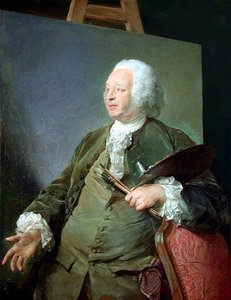
Jean-Baptiste Oudry
1686 - 1755 , France
Quick Facts
- Birth Date: 17 March 1686
- Birth Place: Paris, France
- Death Date: 30 April 1755
- Influenced By: Nicolas de Largillière
- Movement: Rococo
- Name: Jean-Baptiste Oudry
- Nationality: French
- Notable Works:
- The Pastoral Amusements
- Louis XV hunting a deer in the forest of Saint-Germain
Related Articles
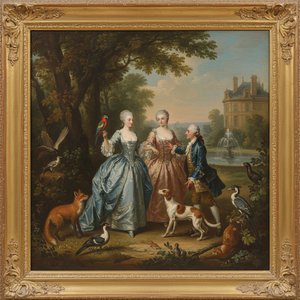
Jean-Baptiste Oudry: Rococo Painter of Aristocratic Life & Naturalistic Detail
Explore the exquisite Rococo paintings of Jean-Baptiste Oudry (1686-1755). Discover his mastery of animal depictions, royal commissions, and tapestry designs. A deep dive into 18th-century French artistry.

Rococo's Radiant Legacy: 10 Masterpieces for Your Home |
Indulge in the elegance of Rococo! Explore 10 masterpieces by Fragonard, Boucher & Watteau. Discover the stories behind these iconic paintings and bring timeless art to your home with museum-quality reproductions from .

The Rococo Aesthetic: Opulence, Rebellion & the Pursuit of Pleasure in 18th-Century Art
Explore the opulent world of Rococo art! Discover its origins, key artists like Watteau & Boucher, and lasting influence on design. Expert insights for collectors & enthusiasts.
Silent Narratives: Exploring the Enduring Appeal of Still Life Painting Across Centuries
Explore the rich history of still life painting with ArtsDot. Discover Dutch Masters, decode vanitas symbolism & learn about collecting timeless art. Expert insights and museum-quality reproductions.
The Enduring Appeal of Still Life: A Historical & Contemporary Exploration
Explore the rich history & symbolism of still life painting with ArtsDot. Discover masterpieces from the Dutch Golden Age, learn about vanitas art, and find expert guidance for collecting timeless artworks.