 Preview
 Send
Send Share
Share
 Details

 Download
 Similars
 X-Ray
X-Ray Diaporama
Dinnertime


 Read More
Hand Made Oil Reproduction
Hand-painted oil on canvas in your size and frame, made to order by our artists. ( Buy Print Buy Image)




P118B $10

P118H $10

P118W $10

P438Z $10

P508JH $12

P508YH $12

P805H $10

P805Z $10

P919BZ $10

P919G $10

P919XJ $10

P959ZH $10

P968JZ $12

W106C $8

W218G $10

W218JH $8

W218Y $10

W307PJ $10

W316G $10

W316PJ $8

W316Y $10

W398PJ $8

W4111J $10

W500HY $15

W500JH $15

W692G $12

W849H $8

W940BG $15

W953PJ $8




Pick from our preset sizes that match the artwork's original proportions.

You may enter your own dimensions to fit a specific frame or space. If your selected size does not match the original image's proportions, we will either crop the artwork or extend the painting with additional hand-painted elements. A digital mockup will be sent for your approval before production begins.
Please note that the on-screen preview does not reflect the actual cropping or extension. Only the mockup will accurately show the final composition.
While custom sizes are available, we recommend selecting a dimension from the predefined list to preserve the original proportions.
After order, ArtsDot.com team will email client for instructions and provide a mockup preview
Worldwide Delivery () in 3/4 weeks instead of standard 5 weeks. (17 August). No compromise on quality.

Free Worldwide Express Shipping

High-Quality Linen Canvas

Full Shipping Insurance

Customs Tax Refund Guarantee

True Color Matching Guarantee

60-Day Return Policy (Defects Only)

100% Money-Back Guarantee

Bulk Discount Offer
 Glass option is only available in size under 110 CM

Dinnertime
Reproduction Medium
Reproduction Size
-


Total Price
$ 263
Artwork Description
A Quiet Convergence at Dinnertime
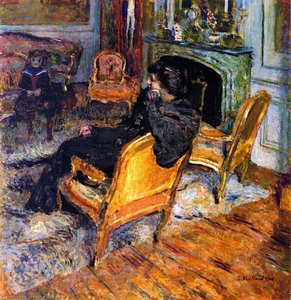
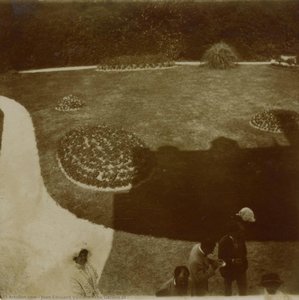
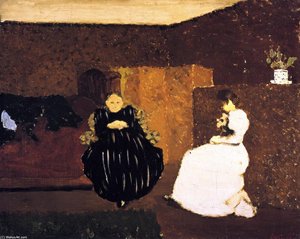
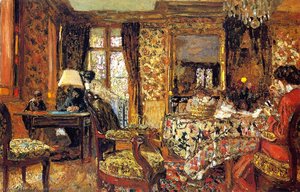
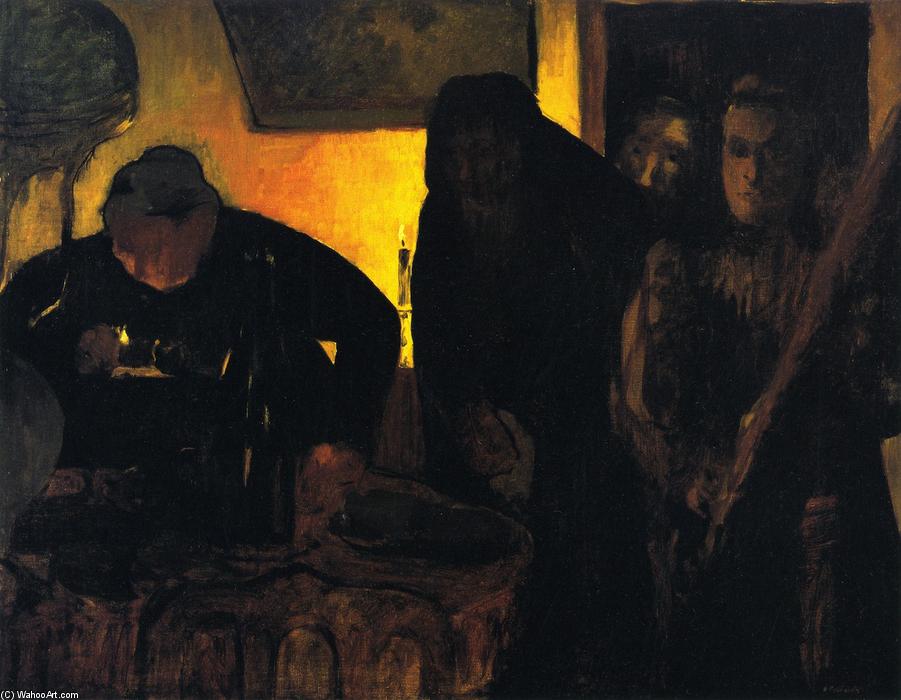
Jean-Édouard Vuillard’s Dinnertime, dating from 1889, transports the viewer into an intimate tableau of domestic life. This black and white representation captures a moment suspended in time—a gathering around a set table that speaks volumes without uttering a single word. The composition centers on three figures arranged with careful balance: one seated to the left, another standing near the center, and the third completing the grouping on the right. It is a scene steeped in the quiet ritual of shared sustenance, suggesting not merely a meal, but a connection woven from conversation and proximity.
The Geometry of Intimacy and Form
Technically, the painting showcases Vuillard’s masterful handling of interior space. While the subject matter is deeply human, the execution hints at the structural concerns that would define his later work with Les Nabis. The arrangement of objects—the three cups placed thoughtfully around the table, the two bowls flanking the center, and the precise placement of the knife and spoon—lends a quiet, almost patterned rhythm to the foreground. Vuillard does not simply paint what is there; he constructs an atmosphere using planes of color and form. Even in this monochromatic study, one senses the flattened, decorative quality that allowed him to explore spatial effects, making the very act of dining feel both monumental and utterly private.
Historical Echoes: The Turn Towards the Personal
Painted at the cusp of a major artistic revolution, Dinnertime sits within a fascinating historical moment. While Impressionism celebrated fleeting outdoor moments, Vuillard’s focus turned inward, toward the domestic sphere and the psychology of private life. This predates his full immersion into the vibrant color theories of Les Nabis, yet it carries the seeds of that revolution: an intense concentration on pattern, texture, and the emotional resonance found within familiar, enclosed spaces. It is a precursor to modern abstraction, finding profound depth in the mundane arrangement of chairs and tableware.
Symbolism of Gathering
The symbolism inherent in this gathering is rich with unspoken narratives. The table itself acts as an altar to connection—a place where disparate individuals momentarily converge into a single unit. The objects laid out are tools for communion; they suggest shared history, anticipated conversation, and the comforting weight of familial or deep friendship. To gaze upon it is to contemplate the delicate balance between individual presence and collective belonging. It invites the collector or designer to consider how art can elevate the everyday ritual, transforming a simple dinner into an enduring meditation on togetherness.
Related Artworks
Artist Biography
**early life and artistic beginnings**
jean-édouard vuillard, a french painter, decorative artist, and printmaker, was born on november 11, 1868, in cuiseaux, france. his life's work would later become a cornerstone of the avant-garde artistic group les nabis, alongside fellow visionaries like maurice denis and édouard vuillard. this collective would revolutionize the art world with their innovative approach to color and form.**the nabis movement and its influence**
as a prominent member of les nabis, vuillard's paintings assembled areas of pure color, influenced by japanese prints. his interior scenes explored the spatial effects of flattened planes of color, pattern, and form. this approach would later influence the development of cubism, fauvism, and abstract art.- les nabis, a group of young french artists active in paris from 1888 until 1900, played a large part in the transition from impressionism and academic art to abstract art, symbolism, and the other early movements of modernism.
- their philosophy was based upon the philosophy of positivism, and the writings of auguste comte and hippolyte taine.
**vuillard's later work and legacy**
after 1900, when les nabis disbanded, vuillard adopted a more realistic style, approaching landscapes and interiors with greater detail and vivid colors. in the 1920s and 1930s, he painted portraits of prominent figures in french industry and the arts in their familiar settings. **key works and exhibitions:**- jean-édouard vuillard's paintings can be found in various museums, including the musée de la révolution française (france), which boasts a rich collection of artworks, documents, and objects related to the revolutionary period.
- some of his notable works include "la patrie en danger" by guillaume lethière and "jean de la barre" by jean clouet, which depict a young man condemned to death for blasphemy during the ancien régime.
- vuillard's later work, such as his portraits of french industry and arts figures, can be seen in various galleries, including those at intimism art movement and jean-édouard vuillard's page on ArtsDot.
**conclusion**
jean-édouard vuillard's enigmatic world, characterized by its innovative use of color and form, has left an indelible mark on the art world. as a pioneer of modernism, his work continues to inspire artists and influence various artistic movements. discover more about intimism art movement and explore jean-édouard vuillard's works on ArtsDot.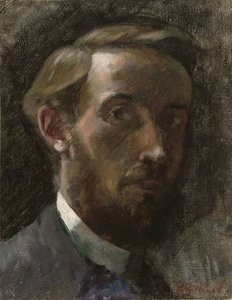
jean-édouard vuillard
1868 - 1940 , France
Quick Facts
- Artistic Movement Or Style: Nabis
- Artists Or Movements Influenced By This Artist:
- Cubism
- Fauvism
- Artists Who Influenced This Artist: ['Paul Gauguin']
- Date Of Birth: November 11, 1868
- Date Of Death: June 21, 1940
- Full Name: Jean-Édouard Vuillard
- Nationality: French
- Notable Artworks:
- Woman Sweeping
- Sunlit Interior
- Place Of Birth: Cuiseaux, France
Related Articles
Édouard Manet's Masterpieces: Explore 25 Iconic Paintings for Your Home Decor
Explore 25 iconic Édouard Manet paintings, from 'Le Déjeuner sur l'herbe' to 'Olympia'. Discover the stories behind these Impressionist masterpieces & find museum-quality art reproductions for your home. Explore the full collection online at ArtsDot.com!
Intimate Interiors & Poetic Ambiguity: Exploring the Vision of Jean-Édouard Vuillard
Discover the captivating world of Jean-Édouard Vuillard, a key figure of the Nabis movement. Explore his intimate interiors, unique style & lasting influence on modern art. Learn more at ArtsDot.

Giclée Prints: Archival Quality & Aesthetic Nuances for the Discerning Collector
Explore the world of giclée prints with ArtsDot. Learn about archival quality, aesthetic nuances & investment potential. Expert guidance for discerning art collectors seeking museum-quality reproductions and lasting value.

Hokusai's Masterpieces: 25 Iconic Prints & Paintings for Art Lovers | ArtsDot
Journey through Katsushika Hokusai’s 25 most iconic artworks, including *The Great Wave*. Explore the ukiyo-e master's history, style & timeless Japanese woodblock prints. Find museum-quality reproductions for your home at ArtsDot.com.
Japonisme: How Japanese Woodblock Prints Revolutionized Western Art
Explore the profound impact of Japonisme on Western art. Discover how Japanese ukiyo-e woodblock prints revolutionized perspective, color, and composition for masters like Monet and Van Gogh, forever changing the course of modern art history.