 Preview
 Send
Send Share
Share
 Details

 Download
 Similars
 X-Ray
X-Ray Diaporama
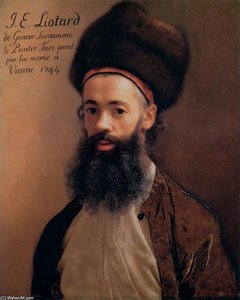
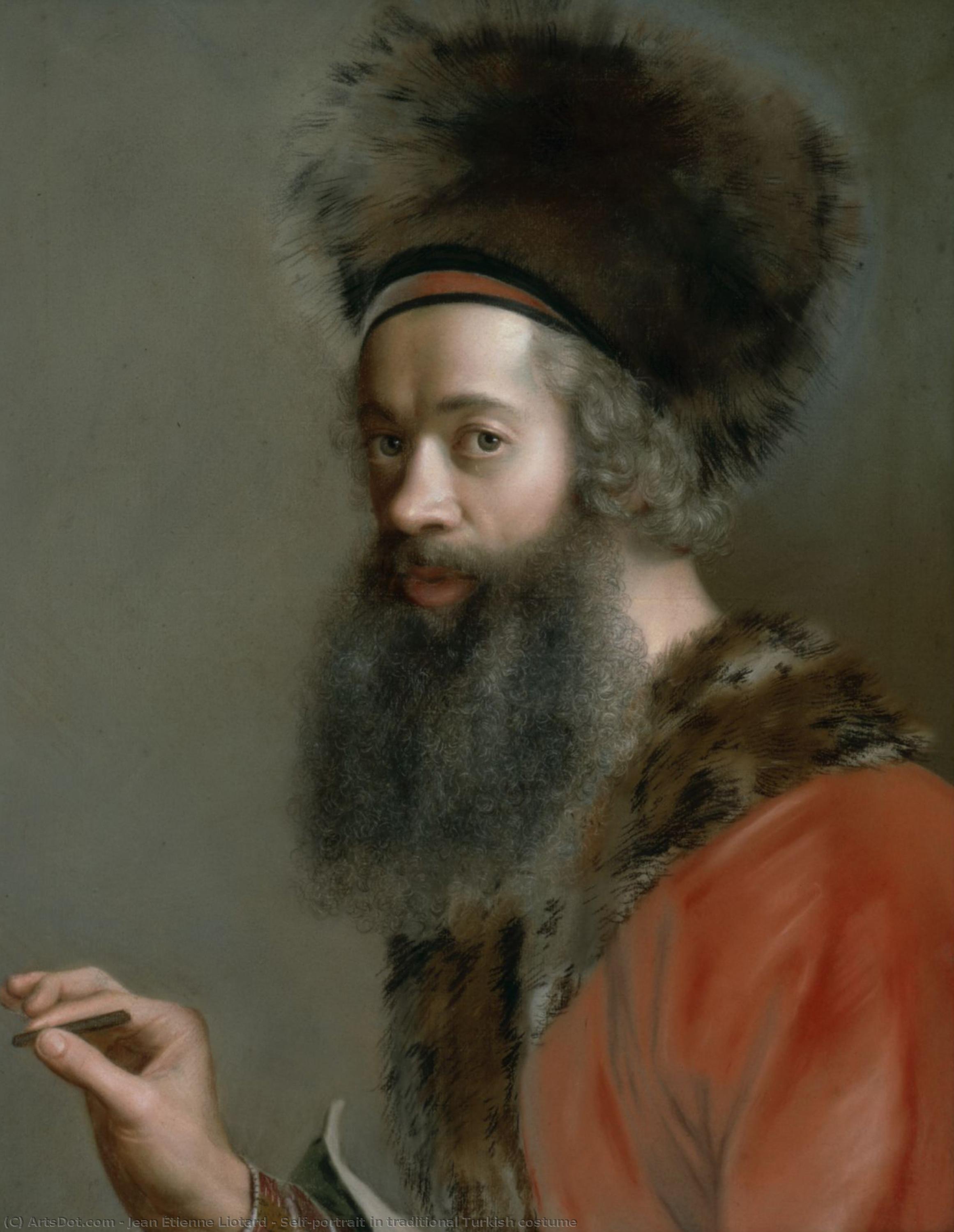
Self-portrait in traditional Turkish costume


 Read More
Hand Made Oil Reproduction
Hand-painted oil on canvas in your size and frame, made to order by our artists. ( Buy Print Buy Image)




P118B $10

P118H $10

P118W $10

P438Z $10

P508JH $12

P508YH $12

P805H $10

P805Z $10

P919BZ $10

P919G $10

P919XJ $10

P959ZH $10

P968JZ $12

W106C $8

W218G $10

W218JH $8

W218Y $10

W307PJ $10

W316G $10

W316PJ $8

W316Y $10

W398PJ $8

W4111J $10

W500HY $15

W500JH $15

W692G $12

W849H $8

W940BG $15

W953PJ $8




Pick from our preset sizes that match the artwork's original proportions.

You may enter your own dimensions to fit a specific frame or space. If your selected size does not match the original image's proportions, we will either crop the artwork or extend the painting with additional hand-painted elements. A digital mockup will be sent for your approval before production begins.
Please note that the on-screen preview does not reflect the actual cropping or extension. Only the mockup will accurately show the final composition.
While custom sizes are available, we recommend selecting a dimension from the predefined list to preserve the original proportions.
After order, ArtsDot.com team will email client for instructions and provide a mockup preview
Worldwide Delivery () in 3/4 weeks instead of standard 5 weeks. (16 August). No compromise on quality.

Free Worldwide Express Shipping

High-Quality Linen Canvas

Full Shipping Insurance

Customs Tax Refund Guarantee

True Color Matching Guarantee

60-Day Return Policy (Defects Only)

100% Money-Back Guarantee

Bulk Discount Offer
 Glass option is only available in size under 110 CM

Self-portrait in traditional Turkish costume
Reproduction Medium
Reproduction Size
-


Total Price
$ 263
Artwork Description
A Portrait Steeped in Exoticism and Delicate Observation
Jean-Étienne Liotard's "Self-portrait in Traditional Turkish Costume," completed in 1746, stands as a testament to the burgeoning fascination with Orientalism during the Rococo period. More than just a depiction of an individual, it’s a meticulously crafted tableau that embodies the artistic spirit of its time—characterized by refined elegance, naturalistic detail, and a yearning for beauty found beyond European borders.
The painting showcases Liotard himself in opulent Turkish attire: a fur hat perched atop his head, signaling wealth and status; a richly embroidered waistcoat reflecting the lavish fashions of aristocratic circles. His gaze meets the viewer’s eye with quiet confidence, conveying an aura of intellectual curiosity—a hallmark of Liotard's artistic persona.
Technique and Material Considerations: Pastel Mastery
Liotard’s masterful use of pastel is immediately apparent. Unlike oil paint, which relies on layering and blending pigments over time, pastel employs powdered pigment mixed with binder (typically gum arabic) applied directly to paper. This technique allowed for unparalleled luminosity and vibrancy—essential qualities in capturing the subtle nuances of light and color that Liotard expertly achieved.
The delicate texture of the pastel surface contributes significantly to the painting’s overall impression. It captures the ephemeral beauty of a fleeting moment, mirroring the Rococo preoccupation with illusion and atmosphere. The artist's meticulous attention to detail—evident in the rendering of facial features and clothing textures—underscores his commitment to naturalistic representation.
Istanbul’s Influence: Exploring Eastern Sensibilities
Liotard’s sojourn in Constantinople (modern Istanbul) between 1738 and 1742 profoundly impacted his artistic vision. This journey exposed him to the vibrant colors, textures, and decorative arts of the Ottoman Empire—influences that permeate numerous pastel depictions produced during this period.
The inclusion of two figures in the upper left corner adds another layer of complexity to the composition. These smaller portraits likely represent Liotard’s wife, Marie Fargues, dressed in Turkish attire – a deliberate gesture reflecting the artistic conventions of the era and highlighting the importance of portraying idealized beauty alongside scholarly contemplation.
Symbolism Beyond Surface Beauty
"Self-portrait in Traditional Turkish Costume" transcends mere visual splendor. It speaks to broader themes of identity, aspiration, and engagement with distant cultures. The fur hat symbolizes nobility and power—a conscious reference to Ottoman imperial iconography—while the pipe represents contemplation and intellectual pursuits.
Ultimately, Liotard’s masterpiece invites viewers to contemplate not only the artist's physical appearance but also his inner life—his intellect, his passions, and his desire to capture the sublime beauty of the natural world. It remains a captivating example of Rococo artistry and a poignant reflection on the transformative power of travel and cultural exchange.
Related Artworks
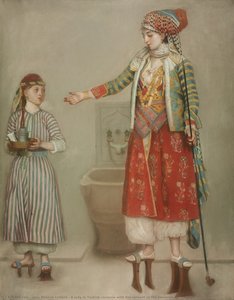
Artist Biography
early life and training
jean-étienne liotard, a renowned genevan painter, art connoisseur, and dealer, was born on december 22, 1702, in geneva, switzerland. his parents, french protestants, had fled to geneva after 1685. liotard's artistic journey began under the guidance of professors daniel gardelle and petitot, whose enamels and miniatures he skillfully replicated.artistic career
liotard's travels took him to various european capitals, including paris, rome, istanbul, and vienna, where his portraits were highly sought after. in 1725, he studied under jean-baptiste massé and françois lemoyne in paris. his time in constantinople (1738-1742) significantly influenced his work, as evident in his numerous pastel depictions of turkish domestic scenes.notable works and style
liotard's mastery of pastel is showcased in works like:- dutch girl at breakfast (ca. 1756, oil on canvas, rijksmuseum), demonstrating his versatility.
- la liseuse, the chocolate girl, and la belle lyonnaise at the dresden gallery, exemplifying his delicate pastel drawings.
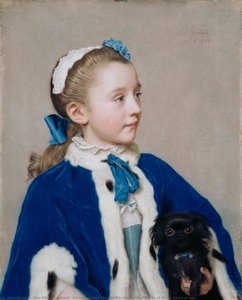
- maria frederike van reede-athlone at seven (j. paul getty museum), a testament to his naturalistic portraiture.
legacy and later life
liotard's later years were marked by the publication of his treatise, traité des principes et des règles de la peinture (1781). he continued to paint still lifes and landscapes until his passing on june 12, 1789, in geneva. key links:- jean-étienne liotard | ArtsDot.com (artist page)
- jean-étienne liotard | wikipedia
- a woman in turkish dress | ArtsDot.com (painting)
museums and collections:
- the museum private collection (geneva, switzerland), featuring an impressive array of liotard's works.
- musée d'art et d'histoire (geneva, switzerland), housing a significant collection of liotard's pastels and drawings.
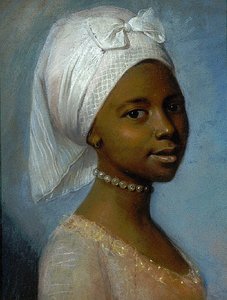
jean-étienne liotard
1702 - 1789 , Switzerland
Quick Facts
- Artistic Movement Or Style: Pastoralism
- Artists Or Movements Influenced By This Artist:
- Jean Baptiste Massé
- François Lemoyne
- Artists Who Influenced This Artist:
- Daniel Gardelle
- Petitot
- Date Of Birth: December 22, 1702
- Date Of Death: June 12, 1789
- Full Name: Jean-Étienne Liotard
- Nationality: Swiss
- Notable Artworks:
- Dutch Girl at Breakfast
- La Liseuse, The Chocolate Girl
- Maria Frederike van Reede-Athlone at Seven
- Place Of Birth: Geneva, Switzerland
Related Articles
Reflections of Power: Aristocratic Life in Western Art & the Rococo Era
Explore the captivating world of aristocratic life through Western art history. Discover Rococo masterpieces & portraits of European nobility. Expert insights for collectors and enthusiasts.
The Resonance of Self: Exploring the Psychological and Aesthetic Dimensions of Personalized Art Commissions
Discover the power of personalized art commissions with ArtsDot.com. Collaborate with skilled artists to create unique portraits that capture your story and elevate your space. Expert guidance & lasting value.

The Rococo Aesthetic: Opulence, Rebellion & the Pursuit of Pleasure in 18th-Century Art
Explore the opulent world of Rococo art! Discover its origins, key artists like Watteau & Boucher, and lasting influence on design. Expert insights for collectors & enthusiasts.
The Subdued Radiance of Pastel: Exploring Nuance & Emotion in Art
Explore the nuanced world of pastel art! Discover its history, techniques & emotional power with expert insights from ArtsDot.com. Find museum-quality reproductions and learn about collecting this delicate medium.
Maurice Quentin de La Tour: Light, Shadow & the Rococo Portrait
Explore the captivating world of Maurice Quentin de La Tour, a master of Rococo portraiture. Discover his innovative pastel techniques, intimate depictions of French aristocracy, and lasting artistic legacy. Learn more at ArtsDot.