 Preview
 Send
Send Share
Share
 Details

 Download
 Similars
 X-Ray
X-Ray Diaporama
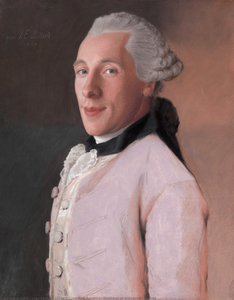
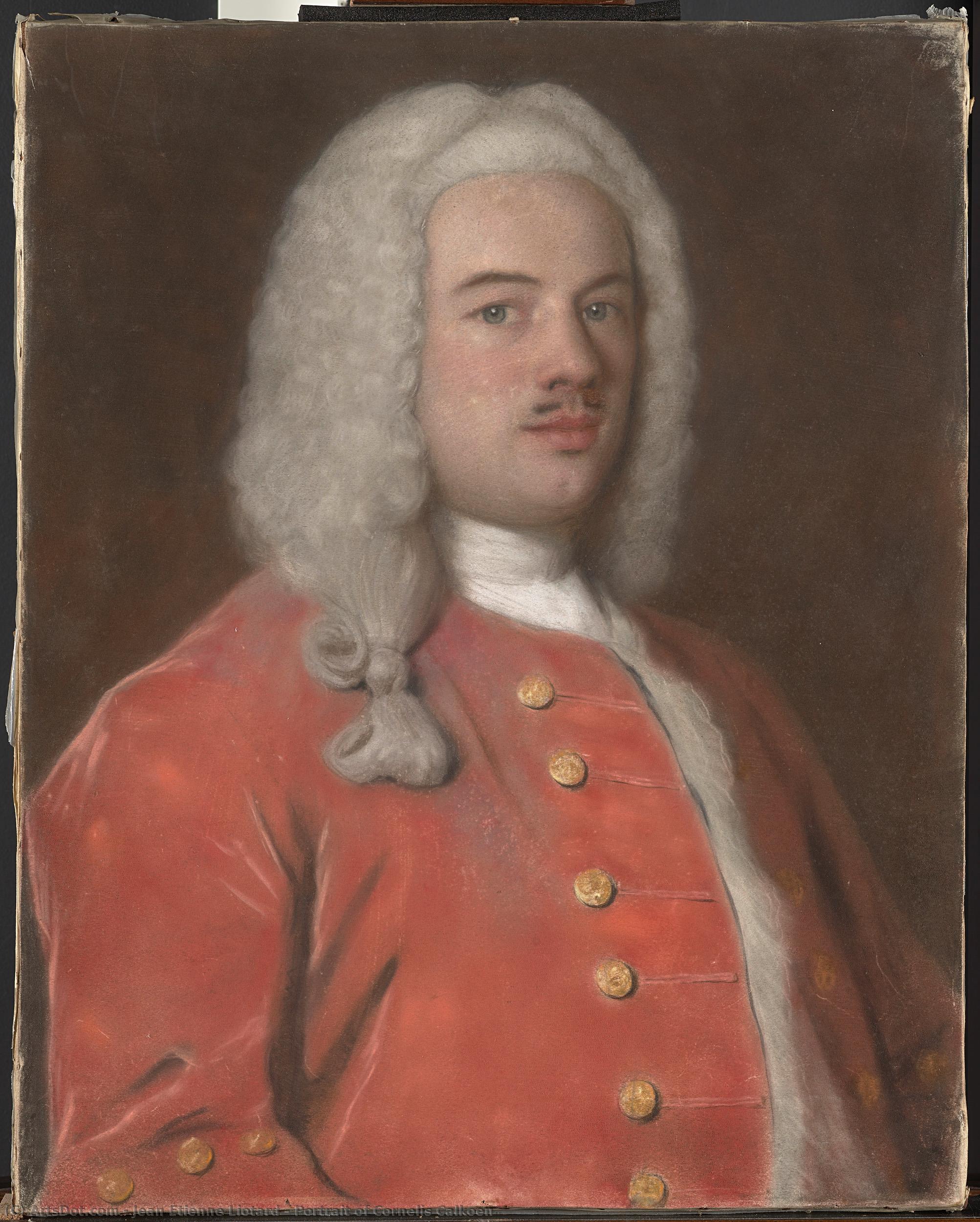
Portrait of Cornelis Calkoen


 Read More
Hand Made Oil Reproduction
Hand-painted oil on canvas in your size and frame, made to order by our artists. ( Buy Print Buy Image)




P118B $10

P118H $10

P118W $10

P438Z $10

P508JH $12

P508YH $12

P805H $10

P805Z $10

P919BZ $10

P919G $10

P919XJ $10

P959ZH $10

P968JZ $12

W106C $8

W218G $10

W218JH $8

W218Y $10

W307PJ $10

W316G $10

W316PJ $8

W316Y $10

W398PJ $8

W4111J $10

W500HY $15

W500JH $15

W692G $12

W849H $8

W940BG $15

W953PJ $8




Pick from our preset sizes that match the artwork's original proportions.

You may enter your own dimensions to fit a specific frame or space. If your selected size does not match the original image's proportions, we will either crop the artwork or extend the painting with additional hand-painted elements. A digital mockup will be sent for your approval before production begins.
Please note that the on-screen preview does not reflect the actual cropping or extension. Only the mockup will accurately show the final composition.
While custom sizes are available, we recommend selecting a dimension from the predefined list to preserve the original proportions.
After order, ArtsDot.com team will email client for instructions and provide a mockup preview
Worldwide Delivery () in 3/4 weeks instead of standard 5 weeks. (16 August). No compromise on quality.

Free Worldwide Express Shipping

High-Quality Linen Canvas

Full Shipping Insurance

Customs Tax Refund Guarantee

True Color Matching Guarantee

60-Day Return Policy (Defects Only)

100% Money-Back Guarantee

Bulk Discount Offer
 Glass option is only available in size under 110 CM

Portrait of Cornelis Calkoen
Reproduction Medium
Reproduction Size
-


Total Price
$ 263
Artwork Description
Portrait of Cornelis Calkoen: A Glimpse into 18th-Century Nobility Through Liotard’s Delicate Brush
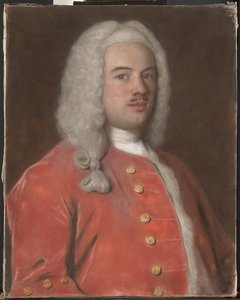
Jean-Étienne Liotard's "Portrait of Cornelis Calkoen," painted around 1738-1742, is more than just a likeness; it’s a meticulously crafted window into the world of 18th-century European aristocracy. This captivating portrait, now housed in various collections and widely reproduced, reveals Liotard's mastery of pastel and his profound understanding of capturing not only physical appearance but also the subtle nuances of personality and social standing. The painting immediately draws the eye with its vibrant red coat, a bold statement against the muted browns and creams that define the background – a deliberate choice designed to elevate Calkoen’s status and draw attention to his commanding presence.
Liotard's style is distinctly Rococo, characterized by an emphasis on elegance, grace, and a certain theatricality. He moved away from the rigid formality of earlier portraiture, embracing a more relaxed and intimate approach. This is evident in Calkoen’s pose – he isn’t stiffly upright but leans slightly forward, engaging the viewer with a direct gaze. His powdered wig, meticulously styled according to the fashions of the time, frames his face, while the delicate folds of his clothing are rendered with remarkable precision, showcasing Liotard's skill in layering and blending pastel hues to create a sense of texture and depth.
The Art of Pastel: Technique and Innovation
Liotard was particularly renowned for his virtuosity with pastel – a medium he exploited to its fullest potential. Unlike oil paints, which require extensive drying time, pastels allow the artist to work directly on the paper, creating incredibly luminous and delicate effects. He employed a technique of ‘stippling’ and ‘hatching,’ building up layers of color through tiny dots and short lines, achieving an astonishing level of detail and tonal variation. Notice how he uses subtle gradations of pinks and reds to capture the sheen of Calkoen's coat, while delicate blues and greens are used to suggest the fabric beneath. This masterful control over the medium is a hallmark of Liotard’s work.
Furthermore, Liotard’s use of light is particularly noteworthy. The soft, diffused lighting creates an atmosphere of intimacy and serenity, highlighting Calkoen's features without harshness. The background is deliberately blurred, directing the viewer’s attention entirely to the subject. This technique, combined with his meticulous rendering of textures – from the velvet of the coat to the sheen of the wig – contributes significantly to the portrait’s overall realism and impact.
Symbolism and Social Context
Beyond its technical brilliance, “Portrait of Cornelis Calkoen” offers a glimpse into the social dynamics of 18th-century Europe. The subject himself, Cornelis Calkoen, was likely a member of the landed gentry – evidenced by his attire and bearing. The red coat, often associated with nobility and military rank, signifies wealth and status. The inclusion of gold buttons further emphasizes this distinction. The portrait served not merely as a representation of an individual but also as a visual declaration of social standing, reflecting the importance of lineage and patronage within that era.
Interestingly, Liotard’s travels throughout Europe – to Paris, Rome, Istanbul, and Vienna – profoundly influenced his artistic style. His time in Constantinople, particularly, exposed him to Turkish culture and aesthetics, which can be seen reflected in the subtle details of Calkoen's attire and the overall atmosphere of the portrait. The painting is a testament to Liotard’s ability to synthesize diverse influences into a uniquely personal and compelling artistic vision.
A Timeless Masterpiece: Reproduction and Inspiration
Today, “Portrait of Cornelis Calkoen” remains a beloved example of Rococo portraiture. Its delicate beauty, technical sophistication, and evocative symbolism continue to captivate viewers centuries after its creation. Reproductions, such as those offered by ArtsDot.com, allow us to appreciate Liotard’s artistry in our own homes, bringing a touch of elegance and historical insight into any space. The painting's enduring appeal lies not only in its aesthetic qualities but also in its ability to transport us back to a world of aristocratic grandeur and artistic innovation.
Related Artworks
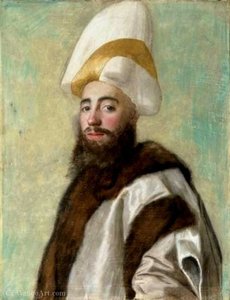
Artist Biography
early life and training
jean-étienne liotard, a renowned genevan painter, art connoisseur, and dealer, was born on december 22, 1702, in geneva, switzerland. his parents, french protestants, had fled to geneva after 1685. liotard's artistic journey began under the guidance of professors daniel gardelle and petitot, whose enamels and miniatures he skillfully replicated.artistic career
liotard's travels took him to various european capitals, including paris, rome, istanbul, and vienna, where his portraits were highly sought after. in 1725, he studied under jean-baptiste massé and françois lemoyne in paris. his time in constantinople (1738-1742) significantly influenced his work, as evident in his numerous pastel depictions of turkish domestic scenes.notable works and style
liotard's mastery of pastel is showcased in works like:- dutch girl at breakfast (ca. 1756, oil on canvas, rijksmuseum), demonstrating his versatility.
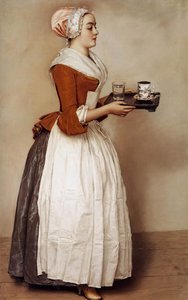
- la liseuse, the chocolate girl, and la belle lyonnaise at the dresden gallery, exemplifying his delicate pastel drawings.
- maria frederike van reede-athlone at seven (j. paul getty museum), a testament to his naturalistic portraiture.
legacy and later life
liotard's later years were marked by the publication of his treatise, traité des principes et des règles de la peinture (1781). he continued to paint still lifes and landscapes until his passing on june 12, 1789, in geneva. key links:- jean-étienne liotard | ArtsDot.com (artist page)
- jean-étienne liotard | wikipedia
- a woman in turkish dress | ArtsDot.com (painting)
museums and collections:
- the museum private collection (geneva, switzerland), featuring an impressive array of liotard's works.
- musée d'art et d'histoire (geneva, switzerland), housing a significant collection of liotard's pastels and drawings.
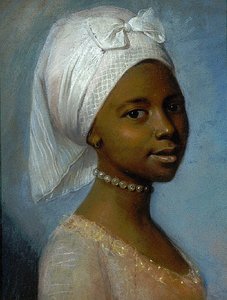
jean-étienne liotard
1702 - 1789 , Switzerland
Quick Facts
- Artistic Movement Or Style: Pastoralism
- Artists Or Movements Influenced By This Artist:
- Jean Baptiste Massé
- François Lemoyne
- Artists Who Influenced This Artist:
- Daniel Gardelle
- Petitot
- Date Of Birth: December 22, 1702
- Date Of Death: June 12, 1789
- Full Name: Jean-Étienne Liotard
- Nationality: Swiss
- Notable Artworks:
- Dutch Girl at Breakfast
- La Liseuse, The Chocolate Girl
- Maria Frederike van Reede-Athlone at Seven
- Place Of Birth: Geneva, Switzerland
Related Articles
Reimagining Portraiture: Commissioning Historical-Style Paintings for Contemporary Identity and Legacy
Commission a timeless historical-style portrait from skilled artists. Explore Renaissance to Dutch Masters techniques & create a lasting legacy. Expert guidance, bespoke designs & museum-quality results. Discover your artistic vision today!
Vigée Le Brun: Portraiture, Patronage & Feminine Identity in 18th-Century France
Explore the life & art of Louise Élisabeth Vigée Le Brun, Marie Antoinette’s renowned portraitist. Discover her Rococo style, self-portraits, and influence on 18th-century French painting. A deep dive into patronage & feminine identity.
The Digital Portrait Renaissance: Transforming Personal Photography into Timeless Oil Paintings Through Artistic Reproduction
Transform your cherished photos into timeless oil paintings with ArtsDot's expert artists. Museum-quality reproductions & custom portraits, crafted to last a lifetime. Discover the art of personal legacy.
Thomas Hudson: A Study in 18th-Century Portraiture & British Artistic Identity
Explore the life & work of Thomas Hudson, a leading 18th-century British portraitist. Discover his mastery of the 'Grand Manner,' influential style, and lasting impact on British art. Learn about his notable portraits like Judge William Noel & Alexander Van Aken.
Illuminating the Enlightenment: Art & Sociopolitical Context of the 18th Century
Explore the art of the Enlightenment! Discover Rococo's elegance, Neoclassicism’s virtue, & David’s revolutionary masterpieces. Uncover the sociopolitical context shaping 18th-century European painting.