 Preview
 Send
Send Share
Share
 Details

 Download
 Similars
 X-Ray
X-Ray Diaporama
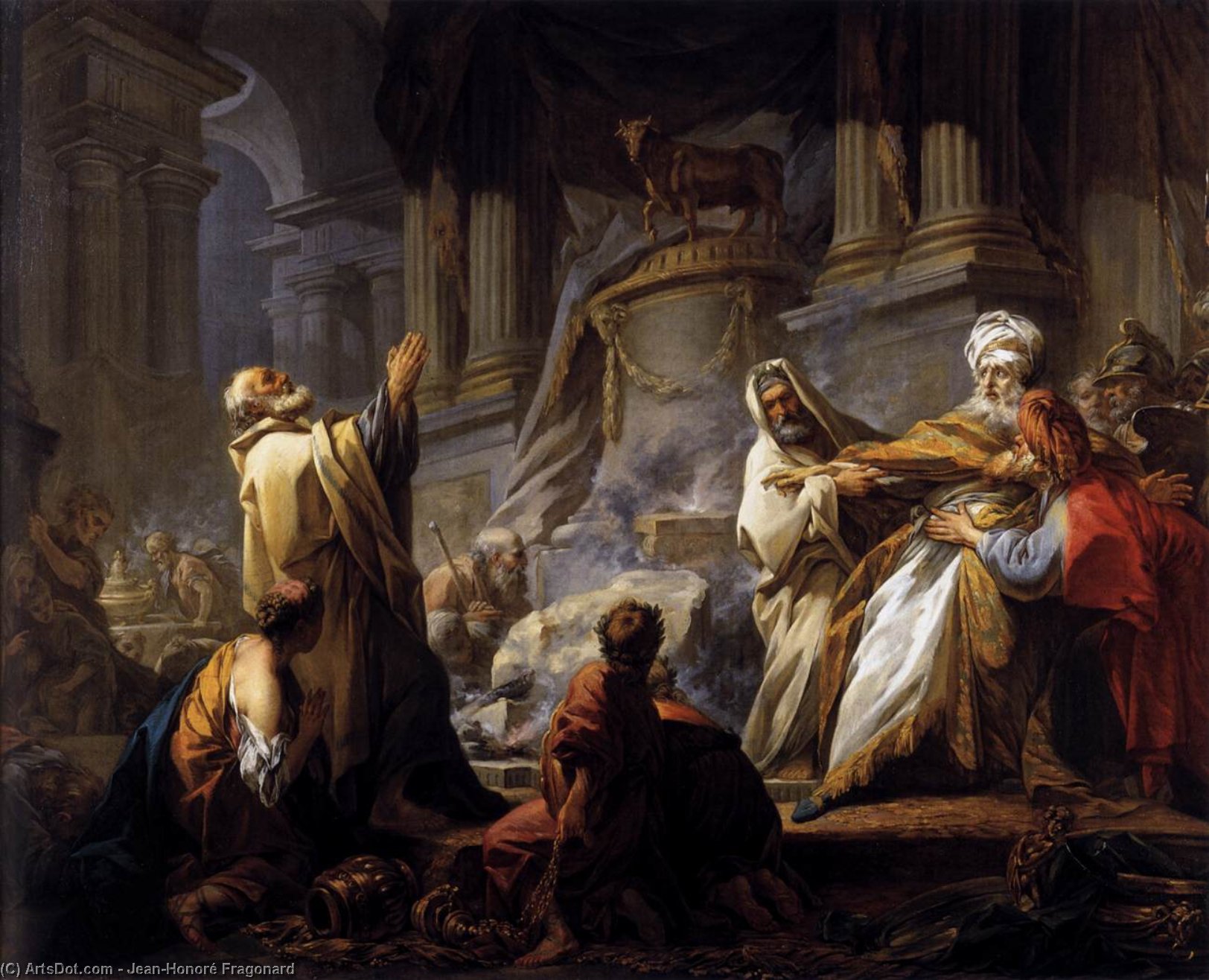
Jeroboam Offering Sacrifice for the Idol
 Oil On Canvas
- WallArt
- Rococo
 1752
1752 115.0 x 145.0 cm
 École Nationale Supérieure des Beaux-Arts
 Read More
Hand Made Oil Reproduction
Hand-painted oil on canvas in your size and frame, made to order by our artists. ( Buy Print Buy Image)




P118B $10

P118H $10

P118W $10

P438Z $10

P508JH $12

P508YH $12

P805H $10

P805Z $10

P919BZ $10

P919G $10

P919XJ $10

P959ZH $10

P968JZ $12

W106C $8

W218G $10

W218JH $8

W218Y $10

W307PJ $10

W316G $10

W316PJ $8

W316Y $10

W398PJ $8

W4111J $10

W500HY $15

W500JH $15

W692G $12

W849H $8

W940BG $15

W953PJ $8




Pick from our preset sizes that match the artwork's original proportions.

You may enter your own dimensions to fit a specific frame or space. If your selected size does not match the original image's proportions, we will either crop the artwork or extend the painting with additional hand-painted elements. A digital mockup will be sent for your approval before production begins.
Please note that the on-screen preview does not reflect the actual cropping or extension. Only the mockup will accurately show the final composition.
While custom sizes are available, we recommend selecting a dimension from the predefined list to preserve the original proportions.
After order, ArtsDot.com team will email client for instructions and provide a mockup preview
Worldwide Delivery () in 3/4 weeks instead of standard 5 weeks. (16 August). No compromise on quality.

Free Worldwide Express Shipping

High-Quality Linen Canvas

Full Shipping Insurance

Customs Tax Refund Guarantee

True Color Matching Guarantee

60-Day Return Policy (Defects Only)

100% Money-Back Guarantee

Bulk Discount Offer
 Glass option is only available in size under 110 CM

Jeroboam Offering Sacrifice for the Idol
Reproduction Medium
Reproduction Size
-


Total Price
$ 263
Artwork Description
A Moment of Faith Amidst Rococo Excess
Jean-Honoré Fragonard’s “Jeroboam Offering Sacrifice for the Idol,” completed in 1752, stands as a striking anomaly within his oeuvre—a history painting that deliberately eschews the frivolous charm characteristic of his fellow artists during the height of Rococo. Unlike Boucher’s opulent depictions of aristocratic pleasure or Troy’s idealized landscapes, Fragonard confronts us with a scene rooted in biblical narrative, demanding a deeper engagement with theological themes.
- Subject Matter: The painting portrays King Jeroboam II of Israel performing a ritual sacrifice before an idol—specifically, a bull or cow—at Bethel. This choice was considered audacious by contemporaries who expected Fragonard to adhere to the prevailing artistic conventions of his time.
- Style & Technique: Fragonard skillfully adapts his signature Rococo style for this monumental commission, demonstrating remarkable precision and control. The brushstrokes are loose yet confident, capturing the dynamism of movement and conveying a palpable sense of atmosphere. Infrared photography reveals numerous pentimenti—corrections made by the artist during the painting process—underscoring Fragonard’s meticulous attention to detail.
Historical Context: The Academy and Religious Patronage
Fragonard secured his place in art history through the prestigious Prix de Rome, affording him access to the artistic traditions of Italy. This scholarship allowed him to immerse himself in the classical ideals championed by Charles Joseph Natoire, director of the French Academy in Rome—a formative influence that shaped Fragonard’s stylistic sensibilities. The commission itself reflects the broader cultural landscape of Louis XV's court, where religious iconography held considerable sway alongside aristocratic indulgence.
- Influence of Boucher & Troy: Fragonard’s artistic development was profoundly impacted by François Boucher and Jean François de Troy, whose techniques he diligently studied. These masters instilled in him a love for graceful forms and delicate colors—elements that would become hallmarks of his distinctive style.
Symbolism & Emotional Resonance
Beyond its narrative depiction of biblical scripture, “Jeroboam Offering Sacrifice” is laden with symbolic significance. The prophet’s intervention represents a moral rebuke to Jeroboam's idolatry—a reminder that true piety demands adherence to divine law. The fractured altar symbolizes the crumbling edifice of pagan beliefs and underscores the triumph of faith over superstition. Fragonard’s masterful use of color—particularly the luminous whites and golds—evokes a sense of solemn grandeur, conveying an emotional depth rarely found in Rococo art.
- The Prophet's Role: The prophet embodies moral authority and serves as a counterpoint to Jeroboam’s actions.
- Color Palette & Atmosphere: Fragonard’s palette contributes significantly to the painting’s emotive impact, creating an atmosphere of reverence and contemplation.
Legacy & Reproduction
“Jeroboam Offering Sacrifice for the Idol” remains a testament to Fragonard's artistic genius—a singular achievement that transcends stylistic boundaries. Today, ArtsDot offers high-quality reproductions of this masterpiece, allowing art enthusiasts worldwide to experience its beauty and contemplate its profound symbolism. Explore the artwork’s detailed history and captivating visual qualities at ArtsDot.
Related Artworks
Artist Biography
A Life Bathed in Light: The World of Jean-Honoré Fragonard
Born amidst the fragrant fields of Grasse, France, in 1732, Jean-Honoré Fragonard’s artistic journey began not with grand ambition but a quiet relocation to Paris with his family. It was there, under the initial guidance of Jean Siméon Chardin – a master of everyday life and subtle observation – that young Fragonard first encountered the possibilities of paint and canvas. However, it was within the atelier of François Boucher, the celebrated painter to the court of Louis XV, that his true stylistic foundations were laid. Boucher’s influence instilled in Fragonard a love for graceful forms, delicate colors, and the playful spirit that would come to define his oeuvre. Winning the prestigious Prix de Rome in 1752 marked a pivotal moment, affording him the opportunity to immerse himself in the classical world of Italy for several years. This period wasn’t merely about copying ancient masters; it was an awakening – a chance to absorb the vibrancy and sensuality that would later infuse his own unique vision.The Rococo Master: A Celebration of Pleasure and Intrigue
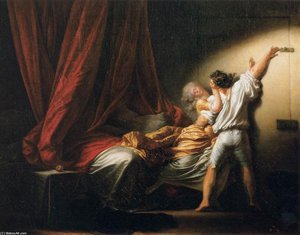
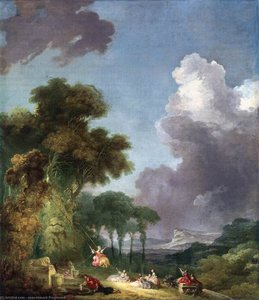
Upon returning to Paris, Fragonard swiftly established himself as a leading figure in the burgeoning Rococo movement. This wasn’t simply about adopting a style; it was about embodying an entire worldview – one that celebrated pleasure, intimacy, and the fleeting beauty of life. His paintings weren't intended for grand public display but rather for the private salons of aristocrats seeking works that whispered secrets and hinted at hidden desires. The Swing, perhaps his most iconic creation, perfectly encapsulates this spirit. A young woman playfully kicks off her shoe as a bishop pushes her swing, while a hidden lover gazes up from below – it’s a scene brimming with mischievous energy and veiled eroticism. Other works like The Bolt and Love Vow continue this exploration of clandestine encounters and the delicate dance between attraction and restraint. Fragonard didn't merely depict scenes of love; he created an atmosphere, a mood – one that was both alluring and slightly dangerous. His brushwork became increasingly fluid and spontaneous, capturing not just appearances but also the very essence of fleeting moments.Beyond the Salon: Experimentation and Evolving Styles
While Fragonard achieved considerable success within the established art world, he wasn’t one to remain confined by its conventions. He experimented with different genres and techniques throughout his career, demonstrating a remarkable versatility. His early attempts at history painting, though initially praised, didn't fully satisfy him; he found greater freedom in exploring more intimate and personal subjects. A brief flirtation with Neoclassicism – evident in portraits like that of Denis Diderot – showcased his willingness to engage with contemporary artistic trends, but it was the Rococo sensibility that ultimately defined his legacy. He also excelled as a draftsman, producing countless sketches and drawings that reveal his masterful command of line and form. These weren’t merely preparatory studies; they were often works of art in their own right, capturing fleeting impressions and intimate moments with remarkable sensitivity.A Legacy Enduring Through Time
The French Revolution brought a dramatic shift in artistic tastes, and Fragonard's lighthearted, aristocratic style fell out of favor. He retreated to his hometown of Grasse for a time, returning to Paris only after the political turmoil subsided. Though he held administrative positions at the Louvre during this period, his creative output diminished. However, his influence continued to resonate through subsequent generations of artists. His emphasis on color, light, and sensuality paved the way for Impressionism, while his playful spirit and rejection of academic constraints inspired a more liberated approach to artmaking. Today, Fragonard’s works are celebrated in museums around the world – from the Louvre in Paris to the National Gallery of Art in Washington D.C. His paintings continue to captivate audiences with their beauty, wit, and enduring appeal, reminding us of a time when life was meant to be savored, and pleasure was considered an art form itself.Notable Works & Collections
- The Swing (L'Escarpolette): Wallace Collection, London – A quintessential example of Rococo exuberance.
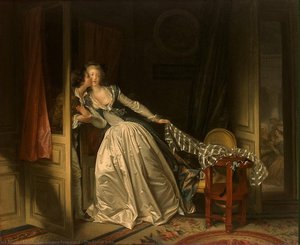
- The Bolt: View on ArtsDot - A captivating scene of domestic intrigue and playful tension.
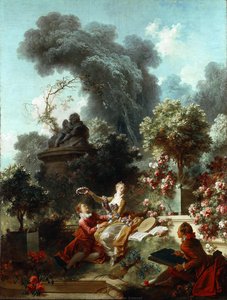
- Love Vow: Discover more about Fragonard’s works on ArtsDot – A tender depiction of romantic commitment.
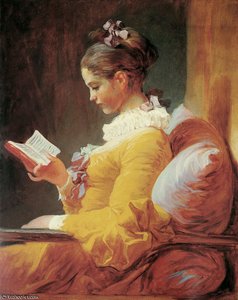
- Young Girl Reading: Featured in artworks databases, showcasing his mastery of portraiture and light.
- Works are also prominently displayed at the Musée du Louvre, Grasse Cathedral, The Metropolitan Museum of Art, and The Frick Collection.
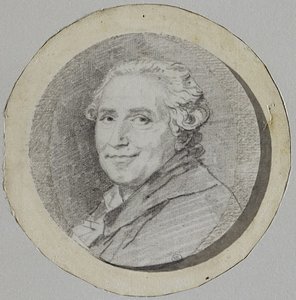
Jean-Honoré Fragonard
1732 - 1806 , France
Quick Facts
- Artistic Movement Or Style: Rococo
- Artists Or Movements Influenced By This Artist: Subsequent art movements
- Artists Who Influenced This Artist:
- François Boucher
- Charles-André van Loo
- Date Of Birth: April 4, 1732
- Date Of Death: August 22, 1806
- Full Name: Jean-Honoré Fragonard
- Nationality: French
- Notable Artworks:
- The Swing
- The Bolt
- Love Vow
- Young Girl Reading
- Place Of Birth: Grasse, France
Related Articles
The Rococo Reverie of Fragonard: Love, Leisure & Pleasure in 18th-Century France
Explore the captivating world of Jean-Honoré Fragonard! Discover his Rococo masterpieces, intimate portraits & the allure of 18th-century French art. Learn about 'The Progress of Love' and more at ArtsDot.

Rococo's Radiant Legacy: 10 Masterpieces for Your Home |
Indulge in the elegance of Rococo! Explore 10 masterpieces by Fragonard, Boucher & Watteau. Discover the stories behind these iconic paintings and bring timeless art to your home with museum-quality reproductions from .
The Rococo Aesthetic: Opulence, Rebellion & the Pursuit of Pleasure in 18th-Century Art
Explore the opulent world of Rococo art! Discover its origins, key artists like Watteau & Boucher, and lasting influence on design. Expert insights for collectors & enthusiasts.
Illuminating the Enlightenment: A Comprehensive Exploration of 18th-Century Painting
Explore the captivating world of 18th-century painting! Discover Rococo's playful elegance & Neoclassicism’s Enlightenment ideals with expert insights into Fragonard, David, and more. A comprehensive guide for art enthusiasts.
The Allure of Elegance in Art: A Historical & Aesthetic Exploration of Refinement & Grace
Explore the exquisite world of Rococo art! Discover its history, masters (Watteau, Boucher & more), and defining elegance. Expert insights for collectors seeking museum-quality reproductions & custom portraits.