 Preview
 Send
Send Share
Share
 Details

 Download
 Similars
 X-Ray
X-Ray Diaporama
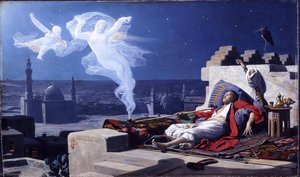
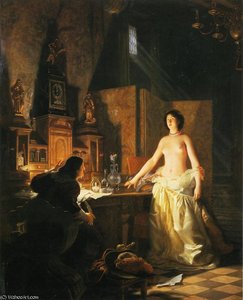
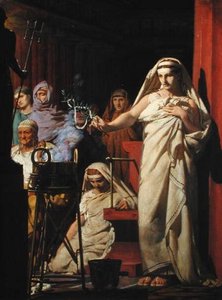
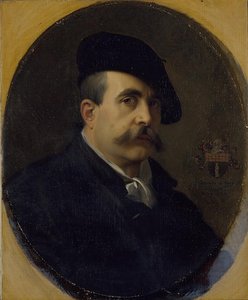
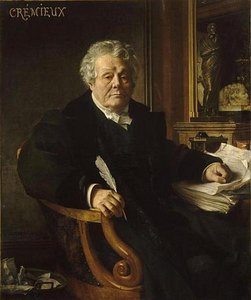
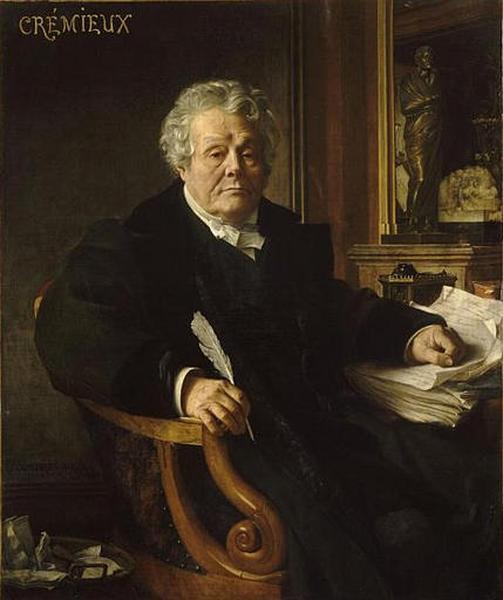
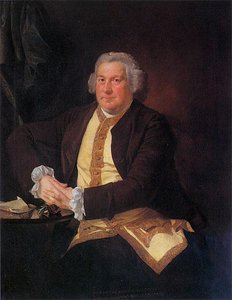
ADOLPHE CREMIEUX

 Read More
Hand Made Oil Reproduction
Hand-painted oil on canvas in your size and frame, made to order by our artists. ( Buy Print Buy Image)




P118B $10

P118H $10

P118W $10

P438Z $10

P508JH $12

P508YH $12

P805H $10

P805Z $10

P919BZ $10

P919G $10

P919XJ $10

P959ZH $10

P968JZ $12

W106C $8

W218G $10

W218JH $8

W218Y $10

W307PJ $10

W316G $10

W316PJ $8

W316Y $10

W398PJ $8

W4111J $10

W500HY $15

W500JH $15

W692G $12

W849H $8

W940BG $15

W953PJ $8




Pick from our preset sizes that match the artwork's original proportions.

You may enter your own dimensions to fit a specific frame or space. If your selected size does not match the original image's proportions, we will either crop the artwork or extend the painting with additional hand-painted elements. A digital mockup will be sent for your approval before production begins.
Please note that the on-screen preview does not reflect the actual cropping or extension. Only the mockup will accurately show the final composition.
While custom sizes are available, we recommend selecting a dimension from the predefined list to preserve the original proportions.
After order, ArtsDot.com team will email client for instructions and provide a mockup preview
Worldwide Delivery () in 3/4 weeks instead of standard 5 weeks. (21 August). No compromise on quality.

Free Worldwide Express Shipping

High-Quality Linen Canvas

Full Shipping Insurance

Customs Tax Refund Guarantee

True Color Matching Guarantee

60-Day Return Policy (Defects Only)

100% Money-Back Guarantee

Bulk Discount Offer
 Glass option is only available in size under 110 CM

ADOLPHE CREMIEUX
Reproduction Medium
Reproduction Size
-


Total Price
$ 263
Related Artworks
Artist Biography
A Life Immersed in Orientalism and Academic Tradition
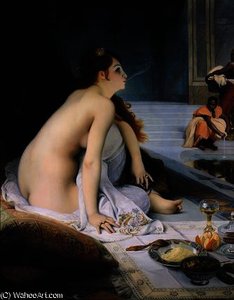
Jean-Jules-Antoine Lecomte du Nouÿ, born into a family of established nobility in Paris in 1842, was an artist whose life became deeply intertwined with the allure of the Orient and the rigorous demands of academic painting. Descended from Piedmontese origins settled in France since the fourteenth century, young Jean-Jules-Antoine displayed an early aptitude for visual art, reportedly creating portraits of his father and uncle by the tender age of six. This innate talent propelled him towards formal training at the atelier of Swiss artist Charles Gleyre in 1861, where he absorbed the importance of individual style and foundational techniques. His artistic education continued under the tutelage of Jean-Léon Gérôme, a leading figure in academic painting, who instilled within him a dedication to precise representation – *la belle nature* – that would become a hallmark of his career. This commitment to detailed realism set the stage for a lifetime spent capturing scenes both historical and exotic with meticulous accuracy.Travels and the Embrace of Eastern Themes
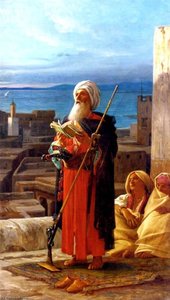
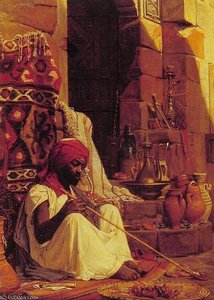
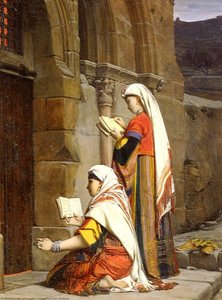
The year 1865 marked a pivotal moment in Lecomte du Nouÿ’s artistic development, as he embarked on a journey to Cairo alongside fellow artist Félix Auguste Clément. This voyage ignited a passion for the opulent world of the Orient, inspiring him to portray its landscapes, people, and customs with increasing frequency. Subsequent travels extended his horizons to Greece, Turkey, Italy, and Romania, each location contributing to a rich tapestry of inspiration. He wasn’t merely documenting these places; he was immersing himself in their social, historical, and literary facets, seeking to understand the cultures he depicted. This dedication to firsthand observation distinguished his work within the broader Orientalist movement, lending it an air of authenticity that resonated with audiences captivated by tales of distant lands. His paintings weren't simply exotic fantasies but attempts at informed representation, albeit viewed through a distinctly European lens.A Steadfast Style in a Changing World
Lecomte du Nouÿ’s artistic path was remarkable for its consistency. While the latter half of his career unfolded amidst the revolutionary shifts brought about by Impressionism, Fauvism, and Constructivism, he remained steadfastly committed to his detailed, realistic style. He adhered to the principles of academic art, prioritizing skillful execution, formal composition, and a subdued realism that emphasized precise depiction – particularly of the human form. This dedication to traditional techniques wasn’t born of resistance to change but rather from a deeply ingrained artistic philosophy. His compositions often employed dramatic half-light, adding layers of mood and melancholy to his scenes. Some scholars, like Professor Alan Braddock, even suggest a subtle modernity within his work, arguing that it indirectly addressed contemporary issues such as colonialism, international trade, gender roles, religion, and history – albeit from a conservative perspective.Legacy and Lasting Influence
In the later years of his life, Lecomte du Nouÿ found patronage in Romania, where he primarily painted portraits of the royal family and their court. However, he returned to Paris before his death in 1923, leaving behind a substantial body of work that significantly contributed to the iconic representation of the Orient during the nineteenth century. His influence extended beyond the canvas; in 1932, a Parisian street was named in his honor – *Rue Lecomte du Nouÿ* – a testament to his standing within the artistic community. Notable works such as “The Supper of Beaucaire,” “The White Slave,” and “Saint Vincent de Paul bringing gallery slaves to the faith” continue to captivate viewers with their meticulous detail, dramatic lighting, and evocative storytelling.Selected Masterpieces
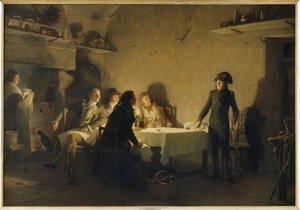
- Le Souper de Beaucaire (1869-1894): A grand historical scene depicting a pivotal moment during the French Revolution.
- The White Slave (1888): A poignant and controversial work exploring themes of captivity and exploitation, housed in the Musée des Beaux-Arts de Nantes.
- Saint Vincent de Paul bringing gallery slaves to the faith (1876): A powerful religious composition displayed at Sainte-Trinité church in Paris.
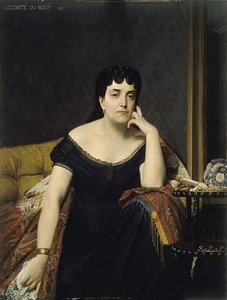
- Portrait of Mademoiselle E.T.: Demonstrates his skill in portraiture, capturing a sense of personality and refinement.
- Autoportrait: Offers a glimpse into the artist's own self-perception and artistic identity.
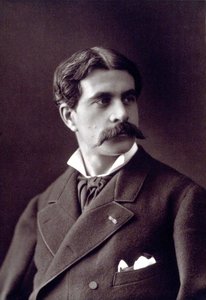
jean jules antoine lecomte du nouy
1842 - 1923 , France
Quick Facts
- Artistic Movement Or Style: Orientalism, Academic art
- Artists Who Influenced This Artist:
- Charles Gleyre
- Jean-Léon Gérôme
- Date Of Birth: June 10, 1842
- Date Of Death: February 19, 1923
- Full Name: Jean-Jules-Antoine Lecomte du Nouÿ
- Nationality: French
- Notable Artworks:
- Le Souper de Beaucaire
- The White Slave
- Saint Vincent de Paul
- Place Of Birth: Paris, France
Related Articles
Ferdinand du Puigaudeau: Bridging Impressionism & Symbolism in Breton Landscapes
Discover Ferdinand du Puigaudeau's captivating Breton landscapes – a bridge between Impressionism & Symbolism. Explore his life, unique style, and enduring legacy with ArtsDot.
Simon Vouet: A Baroque Master's Journey from Italian Influence to French Classicism
Explore the life & art of Simon Vouet, a pivotal French Baroque painter who introduced Italian styles to France. Discover his masterpieces and lasting influence on 17th-century art.
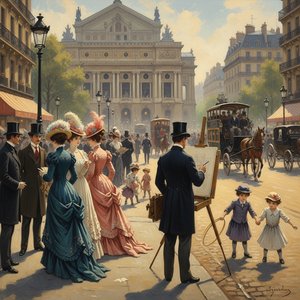
Jean-Georges Béraud: Capturing Parisian Life in the Belle Époque
Explore the captivating world of Jean-Georges Béraud, master painter of Belle Époque Paris. Discover his iconic scenes, artistic evolution, and social commentary. A deep dive into 19th-century French art.
Antoine Blanchard (Marcel Masson): Parisian Abstraction & the Legacy of Automatism
Explore the captivating world of Antoine Blanchard (Marcel Masson) and his nostalgic Parisian scenes. Discover his artistic influences, unique style, and the challenges of authentication. Expert insights & art appraisal information.
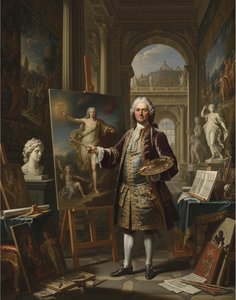
Charles Le Brun: Master of French Baroque Classicism & His Enduring Legacy
Explore the life & art of Charles Le Brun, master of French Baroque Classicism. Discover his royal commissions, influence on Versailles, and enduring legacy through detailed analysis & stunning artworks.