 Preview
 Send
Send Share
Share
 Details

 Download
 Similars
 X-Ray
X-Ray Diaporama
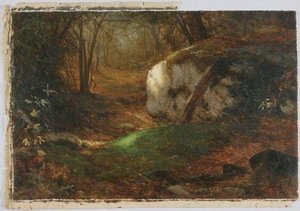
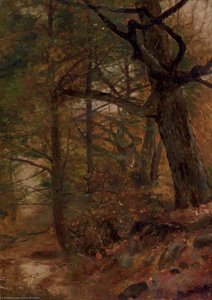
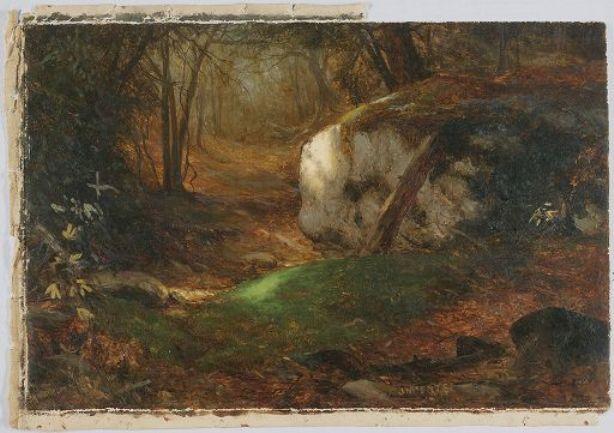
Mossy Bank


 Read More
Hand Made Oil Reproduction
Hand-painted oil on canvas in your size and frame, made to order by our artists. ( Buy Print Buy Image)




P118B $10

P118H $10

P118W $10

P438Z $10

P508JH $12

P508YH $12

P805H $10

P805Z $10

P919BZ $10

P919G $10

P919XJ $10

P959ZH $10

P968JZ $12

W106C $8

W218G $10

W218JH $8

W218Y $10

W307PJ $10

W316G $10

W316PJ $8

W316Y $10

W398PJ $8

W4111J $10

W500HY $15

W500JH $15

W692G $12

W849H $8

W940BG $15

W953PJ $8




Pick from our preset sizes that match the artwork's original proportions.

You may enter your own dimensions to fit a specific frame or space. If your selected size does not match the original image's proportions, we will either crop the artwork or extend the painting with additional hand-painted elements. A digital mockup will be sent for your approval before production begins.
Please note that the on-screen preview does not reflect the actual cropping or extension. Only the mockup will accurately show the final composition.
While custom sizes are available, we recommend selecting a dimension from the predefined list to preserve the original proportions.
After order, ArtsDot.com team will email client for instructions and provide a mockup preview
Worldwide Delivery () in 3/4 weeks instead of standard 5 weeks. (17 August). No compromise on quality.

Free Worldwide Express Shipping

High-Quality Linen Canvas

Full Shipping Insurance

Customs Tax Refund Guarantee

True Color Matching Guarantee

60-Day Return Policy (Defects Only)

100% Money-Back Guarantee

Bulk Discount Offer
 Glass option is only available in size under 110 CM

Mossy Bank
Reproduction Medium
Reproduction Size
-


Total Price
$ 263
Artwork Description
A Melancholy Vision of the American Landscape
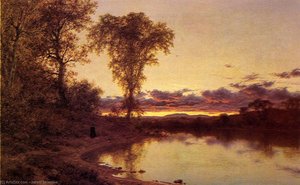
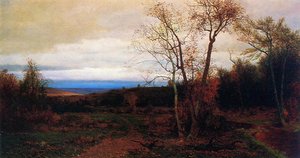
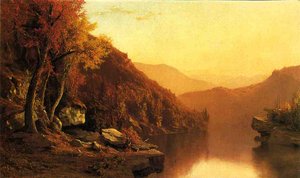
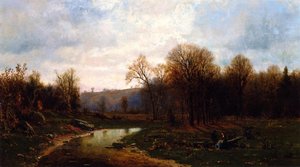
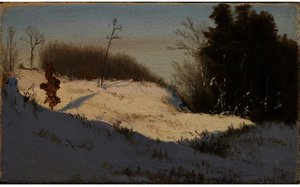
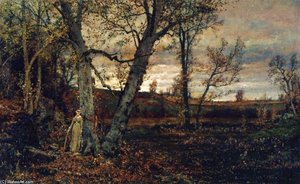
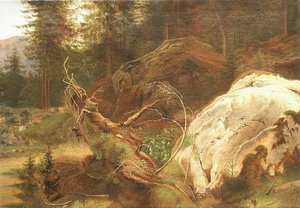
The painting “Mossy Bank,” executed by Jervis McEntee in 1860, stands as a poignant testament to the Hudson River School’s evolving aesthetic sensibilities—a departure from the heroic grandeur favored by its more prominent figures. Rather than depicting sweeping vistas teeming with dynamism and triumph over nature, McEntee presents a contemplative scene of a forest glen bathed in diffused sunlight, capturing a mood of quiet melancholy that speaks volumes about the artist's profound understanding of the natural world’s inherent fragility.- Subject Matter: The artwork focuses on a densely populated woodland area featuring a meandering path bordered by mature trees—primarily oaks and maples—creating an inviting yet subtly unsettling space. Scattered rocks punctuate the landscape, grounding the composition and emphasizing the textures of bark and stone.
- Style & Technique: McEntee’s approach aligns closely with Impressionism's burgeoning influence, prioritizing atmospheric perspective and tonal modulation over precise detail. He employs a muted palette dominated by greens, browns, and ochres—colors deliberately chosen to convey a sense of subdued beauty rather than flamboyant spectacle. Brushstrokes are loose and expressive, blending seamlessly to create an illusion of depth and luminosity.
- Historical Context: Painted during the mid-Victorian era, “Mossy Bank” reflects a growing awareness within American art circles concerning the passage of time and the inevitability of decay—themes that resonated deeply with Romantic poets like Wordsworth and Coleridge. It represents a subtle critique of the prevailing optimism surrounding industrial progress, suggesting instead a reverence for the enduring power of untamed wilderness.
- Symbolism: The moss-covered bank itself serves as a potent symbol of resilience amidst decline; it embodies the quiet dignity found in accepting natural cycles and embracing beauty even in moments of vulnerability. The solitary figures traversing the path represent humanity’s contemplation of its place within the grand scheme of existence—a reminder that true appreciation lies not in conquering nature but in harmonizing with its rhythms.
- Emotional Impact: Viewing “Mossy Bank” evokes a feeling of serene introspection, prompting viewers to consider themes of solitude, remembrance, and the sublime beauty inherent in natural landscapes untouched by human intervention. Its understated elegance transcends mere visual representation, inviting contemplation on the profound connection between humanity and the environment—a legacy that continues to inspire artists and collectors alike.
Related Artworks
Artist Biography
A Melancholy Vision of the American Landscape
Jervis McEntee, born in Rondout, New York, in 1828, occupies a unique and often understated position within the celebrated lineage of Hudson River School painters. While names like Frederic Church and Albert Bierstadt resonate with broader public recognition, McEntee carved out an artistic identity defined by profound introspection and a poetic sensibility toward the natural world. His landscapes are not grand celebrations of untamed wilderness; rather, they are nuanced meditations on transience, loss, and the quiet beauty found in nature’s inevitable decline—a subtle but powerful counterpoint to the more exuberant expressions of his contemporaries. Little is known of his early childhood beyond the details of his parentage – James Smith McEntee and Sarah Jane McEntee – yet an academic inclination was evident from his attendance at the Clinton Liberal Institute between 1844 and 1846, a foundation that would serve him well as he embarked on a career blending artistic skill with intellectual depth. His early commitment to art is underscored by his debut exhibition at the National Academy of Design in New York City as early as 1850, signaling a determined pursuit of his chosen path.Apprenticeship and Artistic Development
A pivotal moment arrived in 1851 with an apprenticeship under Frederic Edwin Church, a leading light of the Hudson River School. This mentorship proved profoundly influential, shaping not only McEntee’s technical approach but also his understanding of landscape painting as a vehicle for emotional and spiritual expression. However, McEntee quickly diverged from Church’s often dramatic and luminous style, developing a more subdued palette and a preference for scenes imbued with a melancholic atmosphere. He became associated with the Hudson River School, yet distinguished himself through this distinctive moodiness. A brief foray into business between 1852-1855 proved unfulfilling, reaffirming his dedication to art. In 1858 he settled in New York City’s Tenth Street Studio Building, becoming part of a vibrant artistic community alongside contemporaries like Eastman Johnson and Sanford Robinson Gifford. His election as an associate of the National Academy of Design in 1860, followed by full academician status in 1861, solidified his standing within the art world. A trip to Europe in 1869, with extensive painting in Italy, broadened his horizons, yet he returned with a reinforced commitment to American landscapes and his signature autumnal themes. This period saw him refine his technique, focusing on capturing not just the visual appearance of nature but its emotional resonance—the feeling of time passing, the weight of memory, and the quiet dignity of decay.The Poetics of Autumn and Influences
McEntee’s artistic vision is perhaps most readily identified by his evocative depictions of autumn. Unlike many contemporaries who reveled in the vibrant spectacle of fall foliage, McEntee focused on the season's waning moments – the falling leaves, the muted colors, the cloudy skies hinting at approaching winter. He described this preference as a focus on “the soberer phases of Nature,” seeking to capture not just visual beauty but also the emotional resonance of decline and transition. This sensibility was deeply intertwined with his love of poetry, particularly the works of William Cullen Bryant, whose verses often served as inspiration for his paintings. McEntee aimed to translate poetic sentiments into visual form, creating landscapes that resonated with a sense of quiet contemplation and elegiac beauty. His work wasn’t merely about representing nature; it was about evoking a feeling, a mood, a state of mind. He sought to capture the ephemeral quality of light and atmosphere, imbuing his scenes with a palpable sense of time passing. November Day, 1863, for example, exemplifies this approach—a scene not of vibrant color but of muted tones and subtle gradations, conveying a feeling of peaceful resignation rather than exuberant joy.Legacy Beyond the Canvas
While McEntee’s paintings offer valuable insights into 19th-century American art and landscape aesthetics, his most enduring legacy may lie in his remarkably detailed journals. Spanning from the early 1870s until his death in Kingston, New York, on January 27, 1891, these diaries provide an unparalleled glimpse into the life of a New York painter during the Gilded Age. They document not only his artistic struggles and creative process but also the social circles he inhabited, the gossip circulating within the art world, and the inner workings of institutions like the National Academy and the Century Club. These journals are a treasure trove for historians, offering first-hand accounts of Hudson River School artists, their daily lives, and their reflections on the American art scene. Today, five volumes of these journals are digitally scanned and accessible online through the Archives of American Art at the Smithsonian Institution, ensuring that McEntee’s voice continues to resonate with scholars and art enthusiasts alike. Though perhaps a lesser-known figure compared to his contemporaries, Jervis McEntee's contribution extends beyond his canvases; he left behind a rich historical record illuminating a pivotal era in American artistic history.Relationships and Lasting Impact
Throughout his life, McEntee fostered close relationships with fellow artists who shaped both his personal and professional trajectory. His lifelong friendship with Frederic Edwin Church remained a constant source of support and inspiration. He also enjoyed deep connections with Sanford Robinson Gifford, Worthington Whittredge, John Ferguson Weir, and Eastman Johnson, forming a vibrant artistic community that exchanged ideas and critiques. These friendships were not merely social; they were integral to the development of his style and his understanding of the art world. McEntee’s work continues to be appreciated for its unique blend of technical skill, emotional depth, and historical significance. His paintings offer a poignant reflection on the American landscape and the human condition, while his journals provide an invaluable window into the life of a 19th-century artist. He remains a compelling figure whose legacy deserves continued exploration and recognition. Born: July 14, 1828, Rondout, New York; Died: January 27, 1891, Kingston, New York; Apprenticed with: Frederic Edwin Church in 1851; Elected to the National Academy of Design: in 1860.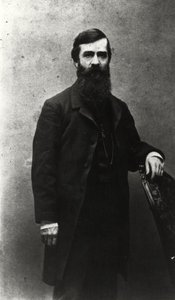
Jervis McEntee
1828 - 1891 , United States of America
Quick Facts
- Artistic Movement Or Style: Hudson River School
- Artists Who Influenced This Artist: ['Frederic Church']
- Date Of Birth: July 14, 1828
- Date Of Death: January 27, 1891
- Full Name: Jervis McEntee
- Nationality: American
- Notable Artworks:
- Lake Como
- Roman Aqueduct
- November Day
- Place Of Birth: Rondout, USA
Related Articles
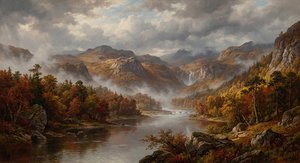
Hudson River School: 10 Masterpieces That Capture America's Wild Beauty | ArtsDot
Journey through America's breathtaking landscapes with our guide to the Top 10 Hudson River School masterpieces. Explore Thomas Cole, Frederic Church & more! Find museum-quality art reproductions and elevate your home decor at ArtsDot.com.
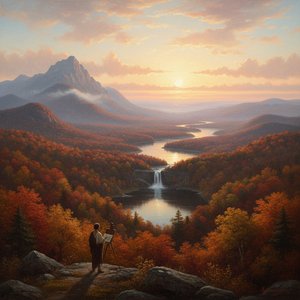
The Sublime Landscape: Exploring the Hudson River School Movement
Explore the captivating world of the Hudson River School! Discover the history, artists, and defining characteristics of this iconic American art movement. Learn about Romanticism's influence & find inspiration for your collection.
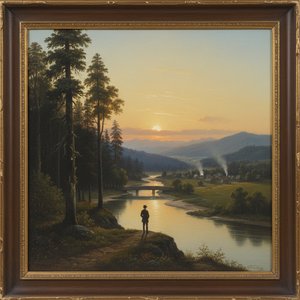
Robert Spencer: Luminism, Narrative & the American Landscape Tradition
Explore the captivating world of Luminism & the Hudson River School with our expert analysis. Discover the history, artists, and enduring beauty of 19th-century American landscape painting. Find museum-quality reproductions at ArtsDot.
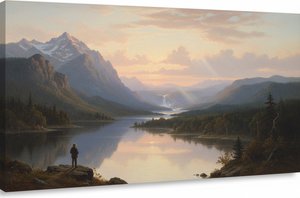
The Sublime American Landscape: Frederic Edwin Church & the Dawn of Luminism
Explore the captivating world of Frederic Edwin Church and the Luminist movement. Discover the history, techniques & enduring legacy of America’s first great landscape painters with ArtsDot.
Sanford Robinson Gifford: Luminism & the American Landscape Tradition
Explore the serene landscapes of Sanford Robinson Gifford, a leading Luminist painter of the Hudson River School. Discover his mastery of light, atmospheric effects & lasting influence on American art. Hand-painted reproductions available.