 Preview
 Send
Send Share
Share
 Details

 Download
 Similars
 X-Ray
X-Ray Diaporama
Dr. Zoé Puyrigaud
 Watercolor
- WallArt
- Contemporary Realism
 2020
2020- Contemporary
 35.0 x 35.0 cm
 Paintings in Hospitals
 Read More
Hand Made Oil Reproduction
Hand-painted oil on canvas in your size and frame, made to order by our artists. ( Buy Print Buy Image)




P118B $10

P118H $10

P118W $10

P438Z $10

P508JH $12

P508YH $12

P805H $10

P805Z $10

P919BZ $10

P919G $10

P919XJ $10

P959ZH $10

P968JZ $12

W106C $8

W218G $10

W218JH $8

W218Y $10

W307PJ $10

W316G $10

W316PJ $8

W316Y $10

W398PJ $8

W4111J $10

W500HY $15

W500JH $15

W692G $12

W849H $8

W940BG $15

W953PJ $8




Pick from our preset sizes that match the artwork's original proportions.

You may enter your own dimensions to fit a specific frame or space. If your selected size does not match the original image's proportions, we will either crop the artwork or extend the painting with additional hand-painted elements. A digital mockup will be sent for your approval before production begins.
Please note that the on-screen preview does not reflect the actual cropping or extension. Only the mockup will accurately show the final composition.
While custom sizes are available, we recommend selecting a dimension from the predefined list to preserve the original proportions.
After order, ArtsDot.com team will email client for instructions and provide a mockup preview
Worldwide Delivery () in 3/4 weeks instead of standard 5 weeks. (28 August). No compromise on quality.

Free Worldwide Express Shipping

High-Quality Linen Canvas

Full Shipping Insurance

Customs Tax Refund Guarantee

True Color Matching Guarantee

60-Day Return Policy (Defects Only)

100% Money-Back Guarantee

Bulk Discount Offer
 Glass option is only available in size under 110 CM

Dr. Zoé Puyrigaud
Reproduction Medium
Reproduction Size
-


Total Price
$ 263
A Moment Captured in Watercolor: The Essence of Dr. Zoé Puyrigaud
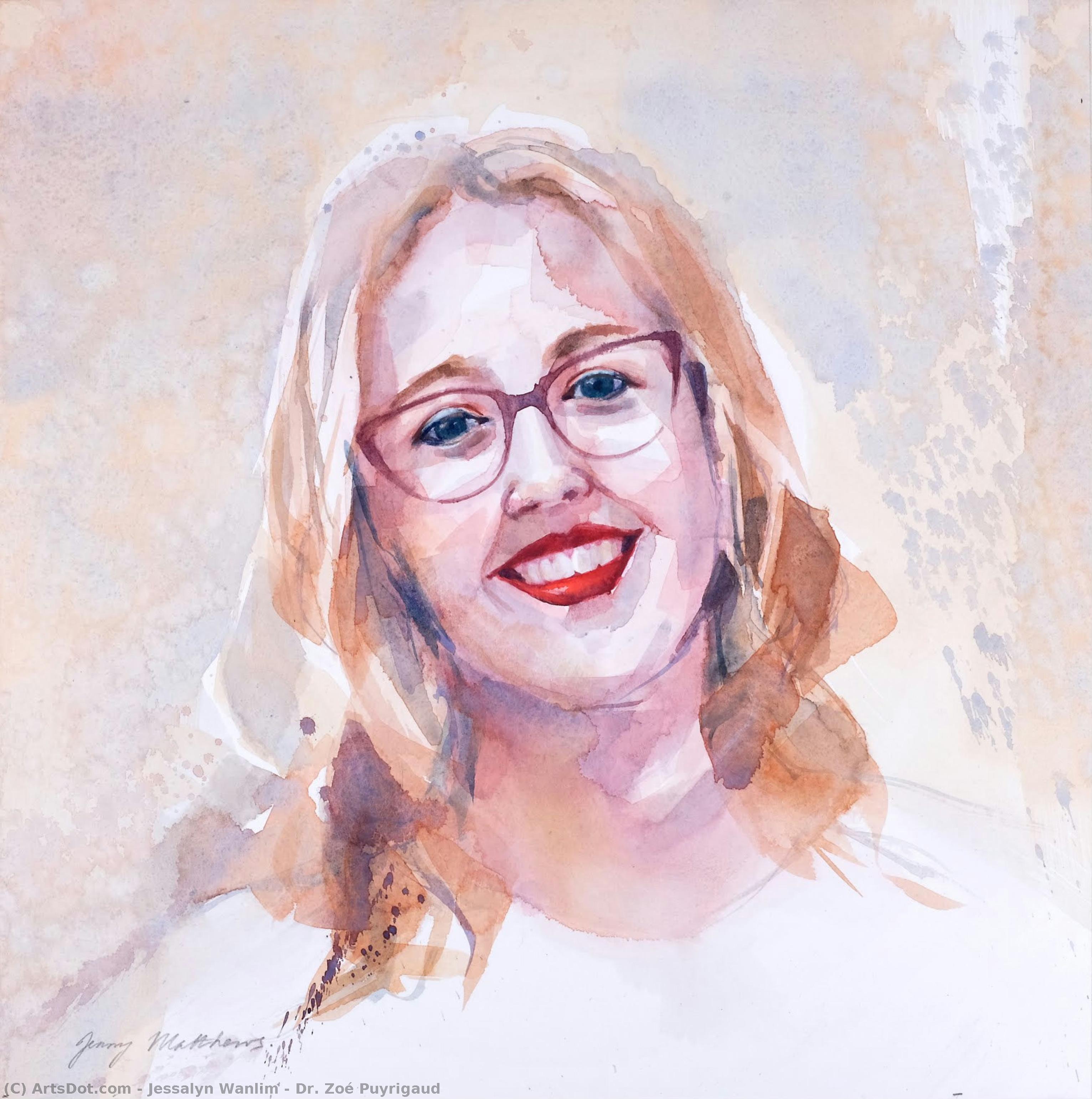
In the delicate dance of light and pigment, Jessalyn Wanlim’s Dr. Zoé Puyrigaud emerges as a profound study of character and warmth. This intimate watercolor portrait invites the viewer into a private moment, capturing a woman whose presence is defined by both intelligence and an approachable grace. Through the fluid, translucent layers characteristic of the watercolor medium, Wanlim breathes life into the subject, allowing the soft edges of her long, flowing hair to merge seamlessly with the ethereal atmosphere of the background. The painting does not merely depict a face; it captures a spirit, presenting a smile that feels both spontaneous and deeply resonant.
The technical mastery displayed in this piece lies in its ability to balance sharp, defining details with a dreamlike softness. While the background remains a blurred, impressionistic wash of color—ensuring that the viewer's gaze is immediately anchored to the subject—the artist pays meticulous attention to the structural elements of the portrait. The clarity of the doctor’s glasses serves as a brilliant focal point, acting as a window through which her observant and kind eyes are framed. This interplay between the crisp lines of the eyewear and the soft, bleeding edges of the watercolor washes creates a visual tension that is both sophisticated and captivating.
For the discerning collector or interior designer, Dr. Zoé Puyrigaud offers more than just aesthetic beauty; it provides an emotional anchor for any space. The composition, rendered in a compact 35 x 35 cm format, possesses a concentrated energy that makes it ideal for curated gallery walls or as a singular, poignant statement piece in a modern study or living area. The choice of a white shirt adds a sense of purity and professional calm to the work, contrasting beautifully with the organic textures of the paint. It is a piece that speaks of human connection, celebrating the quiet dignity found in a single, well-captured expression.
Owning a reproduction of such a contemporary masterpiece allows one to bring the nuanced storytelling of Jessalyn Wanlim into the home. This artwork serves as a testament to the power of portraiture to transcend time, offering a sense of companionship and intellectual depth. Whether viewed as an exploration of modern identity or simply as a beautiful exercise in light and shadow, this painting remains a timeless addition to any collection dedicated to the fine art of human emotion.
Related Artworks
Artist Biography
Jean-Michel Basquiat: A Voice From the Streets and Beyond
Born in Brooklyn, New York, in 1960 to Haitian and Puerto Rican parents, Jean-Michel Basquiat’s life was a collision of cultures, experiences, and artistic impulses. His early years were marked by movement – leaving home at fifteen to live in Lower Manhattan, immersing himself in the vibrant, often chaotic, world of New York City's downtown art scene. This wasn’t a conventional path to an artistic career; he honed his skills through odd jobs, playing in noise bands, and most significantly, engaging with the burgeoning graffiti movement. This formative period, spent navigating the streets as “SAMO,” a moniker derived from the abbreviation for "same old, same old," laid the groundwork for his distinctive visual language – a potent blend of street art aesthetics and deeply personal commentary.
The Rise of SAMO and Early Influences
Basquiat’s early work as SAMO was characterized by cryptic statements and symbols sprayed across the walls of New York City. These weren't simply tags; they were a form of visual poetry, exploring themes of identity, alienation, and social commentary. The “SAMO” pieces, often accompanied by phrases like "Playing Art with Daddy’s Money" and "9 to 5 Clone," quickly gained notoriety within the underground art community. This period wasn't about individual recognition; it was a collective effort, a shared language spoken through spray paint on public surfaces. Crucially, Basquiat’s experiences as SAMO exposed him to the realities of racial dynamics in New York – both the overt prejudice and the subtle ways Black artists were often marginalized within the art world.
The Breakthrough: 1981 and “The Radiant Child”
The turning point arrived in 1981 with the exhibition "New York/New Wave" at MoMA PS1, curated by Diego Cortez. This show provided Basquiat with his first major exposure to the established art world. It was here that he transitioned from SAMO and began producing paintings on canvas, showcasing a rapidly evolving style. The article “The Radiant Child,” published in New York Times Magazine, propelled him into the spotlight, describing him as "no piece by Samo." This article, written by critic Rene Ricard, captured the essence of the art market’s shift towards valuing individuals rather than simply artistic movements – a phenomenon deeply intertwined with the cultural anxieties and debates of the time. Basquiat's work in this period began to grapple directly with issues of race, power, and representation, reflecting his own experiences as a Black artist navigating a predominantly white institution.
A Complex Style: Combining Chaos and Meaning
Basquiat’s artistic style was remarkably complex and defies easy categorization. He drew heavily on the improvisational energy of jazz music – incorporating multiple references, layers of imagery, and seemingly random juxtapositions. His paintings are densely packed with text, symbols, anatomical diagrams, maps, and historical allusions, often referencing African art, Black history, and pop culture. Many of his works possess double or triple meanings, deliberately leaving room for interpretation by the viewer. He frequently used lists, inventories, and diagrams to organize this torrent of information, creating a visual representation of the overwhelming sensory experience of modern life. The artist himself acknowledged that he didn’t always fully understand the meaning of everything he included in his work, embracing ambiguity as an integral part of its power.
Legacy and Lasting Impact
Basquiat's tragically short life – dying from a heroin overdose at age 27 in 1988 – cut short what promised to be an extraordinary career. However, his impact on the art world has been profound and enduring. His work continues to resonate with audiences today, prompting reflection on issues of race, identity, power, and representation. His paintings have consistently commanded record-breaking prices at auction, demonstrating a remarkable appreciation for his unique vision. Basquiat’s legacy extends beyond individual artworks; he helped usher in the Neo-Expressionist movement, challenging traditional notions of art and paving the way for future generations of artists to explore personal narratives and social commentary through their work. His influence can be seen in contemporary artists who continue to grapple with similar themes and employ a similarly raw and expressive approach.

jessalyn wanlim
1982 - , Canada
Quick Facts
- Artistic Movement Or Style: Neo-Expressionism
- Artists Or Movements Influenced By This Artist:
- Jazz
- African art
- Artists Who Influenced This Artist:
- Andy Warhol
- Graffiti artists
- Date Of Birth: 1960
- Date Of Death: 1988
- Full Name: Jean-Michel Basquiat
- Nationality: American
- Notable Artworks:
- Untitled (1982)
- Dustheads
- Echoes in the Rain
- Place Of Birth: Brooklyn, New York
Related Articles
Watercolor Wonders: 10 Masterpieces That Redefined Art History | ArtsDot
Journey through 10 legendary watercolor masterpieces by Sargent, Turner & Homer! Explore iconic landscapes, portraits & floral art that redefined history. Find museum-quality reproductions and curated decor ideas at ArtsDot.com.
White on Canvas: 10 Masterpieces & Timeless Elegance for Your Home Decor
Explore 10 iconic white paintings by Monet, Whistler & Rothko! Discover the stories behind these serene masterpieces and their impact on art history. Find museum-quality reproductions for your home decor at .
Ephemeral Visions: Exploring the Artistic Legacy & Contemporary Practice of Watercolor Painting
Explore the captivating world of watercolor painting! Discover its rich history, essential techniques, influential artists & collecting tips. A comprehensive guide for art enthusiasts from ArtsDot.
Ephemeral Visions: Exploring the History & Emotional Resonance of Watercolor Painting
Explore the captivating history of watercolor painting, from ancient techniques to modern masters like Kandinsky & Blake. Discover essential artists, collecting tips & the emotional power of this luminous medium. Expert insights for art enthusiasts.
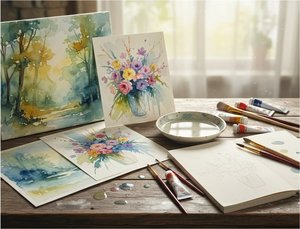
Ephemeral Visions: Exploring the Artistic Legacy & Nuances of Watercolor Painting
Explore the captivating world of watercolor painting! Discover its rich history, essential techniques, influential artists & collecting tips from art experts. A comprehensive guide for enthusiasts.