 Preview
 Send
Send Share
Share
 Details

 Download
 Similars
 X-Ray
X-Ray Diaporama
The Golden Age
 Oil On Copper
- WallArt
- Dutch Mannerism
 1605
1605- Early Modern
 23.0 x 31.0 cm
 Metropolitan Museum of Art
 Read More
Giclée / Art Print
Museum-quality giclée or canvas print with fast production and flexible finish options. ( Buy Hand Made Painting Buy Image)




P118B $10

P118H $10

P118W $10

P438Z $10

P508JH $12

P508YH $12

P805H $10

P805Z $10

P919BZ $10

P919G $10

P919XJ $10

P959ZH $10

P968JZ $12

W106C $8

W218G $10

W218JH $8

W218Y $10

W307PJ $10

W316G $10

W316PJ $8

W316Y $10

W398PJ $8

W4111J $10

W500HY $15

W500JH $15

W692G $12

W849H $8

W940BG $15

W953PJ $8




Pick from our preset sizes that match the artwork's original proportions.

You may enter your own dimensions to fit a specific frame or space. If your selected size does not match the original image's proportions, we will either crop the artwork or extend the image with a mirrored or solid-fill edge. A digital mockup will be sent for your approval before production begins.
Please note that the on-screen preview does not reflect the actual cropping or extension. Only the mockup will accurately show the final composition.
While custom sizes are available, we recommend selecting a dimension from the predefined list to preserve the original proportions.
Worldwide Delivery () in 2 weeks instead of standard 4/5 weeks. (20 August)

Free Worldwide Express Shipping

High-Quality Linen Canvas

Full Shipping Insurance

Customs Tax Refund Guarantee

True Color Matching Guarantee

60-Day Return Policy (Defects Only)

100% Money-Back Guarantee

Bulk Discount Offer
 Glass option is only available in size under 110 CM

The Golden Age
Giclée / Art Print
Reproduction Size
-


Total Price
$ 63
Collectible Description
A Vision of Arcadia: The Eternal Radiance of The Golden Age
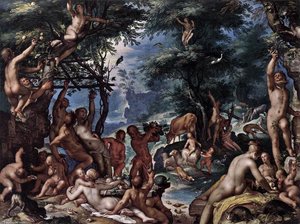
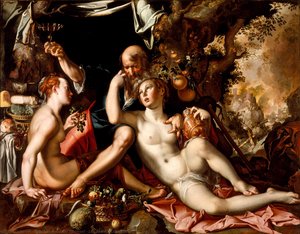
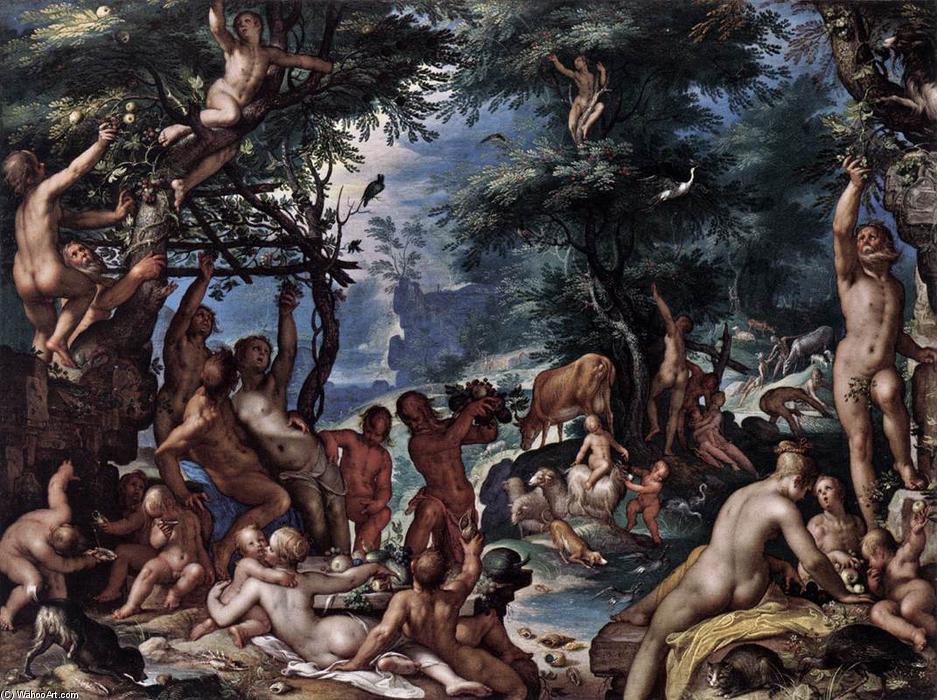
In the quiet corridors of the Metropolitan Museum of Art, there exists a window into a lost paradise, a realm where time seems to suspend its relentless march. Joachim Anthonisz Wtewael’s 1605 masterpiece, The Golden Age, is far more than a mere pastoral landscape; it is a breathtaking symphony of light and innocence. As one gazes upon this exquisite work, they are transported into the mythical Arcadia—a legendary sanctuary of shepherds and nymphs where the burdens of civilization dissolve into the lush embrace of nature. Wtewael, a master of Dutch Mannerism, does not merely depict a scene; he orchestrates an emotional experience, inviting the viewer to inhabit a world defined by grace, abundance, and an almost divine tranquility.
The composition is a marvel of dynamic energy and stylized elegance. Eschewing the rigid naturalism that would later define much of the Dutch Golden Age, Wtewael embraces the sophisticated vocabulary of Mannerism. The figures within the frame possess an ethereal quality, their forms subtly elongated and their poses captured in a state of graceful, rhythmic movement. This intentional distortion serves to elevate the subject matter from the mundane to the celestial. Amidst a verdant tapestry of foliage and a serene azure sky, nude figures interact with a fluid spontaneity, their bodies sculpted by a masterful use of chiaroscuro. The dramatic interplay of light and shadow does more than provide dimension; it breathes life into the textures of skin, leaf, and earth, creating a palpable atmosphere that feels both intimately close and hauntingly dreamlike.
Technique and the Alchemy of Copper
One of the most profound secrets behind the luminous depth of this painting lies in its medium. Wtewael utilized copper plate printing—a revolutionary technique for its time—to achieve a level of precision and tonal subtlety that traditional canvas could rarely match. The smooth, non-absorbent surface of the copper allows for an incredible density of pigment and a brilliant clarity of detail. This technical choice enables the artist to render the delicate textures of drapery and the soft, dappled light filtering through the canopy with unparalleled luminosity. For the discerning collector or interior designer, this translates into a work of art that possesses a jewel-like intensity, capable of commanding attention and adding a layer of sophisticated historical depth to any curated space.
Beyond the technical brilliance, the painting serves as a profound meditation on the ideal state of humanity. The "Golden Age" refers to a primordial era of peace and prosperity, symbolized here by the harmonious coexistence of humans and animals, such as the prominent, sturdy cow that anchors the mid-ground. Every element, from the soft clouds drifting across the sky to the lush, vibrant greenery, contributes to a sense of eternal spring. It is a visual poem celebrating life in its most unadulterated form. To possess a reproduction of this work is to bring a piece of this enduring optimism into one's home—a constant reminder of the beauty that exists when humanity lives in perfect equilibrium with the natural world.
Related Artworks
Artist Biography
The Enduring Polish of a Mannerist Master
Joachim Anthonisz Wtewael, a name whispered among connoisseurs of the Dutch Golden Age, remains a captivating figure whose art defies easy categorization. Born in 1566 and passing away in 1638, his life was as multifaceted as his canvases. While his artistic genius shone brightly, it is equally notable that he was also a successful flax merchant and an active town councillor of Utrecht. This dual existence—the meticulous artisan alongside the pillar of civic society—suggests a man whose life demanded both worldly acumen and profound creative focus. Wtewael’s signature style, however, possessed a remarkable consistency; it remained largely untouched by the sweeping naturalistic currents that were reshaping art across Europe during his lifetime.
A Journey Through Style and Influence
Wtewael's early training rooted him deeply in the sophisticated vocabulary of late 16th-century Haarlem Mannerism. His initial professional life saw him working as a glassmaker and engraver within his father’s workshop, an apprenticeship that undoubtedly honed his hand for intricate detail. A pivotal period arrived when he embarked on travels through Italy and France starting in 1586. These sojourns were crucial, exposing him to the rich artistic currents of the Second School of Fontainebleau. Yet, despite these influences, Wtewael possessed a unique internal compass. His work is characterized by figures that are masterfully drawn, possessing an almost porcelain-like polish, often arranged in poses that feel wonderfully capricious and dramatically charged.
Thematic Depth: Myth Meets Devotion
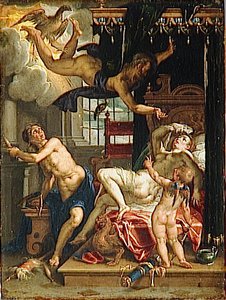
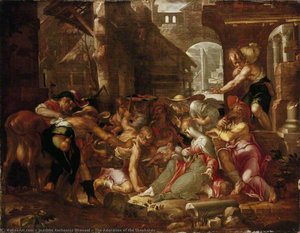
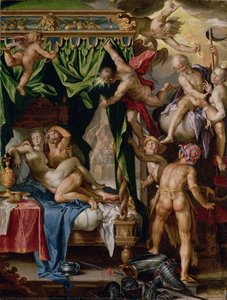
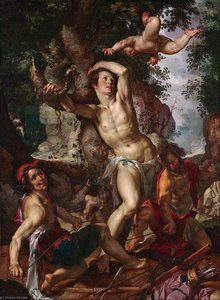
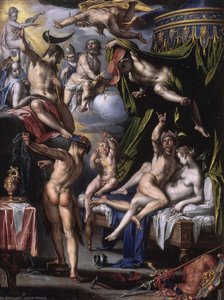
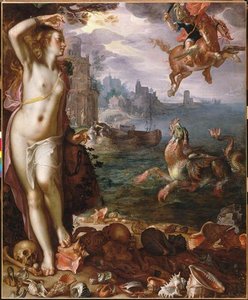
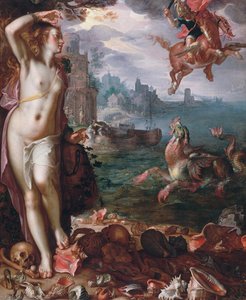
The body of his surviving work—comprising around one hundred paintings, alongside numerous drawings and stained glass designs—reveals a fascinating thematic duality. He was equally at home depicting profound religious narratives as he was celebrating the lush drama of classical mythology. Consider works such as Adoration of the Shepherds juxtaposed with Venus and Mars Surprised by Vulcan. These pieces showcase his remarkable ability to weave together conventional sacred subjects with pagan lore, often imbuing both realms with a palpable, sometimes strong erotic undercurrent that draws the viewer into its narrative embrace. His attention to detail is breathtaking; in works like Perseus and Andromeda, housed notably at the Mauritshuis museum in Utrecht, one can trace his unparalleled skill.
Historical Significance and Legacy
What makes Wtewael’s contribution so significant is precisely that resistance to change. While naturalism beckoned artists toward greater realism, Wtewael held fast to a polished, idealized aesthetic, creating a body of work that feels both historically situated and eternally vibrant. His cabinet paintings, executed on copper plates, are particularly distinctive and numerous, offering intimate glimpses into his artistic process. Though the final decade of his life saw him retreat from painting—a period possibly marked by personal sorrow following the passing of his wife—the impact of his vision endures. He gifted art history a style that remains both highly polished and wonderfully unpredictable.
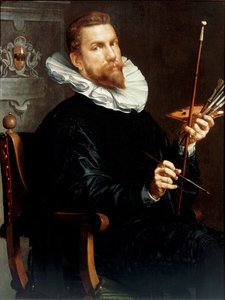
joachim anthonisz wtewael
1566 - 1638
Quick Facts
- Artistic Movement Or Style: Mannerism
- Artists Who Influenced This Artist: ['Second school of Fontainebleau']
- Date Of Birth: 1566
- Date Of Death: 1638
- Full Name: Joachim Anthonisz Wtewael
- Nationality: Dutch
- Notable Artworks:
- Adoration of the Shepherds
- Venus and Mars surprised by Vulcan
Related Articles

Dutch Baroque Masters: 10 Paintings That Shaped an Era | ArtsDot
Journey through the Golden Age with our guide to the Top 10 Dutch Baroque masterpieces! Explore iconic paintings by Rembrandt, Vermeer & Frans Hals. Find museum-quality art reproductions and elevate your home decor at ArtsDot.com.

Golden Age Reflections: Dutch Baroque Painting & Cultural Innovation
Explore the Dutch Golden Age of painting! Discover key artists like Vermeer & ter Borch, their innovative techniques, and the rich cultural context behind these Baroque masterpieces. Learn about collecting & appreciating this iconic art period.

Baroque Masterpieces: 10 Paintings That Defined an Era |
Journey through the drama & grandeur of Baroque art! Explore 10 masterpieces by Caravaggio, Rembrandt, Rubens & more. Discover stunning oil paintings, rich colors & timeless stories. Find museum-quality reproductions at .

Baroque Drama: Bringing Opulence & Emotion into Contemporary Interiors
Explore the opulent world of Baroque interior design! Discover key elements, modern applications & how to bring dramatic elegance into your home with 's authentic reproductions.

The Enduring Power of Painting: A Historical & Contemporary Exploration of Form and Emotion
Explore the rich history & enduring techniques of oil painting with ArtsDot. Discover masterpieces, learn about art collecting, and find authentic handmade reproductions crafted by skilled artists.