 Preview
 Send
Send Share
Share
 Details

 Download
 Similars
 X-Ray
X-Ray Diaporama
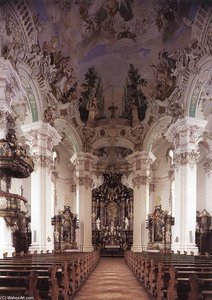
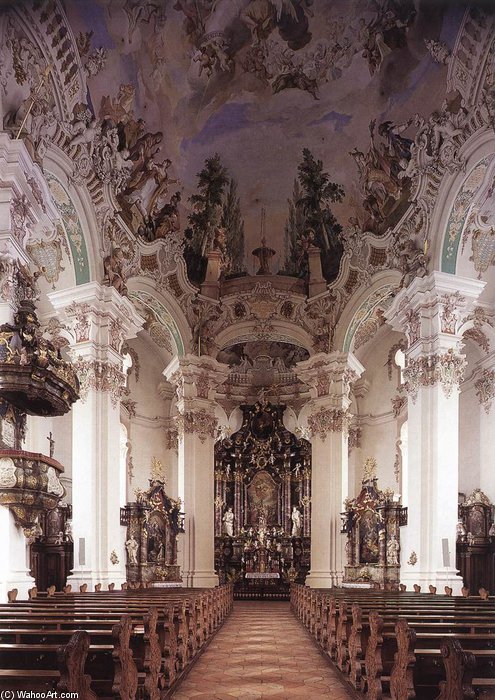
Interior With Ceiling Fresco
 Read More
Hand Made Oil Reproduction
Hand-painted oil on canvas in your size and frame, made to order by our artists. ( Buy Print Buy Image)




































Pick from our preset sizes that match the artwork's original proportions.

You may enter your own dimensions to fit a specific frame or space. If your selected size does not match the original image's proportions, we will either crop the artwork or extend the painting with additional hand-painted elements. A digital mockup will be sent for your approval before production begins.
Please note that the on-screen preview does not reflect the actual cropping or extension. Only the mockup will accurately show the final composition.
While custom sizes are available, we recommend selecting a dimension from the predefined list to preserve the original proportions.
After order, ArtsDot.com team will email client for instructions and provide a mockup preview
Worldwide Delivery () in 3/4 weeks instead of standard 5 weeks. (21 August). No compromise on quality.

Free Worldwide Express Shipping

High-Quality Linen Canvas

Full Shipping Insurance

Customs Tax Refund Guarantee

True Color Matching Guarantee

60-Day Return Policy (Defects Only)

100% Money-Back Guarantee

Bulk Discount Offer
 Glass option is only available in size under 110 CM

Interior With Ceiling Fresco
Reproduction Medium
Reproduction Size
-


Total Price
$ 263
Related Artworks
Artist Biography
Johann Baptist Zimmermann (1680 – 1758): The Architect of Bavarian Rococo
Johann Baptist Zimmermann stands as a pivotal figure in the artistic landscape of Bavaria during the Rococo period, renowned for his breathtaking ceiling frescoes and masterful sculptural works that graced churches and palaces alike. Born in Wiesensteig in 1680, he descended from a family steeped in sculpting tradition – his father Johann George Straub and brothers Philipp Jakob, Joseph, and Johann Georg Straub were all accomplished sculptors—establishing him within a lineage deeply connected to the artistic heritage of the region. This familial influence undoubtedly shaped Zimmermann’s formative years and instilled an unwavering dedication to the craft. His early training took place in Munich under Gabriel Ludwig, a prominent court sculptor, providing him with invaluable experience in mastering classical techniques. Subsequently, he ventured to Vienna from 1726 to 1734 where he honed his skills further amidst the vibrant artistic milieu of Habsburg Austria. This period exposed Zimmermann to diverse stylistic influences and broadened his artistic horizons. Notably, he collaborated closely with Johann Michael Fischer, architect of Schönbrunn Palace, fostering a dialogue between architectural grandeur and decorative artistry—a hallmark of Bavarian Rococo. Zimmermann’s return to Munich in 1734 marked the commencement of a prolific career characterized by an unwavering commitment to religious patronage. He was appointed by elector Karl Albrecht as the court sculptor in 1737, cementing his position at the heart of Bavarian artistic life and securing commissions that would propel him to international acclaim. His marriage to Franz Xaver Späth’s daughter further solidified his social standing and provided a stable foundation for his family life. Throughout his career, Zimmermann primarily focused on embellishing churches and monasteries across Upper Bavaria, often partnering with fellow masters like Günther, Zeiller, and Feuchtmayer. His sculptures are distinguished by their simplicity—often carved in alabaster—employing minimal ornamentation to maximize the impact of form and texture. The altars of St. Michael’s Church in Berg am Laim and the monastic churches of Andechs and Schäftlarn stand as testament to his unparalleled skill, embodying the ethereal beauty and spiritual depth characteristic of Rococo art. These monumental works are not merely decorative; they convey profound theological narratives through exquisitely crafted figures—a reflection of Zimmermann's deep understanding of artistic expression as a vehicle for conveying religious sentiment. His legacy extends beyond individual masterpieces; Zimmermann established Munich’s workshop as the foremost center for sculptural training, nurturing talents like Ignaz Günther and shaping the trajectory of Bavarian art history. The enduring fascination with his work underscores its timeless appeal—a testament to Zimmermann's ability to capture the essence of Rococo aesthetics while simultaneously elevating religious iconography to sublime heights. He remains an exemplar of artistic excellence and a cornerstone of Bavaria’s cultural heritage.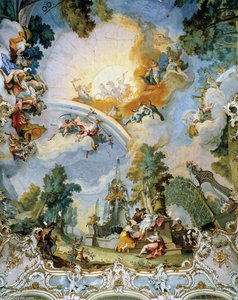
Johann Baptist Zimmermann
1704 - 1784 , Germany
Quick Facts
- Artistic Movement Or Style: Rococo
- Artists Or Movements Influenced By This Artist: ['Johann Michael Fischer']
- Artists Who Influenced This Artist: ['Gabriel Ludwig']
- Date Of Birth: January 3, 1680
- Date Of Death: March 2, 1758
- Full Name: Johann Baptist Zimmermann
- Nationality: German
- Notable Artworks:
- The Nymph
- Interior With Ceiling Fresco
- Place Of Birth: Wessobrunn, Germany