 Preview
 Send
Send Share
Share
 Details

 Download
 Similars
 X-Ray
X-Ray Diaporama
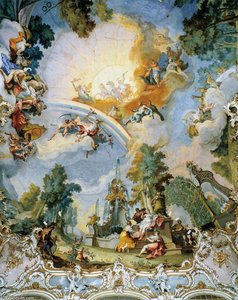
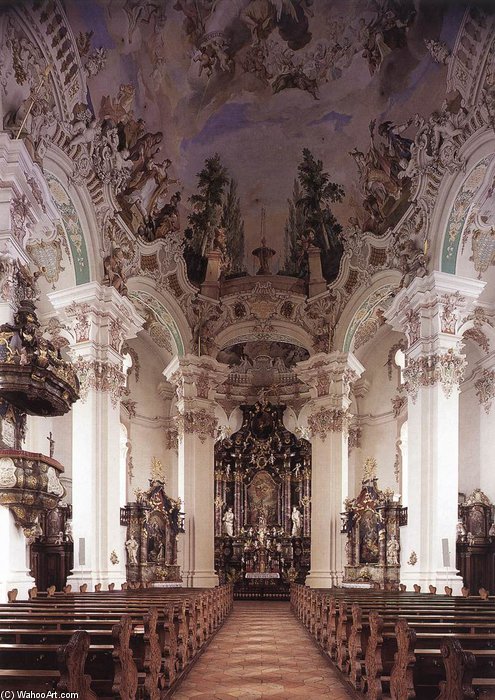
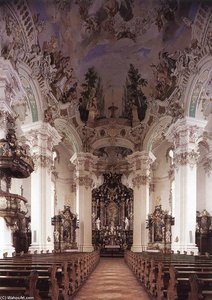
Interior With Ceiling Fresco
 Read More
Hand Made Oil Reproduction
Hand-painted oil on canvas in your size and frame, made to order by our artists. ( Buy Print Buy Image)




































Pick from our preset sizes that match the artwork's original proportions.

You may enter your own dimensions to fit a specific frame or space. If your selected size does not match the original image's proportions, we will either crop the artwork or extend the painting with additional hand-painted elements. A digital mockup will be sent for your approval before production begins.
Please note that the on-screen preview does not reflect the actual cropping or extension. Only the mockup will accurately show the final composition.
While custom sizes are available, we recommend selecting a dimension from the predefined list to preserve the original proportions.
After order, ArtsDot.com team will email client for instructions and provide a mockup preview
Worldwide Delivery () in 3/4 weeks instead of standard 5 weeks. (26 August). No compromise on quality.

Free Worldwide Express Shipping

High-Quality Linen Canvas

Full Shipping Insurance

Customs Tax Refund Guarantee

True Color Matching Guarantee

60-Day Return Policy (Defects Only)

100% Money-Back Guarantee

Bulk Discount Offer
 Glass option is only available in size under 110 CM

Interior With Ceiling Fresco
Reproduction Medium
Reproduction Size
-


Total Price
$ 263
Related Artworks

Artist Biography
The Architect of Bavarian Rococo
Johann Baptist Zimmermann stands as a pivotal figure in the artistic landscape of Bavaria during the Rococo period, renowned for his breathtaking ceiling frescoes and masterful sculptural works that graced churches and palaces alike. Born in Gaispoint, near Wessobrunn, in 1680, he descended from a family deeply steeped in the sculpting traditions of the illustrious Wessobrunner School. This lineage of craftsmanship—which included his father Johann George Straub and several accomplished brothers—provided him with an early immersion into the delicate arts of stucco and ornament. His formative years were defined by this hereditary dedication to beauty, establishing a foundation that would eventually allow him to transform the interior spaces of Southern Germany into celestial visions of light and movement.
His artistic journey was one of continuous refinement and expansion beyond his provincial roots. After receiving early training in Munich under the prominent court sculptor Gabriel Ludwig, Zimmermann sought the broader horizons offered by the imperial atmosphere of Vienna. Between 1726 and 1734, he immersed himself in the vibrant artistic milieu of Habsburg Austria, a period that proved essential in broadening his stylistic vocabulary. It was during these years that he began to master the delicate dialogue between architectural grandeur and decorative artistry. His ability to blend structural permanence with the ethereal lightness of fresco painting became his signature, a skill further sharpened through his close collaborations with legendary architects like Johann Michael Fischer.
A Legacy of Light and Ornament
Upon his return to Munich in 1734, Zimmermann’s career ascended to new heights of prestige and productivity. His appointment as court sculptor by Elector Karl Albrecht in 1737 cemented his status at the very heart of Bavarian cultural life. This era marked a prolific period of religious patronage, where he worked tirelessly to embellish the monasteries and churches of Upper Bavaria. Often working in tandem with his brother, the architect Dominikus Zimmermann, he helped create some of the most transcendent spaces of the age. Their collaborative efforts, such as the breathtaking decoration of the church at Steinhausen, represent the pinnacle of the Rococo spirit, where stucco, fresco, and architecture merge into a single, seamless experience of divine splendor.
The breadth of his technical mastery is evident in the sheer variety of his commissions:
- Sacred Spaces: His transformative work on the Abbey of Tegernsee, the Benediktbeuern Abbey, and the Klosterkirche Maria Saal showcased his ability to use stucco and fresco to evoke a sense of heavenly presence.
- Palatial Grandeur: Beyond the pulpit, Zimmermann brought his delicate touch to the secular world, contributing to the magnificent interiors of Nymphenburg Palace and the Residenz in Munich, where he helped define the opulent aesthetic of the Bavarian court.
- The Art of Stucco: His skill as a prime stucco plasterer allowed him to create intricate, flowing ornaments that seemed to breathe life into stone, bridging the gap between the heavy Baroque and the light, playful Rococo.
Ultimately, the historical significance of Johann Baptist Zimmermann lies in his role as a master synthesizer. He did not merely decorate buildings; he reimagined them as living canvases. Through his mastery of color, light, and texture, he helped define an era where the boundaries between the earthly and the divine were blurred by the grace of a brushstroke and the precision of a sculptor's hand. His work remains a testament to the enduring power of the Wessobrunner tradition and a cornerstone of German art history.
Johann Baptist Zimmermann
1704 - 1784 , Germany
Quick Facts
- Artistic Movement Or Style: Rococo
- Artists Or Movements Influenced By This Artist: ['Johann Michael Fischer']
- Artists Who Influenced This Artist: ['Gabriel Ludwig']
- Date Of Birth: January 3, 1680
- Date Of Death: March 2, 1758
- Full Name: Johann Baptist Zimmermann
- Nationality: German
- Notable Artworks:
- The Nymph
- Interior With Ceiling Fresco
- Place Of Birth: Wessobrunn, Germany