 Preview
 Send
Send Share
Share
 Details

 Download
 Similars
 X-Ray
X-Ray Diaporama
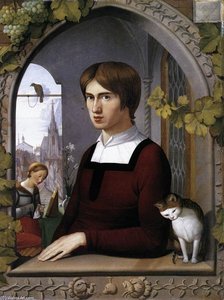
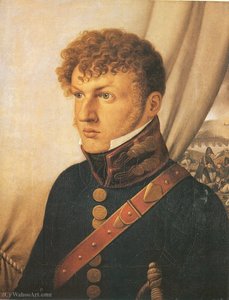
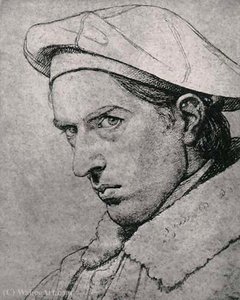
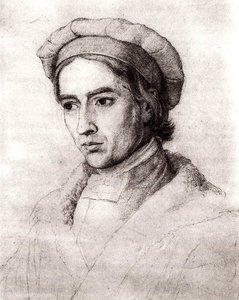
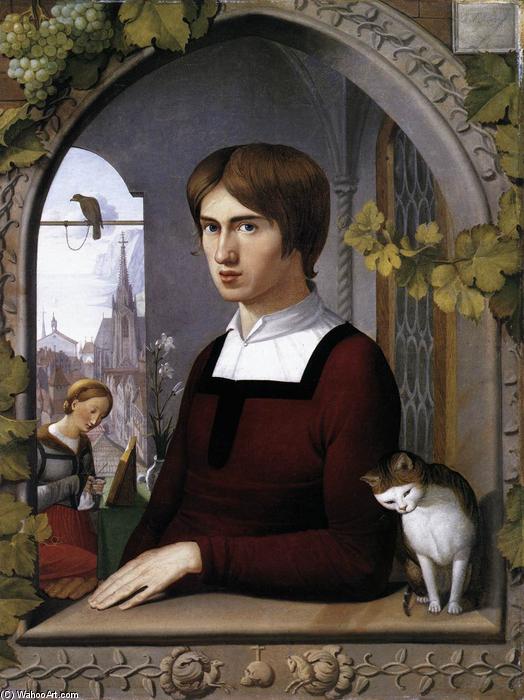
Portrait of the Painter Franz Pforr
 Oil On Canvas
- WallArt
- Nazarene Movement
 1810
1810- Renaissance
 62.0 x 47.0 cm
 Nationalgalerie
 Read More
Giclée / Art Print
Museum-quality giclée or canvas print with fast production and flexible finish options. ( Buy Hand Made Painting Buy Image)




P118B $10

P118H $10

P118W $10

P438Z $10

P508JH $12

P508YH $12

P805H $10

P805Z $10

P919BZ $10

P919G $10

P919XJ $10

P959ZH $10

P968JZ $12

W106C $8

W218G $10

W218JH $8

W218Y $10

W307PJ $10

W316G $10

W316PJ $8

W316Y $10

W398PJ $8

W4111J $10

W500HY $15

W500JH $15

W692G $12

W849H $8

W940BG $15

W953PJ $8




Pick from our preset sizes that match the artwork's original proportions.

You may enter your own dimensions to fit a specific frame or space. If your selected size does not match the original image's proportions, we will either crop the artwork or extend the image with a mirrored or solid-fill edge. A digital mockup will be sent for your approval before production begins.
Please note that the on-screen preview does not reflect the actual cropping or extension. Only the mockup will accurately show the final composition.
While custom sizes are available, we recommend selecting a dimension from the predefined list to preserve the original proportions.
Worldwide Delivery () in 2 weeks instead of standard 4/5 weeks. (21 August)

Free Worldwide Express Shipping

High-Quality Linen Canvas

Full Shipping Insurance

Customs Tax Refund Guarantee

True Color Matching Guarantee

60-Day Return Policy (Defects Only)

100% Money-Back Guarantee

Bulk Discount Offer
 Glass option is only available in size under 110 CM

Portrait of the Painter Franz Pforr
Giclée / Art Print
Reproduction Size
-


Total Price
$ 63
Collectible Description
Portrait of the Painter Franz Pforr - A Window Into Medieval Idealism
The Portrait of the Painter Franz Pforr by Johann Friedrich Overbeck is more than just a depiction of two friends; it’s a carefully constructed meditation on faith, tradition, and the enduring allure of the medieval past. Created in Rome in 1810 during the height of the Nazarene movement—a reaction against the perceived excesses of Enlightenment rationalism—this oil painting embodies the spiritual convictions of its artists and offers a glimpse into their worldview. As a professional art expert and salesman at https://ArtsDot.com, I can attest that this artwork stands as a testament to Overbeck’s masterful technique and profound artistic vision. ### Artistic Style and Technique: Embracing Medieval Echoes Overbeck's stylistic choices deliberately hark back to the grandeur of Gothic cathedral architecture and medieval art. He eschewed the prevailing trends of neoclassical painting, prioritizing instead the luminous chiaroscuro—the dramatic interplay of light and shadow—characteristic of artists like Michelangelo and Raphael. This technique is skillfully employed throughout the canvas, highlighting the contours of Franz Pforr’s face and clothing with meticulous precision. The artist's attention to detail extends beyond mere representation; it aims to evoke a sense of solemn contemplation and spiritual reverence. Notice how Overbeck uses subtle gradations of color to create depth and atmosphere—a deliberate departure from the flat surfaces favored by earlier artistic movements. Furthermore, the inclusion of architectural elements like arched windows and ribbed vaulting reinforces this connection to medieval tradition. ### Historical Context: The Nazarene Movement and Its Ideals The painting emerged during a period of significant intellectual upheaval in Europe. The Enlightenment championed reason and scientific inquiry, challenging established religious dogma and questioning monarchical authority. In response, artists like Overbeck sought refuge in the idealized beauty and moral integrity of medieval art—a realm perceived as untouched by corruption and imbued with spiritual significance. This fascination stemmed from a belief that art should serve as a conduit for divine inspiration and promote virtuous behavior. The Nazarene movement’s core ethos was rooted in the conviction that true artistic excellence resided in honoring God through meticulous craftsmanship and stylistic imitation of earlier masters—a deliberate rejection of the perceived frivolity of neoclassical aesthetics. ### Symbolism: Layers of Meaning Within the Gothic Frame The composition itself is laden with symbolic references. The arched window dominating the scene represents the sacred space of a medieval cathedral, symbolizing divine illumination and transcendence. Beyond the window lies a vista of an Italianate coastline—a deliberate contrast to the idealized medieval world depicted within. However, Overbeck doesn’t simply present opposing forces; he subtly integrates elements from both eras into a harmonious whole. The inclusion of a hawk perched on the windowsill serves as a reminder of God's watchful gaze and dominion over creation. Similarly, the cat nestled amongst Pforr’s wife embodies domestic tranquility and familial piety—values central to medieval social life. Finally, the skull topped with a crucifix—a prominent carving above the window—represents mortality and the promise of eternal salvation—a poignant acknowledgment of humanity's vulnerability in the face of divine judgment. ### Emotional Impact: A Vision of Spiritual Harmony Ultimately, *Portrait of the Painter Franz Pforr* transcends mere visual representation; it aspires to convey a profound emotional resonance. Overbeck’s masterful use of light and shadow creates an atmosphere of solemn contemplation—drawing the viewer into a contemplative space mirroring the spiritual ideals of his time. The painting's serene beauty speaks to a yearning for moral integrity and a belief in the transformative power of faith—themes that continue to inspire audiences today. As a beautifully crafted reproduction available on https://ArtsDot.com, this artwork offers an opportunity to experience firsthand the artistic legacy of the Nazarene movement and its enduring fascination with medieval spirituality.Related Artworks

Artist Biography
A Life Dedicated to Religious Revival
Johann Friedrich Overbeck, a name synonymous with the Nazarene movement and 19th-century German Romanticism, was more than just a painter; he was a spiritual seeker who believed art held the key to restoring faith and moral integrity to a world he perceived as increasingly corrupted. Born in Lübeck, Germany, in 1789, Overbeck’s upbringing within a family of Protestant pastors instilled in him a profound sense of piety and intellectual rigor that would permeate his entire artistic journey. His father, Christian Adolph Overbeck, was not only a respected legal scholar but also a poet and mystic, fostering an environment where both reason and faith were deeply valued. This foundation shaped young Johann’s worldview, leading him to believe that art had lost its sacred purpose and needed to be reclaimed for the glory of God.From Vienna's Disillusionment to Roman Renaissance
Overbeck’s formal artistic training began in 1806 at the Academy of Fine Arts in Vienna, under the tutelage of Heinrich Füger. While he diligently acquired technical skills rooted in Neoclassical principles, a growing disillusionment took hold. He found the academy's emphasis on secular themes and its perceived lack of spiritual depth deeply unsatisfying. The artistic environment felt vulgar and uninspired, a stark contrast to the purity and reverence he believed art should embody. This discontent fueled his conviction that European art had strayed from its true path centuries before, losing its Christian orientation in the wake of societal shifts and Enlightenment ideals. He yearned for a return to the principles of early Italian Renaissance painting – the works of Raphael, Perugino, Pinturicchio, and Francesco Francia – artists he believed possessed an authentic spiritual vision. In 1809, alongside Franz Pforr, Overbeck established the Brotherhood of St. Luke, an artistic fraternity dedicated to honest work, devout living, and a rejection of contemporary artistic trends. Their radical views led to expulsion from the Vienna Academy, but it was a sacrifice they willingly made in pursuit of their ideals. The pivotal moment arrived in 1810 when Overbeck relocated to Rome, which would become the central hub of his artistic endeavors for nearly six decades.The Nazarenes and Artistic Community
Rome provided fertile ground for Overbeck and his fellow artists – including Peter von Cornelius, Friedrich Wilhelm Schadow, and Philipp Veit – to establish a communal living and working space in the old Franciscan convent of San Isidoro. This collective earned them the descriptive epithet "Nazarenes," reflecting their commitment to a lifestyle reminiscent of early Christian communities. Their artistic principles emphasized hard work, moral integrity, and a deliberate rejection of both antique paganism and what they considered the false values of the High Renaissance. They sought inspiration not in the grandeur of Michelangelo or Raphael’s later works, but in the simplicity and piety of earlier masters like Fra Angelico. In 1813, Overbeck's personal spiritual journey took a profound turn with his conversion to Roman Catholicism, an act he believed imbued his art with renewed purpose and “Christian baptism.” This deepened faith became inextricably linked to his artistic expression, guiding his choice of subjects and influencing the very essence of his style.Frescoes, Sacraments, and Lasting Legacy
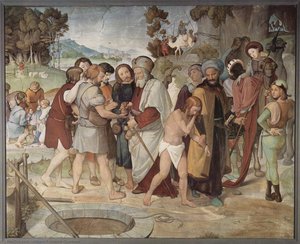
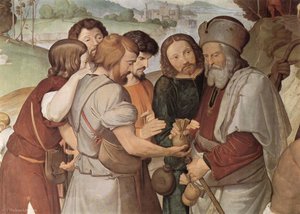
Overbeck’s career blossomed in Rome, marked by significant commissions that allowed him to translate his ideals into tangible form. The frescoes at Palazzo Zuccari (Casa Bartholdy) from 1818, depicting episodes from the story of Joseph, showcased his meticulous technique and narrative skill. His contribution to the Casino Massimo frescoes (1818-1830), particularly “The Meeting of Godfrey de Bouillon and Peter the Hermit” inspired by Tasso’s *Jerusalem Delivered*, demonstrated his ability to imbue historical scenes with religious symbolism. However, it was the fresco "Vision of St. Francis" created for the Porziuncola in the Basilica of Santa Maria degli Angeli near Assisi (1830) that truly exemplified Overbeck’s commitment to depicting religious themes with reverence and clarity. Perhaps his most ambitious undertaking was the “Seven Sacraments” project, begun in 1862 – a monumental series of paintings intended to restore the didactic power of images in conveying spiritual truth. Johann Friedrich Overbeck passed away in Rome in 1869, leaving behind a legacy that profoundly influenced 19th-century religious art. He championed a renewed focus on spirituality and moral values, inspiring generations of artists to seek deeper meaning in their work. His dedication to fresco technique helped revive this ancient medium, while his unwavering commitment to the principles of the Nazarene movement continues to resonate with those who believe in the power of art to uplift the soul. He was elected a foreign honorary member of the American Academy of Arts and Sciences in 1864. Even his nephew, Johannes Overbeck, contributed significantly to the field through his work as an archaeology professor at the University of Leipzig, furthering scholarship on classical art and culture.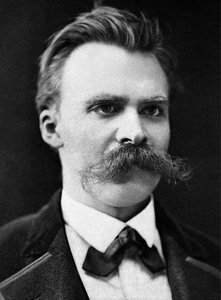
Johann Friedrich Overbeck
1789 - 1869 , Germany
Quick Facts
- Artistic Movement Or Style: Nazarene, Romanticism
- Artists Or Movements Influenced By This Artist:
- Pre-Raphaelite Brotherhood
- Religious art of 19th century
- Artists Who Influenced This Artist:
- Raphael
- Perugino
- Pinturicchio
- Francesco Francia
- Date Of Birth: July 3, 1789
- Date Of Death: November 12, 1869
- Full Name: Johann Friedrich Overbeck
- Nationality: German
- Notable Artworks:
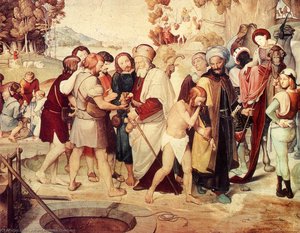
- Joseph Sold by His Brethren
- Vision of St. Francis
- Seven Sacraments Project
- Place Of Birth: Lübeck, Germany
Related Articles

Giclée Prints: Archival Quality & Aesthetic Nuances for the Discerning Collector
Explore the world of giclée prints with ArtsDot. Learn about archival quality, aesthetic nuances & investment potential. Expert guidance for discerning art collectors seeking museum-quality reproductions and lasting value.

The Enduring Legacy of Fine Art Prints: Technique, History & Aesthetic Impact
Explore the rich history & techniques of fine art prints. Discover investment potential, assess authenticity, and learn how to preserve your collection with expert guidance. Trusted insights for discerning collectors.

High Medieval Art: 10 Masterpieces That Shaped an Era | ArtsDot
Journey through High Medieval Art! Explore 10 iconic masterpieces – from Giotto's frescoes to stunning Gothic cathedrals. Discover the stories behind these timeless paintings, sculptures & illuminated manuscripts. Find museum-quality art reproductions at ArtsDot.com.

Echoes of Time: Exploring the Enduring Appeal & Historical Context of Vintage Art Prints
Explore the captivating world of vintage art prints! Discover their history, collecting tips & enduring appeal. Expert insights on chromolithography and building a legacy collection with ArtsDot.
The Enduring Legacy of Printmaking: Techniques, Themes & Artistic Innovation Across Centuries
Explore the rich history of printmaking with ArtsDot. Discover techniques from intaglio to lithography, learn about collecting valuable prints & find museum-quality reproductions. Expert insights for art enthusiasts and collectors.