 Preview
 Send
Send Share
Share
 Details

 Download
 Similars
 X-Ray
X-Ray Diaporama
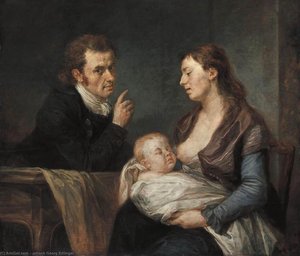
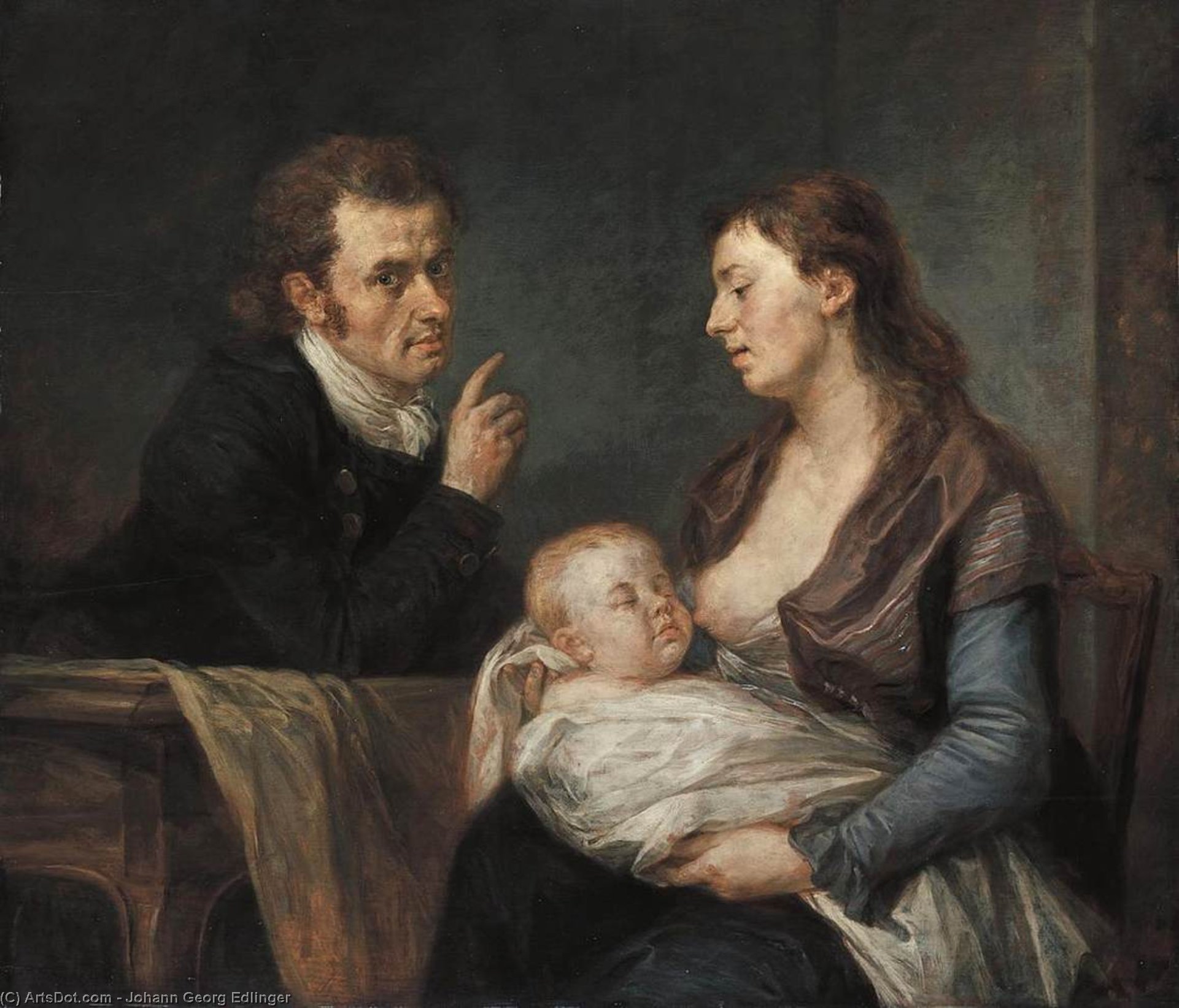
Family Portrait
 Oil On Canvas
- WallArt
- Neoclassicism
 1800
1800- 19th Century
 94.0 x 110.0 cm
 Neue Pinakothek
 Read More
Hand Made Oil Reproduction
Hand-painted oil on canvas in your size and frame, made to order by our artists. ( Buy Print Buy Image)




P118B $10

P118H $10

P118W $10

P438Z $10

P508JH $12

P508YH $12

P805H $10

P805Z $10

P919BZ $10

P919G $10

P919XJ $10

P959ZH $10

P968JZ $12

W106C $8

W218G $10

W218JH $8

W218Y $10

W307PJ $10

W316G $10

W316PJ $8

W316Y $10

W398PJ $8

W4111J $10

W500HY $15

W500JH $15

W692G $12

W849H $8

W940BG $15

W953PJ $8




Pick from our preset sizes that match the artwork's original proportions.

You may enter your own dimensions to fit a specific frame or space. If your selected size does not match the original image's proportions, we will either crop the artwork or extend the painting with additional hand-painted elements. A digital mockup will be sent for your approval before production begins.
Please note that the on-screen preview does not reflect the actual cropping or extension. Only the mockup will accurately show the final composition.
While custom sizes are available, we recommend selecting a dimension from the predefined list to preserve the original proportions.
After order, ArtsDot.com team will email client for instructions and provide a mockup preview
Worldwide Delivery () in 3/4 weeks instead of standard 5 weeks. (16 August). No compromise on quality.

Free Worldwide Express Shipping

High-Quality Linen Canvas

Full Shipping Insurance

Customs Tax Refund Guarantee

True Color Matching Guarantee

60-Day Return Policy (Defects Only)

100% Money-Back Guarantee

Bulk Discount Offer
 Glass option is only available in size under 110 CM

Family Portrait
Reproduction Medium
Reproduction Size
-


Total Price
$ 263
Artwork Description
A Tapestry of Intimacy: Exploring Edlinger's Family Portrait
To stand before Johann Georg Edlinger’s Family Portrait is to step across the threshold of time and into a moment suspended in amber. This oil painting, executed around 1800, is far more than a mere depiction of three figures; it is a profound meditation on familial connection, rendered with the masterful touch of an Austrian court painter at the height of his craft. The air within the canvas feels thick with unspoken affection—a palpable warmth that seems to emanate from the very pigments themselves. Edlinger captures not just likenesses, but the delicate architecture of human emotion, inviting every viewer into the quiet sanctity of this domestic tableau.
Mastery in Technique and Light
Edlinger’s technical prowess is immediately apparent upon close inspection. He employed a sophisticated understanding of chiaroscuro, allowing light to sculpt the forms and deepen the emotional resonance of the scene. Notice how the illumination catches the fine lace at the mother's neckline or highlights the texture of the father's dark coat; these details speak to an almost obsessive attention to realism. The artist’s ability to render fabric, skin, and hair with such convincing verisimilitude elevates the work from simple portraiture to a study in material existence. This meticulous detail ensures that even the background—a relatively subdued, dark wall—serves only to push the luminous humanity of the family into sharp, captivating focus.
The Poise of Family Life
The composition itself is a carefully orchestrated ballet of posture and gaze. The father, seated with a slight forward lean, seems caught mid-narrative, his gesture suggesting a story being told or an important point being made. The mother stands as the serene anchor, her physical connection to the child resting on her hip grounding the entire arrangement. The child, peacefully nestled, acts as the silent heart of the piece. Their collective body language speaks volumes—a comfortable familiarity that transcends mere posing. It is a portrait celebrating the quiet rituals of belonging, making it deeply resonant for anyone who understands the complex, beautiful dynamics of family life.
A Timeless Echo for Modern Spaces
For those seeking to infuse a space with the gravitas and enduring beauty of historical masterworks, this piece offers unparalleled depth. The style, rooted in the late 18th or early 19th-century tradition, speaks to an era that valued both aristocratic formality and burgeoning domestic sentimentality. Owning a reproduction of the Family Portrait allows one to bring home not just art, but a curated atmosphere—one of enduring elegance and heartfelt connection. It serves beautifully as a focal point in a drawing room or study, whispering tales of history while speaking directly to the modern soul's yearning for warmth.
Related Artworks
Artist Biography
Early Life and Artistic Foundations
Johann (Josef) Georg Edlinger, born in the Austrian city of Graz on March 1st, 1741, emerged from a modest background—his father was a gardener named Josef Edlinger, and his mother, Therese. While not initially destined for an artistic path, young Johann’s innate creative abilities were recognized early by his parents, who provided him with initial lessons in their hometown. This foundational encouragement proved pivotal. At the age of seventeen, he embarked on a period of wandering through Austria and Hungary, honing his skills through practical experience and exposure to diverse artistic environments. He returned to Graz briefly before seeking further training in Vienna around 1765, immersing himself in the city’s vibrant art scene. This period was crucial in shaping his developing style and ambition.The Court Painter of Munich
A significant turning point arrived in the mid-1770s when Edlinger relocated to Munich. He quickly integrated into the artistic circles of the Bavarian court, eventually securing a position as official court painter in 1781 under Elector Karl Theodor. This appointment marked a period of relative stability and opportunity, though his initial salary was modest. While he enjoyed patronage, it appears that he later fell out of favor with the court, leading to financial hardship in his later years. Despite these challenges, Munich remained the center of his artistic activity for much of his career. He married Maria Anna Barbara Wels in 1775 and they had six children together.A Rembrandtian Influence and Portraiture Style
Edlinger’s work is characterized by a skillful technique deeply influenced by Dutch and German portrait traditions, particularly the masterful use of light and shadow reminiscent of Rembrandt van Rijn. His portraits are not merely representations of physical likeness; they strive to capture the inner character and expressive qualities of his sitters. He possessed an ability to render realistic features with elegance and poise, often depicting nobility and prominent figures in refined attire. This emphasis on psychological depth and technical precision established him as a competent portraitist within the 18th-century artistic landscape. His paintings frequently feature oil on canvas, reflecting the standard practice of the era.Major Works and Historical Context
Although not prolific in terms of widely recognized masterpieces, Edlinger’s body of work provides valuable insight into the social and cultural milieu of the Holy Roman Empire during its final decades. Several of his portraits—depicting court officials, aristocrats, and members of high society—are now housed in institutions like the Neue Pinakothek in Munich. One particularly intriguing painting is a portrait believed by some to depict Wolfgang Amadeus Mozart, created around 1790. However, definitive proof linking the sitter to the composer remains elusive, adding an element of mystery to the work. Another notable piece is his *Family Portrait*, ca. 1800, now in the Neue Pinakothek. He also painted Heinrich Zimmermann, a companion of Captain Cook on his travels around the world. His portraits of eminent Bavarians were engraved by Friedrich John and published in 1821 under the title *Sammlung von Bildnissen denkwürdiger Männer*.Legacy and Significance
Johann Georg Edlinger died impoverished in Munich in 1819, a testament to the precarious nature of artistic life during that period. Despite his financial struggles, his contributions to Bavarian portraiture are increasingly recognized for their skillful execution and ability to capture the transition from Rococo elegance to the emerging Neoclassical influences prevalent in Central European art. His paintings offer a glimpse into the poised demeanor and social customs of the elite classes amid a time of significant political upheaval. Today, his works are valued by collectors and institutions alike for their historical insight and artistic merit, solidifying his place as a noteworthy figure in 18th-century portraiture.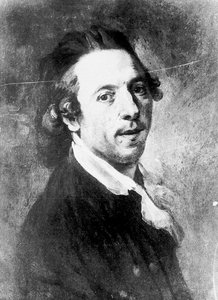
johann georg edlinger
1741 - 1819 , Austria
Quick Facts
- Artistic Movement Or Style: Rembrandtian portraiture
- Artists Who Influenced This Artist:
- Desmarées
- Rembrandt
- Date Of Birth: March 1, 1741
- Date Of Death: September 15, 1819
- Full Name: Johann Georg Edlinger
- Nationality: Austrian
- Notable Artworks:
- Family Portrait
- Mozart (disputed)
- Heinrich Zimmermann
- Place Of Birth: Graz, Austria
Related Articles

The Enduring Legacy of Oil on Canvas: Technique, History & Aesthetic Impact
Explore the rich history & techniques of oil painting – from Renaissance masters to Impressionism. Discover pigments, layering methods, and why this timeless medium endures. Expert insights for artists & art enthusiasts.

Oil on Canvas: A Historical & Technical Exploration of a Timeless Artistic Medium
Explore the rich history & enduring techniques of oil painting on canvas. Discover the science behind its longevity, conservation practices, and contemporary relevance. Expert insights for art enthusiasts.
The Enduring Legacy of Family Portraiture: A Historical & Artistic Exploration
Explore the rich history of family portraiture with ArtsDot. Discover artistic styles, symbolism & collecting insights. Commission a custom oil painting or appraise your existing artwork today!
Evolving Portraits: Personalized Art as a Chronicle of Family Life Across Generations
Create a timeless family legacy with custom portraits! ArtsDot connects you with skilled artists for heirloom-quality paintings & prints. Explore styles, commission your unique artwork today.
19th Century Masterpieces: 10 Paintings That Defined an Era | ArtsDot
Journey through 19th century art with ArtsDot! Explore 10 iconic paintings – from Monet & Renoir to Courbet – and discover the stories behind Romanticism, Realism & Impressionism. Find museum-quality reproductions for your home decor. Explore the full collection online!