 Preview
 Send
Send Share
Share
 Details

 Download
 Similars
 X-Ray
X-Ray Diaporama
 Stats
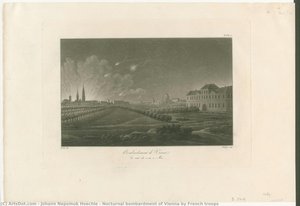
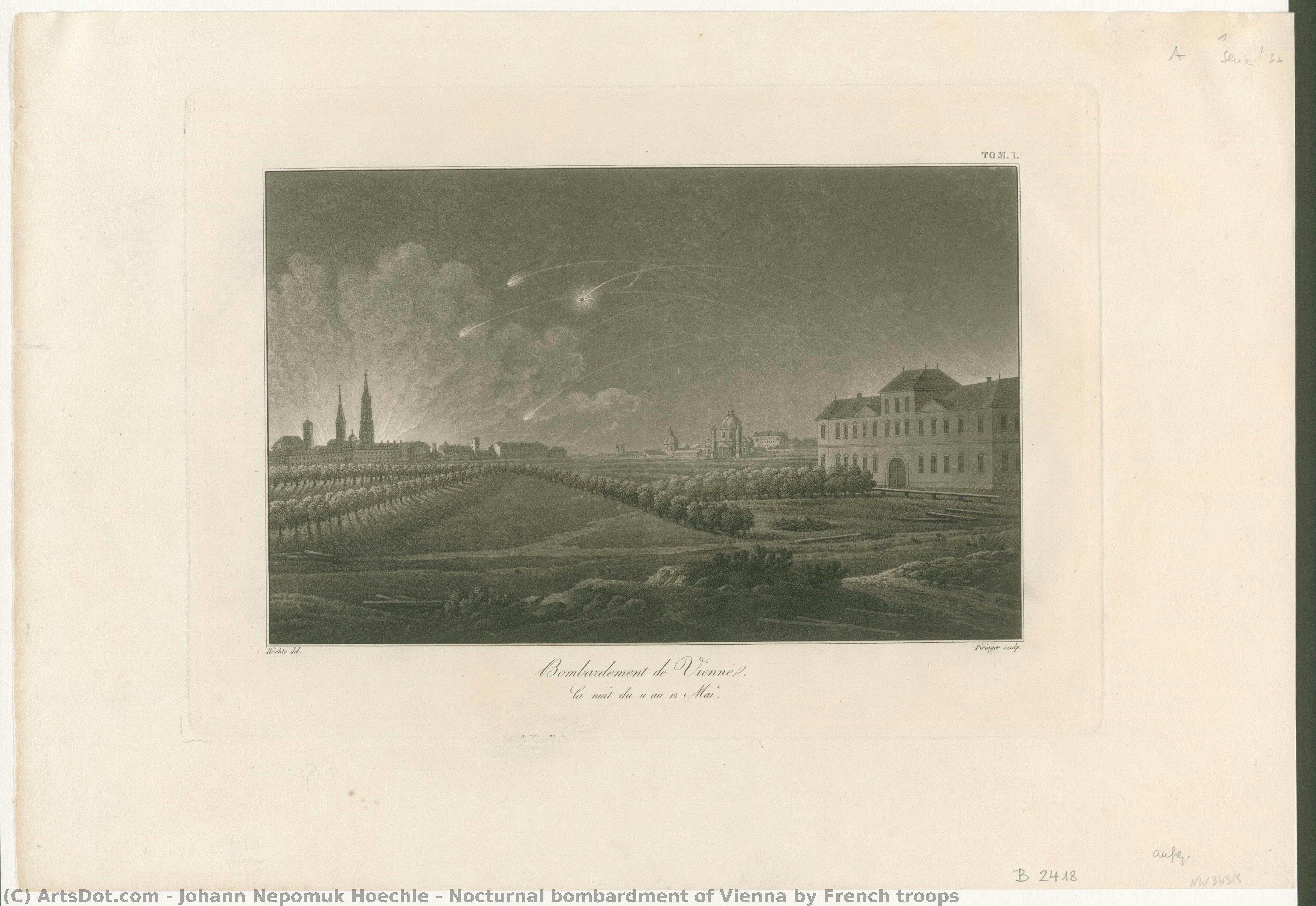
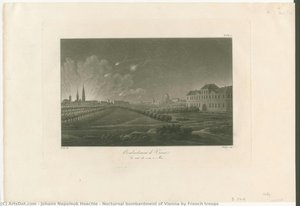
StatsNocturnal bombardment of Vienna by French troops
 1920
1920- 19th Century
 9.0 x 13.0 cm
 Beethoven-Haus Bonn
 Read More
Hand Made Oil Reproduction
Hand-painted oil on canvas in your size and frame, made to order by our artists. ( Switch to Print Switch to Digital Image)




































Pick from our preset sizes that match the artwork's original proportions.

You may enter your own dimensions to fit a specific frame or space. If your selected size does not match the original image's proportions, we will either crop the artwork or extend the painting with additional hand-painted elements. A digital mockup will be sent for your approval before production begins.
Please note that the on-screen preview does not reflect the actual cropping or extension. Only the mockup will accurately show the final composition.
While custom sizes are available, we recommend selecting a dimension from the predefined list to preserve the original proportions.
After order, ArtsDot.com team will email client for instructions and provide a mockup preview
Worldwide Delivery () in 3/4 weeks instead of standard 5 weeks. (8 September). No compromise on quality.

Free Worldwide Express Shipping

High-Quality Linen Canvas

Full Shipping Insurance

Customs Tax Refund Guarantee

True Color Matching Guarantee

100-Day Return Policy (Defects Only)

100% Money-Back Guarantee

Bulk Discount Offer
 Glass option is only available in size under 110 CM

Nocturnal bombardment of Vienna by French troops
Reproduction Medium
Reproduction Size
-


Total Price
$ 263
A Night of Chaos and Steel
In the shadowy depths of history, few moments capture the raw tension of conflict as viscerally as Johann Nepomuk Hoechle’s Nocturnal bombardment of Vienna by French troops. This evocative work serves as a window into a period of profound upheaval, transporting the viewer directly into the heart of a midnight siege. The painting is not merely a depiction of military maneuvers; it is a dramatic orchestration of light and shadow, where the darkness of the Viennese night is punctured by the sudden, violent energy of war. As we gaze upon the scene, the movement of cavalry and the heavy presence of artillery create a sense of impending doom, making the canvas feel less like a static image and more like a captured moment of breathless anticipation.
The composition is masterfully structured to guide the eye through the unfolding chaos. Hoechle utilizes a dynamic arrangement of figures, with soldiers on horseback charging toward the viewer, their silhouettes cutting through the gloom. The placement of the cannons—one central and imposing, another lurking in the periphery—anchors the scene, providing a sense of weight and destructive power. A subtle yet haunting detail, the presence of a clock on the left side of the frame, serves as a poignant memento mori, marking the relentless passage of time during the onslaught. This element adds a layer of psychological depth, reminding us that every second of this bombardment brings the city closer to an uncertain fate.
The Mastery of Military Realism
Technically, Hoechle demonstrates the precision of a trained observer, likely honed during his formative years in Vienna. His ability to render the textures of leather, metal, and horsehair amidst such low-light conditions is nothing short of remarkable. The style leans into the tradition of historical military art, where the goal is to balance the grand scale of an event with the intimate, gritty details of soldier life. Through a sophisticated use of chiaroscuro, Hoechle manipulates light to create depth, ensuring that even in the darkness, the forms of the troops and their weaponry possess a sculptural quality that commands attention.
For the discerning collector or interior designer, this piece offers more than just historical interest; it provides a profound emotional resonance. The painting’s somber palette and intense subject matter make it an ideal centerpiece for spaces designed to evoke contemplation, strength, or historical grandeur. Whether placed in a private study, a library, or a sophisticated gallery setting, a high-quality reproduction of this work brings with it the weight of history and the undeniable drama of the human spirit caught in the gears of war. It is a conversation piece that invites viewers to look closer, to wonder about the lives depicted, and to appreciate the enduring power of narrative painting.
Related Artworks
Artist Biography
The Chronicles of Conflict: The Life and Legacy of Johann Nepomuk Hoechle
In the grand tapestry of nineteenth-century European art, few threads are as vibrant or as fraught with tension as those woven by Johann Nepomuk Hoechle. A painter whose brush seemed to pulse with the very heartbeat of war, Hoechle possessed a rare ability to translate the chaotic energy of the battlefield into moments of profound historical resonance. Born in Munich in 1790, he was an artist shaped by both a prestigious lineage and the turbulent political landscape of the Napoleonic era. As the son of Johann Baptist Hoechle, a Swiss-born painter who served the Habsburg monarchy, young Johann was immersed in an environment where visual storytelling was inextricably linked to the service of the state. This early exposure to the grandeur of courtly life provided him with a foundational appreciation for meticulous observation and the dramatic potential of historical narrative.
The trajectory of Hoechle’s talent took a decisive turn through his early training, beginning with an apprenticeship under the skilled engraver Ferdinand Kobell. Though Kobell’s untimely death in 1800 forced a relocation to Vienna, it was within the hallowed halls of the Academy of Fine Arts that Hoechle truly found his voice. Under the guidance of masters such as Heinrich Friedrich Füger, who specialized in history painting, and Michael Wutky, an expert in landscapes, Hoechle learned to marry the epic scale of historical events with the atmospheric nuances of the natural world. This dual mastery would become the hallmark of his career, allowing him to place human drama within vast, often unforgiving, environments.
A Vision Forged in Fire and Shadow
While his academic training provided the technical scaffolding, it was the influence of the French marine and military artist Ignace Duvivier that ignited Hoechle’s passion for the theater of war. Duvivier’s mastery of light, movement, and psychological depth offered Hoechle a blueprint for capturing the visceral reality of combat. This inspiration led to one of the most harrowing and legendary episodes of his life. In 1809, during the height of the Battle of Aspern, Hoechle ventured onto a hillside near Heiligenstadt to sketch the unfolding carnage. His daring—or perhaps his recklessness—nearly cost him his life when he was apprehended by French soldiers who mistook him for a spy. It was only through his fluency in French that he managed to charm his captors and escape the firing squad, an event that undoubtedly deepened the emotional gravity of his subsequent works.
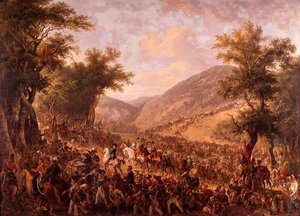
Hoechle’s artistry reached its zenith when he began documenting major military maneuvers on behalf of the Austrian Emperor Francis I. His ability to render the textures of war—the glint of steel, the heavy breath of cavalry, and the suffocating smoke of artillery—set him apart from his contemporaries. One of his most celebrated achievements, The Crossing of the Vosges, stands as a testament to his skill in capturing the aftermath of Napoleon's defeat at Leipzig. In such works, he does not merely record history; he orchestrates it. He utilizes chiaroscuro to punctuate the darkness of night or the gloom of battle with sudden, violent bursts of light, creating a sense of breathless anticipation and impending doom.
The Enduring Impression of a Military Master
Beyond the smoke of the battlefield, Hoechle’s repertoire extended into genre scenes and portraits that showcased his versatility. Whether he was capturing the quiet intimacy of an interior scene or the dignified presence of figures like Beethoven, his work remained anchored in a profound sense of realism. His later years, which saw him traveling through Italy and attending military maneuvers in Hungary, continued to feed his hunger for subject matter that combined movement with historical significance.
Though his life was tragically short, ending in Vienna in 1835, the impact of Johann Nepomuk Hoechle remains palpable. He stands as a pioneer of military art, a painter who refused to look away from the shadows of conflict. His legacy is found in:
- Technical Precision: The remarkable rendering of textures, from the heavy leather of saddles to the cold metal of cannons.
- Atmospheric Drama: A sophisticated use of light and shadow that transformed static battle scenes into living, breathing chronicles of upheaval.
- Historical Witness: His role as a visual chronicler for the Habsburg monarchy, preserving the monumental shifts of the Napoleonic era for posterity.
Today, when we gaze upon his depictions of nocturnal bombardments or the movement of troops through rugged terrain, we are not merely looking at art; we are witnessing the captured pulse of an era defined by change, courage, and the relentless march of history.
Johann Nepomuk Hoechle
1790 - 1835 , Germany
Quick Facts
- Artistic Movement Or Style: Military art
- Artists Or Movements Influenced By This Artist: ['French marine and military art']
- Artists Who Influenced This Artist: ['Ignace Duvivier']
- Date Of Birth: 1790, Munich
- Date Of Death: 1835, Vienna
- Full Name: Johann Nepomuk Hoechle
- Nationality: Austrian
- Notable Artworks:
- Crossing Vosges
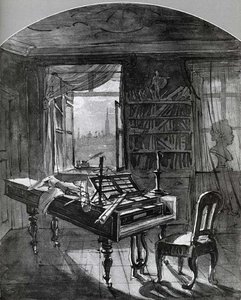
- Beethoven's Room
- Place Of Birth: Germany (Munich)
Related Articles
The Enduring Legacy of French Art: Movements, Masters & Cultural Impact
Explore the rich history of French art, from the Salon to Impressionism & beyond. Discover iconic masters, key movements, and expert guidance for collecting timeless masterpieces. ArtsDot.
Simon Vouet: A Baroque Master's Journey from Italian Influence to French Classicism
Explore the life & art of Simon Vouet, a pivotal French Baroque painter who introduced Italian styles to France. Discover his masterpieces and lasting influence on 17th-century art.
Léon Augustin L'Hermitte: Capturing the Soul of French Rural Life
Discover the captivating realist paintings of Léon Augustin L'Hermitte, masterfully depicting French rural life. Explore his technique, influences & legacy – a cornerstone of 19th-century art.
Charles Le Brun: Master of French Baroque Classicism & His Enduring Legacy
Explore the life & art of Charles Le Brun, master of French Baroque Classicism. Discover his royal commissions, influence on Versailles, and enduring legacy through detailed analysis & stunning artworks.
Paul Huet: Capturing the Essence of French Romanticism Through Light and Landscape
Explore the captivating world of Paul Huet (1803-1869), a master of French Romantic landscape painting. Discover his influence on Barbizon & Impressionism, and browse high-quality reproductions at ArtsDot.