 Preview
 Send
Send Share
Share
 Details

 Download
 Similars
 X-Ray
X-Ray Diaporama
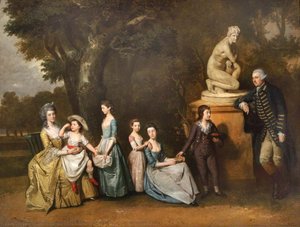
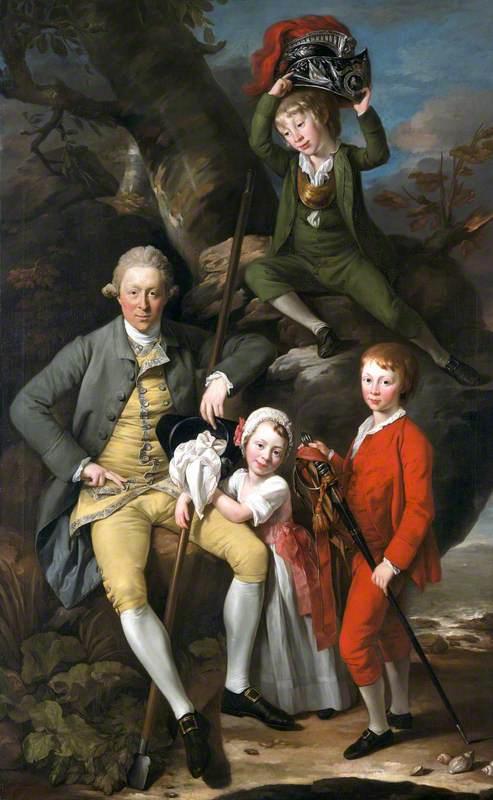
Henry Knight of Tythegston, with His Three Children


 Read More
Hand Made Oil Reproduction
Hand-painted oil on canvas in your size and frame, made to order by our artists. ( Buy Print Buy Image)




P118B $10

P118H $10

P118W $10

P438Z $10

P508JH $12

P508YH $12

P805H $10

P805Z $10

P919BZ $10

P919G $10

P919XJ $10

P959ZH $10

P968JZ $12

W106C $8

W218G $10

W218JH $8

W218Y $10

W307PJ $10

W316G $10

W316PJ $8

W316Y $10

W398PJ $8

W4111J $10

W500HY $15

W500JH $15

W692G $12

W849H $8

W940BG $15

W953PJ $8




Pick from our preset sizes that match the artwork's original proportions.

You may enter your own dimensions to fit a specific frame or space. If your selected size does not match the original image's proportions, we will either crop the artwork or extend the painting with additional hand-painted elements. A digital mockup will be sent for your approval before production begins.
Please note that the on-screen preview does not reflect the actual cropping or extension. Only the mockup will accurately show the final composition.
While custom sizes are available, we recommend selecting a dimension from the predefined list to preserve the original proportions.
After order, ArtsDot.com team will email client for instructions and provide a mockup preview
Worldwide Delivery () in 3/4 weeks instead of standard 5 weeks. (16 August). No compromise on quality.

Free Worldwide Express Shipping

High-Quality Linen Canvas

Full Shipping Insurance

Customs Tax Refund Guarantee

True Color Matching Guarantee

60-Day Return Policy (Defects Only)

100% Money-Back Guarantee

Bulk Discount Offer
 Glass option is only available in size under 110 CM

Henry Knight of Tythegston, with His Three Children
Reproduction Medium
Reproduction Size
-


Total Price
$ 263
Artwork Description
A Portrait of Family and Domesticity: Johann Zoffany’s Masterpiece
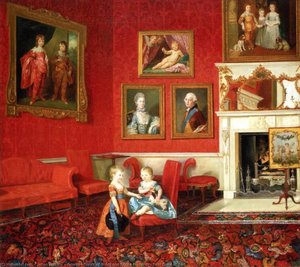
Johann Zoffany's “Henry Knight of Tythegston, with His Three Children” (circa 1770) is more than just a family portrait; it’s a meticulously constructed theatrical scene, a snapshot of 18th-century English life rendered with astonishing detail and psychological insight. Painted during a pivotal period in Zoffany's career – when he was establishing himself as a leading court painter in London – the work exemplifies his signature style: a blend of realism, illusionism, and carefully orchestrated composition. The painting captures a moment within a larger, imagined narrative, inviting viewers to speculate on the relationships and activities unfolding before them.
The scene unfolds within what appears to be an opulent drawing room, though its precise location remains delightfully ambiguous. Henry Knight, a captain in the 70th Foot, is seated prominently, his arm affectionately encircling his young daughter, Etheldra. His three sons – Henry, Robert, and a younger boy – occupy various positions within the space: one stands attentively beside him, while another sits playfully on the floor, engaged with a dog. The inclusion of a bird perched above the dog adds an element of whimsical observation, subtly elevating the scene beyond a simple depiction of family life. The presence of two clocks—one in the upper left corner and another at the bottom right—is not merely decorative; it’s a clever device that reinforces the painting's theatricality, suggesting a carefully staged performance for an unseen audience.
Theatrical Conversation Piece: Zoffany’s Innovative Technique
Zoffany was a pioneer of the ‘conversation piece,’ a genre of portraiture that gained popularity in England during the mid-18th century. Unlike traditional portraits, conversation pieces aimed to capture a scene of social interaction—a gathering of people engaged in an activity or discussion. Zoffany’s skill lay in his ability to create these scenes with remarkable realism and illusionism. He employed techniques borrowed from both Dutch genre painting and Italianate portraiture, meticulously rendering the textures of fabrics, the gleam of polished objects (including the violoncello), and the subtle expressions on each figure's face. The use of aerial perspective—where distant elements appear paler and less detailed—creates a sense of depth and spatial complexity, drawing the viewer into the scene.
Notably, Zoffany’s approach went beyond simple representation. He deliberately included objects that were recognizable to his contemporaries – a large, ornate Uffizi gallery, complete with its own collection of paintings and sculptures. This detail is crucial; it demonstrates Zoffany's awareness of the viewer's cultural context and his desire to create a scene that would resonate with his audience’s knowledge and experience. The inclusion of these familiar elements transforms the painting into a complex visual puzzle, inviting viewers to decipher its layers of meaning.
Symbolism and Social Commentary
Beyond its technical brilliance, “Henry Knight of Tythegston” offers insights into the social dynamics of 18th-century England. The scene depicts a prosperous gentry family—a captain, his wife, and their three children—living in relative comfort and security. The presence of the dog suggests a connection to rural life, while the clocks subtly allude to the importance of time and order within the household. The fact that one son is trying on a helmet from the 15th Light Dragoons hints at his military aspirations and the social status afforded by service in the army. The painting’s composition—with its carefully arranged figures and objects—reflects the values of the era: family, wealth, social standing, and military honor.
Furthermore, the setting itself – a seaside location near Tythegston – likely references the family's estate and connection to the Welsh coast. Zoffany’s ability to seamlessly blend these elements into a cohesive whole is a testament to his artistic skill and his deep understanding of the subject matter. The painting remains a captivating window into a bygone era, offering a glimpse into the lives and aspirations of England’s elite.
Related Artworks
Artist Biography
Johann Zoffany: Life and Legacy
Early Life and Training
Johann Zoffany, born Johannes Josephus Zaufallij in 1733 in Freiburg, Germany, was a painter who achieved renown primarily in England and Italy. Details of his early childhood remain scarce, but it is known he received artistic training from a young age. He initially apprenticed with a sculptor, possibly Melchior Paulus in Ellwangen, before studying with Martin Speer in Regensburg. This foundational period laid the groundwork for his future career.
Journey to Italy and England
In 1750, Zoffany traveled to Rome, entering the studio of Agostino Masucci where he honed his skills within the Italian artistic tradition. He later moved to England in 1760, initially supporting himself by creating decorative designs for clocks made by Stephen Rimbault. This period marked a turning point as he began to establish connections and gain recognition within London’s art scene.
Royal Patronage and Artistic Development
Zoffany quickly attracted the attention of King George III and Queen Charlotte, becoming a favored portraitist of the royal family. His ability to capture informal moments – such as Queen Charlotte and Her Two Eldest Children (1765) – distinguished him from more formal court painters. He was also popular with Austrian imperial family and created a baron of the Holy Roman Empire in 1776 by Empress Maria Theresa.
The Master of ‘Conversation Pieces’
Zoffany became celebrated for his “conversation pieces,” or *conversazione* – informal group portraits depicting social gatherings. He excelled at capturing the personalities and interactions within these scenes, often featuring prominent figures from society, theatre, and literature. His works like The Cope Family (1775) exemplify this style, offering glimpses into the lives of his patrons.
Major Achievements and Notable Works
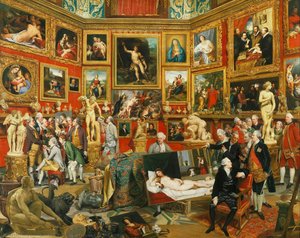
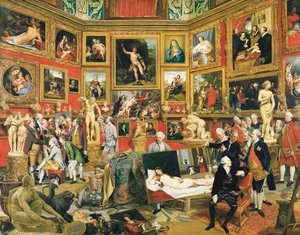
- Tribuna of the Uffizi (1772-1778): Perhaps his most famous work, a meticulously detailed depiction of the Uffizi Gallery in Florence.
- Dr William Hunter Teaching Anatomy at the Royal Academy (1779): A fascinating portrayal of medical education and scientific inquiry.
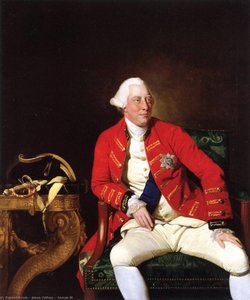
- George III (1771): A regal portrait showcasing the King’s power and elegance.
- Colonel Mordaunt's Cock Match (1784-1786): A vibrant depiction of colonial life in India, capturing a unique cultural event.
Years in India and Later Life
From 1783 to 1789, Zoffany resided in India, where he painted portraits of prominent figures like Warren Hastings and Asaf-ud-Daula. His experiences there influenced his artistic style and subject matter. A remarkable story from this period involves a shipwreck off the Andaman Islands, where survivors resorted to extreme measures for survival.
Influences and Legacy
Zoffany’s work reflects influences from both German precision and Italian artistry. He was influenced by artists like Agostino Masucci and drew inspiration from the Baroque tradition. His style, in turn, influenced contemporaries and later artists interested in portraiture and social commentary. He bridged artistic traditions and left a lasting impact on 18th-century art.
Historical Significance
Johann Zoffany’s paintings provide valuable insights into the social customs, intellectual life, and cultural values of his time. His “conversation pieces” offer intimate portraits of prominent individuals and their world, while his depictions of India contribute to our understanding of colonial history. He remains a significant figure in the history of art, celebrated for his technical skill, insightful observations, and unique artistic vision.
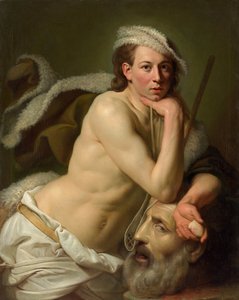
johann zoffany
1733 - 1810 , Germany
Quick Facts
- Birth Date: 1733
- Birth Place: Frankfurt, Germany
- Death Date: 1810
- Movement:
- Neoclassicism
- Realism
- Expressionism
- Name: Johann Zoffany
- Nationality: German
- Notable Works:
- Tribuna of the Uffizi
- Dr William Hunter Teaching Anatomy at the Royal Academy
- George III
- The Flower Girl
- Colonel Mordaunt's Cock Match
Related Articles
Johann Zoffany: Capturing Georgian Society with Brushstrokes of Cosmopolitan Flair
Explore the captivating world of Johann Zoffany, master portraitist of Georgian society. Discover his unique 'conversation pieces,' imperial commissions & lasting legacy. A guide for discerning collectors.
The Enduring Legacy of Family Portraiture: A Historical & Artistic Exploration
Explore the rich history of family portraiture with ArtsDot. Discover artistic styles, symbolism & collecting insights. Commission a custom oil painting or appraise your existing artwork today!
18th Century Masters: 10 Artworks That Define an Era | ArtsDot
Journey through 18th century art! Explore 10 iconic paintings – from Rococo elegance to Neoclassical grandeur. Discover Fragonard, David & more. Find museum-quality reproductions and elevate your home decor on ArtsDot.com.
Evolving Portraits: Personalized Art as a Chronicle of Family Life Across Generations
Create a timeless family legacy with custom portraits! ArtsDot connects you with skilled artists for heirloom-quality paintings & prints. Explore styles, commission your unique artwork today.
From Snapshot to Legacy: Reimagining Family Portraits Through the Lens of Old Master Techniques
Transform cherished memories into lasting heirlooms with custom family portraits inspired by Old Master techniques. Expert artists, museum-quality craftsmanship & a timeless legacy guaranteed. Explore the art of portraiture.