 Preview
 Send
Send Share
Share
 Details

 Download
 Similars
 X-Ray
X-Ray Diaporama
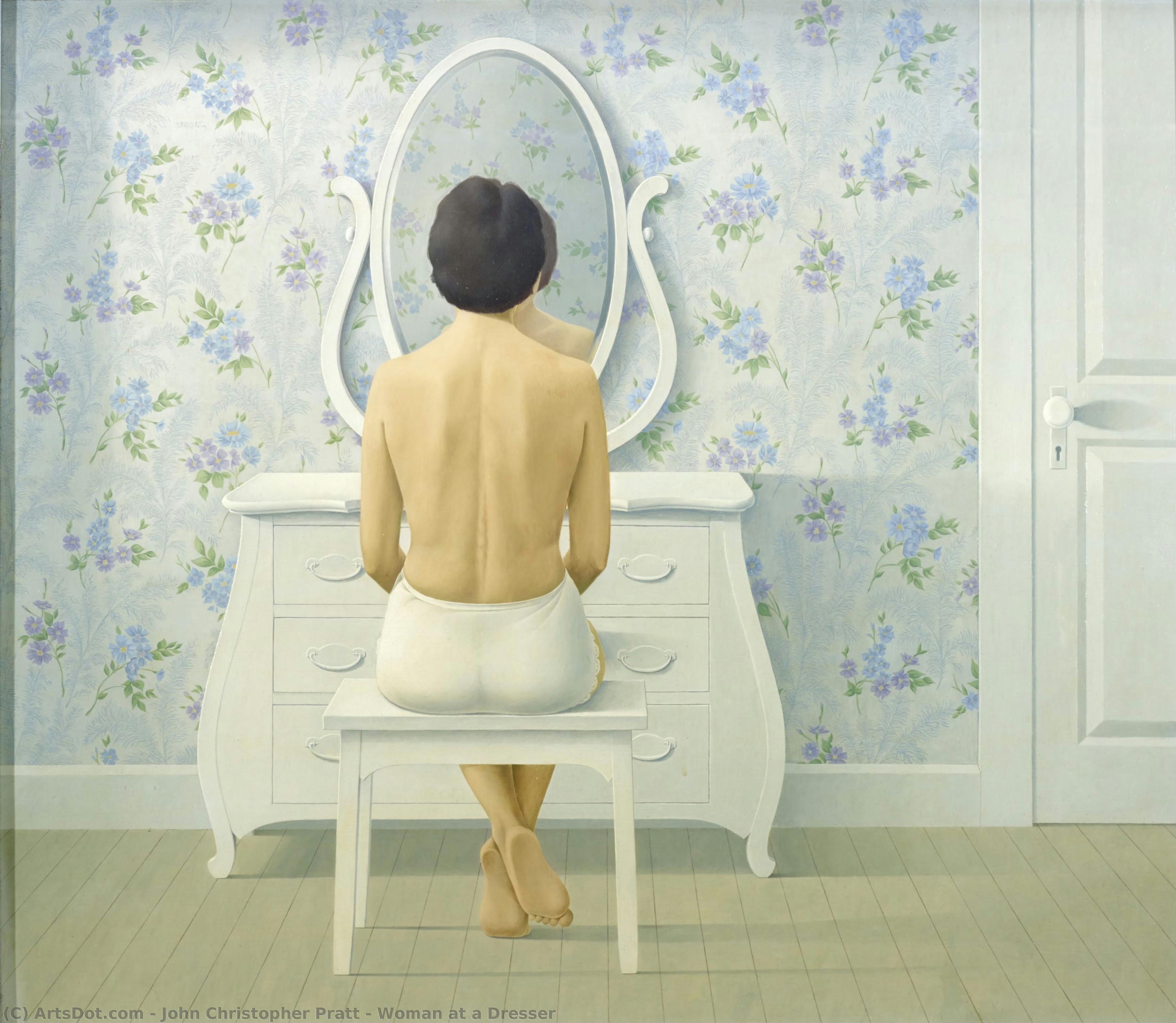
Woman at a Dresser
 Acrylic On Canvas
- WallArt
- Contemporary Realism
 1964
1964 67.0 x 77.0 cm
 McMichael Canadian Art Collection
 Read More
Hand Made Oil Reproduction
Hand-painted oil on canvas in your size and frame, made to order by our artists. ( Buy Print Buy Image)




P118B $10

P118H $10

P118W $10

P438Z $10

P508JH $12

P508YH $12

P805H $10

P805Z $10

P919BZ $10

P919G $10

P919XJ $10

P959ZH $10

P968JZ $12

W106C $8

W218G $10

W218JH $8

W218Y $10

W307PJ $10

W316G $10

W316PJ $8

W316Y $10

W398PJ $8

W4111J $10

W500HY $15

W500JH $15

W692G $12

W849H $8

W940BG $15

W953PJ $8




Pick from our preset sizes that match the artwork's original proportions.

You may enter your own dimensions to fit a specific frame or space. If your selected size does not match the original image's proportions, we will either crop the artwork or extend the painting with additional hand-painted elements. A digital mockup will be sent for your approval before production begins.
Please note that the on-screen preview does not reflect the actual cropping or extension. Only the mockup will accurately show the final composition.
While custom sizes are available, we recommend selecting a dimension from the predefined list to preserve the original proportions.
After order, ArtsDot.com team will email client for instructions and provide a mockup preview
Worldwide Delivery () in 3/4 weeks instead of standard 5 weeks. (20 August). No compromise on quality.

Free Worldwide Express Shipping

High-Quality Linen Canvas

Full Shipping Insurance

Customs Tax Refund Guarantee

True Color Matching Guarantee

60-Day Return Policy (Defects Only)

100% Money-Back Guarantee

Bulk Discount Offer
 Glass option is only available in size under 110 CM

Woman at a Dresser
Reproduction Medium
Reproduction Size
-


Total Price
$ 263
Artwork Description
A Window into Newfoundland’s Soul: Examining Christopher Pratt's “Woman at a Dresser”
Christopher Pratt (1935-2022) wasn’t merely a painter; he was an ardent chronicler of his homeland, Newfoundland. His artistic vision stemmed from a profound connection to the island’s rugged landscape and its quiet traditions—a heritage deeply rooted in maritime history, mirroring his father's profession as a shipbuilder. Pratt’s oeuvre distinguishes itself through remarkable realism combined with subtle chromatic shifts, offering not just visual representation but an immersive meditation on place, memory, and the enduring spirit of Newfoundland. This painting, “Woman at a Dresser,” exemplifies this approach perfectly.The Composition: Precision and Tranquility
The artwork depicts a woman seated before a dresser mirror, absorbed in brushing her hair. Pratt’s meticulous attention to detail—evident in the rendering of fabric folds, the reflection shimmering on the glass surface—demonstrates his mastery of observational drawing. The room itself is bathed in soft light, accentuated by floral wallpaper that introduces an element of domestic warmth and elegance. Two figures flank the woman: one standing slightly to her left, providing a grounding presence, while another occupies space to her right, subtly enhancing the scene’s narrative depth. A chair positioned beside the dresser reinforces the sense of calm repose.Style and Technique: Impressionistic Realism
Pratt skillfully blends elements of impressionism with realism. While maintaining accurate depictions of form and texture—particularly noticeable in the depiction of hair strands and drapery—he employs loose brushstrokes to capture the diffused light and atmospheric conditions prevalent in Newfoundland interiors. This technique imbues the painting with a palpable sense of immediacy, inviting viewers into the quiet intimacy of the moment captured. The use of oil paint on hardboard contributes to the artwork’s durability and allows for nuanced tonal variations that contribute significantly to its expressive quality.Historical Context: Capturing Newfoundland's Identity
Created in 1964, “Woman at a Dresser” reflects Pratt’s broader commitment to documenting Newfoundland’s cultural heritage. During this period, Pratt was actively engaged in exploring themes of rural life and domestic tranquility—subjects that resonated deeply with the sensibilities of his time. The painting's depiction of a woman tending to her appearance speaks to notions of femininity and self-care within Newfoundland society, reflecting broader societal values of the era. Furthermore, it aligns with Pratt’s fascination for capturing the essence of Newfoundland’s visual landscape – a preoccupation that would define much of his artistic output.Symbolism: Reflection and Introspection
The dresser mirror serves as a powerful symbol—representing introspection and self-awareness. As the woman gazes upon her reflection, she engages in an act of contemplation, prompting viewers to consider themes of identity and personal experience. The floral wallpaper symbolizes beauty and fertility, subtly enriching the painting’s visual vocabulary. Overall, “Woman at a Dresser” transcends mere representation; it embodies Pratt's ability to distill complex emotions and ideas into a single, exquisitely crafted image—a testament to his enduring legacy as one of Newfoundland’s most celebrated artists.Related Artworks






Artist Biography
A Life Painted in the Light of Newfoundland: The Art and Legacy of Christopher Pratt
Christopher Pratt (1935-2022) wasn’t merely a painter; he was an interpreter of his homeland, a meticulous observer of its landscapes, architecture, and the quiet rhythms of life within it. Born in St. John's, Newfoundland, into a family deeply rooted in the region’s maritime history – his father was a shipbuilder – Pratt’s artistic journey began with a fascination for capturing the essence of this ruggedly beautiful island. His work, characterized by its remarkable realism and subtle shifts in color, offers a profound meditation on place, memory, and the enduring spirit of Newfoundland.
Pratt's early life was shaped by both formal education and experiential learning. He initially pursued a path in engineering, gaining valuable surveying skills that would later inform his precise compositions. However, it was his exposure to the art world – particularly through encouragement from influential figures like Lawren Phillips Harris and Alex Colville – that steered him towards painting. His time spent during summers in Bay Roberts, observing the local community and its surroundings, proved invaluable, providing a rich source of inspiration for his future work. This period instilled within him a deep appreciation for the understated beauty of everyday life, a theme that consistently recurs throughout his oeuvre.
Pratt’s artistic style evolved over six decades, drawing upon a diverse range of influences. The Group of Seven, with their celebration of Canadian wilderness, undoubtedly played a significant role in shaping his early aesthetic. However, Pratt’s work transcends simple imitation; he developed a distinctly personal voice, informed by his own experiences and observations. His meticulous attention to detail—the way light falls on weathered stone walls, the texture of fishing nets draped across docks, the subtle expressions on the faces of local residents—creates an immersive quality that invites viewers into the heart of Newfoundland’s soul. He was particularly drawn to architectural studies, capturing the solidity and character of buildings against the backdrop of the Atlantic coast.
Pratt's technical mastery is evident in his use of oil paints, watercolours, lithography, and silkscreen techniques. He skillfully employed a restrained palette—primarily blues, greens, and neutrals—to evoke the atmospheric conditions of Newfoundland’s coastal environment. His prints, in particular, demonstrate a remarkable control over tonal values and textures, creating images that are both visually arresting and emotionally resonant. The influence of his time studying at Glasgow School of Art is apparent in his use of bold lines and simplified forms, while retaining a distinctly Canadian sensibility.
Key Works and Notable Achievements
Pratt’s body of work encompasses a vast range of subjects, from expansive landscapes to intimate portraits. Among his most celebrated paintings are depictions of the Newfoundland coastline, capturing its dramatic cliffs, sheltered coves, and ever-changing weather patterns. *Shed in a Storm*, created during his early years, is considered a seminal work that established his distinctive style. His architectural studies—particularly those depicting historic buildings in St. John’s—offer a poignant reflection on the region's past. The design of the Newfoundland and Labrador flag stands as another significant achievement, embodying the spirit and identity of the province.
Beyond his artistic creations, Pratt was deeply involved in the cultural life of Newfoundland. He served as curator at Memorial University Art Gallery from 1963 to 1965, playing a crucial role in establishing the gallery’s collection and programming. His contributions were recognized with numerous awards and honours, including Officer of the Order of Canada (1973) and honorary degrees from several Canadian universities.
The Influence of Place: A Newfoundland Perspective
What distinguishes Pratt's work is not simply his technical skill or his ability to capture a likeness; it’s his profound connection to place. He wasn’t interested in merely depicting the landscape—he sought to convey its essence, its spirit, and its enduring presence. As he himself stated, “They were never photographic takes on the places I was painting. I invented places and situations that came from places I had been—places I could identify.” This approach reflects a deep understanding of Newfoundland’s unique cultural identity, shaped by its isolation, maritime heritage, and close-knit communities.
His paintings are imbued with a sense of quiet contemplation, inviting viewers to slow down and appreciate the subtle beauty of their surroundings. Pratt's work is a testament to the power of observation, reminding us that even in the most ordinary scenes, there lies a wealth of stories waiting to be told.
A Lasting Legacy
Christopher Pratt’s legacy extends far beyond his individual artworks. He played a vital role in promoting Canadian art and culture both nationally and internationally. His work is held in prominent collections across Canada and around the world, ensuring that his vision will continue to inspire future generations of artists. The National Gallery of Canada, The Rooms Provincial Art Gallery, and numerous private collectors attest to the enduring value and significance of his artistic contributions. Pratt’s passing in 2022 marked the loss of a truly exceptional artist—one who captured the heart and soul of Newfoundland with remarkable skill and sensitivity.

john christopher pratt
1935 - 2022 , Canada
Quick Facts
- Artistic Movement Or Style: Realism, Atlantic landscapes
- Artists Or Movements Influenced By This Artist:
- Edward Hopper
- Charles Sheeler
- Artists Who Influenced This Artist:
- Alex Colville
- Lawren P. Harris
- Date Of Birth: December 9, 1935
- Date Of Death: June 5, 2022
- Full Name: John Christopher Pratt
- Nationality: Canadian
- Notable Artworks:
- Woman at a Dresser
- Shed in a Storm
- Boat in Sand
- Place Of Birth: St. John's, Canada
Related Articles

George Agnew Reid: A Canadian Impressionist's Pursuit of Light, Colour, and National Identity
Explore the life & work of George Agnew Reid, a pivotal figure in Canadian Impressionism. Discover his genre paintings, mural commissions, and lasting influence on art education & national identity. A comprehensive guide for collectors & enthusiasts.
Arthur Lismer: A Pioneer of Canadian Modernism & the Group of Seven's Visionary Spirit
Explore the life & art of Arthur Lismer, a pivotal figure in Canadian Modernism and founding member of the Group of Seven. Discover his landscapes, teaching legacy & lasting influence on Canadian art history.

Thomas Thomson: Pioneering Canadian Landscape & the Pursuit of National Identity
Explore the evocative landscapes of Tom Thomson, a pivotal figure in Canadian art & precursor to the Group of Seven. Discover his bold style, lasting legacy, and profound impact on shaping a national artistic identity.

Cornelius Krieghoff: Capturing the Soul of 19th-Century Canada
Explore the captivating world of Cornelius Krieghoff, Canada's beloved 19th-century painter. Discover his iconic winter scenes, Indigenous portraits & lasting legacy with our expert guide. Learn about collecting and appreciating this master artist.

Christopher Williams: Deconstructing Representation & Materiality in Contemporary Art
Explore the groundbreaking work of Christopher Williams, a pivotal figure in contemporary art. This analysis delves into his deconstruction of representation, materiality, and institutional critique – essential reading for serious collectors.